
Waldorfish Blog

4 things to know before planning your Waldorf homeschool year.
Anyone who has come into contact with Waldorf education -- and those of us who have invested our hearts and souls into it’s tenets -- know firsthand the misunderstandings that arise within and around this extraordinary system of education.
The aim of this article is to help clear up some fundamental misunderstandings about the Waldorf approach to life and learning (for more on Waldorf curriculum, click here!), as well as share some of our experiences with the hope that those reading this will be able to better serve the children they are educating. (Initials in parenthesis indicate which author is speaking.)
pedagogy:
noun - ped·a·go·gy \ˈpe-də-ˌgō-jē also -ˌgä-, especially British -ˌgä-gē\
"...concerns the study of HOW best to teach."
curriculum:
noun - cur·ric·u·lum \kə-ˈri-kyə-ləm\
" ...refers to the lessons and academic content taught in a school or in a specific course or program.." (Or, in other words, WHAT to teach.)
If you’d prefer to listen to the audio version of this post, you can do that right here:
#1. Waldorf education is a pedagogy (not a curriculum).

Photo: Cristina Havel
Waldorf education is a set of ideas about HOW to teach, laid out by Rudolf Steiner. Waldorf Education is NOT a curriculum - in it's purest form it does not specify which topics and lessons to teach in the classroom. This is a very important distinction to make. It allows an important shift to take place: away from a blanket approach to education, which puts a child’s heart and mind to sleep, and toward an open-hearted and living tradition in which the learning process takes on its true purpose: to awaken personal gifts that allow one to be of maximum service to society.
“In a Waldorf school outer forms do not follow set patterns, so that it is quite possible for one teacher to teach his class of nine year olds well, while another, who takes a completely different line, may be an equally good teacher. In this way we plan the curriculum for each year in accordance with the nature of the growing child. As long as the teacher feels in harmony with the underlying principles and with the methods employed, he must be given freedom in his work instead of being tied to fixed standards...” ~Rudolf Steiner, The Renewal of Education, 1920.”
(RW) Conversations with mentors over the years have continually reminded me that Steiner never gave specific indications about which topics and subjects should be taught in which grades. This notion of "saints in second grade, farming in third grade", etc. is a convention created by schools needing to be able to assure parents that all children will receive an equal (or at least similar) education from grade to grade no matter who the teacher is. After all, a school can hardly market its’ program to tuition-paying parents using the slogan "Our teachers do whatever they feel like!"
#2. Rudolf Steiner felt that freedom was the key.
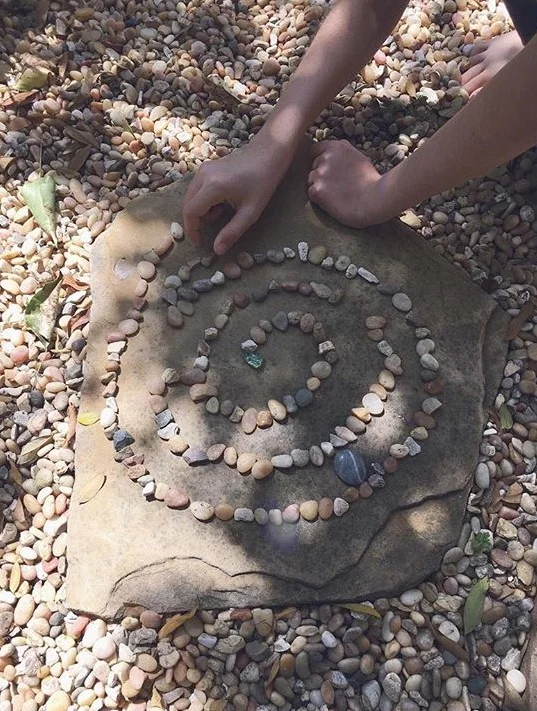
Photo: Cristina Havel
(CH) It’s not quite that simple, of course, for Steiner believed freedom was essential for teachers, and that they should ideally be able to discern what their students need from grade to grade, based on deep and unbiased observation of the children themselves. Freedom was not viewed in a negative light, as irresponsible or out-of-touch. On the contrary, Steiner felt that freedom was the lynch pin of his pedagogy, and as such that which would most effectively serve the developing child.
Central to the idea of freedom in music is the concept of improvisation. Jazz pianist Marcus Roberts, in the documentary “Note by Note: The Making of a Steinway”, says the following about creativity and improvisation:
“Improvisation...does not mean “random”. It means that you can only play something that you know. But you can present it in a context that you didn’t know was going to happen, that’s the beauty of it. So in the same way that you live day to day, and you don’t know exactly what the day’s gonna be, you can only do or say or achieve things that are within your grasp of understanding.”
Steiner is well understood in this context. Freedom in education is not the absence of knowing but the deepest of knowledge, coupled with the sense of responsibility to bring it to life in ourselves and the children we teach.
#3. A pre-packaged curriculum is a good *starting point*.
(RW) While often a great place to start, a packaged curriculum is unlikely to perfectly meet the children in front of you every step of the way. They can create an artificial standard .... a set of "shoulds" and "supposed to's" for each grade that could start to resemble dogma, depending on who the facilitator is and how it is being implemented. Of course, packaged curricula offer benefits too. They provide form to a family just beginning their homeschooling journey, when parents are still determining how their children learn best. They provide structure and predictability, two things which are appealing to many families.

Photo: Cristina Havel
(CH) I have a son that is finishing the 3rd grade. After trying to approach the Old Testament block from several different angles, I found myself questioning whether these studies (an absolute staple, in my mind, of the 3rd grade Waldorf curriculum) were right for my child. The stories I read to him -- which I drew from more than one source -- did not make his eyes light up, a hallmark of connection in education. Instead, perplexed looks were followed by lackluster book work. After giving it a lot of thought, I sent a message to Robyn. The following exchange ensued:
Me: Hey! I'm thinking about skipping Old Testament altogether. I'd like to do something more along the lines of Dharma stories. Will that get me kicked out of Waldorf home school?
RW: Have I ever told you what Steiner said about specific subject matter for specific grades?
Me: NO! What? What did he say??
RW: Nothing concrete, actually.
(RW) We went on to discuss Steiner's original intentions for Waldorf education. I explained that the key is to examine your (story, lesson, activity) options and then choose consciously, knowing what the big picture ideals are for the specific age or grade of your child. Grade 3 -- and what is commonly referred to within Waldorf circles as Middle Childhood -- is about the emerging sense of self, or being. Origin stories at the macro level down to stories related to self-knowledge and self-regulation at the micro level are the guiding stars of this age and grade. It is possible to use Old Testament stories from the Bible, Dharma stories from Buddhism, or stories from a number of other belief systems to achieve the same goal. What is important is that you find stories and images and activities that speak to the child's heart based on their current stage of development. THIS is the cornerstone of Steiner's educational philosophy: everything must awaken the child before you. It’s what makes Waldorf education successful and timeless.
#4. Waldorf homeschooling families are uniquely positioned to carry forward a faithful interpretation of Rudolf Steiner's vision for education.
(CH) Small-scale learning environments are best suited for the kind of exchanges that foster awakening both internally and externally. Creativity and flexibility are hallmarks of Steiner's pedagogy. If an activity isn't engaging a child, find another one that does. The point is not to cycle endlessly through activities with the hope that "something will stick". On the contrary, this approach stems from the belief that children long to engage in the world around them and if he or she isn't doing so, it is the responsibility of the educator to remedy the situation. If a child is not ready to write, if math is the source of frustration, try bringing the material to life in a different form. Scale back the amount of book work a child does, or use an established topic of interest as the foundation for handwriting practice, language arts and recall. Tell more stories around Math — or none at all. If she loves languages, recognize her interest in other cultures and encourage her to express herself to whatever degree she would like, including reading and writing. Never hold children back from their interests because they do not conform to a formalized schedule or curriculum. This is antithetical to Waldorf education. The point is to develop creative and generative habits that make learning a lifelong priority, as opposed to education being an act of conformity.
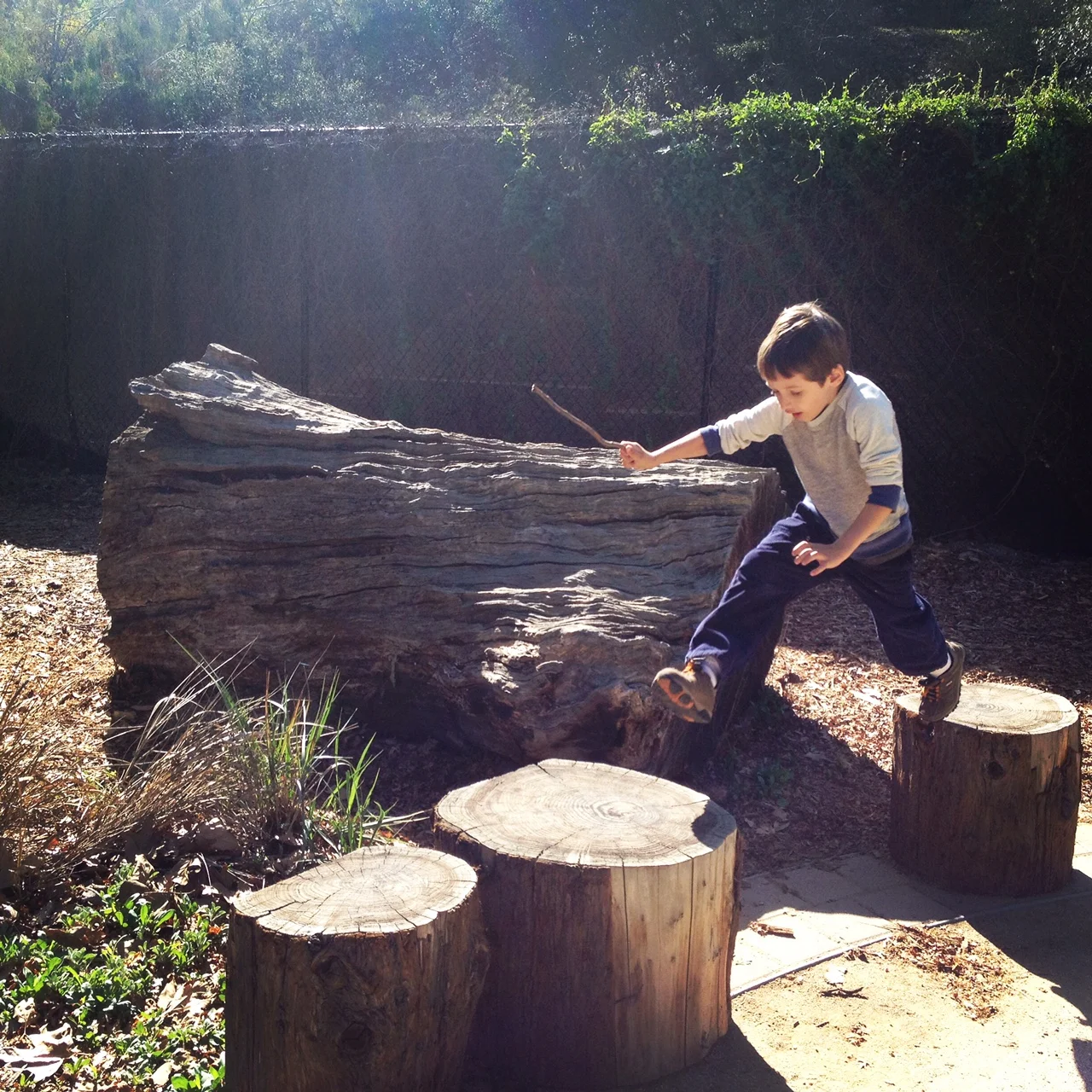
Photo: Cristina Havel
(RW) Now that we're a few years into this journey, we understand deeply that if a particular block or story isn't meeting a child, it should be considered a hint that something needs to shift. We recognize the signs now, when it's time to select a different set of stories, or change our daily routine to make room for something else. Mostly we understand that there are very few should's and have-to's in Waldorf education, and that our children themselves will help us discern what is needed.
(CH) My son is on the young side for 3rd grade. For this reason I chose to wait until the end of the year to do what is typically the block reserved for Old Testament. I sensed that the material would speak to him on a deeper level once he reached the age of 9 (and the 9-year change, perhaps the subject of another essay).
(RW) I am frequently asked what curriculum we use for homeschooling our two children. I answer this question hesitantly and always with the disclaimer that what we use may not be the right program for other children. In truth, we use many resources. We use one program for math because it speaks to one of our children, and something entirely different for the other child. We design many of our own blocks, but also use a few that are pre-packaged because we know the content will cause our kids' eyes to light up. These are decisions we can make now, only after spending a few years learning the intimate details of their unique learning styles. Truth be told, we initially picked a lot of "wrong" things. Finding your curriculum groove can take some time. Be patient, be open to trial and error, borrow things from friends, and take advantage of the free sample lessons that many curriculum companies offer. Trust that your children WILL let you know what works for them and what doesn't.
Related posts on curriculum planning and Steiner's thoughts on freedom:
Bring good chocolate (1st of a 3-part series)
Freedom! (part 2, includes a George Michael-inspired dance break)
It won't fit in a box (part 3)

Cristina Havel lives in Southern California where she and her husband have worked together for nearly 2 decades. They homeschool their son using the Waldorf pedagogy as a guide and believe in the transformative powers of art and nature.

An early career as a park ranger led Waldorfish co-founder, Robyn Beaufoy, to her love of illustrating and education. Trained initially as both a public school and Waldorf teacher, she has been involved in art + education for over 20 years, including homeschooling her two children. Robyn is currently working as the manifestor of the creative vision held by the Waldorfish team. Working out of the premise that life is short (but sweet!), she empowers soul-filled teachers & families to (re)find their JOY in teaching and making art.

Waldorf education won't fit in a box (Part III).
You may have noticed that we don't think a good Waldorf education will fit in a standard sized box.
More importantly, it will not necessarily resemble what our Waldorf friends and neighbors are doing either. We HIGHLY recommend asking yourself a couple of questions before you make any decisions related to your children. Consider:
“Is this toy (or school supply or activity, etc) helping to nurture a spiritual depth and creative thinking within my child?
Do we currently own something that can be used to the same end?
Could we make/do something similar ourselves?”
What is most important?
Brian and I have spent the past couple of years distilling our decades of experiences in classrooms down to the most essential components.
We’ve been looking at what is really important. For example, our online course, Waldorf Art for Beginners, is one product of this distillation process.
While planning it, we asked ourselves:
What art tools and supplies does a family just getting started with Waldorf education really need?
What’s worth spending money on, and what’s not so important?
What are the most basic skills they’ll need to move forward with chalk-drawing, watercolor painting, and using block crayons?
The results of taking the time to reflect on these questions is a course that is JAM-PACKED with value, and yet is still simple. Filled with ease.
Take a minute to reflect on what is most important for your family. What do you really need?
Claim your quiet.
What would more simplicity look like? Find the ease.
What does a balanced weekly rhythm look like for YOUR family? Are you doing more than feels good because you feel like you need to look like other Waldorf-inspired families?
Let's cheer each other on as we move towards creating more simplicity in our days, our weeks!
It's so worth it.


Freedom! (or, Advice for your Waldorf journey, Part II)
My inner pragmatist spends a lot of time contemplating what she can tell you that will be immediately useful to you on this journey.
It's true that yes, this is a journey of many steps, and ultimately there's no rush. But there is also the reality of needing to jump in and get started somewhere, yes?
So, maybe it makes sense to start here?
I am 100% certain that Steiner never said we should go broke giving our children a Waldorf-inspired education and lifestyle. He did say that we should emphasize natural materials, and that teachers should consciously choose open-ended playthings and supplies for the home or classroom that will nourish a young child’s senses. It’s true, sometimes the toys and supplies made from beautiful, natural materials DO cost more, and well, rightfully so. They are often handmade, and they are worth more than their plastic counterparts, plain and simple. This leads me to my next thought.
It isn't always going to look the same.
At no point did Steiner ever say that we must buy all the same things that other Waldorf-inspired families own. Nor did he say that we must teach our children in exactly the same way. In fact, he was pretty clear about that,
“According to each teacher’s individuality, outer forms of teaching may vary enormously in the different classes, and yet the fundamental qualities are retained...in a Waldorf school outer forms do not follow set patterns, so that it is quite possible for one teacher to teach his class of 9 year olds well, while another who takes a completely different line, can be an equally good teacher…and as long as the teacher feels in harmony with the underlying principals, and with the methods employed, he must be given freedom in his work instead of being tied to fixed standards” ~ Rudolf Steiner
Freedom!
What a relief, yes? There is so much freedom to be gained here, when we remember that the expectation was NEVER that we would all "do" Waldorf in exactly the same way.
Inhale.....exhale. And, repeat.

Advice for your Waldorf Journey, Part I.
We love the enthusiasm that comes with new endeavors, planning for a new school year especially.
Since childhood I've had a special place in my heart for school supplies. Anyone else out there that used to play "school" constantly?
High 5's and chest bumps!
As a class teacher, and now home-educator, the dialog as I'm planning for a new year (at least in my head) goes something like “Ok! Here we go! Let’s DO this!”. I like to picture a few high fives, and maybe some chest bumps too, although I’m not certain how Waldorfy those actually are. In any case, at some point in the planning process you, like me, are probably reminded that …. there are a lot of decisions to make.
Curriculum! Toys! Local classes! Art Supplies! Hurray! So many great options available online these days.
So. Many. Options. Oh boy.
Why did I buy this?
No doubt at one point or another, you have found yourself pondering just HOW one is supposed to weed through all the available information out there? Maybe you spent just a little more time than you meant to looking at all the gorgeous toys for sale online? Maybe you've spent just a little more money than you meant to? Or maybe a lot? Does anyone else still have a few things collecting dust from the early homeschooling days that were purchased in a flurry of enthusiasm, but then never actually got used? In my case, a spectacularly expensive, gorgeously handmade wooden puzzle comes to mind.
See? It’s ok. You’re not the only one.
Take your time. Bring good chocolate.
You are probably already somewhat familiar with Rudolf Steiner. No doubt you are aware that he had a lot to say about Waldorf education. Like, A LOT, a lot. It seems to me that no matter where you are in this journey, there is plenty of time to work your way through his lectures, slowly and thoughtfully. My advice would be to keep good chocolate nearby, and pace yourself.
Remember, this is a journey :) Take time to savor even (especially) the tiny moments!
More soon,
~Robyn

*Read Part II :: Freedom!
New here? We've got free goodies for you!
Looking for something?

Welcome to Waldorfish! We started this adventure in 2012 out of a desire to make Waldorf training more accessible to class teachers in remote locations and to homeschooling families everywhere! Read more, click here.



WE WON! Our Weekly Art courses were voted “best interactive art program.” Learn more about the award, here.


Click here for a full list of schools we work with.
A few of our most popular blog posts:

Who are our courses for?

Starting Waldorf First Grade

4 Things to Know Before Planning Your Homeschool Year

In Praise of Balance: A Healthy Festival Life

Science in Waldorf Middle School: Starting Something New!