
Waldorfish Blog

Responsible Innovation - Waldorf at 100 (Growing Old or Growing Wise?)
We recently participated in a local meeting with members of our regional Pedagogical Section Council, Waldorf class teachers, and administrators.
The topic of the evening was Waldorf at 100 - Growing Old or Growing Wiser?
Many schools and teachers (and Waldorf related organizations) are still not sure how to include Waldorf homeschoolers in these larger conversations - we always appreciate being invited to the table. We consider one important part of our work to be bridging this gap.
How do we help homeschooling families gain access to training resources, and, how do we help local Waldorf schools find ways to include homeschoolers in their offerings?

Art credit: Waldorfish ©2019
The evening’s conversation was rich. We touched on questions such as:
What does it mean for the future of Waldorf education that the students of today aren’t the students of a decade ago, let alone of 100 years ago?
How do we meet the children of today and stay true to the underlying essence of Waldorf education?
Clearly the answers require more than one night of discussion. However, it’s more important than ever for those of us who love Waldorf education to talk openly about these (sometimes uncomfortable) questions.
There is a real danger of things becoming stagnant - becoming “things we do in Waldorf because that’s what we’ve always done.” One part of the discussion that we personally resonated with was this question:
What happens to our thinking if we change Waldorf from a noun to a verb?
Instead of saying “we do Waldorf” or “we use the Waldorf method” how different does it start to feel (and look) if we instead say “this is how we Waldorf” or asking the question “how does your family Waldorf?” Suddenly it shifts from being a stagnant Thing, to being alive and breathing! Always changing based on the child in front of us, which was Steiner's goal all along.
Freedom in Anthroposophy means acting out of love - Acting from a place of deeply knowing the child/ren in front of you. As homeschoolers, this intimate understanding of our children allows us to take what we understand to be the essence of a particular grade or block, and then INNOVATE responsibly. Achieving the same goals, but with entirely different, child-driven means than another Waldorf family might use.
*We write more about this idea here.

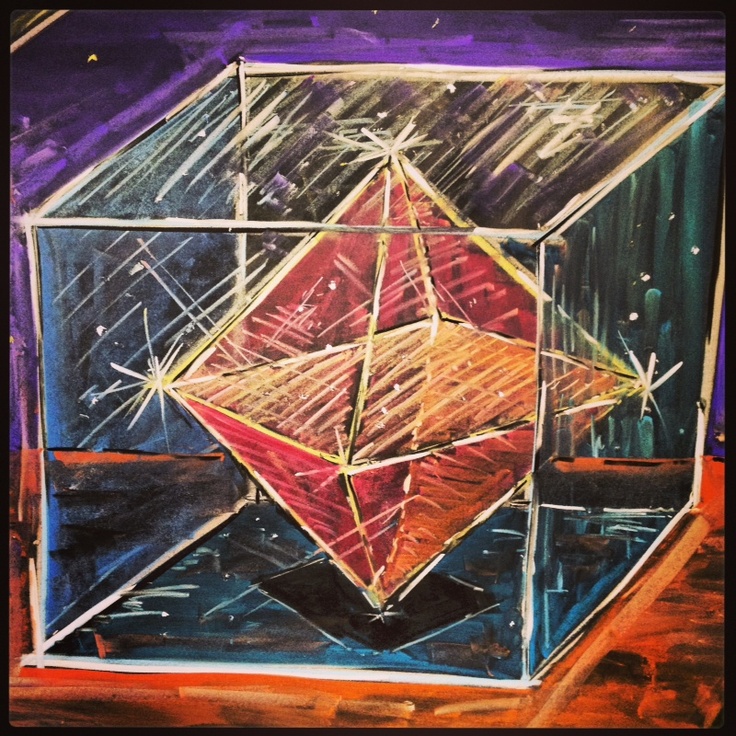
Why Waldorf Chalk Drawing?
Chalk art in the Waldorf curriculum is a medium for extending the storytelling that is happening the classroom. It is a medium for enlivening the curriculum through pictures.
6 ways chalk drawings enliven the Waldorf curriculum:

Image: ©Waldorfish, all rights reserved
In Waldorf Education, it is always through storytelling that the images arrive. Surrounded by story, the children live into their imaginations and each will create mental pictures unique (and most meaningful) to them. Through the artistic activities that follow the review portion of a lesson, the children are able to live into the story experience again. Here they place their own feelings on it. This allows a true and unique connection to the content of the lesson.
“Ordinary everyday life can be portrayed in meaningful pictures and images. The teacher must fill with inner conviction and warmth the pictures he/she presents to the souls of the children. They can derive strength for the whole of their lives from lessons that stream from heart to heart rather than head to head.”
1.Nourishing the Senses
Chalkboard drawings are intentionally beautiful and calming. They offer a soft, sensory-rich visual experience that supports the development of aesthetic awareness and helps create a nurturing classroom or homeschool environment.
2.Engaging the Imagination
Rather than relying on abstract symbols or rote facts, chalk drawings speak in images, mirroring how young children naturally think and learn. This supports deep imaginative engagement, especially in the early grades.

Beautiful and temporary, chalk drawings support learning in multiple ways!
3.Supporting the Lesson’s Theme
Each drawing visually anchors the main lesson content - whether it’s a fable, a math story, or a historical scene. The image becomes a living memory picture that children carry with them, making abstract content more memorable and meaningful.
4.Modeling Artistic Process
Children observe that the teacher created the drawing by hand. This models care, creativity, and intention - and it can inspire children to take joy and pride in their own artistic work.
5.Creating Rhythm and Atmosphere
The chalkboard drawing sets the tone for a lesson block or season, helping children orient themselves rhythmically in time. It quietly says, “We’re entering this story now,” or “This is where we are in the year.”
6.Inviting Quiet Reflection
Because the drawings are temporary and made with care, they invite a sense of reverence. Children often return to the blackboard, sitting in quiet contemplation, taking in the image again and again. It becomes a subtle, sacred part of the learning space.
Waldorf Geometry :: Math in the middle grades
Ge•om•e•try | noun
Origin:
Middle English- via Old French from Latin “geometria”, from Greek, gē ‘earth’+ metria ‘measurement’.
Earth Measurement. This sounds like something entirely different from most of our own experiences with Geometry in school, yes?
Over thousands of years, geometry has become a standard part of math class and yet it sits in the modern math curriculum isolated from its true origin.
Ancient scholars, the first geometers, understood geometry to be the act of measuring the complete human experience of living on Earth. They set out on this study in order to understand the design behind everything they were experiencing in the physical world. In ancient Greece, the latin word “Mathematikos” meant “desire to learn” and the latin word “mathema” meant “knowledge/study.” In other words, the measurement and study of the physical world in order to understand the human experience on earth and how everything around us is created.
“Inspiration is needed in Geometry, just as much as in poetry.”
Rudolf Steiner and Waldorf education place the utmost importance on Geometry in the Waldorf curriculum, and have created a different path for students than the typical math curriculum offers.
In truth, in Waldorf schools children begin their study of “earth measurement” with their first lesson on the first day of first grade - by drawing straight lines and curved lines. Straight lines and curved lines are nature’s design tools and they will become the essential building blocks of writing and drawing.
Printing, cursive, numbers, and music notation are constructed with lines and arcs. As the students progress through the early grades, patterns of lines and arcs are part of almost every lesson. Where there are patterns, there is geometry. Clapping games establish rhythm and order. Eurythmy and dance involve expression by way of patterns in movement. Students sit in rows, circle up, and line up.

Waldorf geometry curriculum evolves as the child grows through grades 5-8!
Music and geometry go hand in hand as well. Rhythm, intervals, and patterns are the geometric design of music and poetry. As the students learn more about music, they can observe how different geometric patterns in music have unique qualities that induce a particular mood or feeling. Major chords sound “happy” and minor chords sound “sad.” The interval between a root note and the 5th sounds and feels much different than the interval between the root note and the seventh. Music is a great example of geometry as the tool behind the expression through sound. The idea of math as a universal language actually goes much deeper than numbers and calculations on paper being the same everywhere in the world. Ideally, a child’s education in the early grades is full of geometry.
Early experiences with Waldorf Geometry
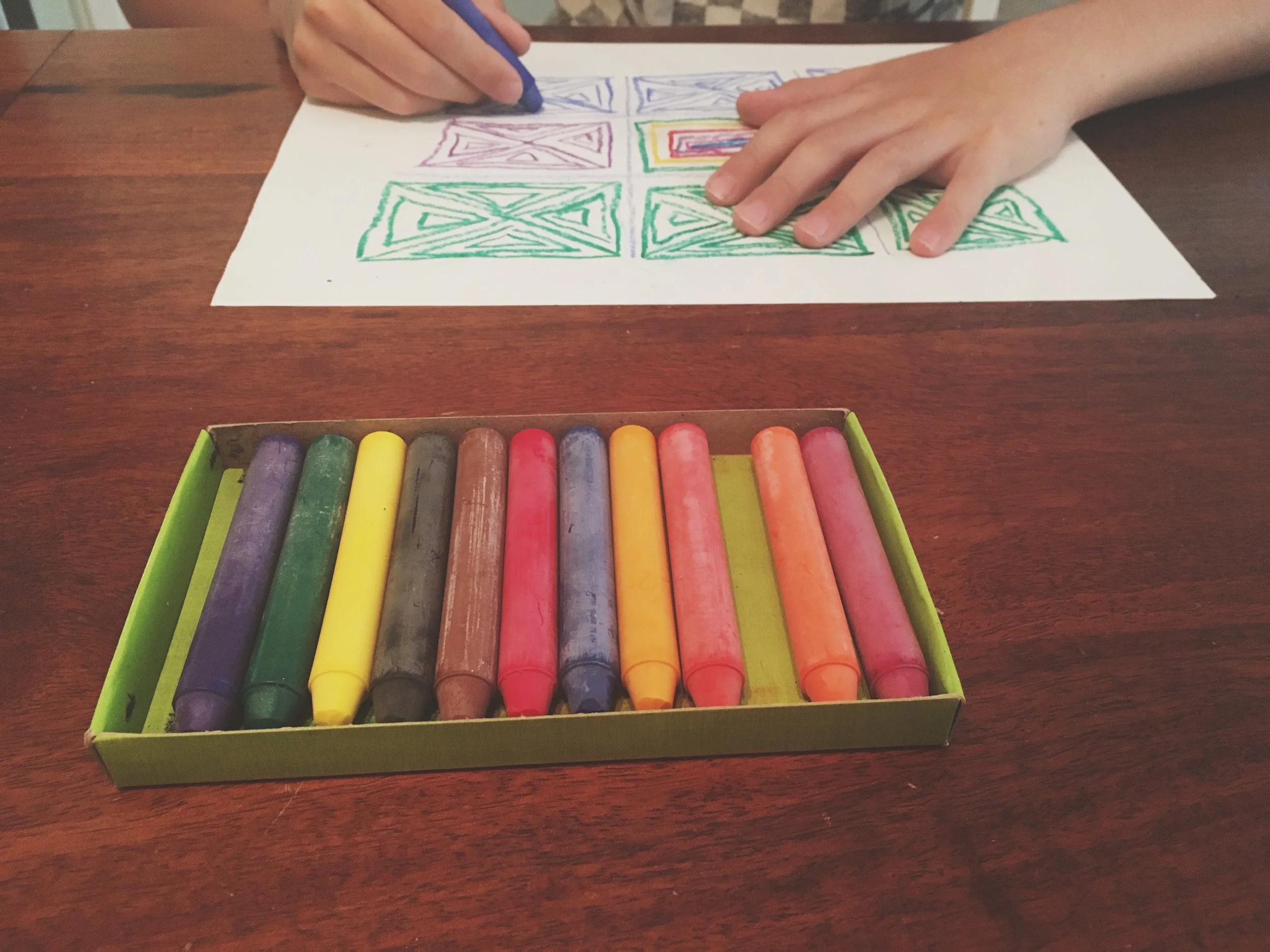
In grades one through four, there is no formal geometry class. Geometry comes by way of everyday school life (music, writing, movement, etc) and Form Drawing class. Forms are patterns of straight and curved lines that become more complex as the children advance through the grades. Simple repeating forms in grades one and two help with the development of coordination for printing and cursive writing. More complex forms in grades three and four help to develop a sense of spatial awareness and symmetry. In the fourth grade, students practice forms that are also symbols from different cultures (i.e. Nordic symbols) and learn how to tie knots - a three dimensional version of the form drawings.
Try A Free Geometry Lesson
Moving into the middle grades
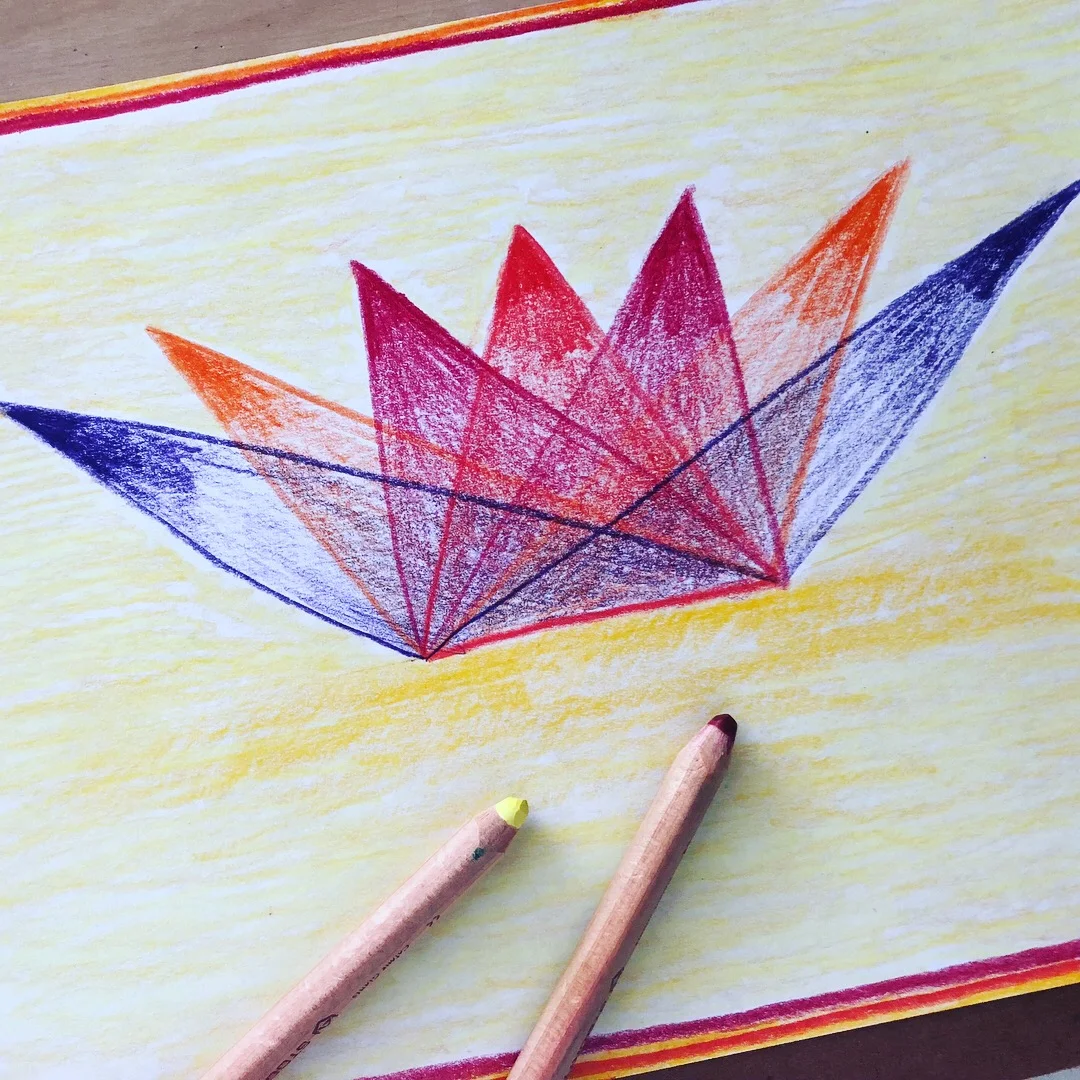
An example of a fifth grade freehand form with colored pencil.
Grade Five - Freehand Waldorf Geometry
Grade five is a special, transitional year, symbolic of the peek of childhood. The students study great civilizations of the past, including the “Golden Age” of Greece. The students themselves are in the golden age of childhood.
They are at the peak of their development in their child bodies and have gained as much mastery of their physical bodies as they are going to before heading into puberty. Fifth grade also marks the transition from form drawing to geometry. The goal of grade five “freehand geometry” is to lock the archetypal geometric forms into the body by drawing them without the use of tools. Classes also set out to find geometric forms in the world outside of their classrooms.
(Learn more about fifth grade geometry here!)

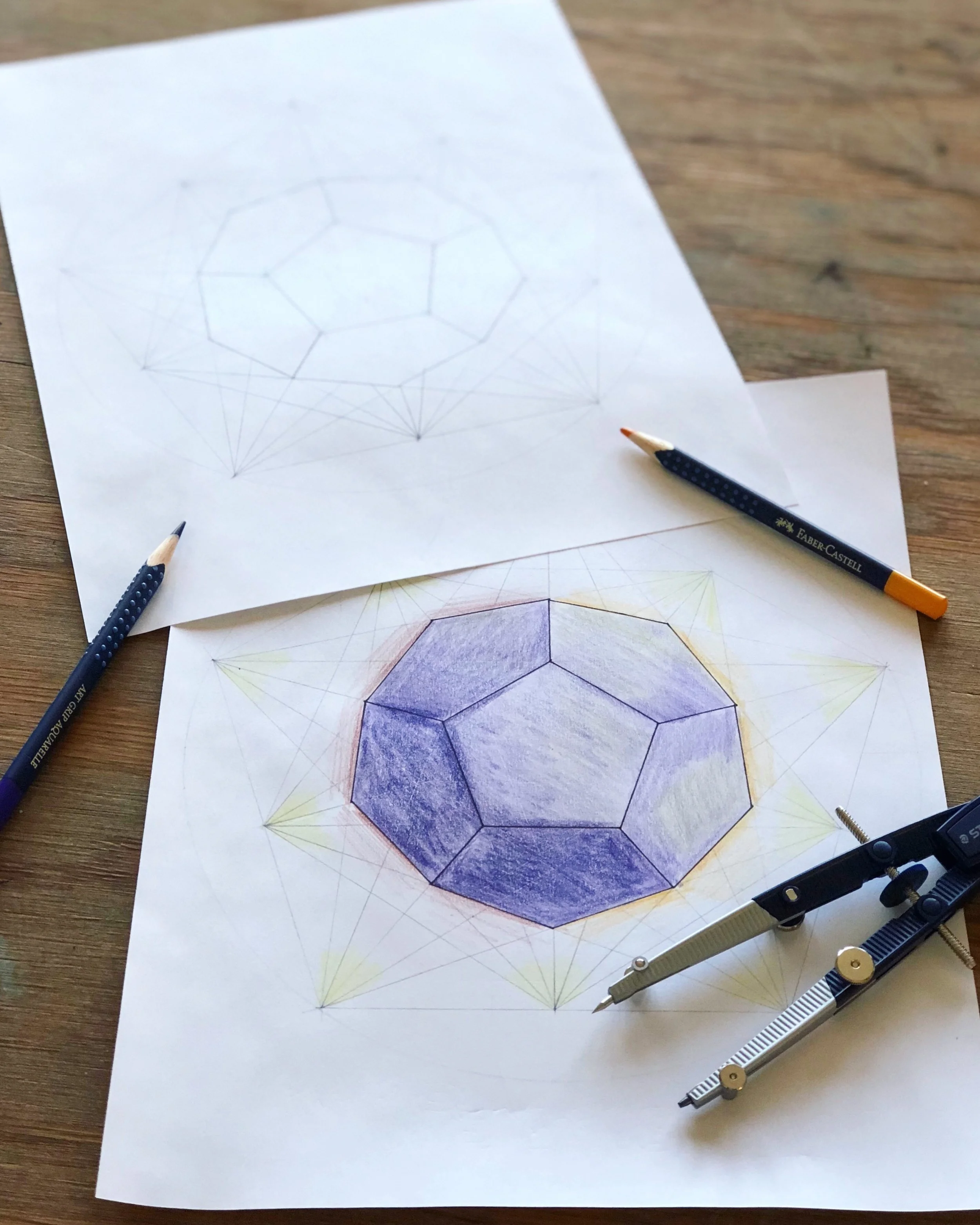
This form begins with twelve points on a circle- all constructed with a compass and straightedge!
Grade Six - Geometric drawing tools
With the arrival of adolescence, grade six becomes a year of re-birth both physically and in the curriculum. In geometry, we need to go all the way back to the beginning with straight lines and curved lines. This time, however, the children learn to construct lines and arcs with geometric drawing tools. A straightedge (ruler) constructs a line and a compass constructs an arc. The students will now begin a second journey through geometry that mirrors grades 1-5. The three-fold approach to learning (doing, feeling, thinking) is beautifully displayed in the geometry curriculum. In grade 6, the focus is on the physical doing aspect of learning. Learning to use tools to construct and measure is a physical task and it challenges the students as they begin to develop new physical bodies. The focus on “doing” in grade six mirrors the 1st and 2nd grade curriculum where an understanding of lines, arcs, and patterns comes from drawing forms with both the hands and feet, walking patterns, and rhythmic clapping games, etc.
(Learn more about sixth grade geometry here!)

Seventh grade geometry curriculum weaves into history, art, mathematics, human anatomy, and more!
Grade Seven - Inward and outward exploration
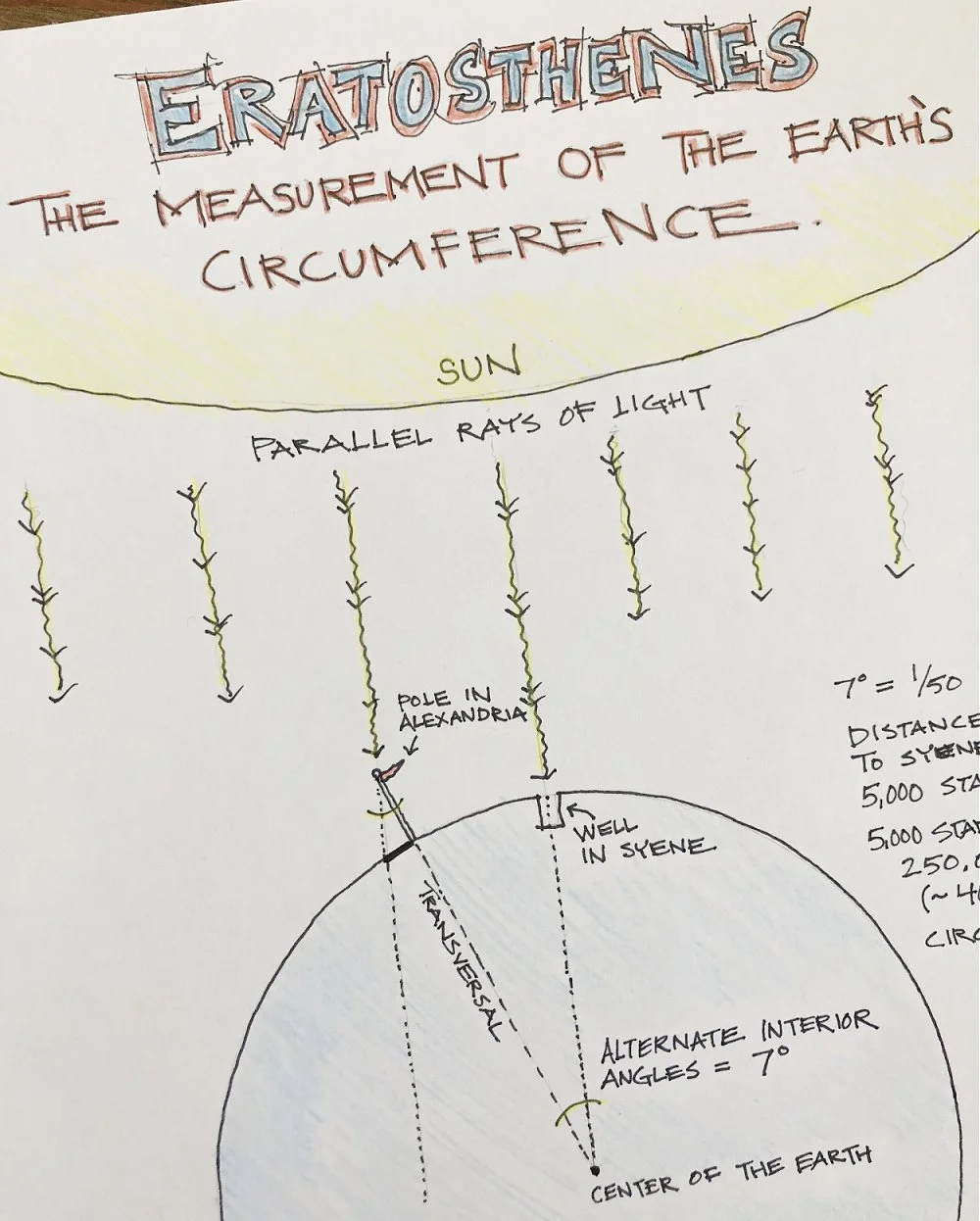
Grade Seven in Waldorf schools is generally thought of as “the year of exploration.” A seventh grader, now fully immersed in adolescence, is ready to outwardly explore the physical world and inwardly begin an exploration of the question “who am I?” The feeling life of the seventh grader takes center stage in the curriculum as we use geometry to understand the human body and the natural world we live in. Da Vinci’s Vitruvian Man and the work of Fibonacci give us clues about the mathematical formula behind all that is living on our planet. It’s an incredible moment when students discover that the same ratios and patterns found in pentagrams, roses, apples, insects, hurricanes, and the milky way galaxy, are also found in the structure of our own bodies. The observational studies of nature performed by the likes of Plato, Pythagoras, Eratosthenes, Fibonacci, and Leonardo Da Vinci are mirrored by the observational powers of the seventh grader (they see everything, yes?).
Grade Eight - Digging deeper
In grade eight, the geometry curriculum enters the thinking realm. Armed with knowledge about how to use the tools of the geometer and the experience of searching for one’s self both in nature and the human body, the students are ready to become mathematicians, in the ancient Greek spirit of the mathematician being one who studies all things.

Eighth grade geometry works with 3D forms- both on paper and with hands-on modeling!
We can now venture into the world of abstract thought and theory. The students will grapple with how to measure and study the three dimensional world on the two dimensional surface of the paper. By the 8th grade, it is the hope that students can see that there is always more than meets the eye, and they now have the physical and intellectual tools to dig deeper through observation, making precise measurements and calculations, and articulately describing what they see. They are mathematicians, scientists, and philosophers training to see things on multiple levels.
On one level, numbers define quantities and help us with measurements and calculations. On another level, each number has its own unique set of qualities. Like the circle, the number one represents wholeness and the beginning. Plato called the circle “the mother of all shapes.” When the whole is cut into two, polarities are created (up, down, left, right, life, death, hot cold, positive, negative, male, female, etc.). The number three has a very balanced quality (tripods, tricycles, triangles). This way of understanding the quality of numbers is similar to the phenomenological way of teaching science. When a botany student imagines a plant, the goal of the teacher is to get the child to have a fluid mental picture that includes the entire life cycle of the plant, as opposed to just a fixed image of the plant in a particular moment in time.
With geometry, the goal for the 8th grader is to help them think of numbers not just as quantities but as parts of patterns in nature with their own qualities that shape the world around us and our experience of the world.
“Let no one ignorant of geometry come under this roof.”
•We created a 3 page Qualities of Numbers reference guide for you! Tell us where to send yours in the form below. It’s free!
•We offer a comprehensive Geometry curriculum, covering the grades 5-8.
Related content:




Waldorf Grade One Painting : Out of the Color
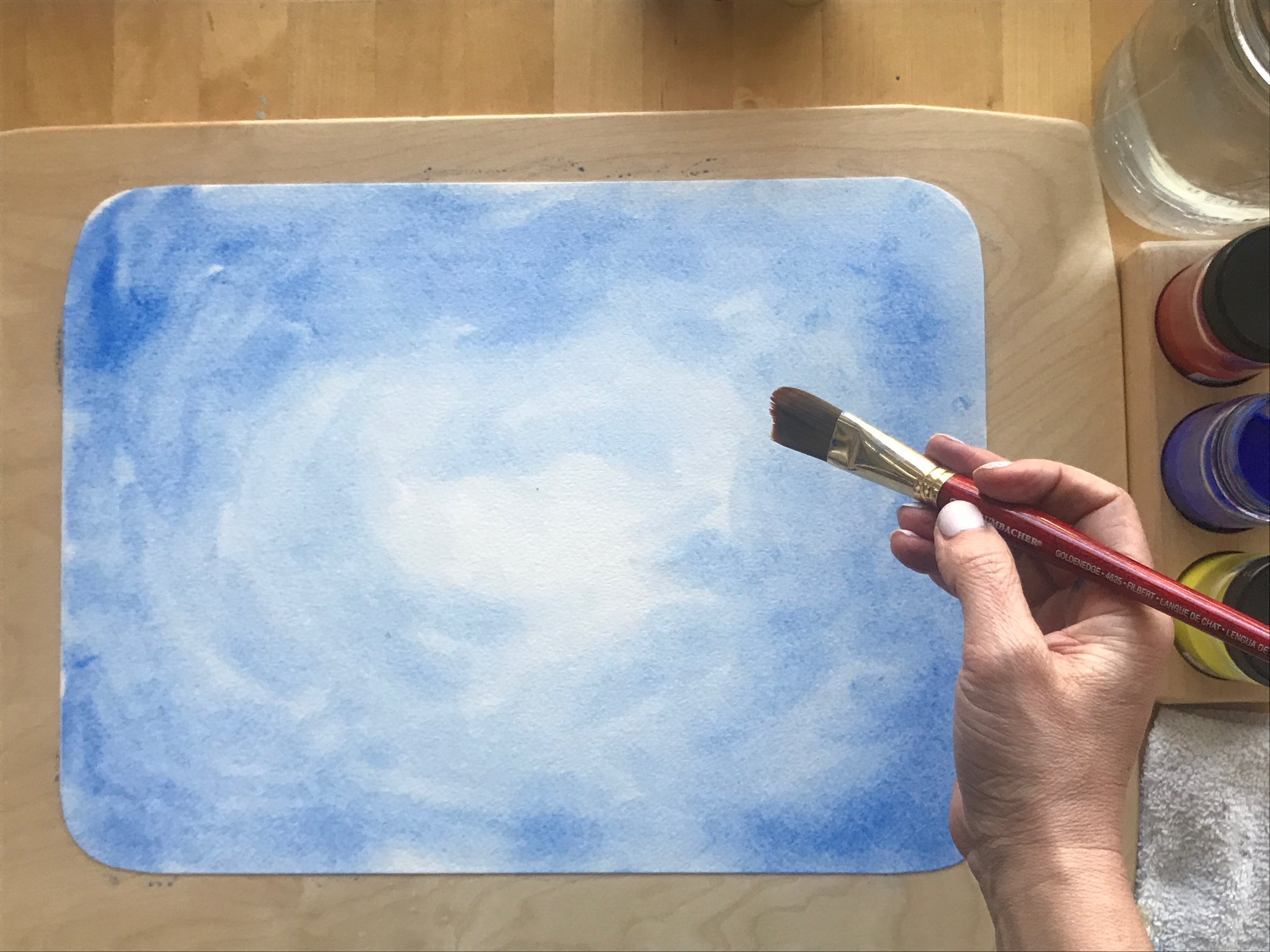
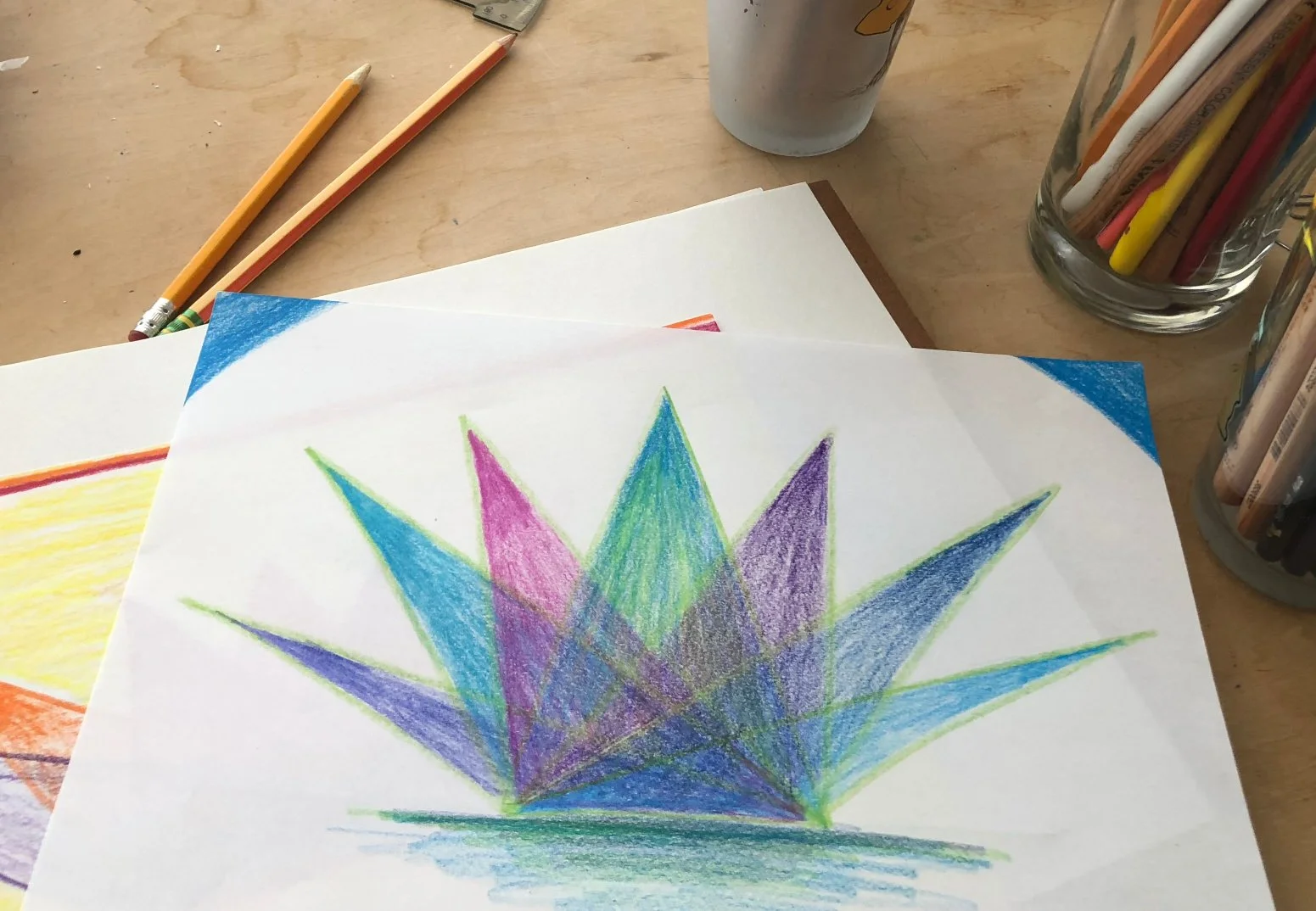
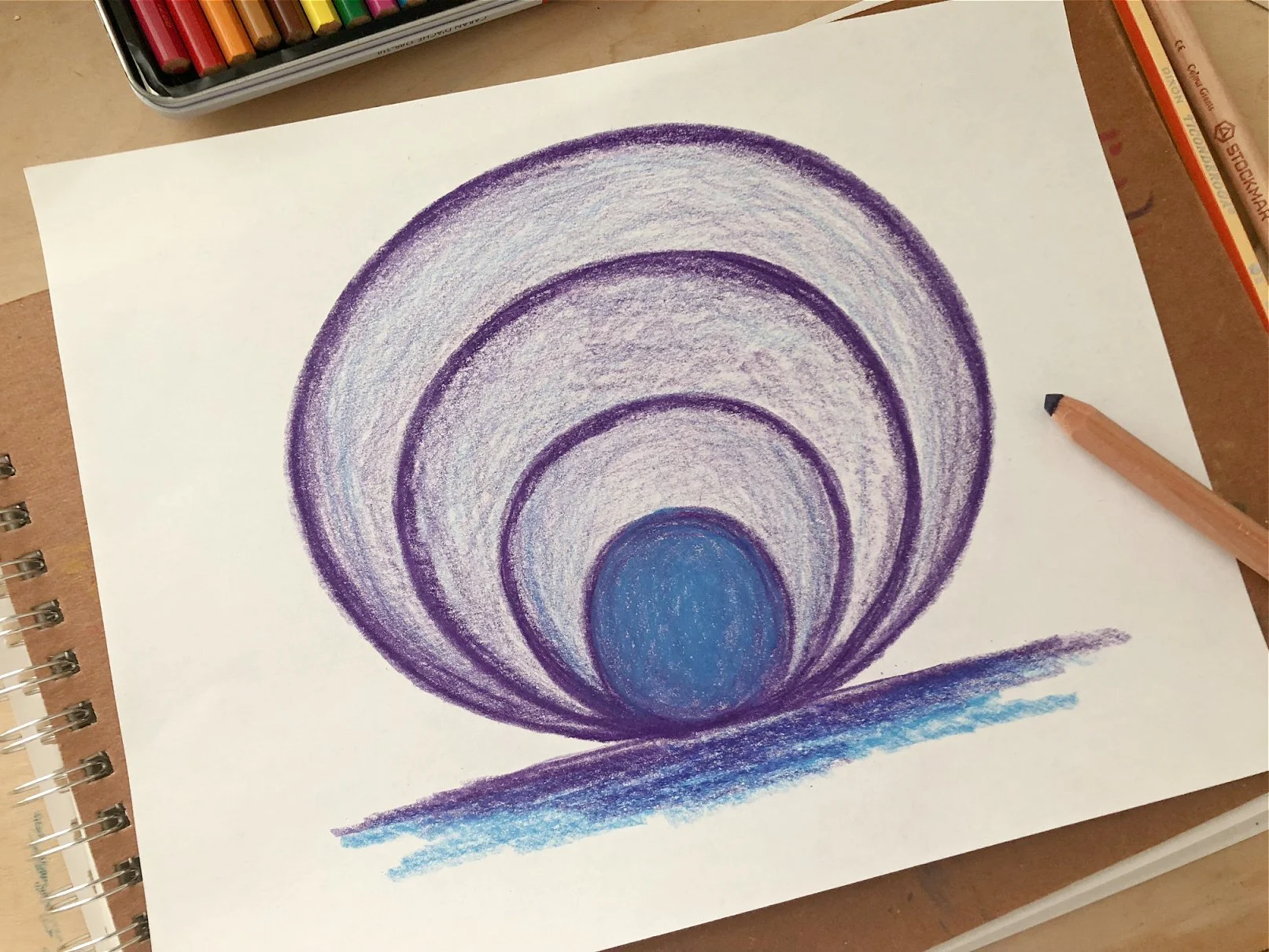
Connecting with the color blue in a simple, yet meaningful painting activity.
Children in Waldorf schools begin painting with liquid watercolors on damp paper in preschool and kindergarten.
The use of this medium continues into grade one, however at this point there is a shift in the way the weekly painting lesson is presented.
The 6-7 year old child learns through experiences. They’ve left kindergarten and are transitioning slowly into more structured learning.
In his Colour Lectures, Rudolf Steiner talks about the importance for each artist (student) to know each of the colors, to understand them individually, and also how they interact with each other. He specifically says that we need to experience the colors in our feeling life in order to understand them. Once we understand them in their trueness, then we can really use them.
“Let us try to sink ourselves completely into what we receive through colour from the rich and varied world around us. We must feel what is in colour if we wish to penetrate into its true nature, bringing insight into our feelings. We must question our feelings about what is living in the colour which surrounds us. ”

Painting in primary colors is a wonderful place to begin for the growing first grader.
Painting lessons create opportunities for students to develop an intimate understanding of the colors through their imaginations, movement, and imitation.
When the teacher brings the lessons in partnership with short verses and stories (which help to personify the colors), the children live into each experience fully.
“Painting lessons also provide the teacher with a further opportunity for getting to know the children’s soul constitution in even more detail. Different temperaments and constitutions reveal themselves through what and how the children paint.”

Bring Waldorf watercolor painting curriculum into your homeschool routine today!
In grade one the lessons are simple color experiences guided by the teacher. It is purely artistic work - there is no expectation of the children creating a specific form or picture of something. These experiences are ordered in such a way that allows the children to begin to understand the dynamics of the colors by themselves, and in relation to each other.
The painting lessons begin very simply, with yellow by itself. Then the children will experience only blue. Eventually the two, yellow and blue, will be brought together on the page and the children will experience them together. Next, red is introduced by itself. Eventually red and yellow will be presented together, and then red and blue. Each of these experiences offers the children something new to live into, all the while expanding their understanding of the nature of each of the colors. (Of course, a natural result of bringing 2 primary colors together in a painting lesson is the birthing of the secondary colors - orange, green and purple. A wonderful moment in any painting lesson!)
As the year progresses, the teacher guides the children as they experience all 3 colors on the page together, culminating towards the end of the year with the children learning to create a color wheel. The color wheel becomes the foundation of many future paintings the children will create in each progressing grade.
*Looking for support painting with your child? We made you something:
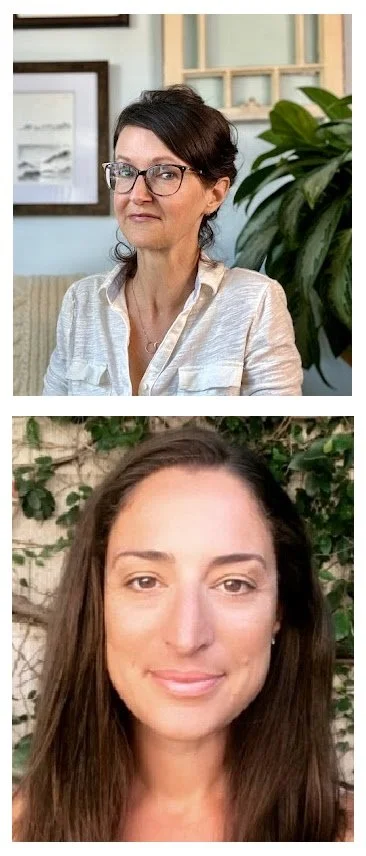
About the Authors
Robyn Beaufoy is Waldorfish’s CEO, and also a course instructor for Simple Season (coming soon!), Waldorf Art for Beginners, and Weekly Art Foundations. You’ll find her intuitive touches and influences throughout everything Waldorfish offers! Robyn has been in the world of education for over 25 years, with an MA in Education and a certification in Waldorf teaching - she also homeschooled both of her children for some of that time. In 2012 Robyn co-founded Waldorfish.com, creating it with the vision of making Waldorf inspired-art and pedagogy more accessible, joyful, and doable for homeschoolers all over the world.
Amanda Ziadeh Mercer is a dynamic Waldorf Teacher, and is the creator of our Painting courses for the grades 1-3. She has had the pleasure of working with children in varying stages of development, ranging from infants in Parent-Child programs to the more mature students of the eighth grade. This wide range of experiences has gifted her a full picture of the developmental stages of childhood.
Looking for something?
Welcome to Waldorfish! We started this adventure in 2012 out of a desire to make Waldorf training more accessible to class teachers in remote locations and to homeschooling families everywhere! Read more, click here.


WE WON! Our Weekly Art courses were voted “best interactive art program.” Learn more about the award, here.


Click here for a full list of schools we work with.
A few of our most popular blog posts:

Who are our courses for?

Starting Waldorf First Grade
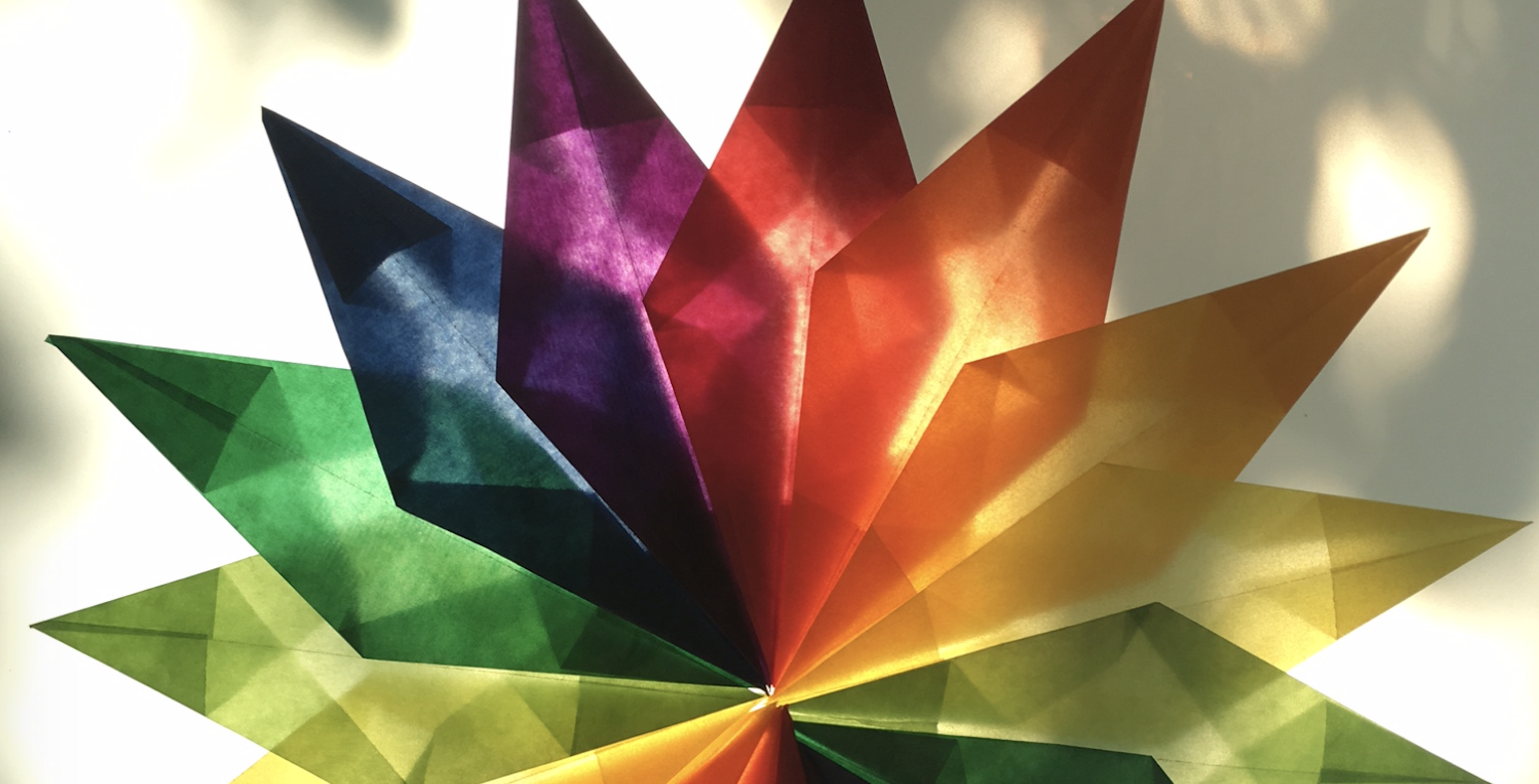
4 Things to Know Before Planning Your Homeschool Year

In Praise of Balance: A Healthy Festival Life
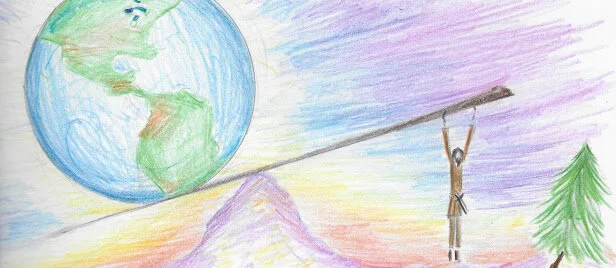
Science in Waldorf Middle School: Starting Something New!