
Waldorfish Blog
Go Back to the Future {Ideas for Healthy Happy Teens #3}

The Wolfe, Hackett & Cohen families jamming in the Spring. All three families are "guerrilla schoolers:" sometimes our kids are homeschooling, unschooling, in public school, and sometimes in Waldorf or other private schools. It's all about what works for each child in each family, any given year. What's consistent is engaged, loving community and the excitement for what is, what's been done, and what's next.
As a grownup unschooler, I hold the teenager years as an epic era for inhaling life. It's a jaded time, as we've developed a distinguishing palate for what we eat with our eyes, our ears and our hearts. Our soul topography is making itself known, and yet, we become monumentally social, and impressionable. Our gesture reflects this dance between what is ours and what it not. Our clothes are astral! We are just. So. Ready.
For all of it.
So I melt when kids, just as likely to conceal, as much as to reveal, share their interests. And I'm crazily grateful to those who make spaces for teens to engage. Between 12-and-18, they have "things" they are filing away, for a time when they have more resources of their own. Concepts, idols, and curiosities they love in small ways, that can become lifelong passions. Interests that keep them up at night, filling their chests and lengthening their spines. And, I remember what it was like to start unschooling, to want to try everything, and needing a little bit of structure to help me along. While some needs went unmet, I was given a privileged share of conscious, creative, communal support. This little series is about that.
I'm coming at it from a funny angle: I'm noticing healthy, happy, modern teenagers. And asking:
What's behind it? What kind of structures, practices, questions, attitudes, rhythms, and tangible love helped them along? How did life come knocking, and what created resilience, tenacity, perseverance, and work ethic? Where did they get the will to be so extraordinary? Where is all this gentle, unformed confidence coming from, and how is it that they are each, still, gorgeously themselves? What mantle of protection was provided to keep their innate qualities intact?
The answers are hard to pinpoint, they're complex, they are specific to each family. It's an ongoing inquiry that I am selfishly using to support my own journey as a parent. I'm hoping you will engage in this inquiry with us, sharing examples of teens, practices, concerns, struggles, discoveries and inquiries that you're living with. What do you attribute to what? We'll riff on them, and send them back out.
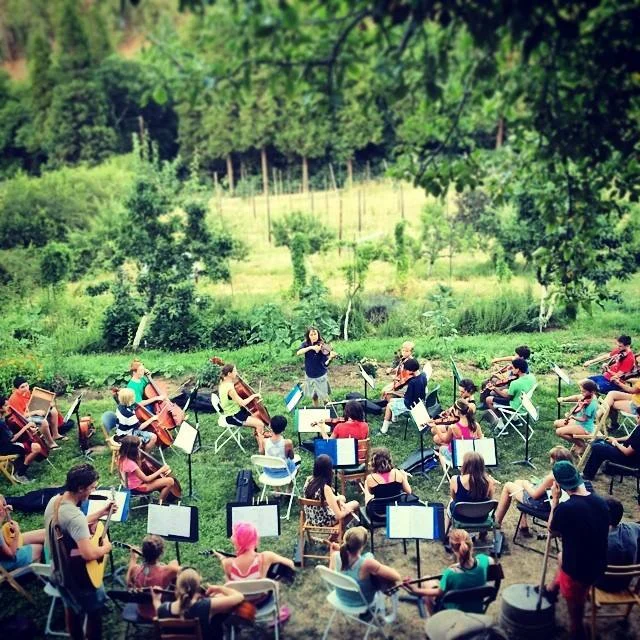
photo by Yale Creek Crew. "One of the many things we do here at Yale Creek Brewfarm is host a #farm camp. Many of our campers are talented #musicians and every night put on a mini#symphony performance in the yard."
Here's an inspired example, at Yale Creek Brewery. This photo brought David and I to tears, seeing not only our son, but all of these young people that we know and love, doing their thing, away from us, and still very much experiencing a sense of home. Every single one asked to attend. Two of the staff are voluntarily playing their own instruments. That "bass drum?" I watched a 6th-grader invent it a few years ago. This is truly an intergenerational, community experience. The farm is owned by teacher Cindy Toy and her family, run by her teen and adult children (who have also danced with public, home + Waldorf schooling), and their friends. So our tweens and teens have a continuum of "family" thru the break, complete with farm chores {processing chickens, even!} and beautiful meals. The intergenerational vibe creates true roots, a village of wisdom and experience that spans different ages, skill sets and temperaments. The camp was made financially accessible, and the students are from diverse socio-economic backgrounds. Off the top of my head, there were participants of Japanese, French, Filipino, East Indian, Norwegian, British, Mexican, Irish, Native, African, German, Haitian, Spanish, and Croatian descent. They co-hosted two farm camps this summer, "Strings" with Davis Waldorf School's 20-year+ instructor, Angela Kost, & "Basketball" with our own Waldorfish Brian Wolfe.
Now, that's a dream example, very literally, because the creating of that camp was their family dream. It's a beautiful example of what comes from co-creative collaboration.
I grew up with this same sense of expansive possibility from the Asian-American artists & activists in San Francisco. So what is your dream for the young adults in your life? What small actions can you take toward that dream? Everyone else will hold their dream, and do their part. And the teenagers, of course, will do their thing. We can count on that.
{in celebration of all that you already do}
Maya
p.s. ~ Again, I'm hoping you will engage in this inquiry with us, sharing examples of teens, practices, concerns, struggles, discoveries and inquiries that you're living with. What do you attribute to what? Answer in the comments below, or send us a note if there's a teen, parent, or teacher you'd like us to interview. xx
String Stories
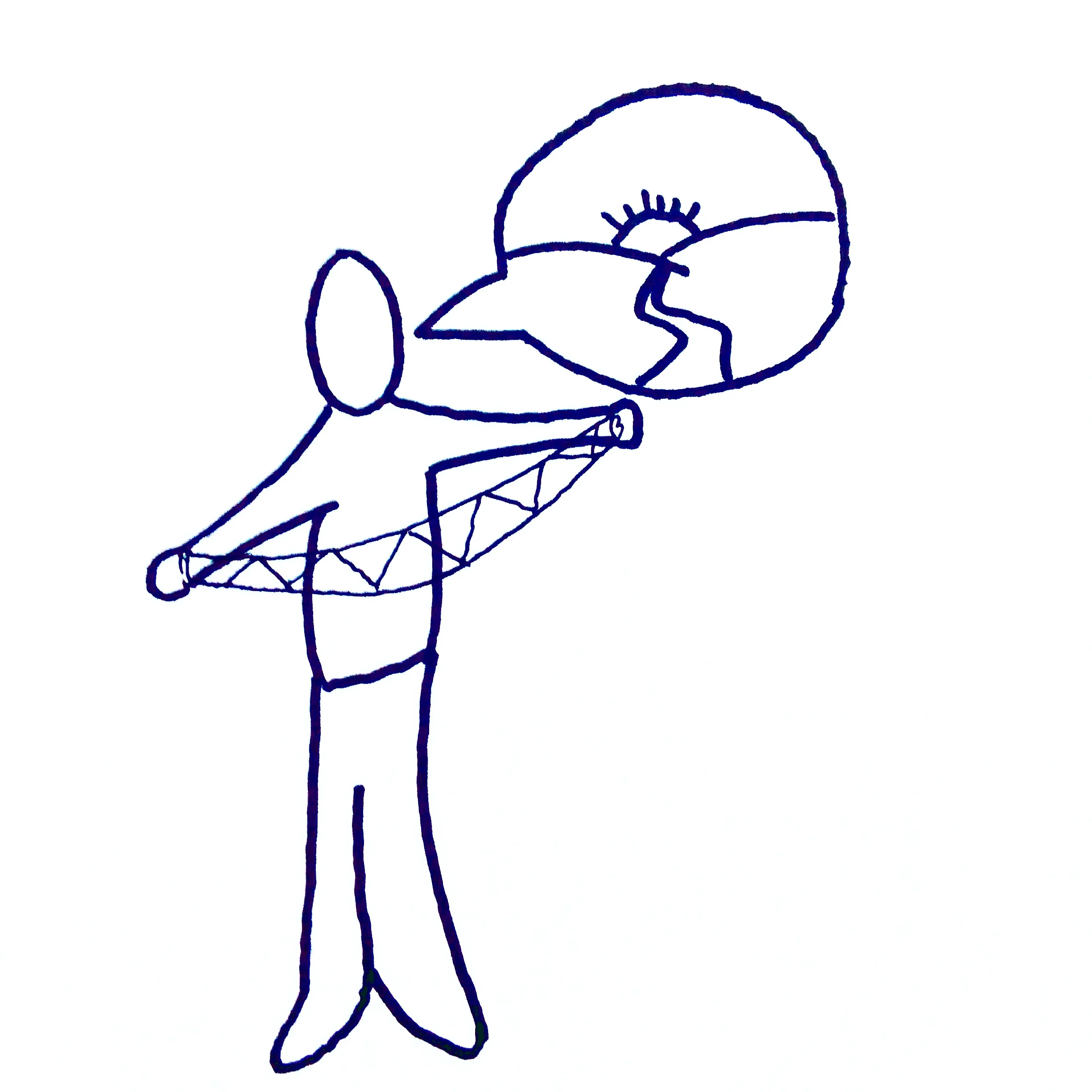
“A story is like a line, a wire between the teller and the listener. Both people hold each end of it, and the story walks on that wire between them.”
-Donald Davis, Author/Storyteller
Like many of you, I played string games games when I was a child. I have memories of sitting on our back porch steps, attempting to master cat's cradle, jacob's ladder and many others - all with varying degrees of success. A few years ago I was delighted to find a string game "kit" of sorts, for sale locally. I purchased it for my children, and then set them free with the book of illustrated instructions and some nylon chord. It held their interest for a little while, but then the string ended up lost, or under the couch.
During my excavations into storytelling this summer, I discovered something about those string games of my childhood. Unbeknownst to me, this pastime is part of a tradition much deeper and more rich than simply being amusing games. String games have ancient origins ...
"String figures and string stories have been around for almost as long as people have been on earth. It is impossible to name a continent which does not have its own set of figures representing the people, objects and animals found there. The Navajo used string figures as a way to encourage the memorization needed for the complicated patterns involved in weaving and sand painting. Some cultures used figures as astronomical devices. Other cultures used them in religious ceremonies."
-Sally Crandall, Telling Stories with String
This discovery led me down a deep rabbit hole on YouTube, as I looked for examples.
Here, Sally Crandall uses string to tell an Inuit story, Totanguak. In it, one of the characters uses ancient string figures to try and collect the soul of a young boy.
In another example, storyteller Anne Glover works with a group of teachers who are learning to tell stories with string.
I was also completely enchanted by my discovery of Rodrigo Libanio Christo, a masterful Brazilian singing storyteller!
It was hard for me not to be inspired (and honestly, to feel a tad inadequate) after watching these masters at work. More than anything, however, I became even more dedicated to honing my own storytelling skills. My hope is that it has the same effect on you.
-Robyn
PS. Jospeh D'Antoni has a series of great videos in which he gives instructions for making many string figures to use in stories. (including a string figure SNEEZE, which I may or may not have watched several times simply because it made me laugh).
More of our storytelling resources:
• Getting Started With Storytelling
• What Are Pedagogical Stories?
• Why Storytelling?
On Storytellling. And an Audio Story for my Ancestral Seas.
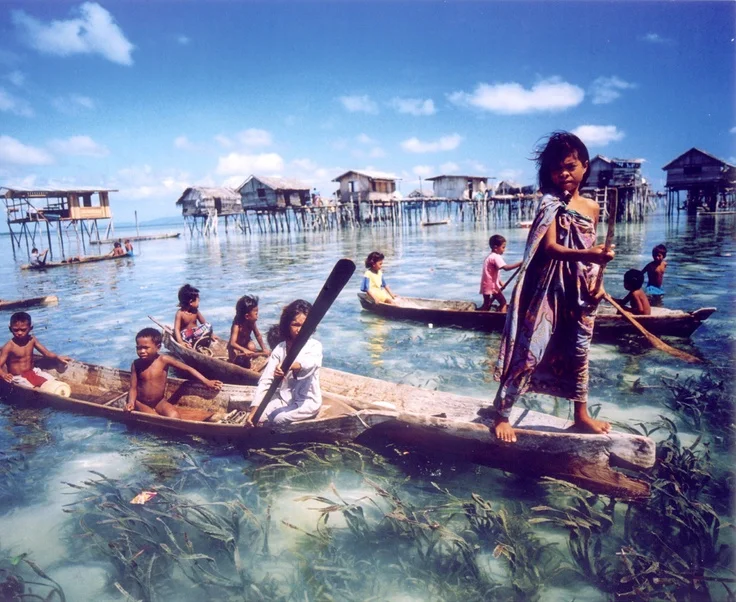
Bajau Sea Gypsies of Mindanao (Maya's maternal island). Unknown photographer, via Pinterest.
“Stories make us more alive, more human, more courageous, more loving.” -Madeleine L’Engle

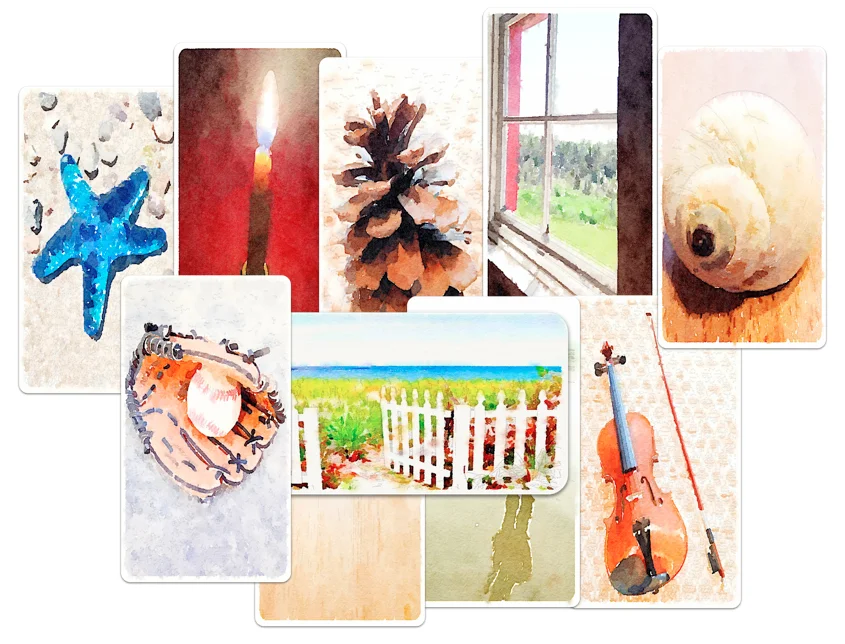
Hundreds of you - teachers, parents & homeschoolers, knowingly asked for storytelling resources. You've felt drawn to create a culture that pulls in and directs your beloveds from deep within them. (There's a free audio story down below) Robyn has followed this thread with her whole heart. She has been dreaming, designing, & reliving stories to find the fundamental images needed for an inspiring tool - a Story Starters Deck. Use the deck to ignite unique stories for and with your children & students. At the end of your time together, your children will have stories they tell about themselves, about the world, and about what’s possible.
These stories will dictate how they relate to humanity, to opportunity, and to obstacles. You want them to become masterful at story: in the telling and receiving, to be able to find the nuggets, and also to be able to be surprised, to change endings, and to shift from middles, to muddles, and back again.
You want them to generate their own futures, to command a reverent response-ability, to architect life with a certain artistry.
"The engineers of the future will be poets." --Terence McKenna
And yet, and yet...
“No, no! The adventures first, explanations take such a dreadful time.” -Lewis Carroll

We don't want to bore them. Or to lecture them. No, we want to mystify them. To enchant them in to the glimmer of their own futures, to be awed in the face of giants (and giant obstacles). And to know themselves as great and creative problem solvers.
So. What's more delicious than stories?
“It has been said that next to hunger and thirst, our most basic human need is for storytelling.” -Khalil Gibran
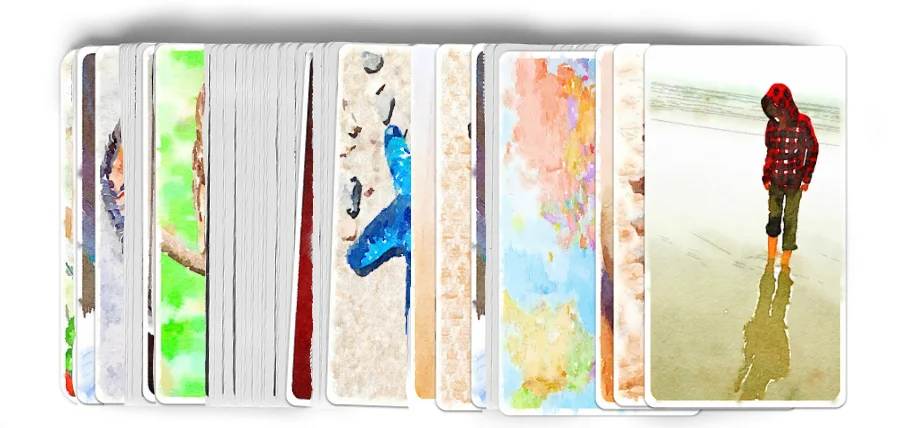
And there is no one more valuable than the storyteller. They are our visionaries, the entertainers, the jesters, guides and crooners. Give your child the gift of story, and you are giving them their ticket, a limitless wellspring to carry them to any career, a lifelong magic trick in their back pocket.
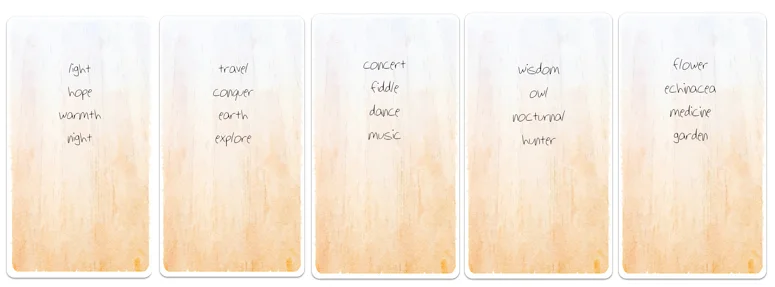
"Stories are a communal currency of humanity." --Tahir Shah, in Arabian Nights
In Celebration of all that,
Maya, Robyn, Brian & David
Available August 15, 2014. Or reserve a deck, now...
*40-Card Deck, 2-sided
*Muslin Drawstring storage sack
*3 Audio recordings
*19-Page e-book with Ideas + Resources
*The Living Home Community Forum
A Storytelling Kit for Your Home & Family
Ideas, Encouragement & Support with Robyn Wolfe

Bajau girl, with rice flour paste to protect her from the sun. Image by Timothy Allen, via Pinterest.
p.s. from Maya: I was recounting memories to our boys about the Bajau, coin-diving children that live in the waters near my mother's hometown. "The sea nomads have golden hair from the sun. And bright white teeth from smiles you can see below the water. Even the three year olds dive ten feet…" Of course there were many questions, so I shared this story using one of the prompts in Robyn's Story Starters eBook. The questions ceased, and now the Bajau live with us. You're welcome to share with your littles.
The Living Home : Music and Family with Dan + Michelle Prindle
We can't wait to tell you all something. But first...
How does music live in your home? Do your children know your voice, and do you make music together? Even though we surround ourselves with music (there's guitars on the walls, couches and in play at the Wolfe residence, Maya sings & David did his graduate studies in music business), we aren't really filling our homes each day with music made WITH our children. We have musical edges we're afraid of, and a bit of trepidation and fuzziness about our ability to just make it. Music, for many of us, isn't something that you can just make. But what more profound, comforting, and connecting practice can we have with our loved ones? What's more alive than walls that resonate with grounding, joyful emotion, made audible?
And SO {clapping. yes, maya & robyn are clapping}…We are beyond ourselves to announce the newest members of the Waldorfish Family, Dan and Michelle Prindle, founders of Living Music in the Home. That pretty much says everything, doesn't it? They teach how to create ethereal, nourishing music for our wee ones, and how to find our inner voice.
{Dan} A first glimpse:
As I enter our living space, trying to view it as I would for the first time, I am struck by the handmade character of our home. The nature table in the corner, proudly displaying the nuts, seed pods and pinecones our sons have gathered on walks and trips to the park, nestled amidst the crafty seasonal projects they've made together; the grapevine wreath hanging over our table, adorned with different decorations for each season - Pysanky eggs at Eastertide, felted acorns and leaves in Autumn, stars at the Winter solstice; window stars, watercolored Valentine's hearts, the colorful bunting Michelle sewed for our living room window.
Everything is a reflection of our family life ~ that we create together and live in this home. But also striking are the contributions of family and friends, who strive to embrace our philosophy and support our aspirations for an intentional lifestyle. There are the handmade mugs - a gift from a college roommate; the crocheted toys Grandma made for our sons' play kitchen; the serving bowl and wooden trains made by my stepfather; and the curtains hanging on our sons' windows, on loan from our dear friend down the street.
And then, of course, there are the instruments, which signify the importance of making living music in our home, of sharing happy hours together, creating as a family in the medium we know best - music.
{Michelle} What was your original vision for this home? How did you hope to express love, made visible?
Our original vision was for a joyful home that is respectful of the needs of our children to play, develop new competencies and abilities, and thrive. We envisioned a home that would offer a welcome respite from the over-stimulation and busy-ness of the outer world. We wanted to recreate traditional rhythms and rituals that were missing from our own typical American suburban upbringings and to provide opportunities for reverence, gratitude and a sense of wonder at life's miracles, large and small. We wanted to model a mindful, purposeful way of life that reflects our commitment to using our resources wisely and carefully, out of respect for our Mother Earth. And, most importantly, we wanted a home filled with the love of music and singing, recitation of poetry, a love of theater, live music and opera. After all, we first met in a high school production of "Fiddler on the Roof" many, many years ago, when we were cast as Motel and Tzeitel, the poor tailor and the daughter of a poor farmer who becomes his bride. So, music has been a part of our lives from our very first days together, and we have always intended that it would remain so!
As musicians and music teachers, our home has also always been our place of work, meaning that there is a steady stream of fellow musicians and collaborators, private lesson students and their families making its way through our home most nights of the week and on weekends. While this brings with it the joy of a home filled with living music, opening our home in this way is not without its challenges! As parents, we've had to grapple with contradictions on a daily basis to build a work-life balance. How do we create a welcoming space that also respects the rhythms of our growing children? How do we balance the needs of our own family and those of our students? How can we remain true to our values as parents, and create a mindful, intentional life for our family?
And so, to live our vision for a joyous home, we've kept an eye to simplicity. What beautiful things can we have in our home that contribute to a peaceful atmosphere and an inviting children's play-space? We've tried to keep only a small selection of natural materials and beautiful toys - many of them handmade by family and friends - available for our children, and to rotate toys in and out of circulation from a "toy library" in the basement to help support our children's creative play.
How can we minimize media exposure for our children while still running a home business and occasionally watching a movie together after our children are tucked in bed? We've covered our old-school television with a beautiful tapestry, which we lift up for our grown-up movie nights, and banished the computer to dad's office to achieve this goal. How can we bring more intention to the way in which we live our lives, not completely apart from modern culture but certainly trying to hold aspects of it at bay and outside of our cozy, safe nest? To achieve this end, we've restricted our children's exposure to the images and impressions of modern pop culture, which has helped to preserve their innocence in a world where children are pushed to mature too fast. We've also begun what we affectionately refer to as "re-skilling," adopting and learning time-honored skills that were missing from our own childhoods. We've cloth diapered with cotton and wool since our son's first day home from the hospital, and I've learned to sew and knit, making clothing and decorations for our home. Our newest forays have been into raised bed gardening (we are complete beginners!), fermenting vegetables, and making yogurt and bone broths from scratch. It's an ever-evolving adventure!
{Michelle} How do holidays, festivals and celebrations occur here?
With each passing year, we've felt our way more and more into a festival life that reflects our values as a family. Beginning with simple rituals - handmade birthday crowns and a Waldorf birthday ring - we've strived to create simple celebrations that honor the lives of our children and each other. There is the special "birthday breakfast," a ritual created by my father when my brother & sister and I were growing up, where the breakfast is chosen by the birthday girl or boy and served up as quite a feast. There is a decorated chair and a special place for small gifts and tokens of love. It feels slow and beautiful to us! This year was particularly meaningful for our son's fifth birthday, as our dear friends from Germany were visiting and shared in the celebration with their own two children.
While we both grew up accustomed to large family gatherings, this past year we made the move to reclaim Christmas as a small and intimate affair for our nuclear family. As occurs most Christmas Eves, we performed together at church - Dan on the cello and me singing. After the vigil ended with the congregation singing "Silent Night" by candlelight, we returned home to sprinkle "reindeer dust" from our front door to the end of our driveway. And then it was time to turn off all the lights and read "Twas the Night Before Christmas" under the twinkly glow of only our Christmas tree. Our boys' eyes were big with with the magic and excitement of it all, their cheeks flushed with anticipation. Most of the gifts for our children and loved-ones were handmade in the weeks and months leading up to Christmas. It was a touchingly simple festival, something that we carefully created and cherished together as a family.
See why we adore them? So many solid questions that we can feel into. They live for the soulful connection between you and yours. We're taking Dan and Michelle's invitation to re-skill, and to seek the edges of our own voices. Living Music in the Home is for parents and teachers who wish to share the joy of music with their children and students. They provide musical training for adults so they can create living music in their homes and classrooms. At Waldorfish, their
simple, exquisite, musical magic is 10% off.
Will you join us? We will be here. xx, Robyn, Maya, Brian, David + The Waldorfish Community
Looking for something?
Welcome to Waldorfish! We started this adventure in 2012 out of a desire to make Waldorf training more accessible to class teachers in remote locations and to homeschooling families everywhere! Read more, click here.


WE WON! Our Weekly Art courses were voted “best interactive art program.” Learn more about the award, here.

Click here for a full list of schools we work with.
A few of our most popular blog posts:
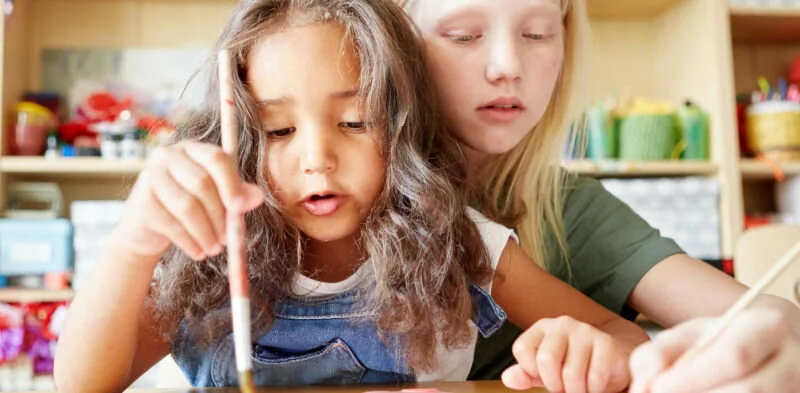
Who are our courses for?

Starting Waldorf First Grade
4 Things to Know Before Planning Your Homeschool Year

In Praise of Balance: A Healthy Festival Life
Science in Waldorf Middle School: Starting Something New!