The middle schooler is in a particularly special and challenging time in their development.
They are undergoing great change in the physical body, and also cultivating their own inner world as an individual.
Research projects create space for students to draw on existing skills, cultivate new ones, and immerse themselves in a subject more deeply than ever before!

The middle schooler is ready for new challenges and approaches to learning.
As the educator gently guides the process, the student becomes the driving force behind the learning - perfectly suited to the middle grader, who is beginning to experience themselves as a more independent individual. Many schools introduce such projects in sixth grade, though they can be utilized throughout middle school.
Research projects may include some or all of the following components, each requiring unique skills:
Written portions that include summaries and detailed descriptions.
Artistic components that portray the subject at hand through the students’ own work.
A physical representation, which could be in booklet, poster, or other form.
An oral presentation, which asks the student to be well-versed in their subject.
A social component, which asks others to assist in their learning. This could be an interview, written letter, or some other form of person-to-person communication.
Putting all of these elements together is certainly a challenge, and it provides an opportunity for the middle grader to experience and learn in new ways.
Here are a few examples of learning opportunities offered by a research project:
Discovering the Greater World
A project allows the student to connect with a topic outside of what they currently know; something brand new and unfamiliar! This awakens inspiration, and a curiosity about what else there is to know and explore.
Students learn from authors through research materials, such as guide books, biographies, articles, and more. As well, this is the perfect opportunity to discuss the importance of citations and bibliographies!
2. Skill Building and Application
Projects require the student to apply many skills at one time: reading comprehension, note-taking, the ability to summarize, provide detail, and much more. They also need to communicate their findings to others in a clear and dynamic way: a new challenge in itself.
3. Awakening New Artistic and Presentation Skills
With a research project, the students are not working out of their own creative imaginations. Instead, they are using the power of observation and artistic representation to illustrate and portray the beauty of their subject. For example, students may be asked to draw a state flag, a specific animal, or a recognizable landmark- all requiring attention to detail, careful drawing, and other artistic skills.
Some projects may require a poster, booklet, or other display. It is the students’ job to present their information clearly, and also make things balanced, colorful, and eye-catching.
4. Stepping into the Social Realm
The middle school student is ready for a challenge, and is ready to communicate in a more mature, focused, and purposeful way. A research project is the perfect time to introduce an opportunity to speak to and ask questions of a professional, either in oral or written form. Learning from experienced professionals is a direct and personal way to learn, and also asks middle school students to be prepared with their questions, respect others’ time, and be in charge of the conversation.
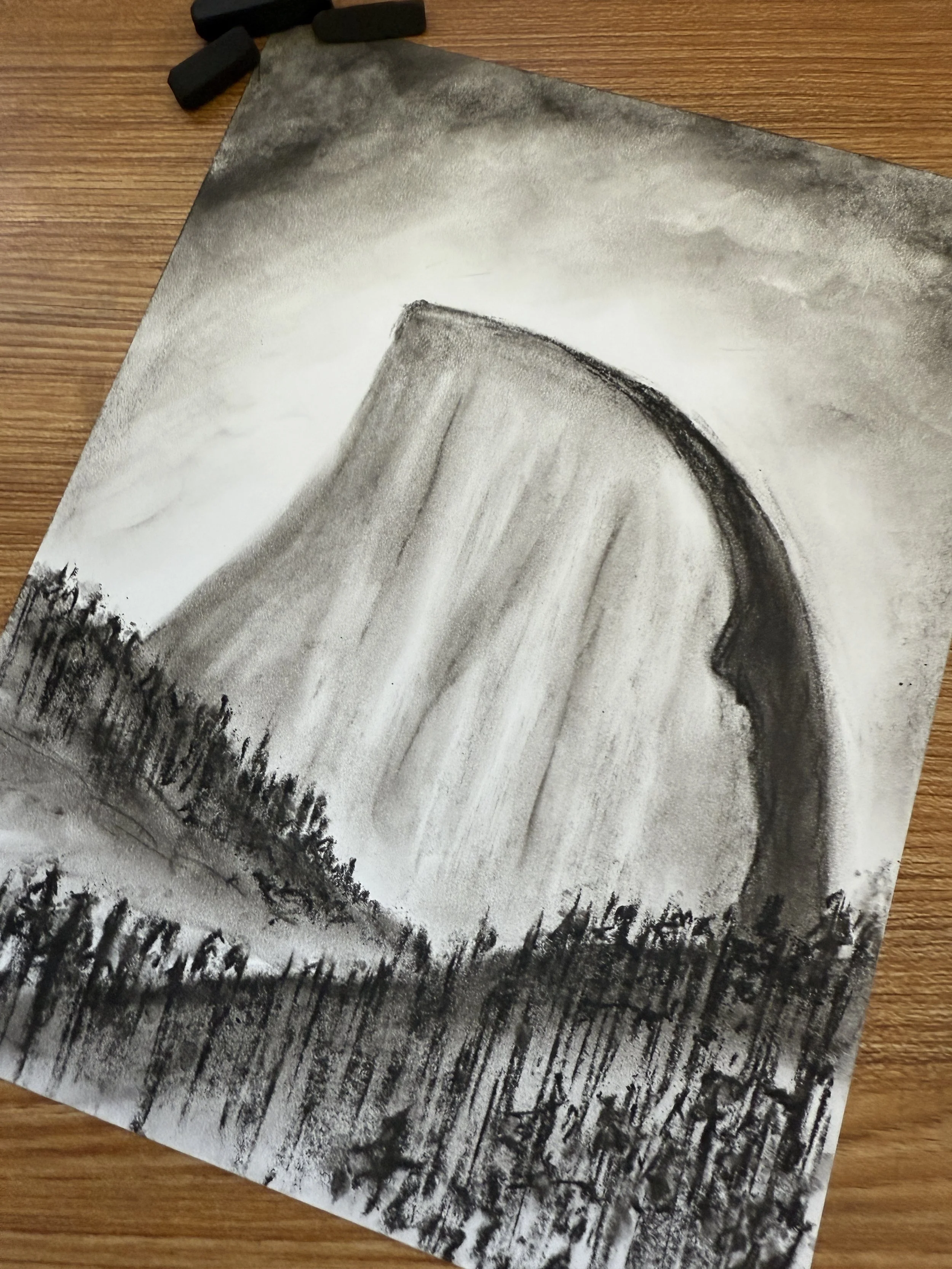
A charcoal drawing lesson of Half Dome is included in our Geology course.
If you’re feeling called to offer your middle schooler a thoughtful research experience - but aren’t quite sure where to begin - our Geology course would be a gentle place to start.
Included is a carefully structured research journey called The National Parks Project, designed to support both student and educator every step of the way.
You’ll find language arts components, artistic extensions, clear outlines, citation and note-taking guidance, and even optional interview questions for a park ranger or other professional in the field.
With these pieces already in place, you’re free to spend less time planning and more time learning alongside your child!
Together, you can choose a national park that sparks curiosity and allows the project to unfold naturally, guiding your student into a deeper understanding of geology, flora, fauna, and the living landscape as a whole.
And if questions arise, you’ll have access to the course instructor, Caitlin Amajor, one of our trained Waldorf teachers, offering steady guidance and support along the way!
More from Waldorfish!






About the Authors
Robyn Beaufoy is Waldorfish’s CEO, and also a course instructor for Simple Season, Waldorf Art for Beginners, and Weekly Art Foundations. You’ll find her intuitive touches and influences throughout everything Waldorfish offers. Robyn has been in the world of education for over 25 years, with an MA in Education and a certification in Waldorf teaching - she also homeschooled both of her children for some of that time. In 2012 Robyn co-founded Waldorfish.com, creating it with the vision of making Waldorf inspired-art and pedagogy more accessible, joyful, and doable for homeschoolers all over the world.
Caitlin Amajor is Waldorfish’s course instructor for Geometry grades 5 & 6, Botany, and Geology as well as our Administrative Assistant. From a young age, Caitlin has been immersed in Waldorf education, attending a Waldorf school from K-8. After receiving a BA in History, Caitlin gained her certification in Waldorf teaching, and spent seven years as a Waldorf class teacher in the upper grades. With a special fondness for watercolor painting and geometry, Caitlin loves bringing Waldorf education to her students all over the world, and seeing their own individuality and style bloom from the curriculum!