
Waldorfish Blog
On Dragons and Making Swords :: Christy Corp-Minamiji
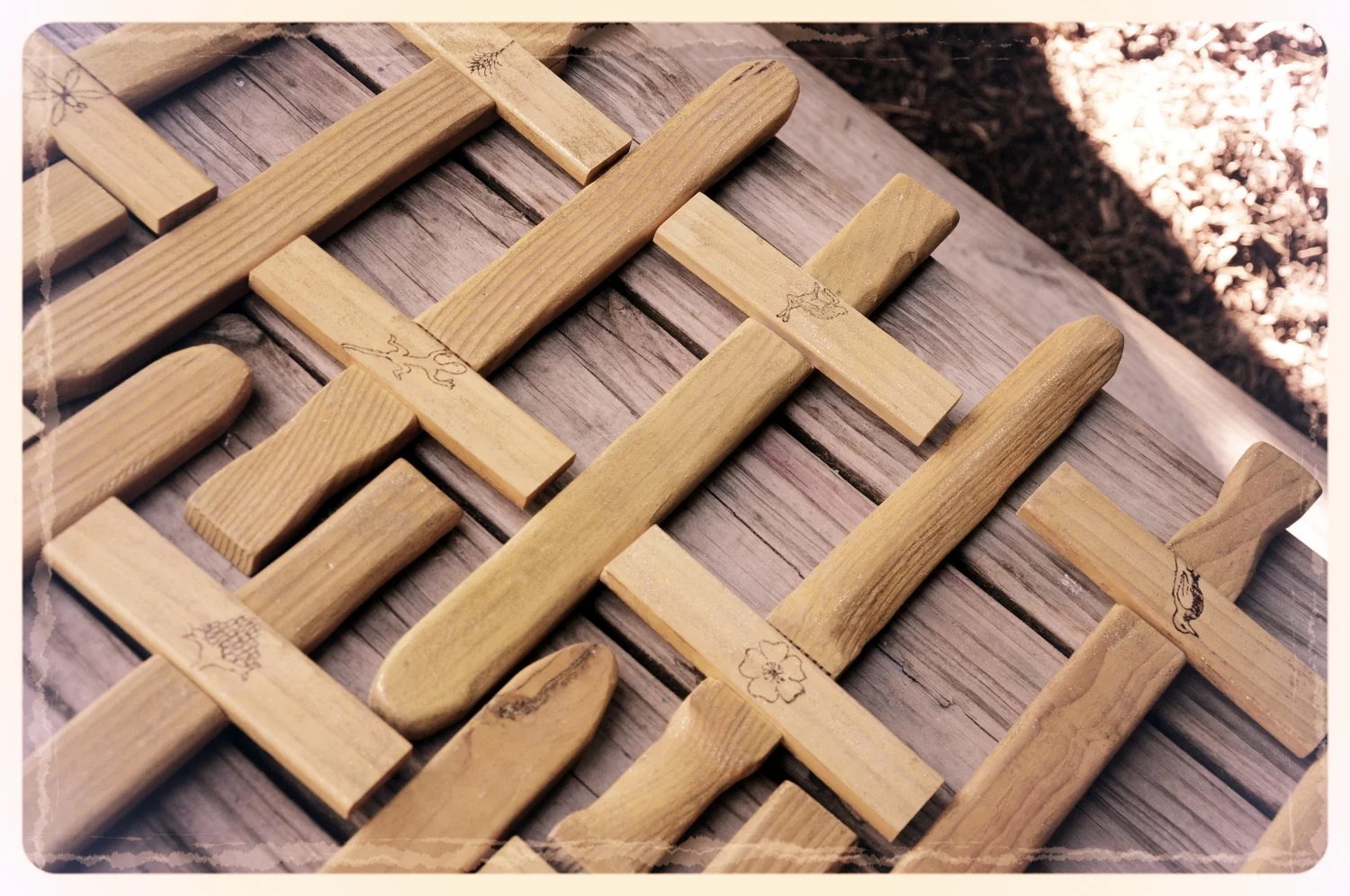
Fairy tales are more than true — not because they tell us dragons exist, but because they tell us dragons can be beaten.
I’ve loved this internet-ubiquitous quote, typically attributed to G.K. Chesterton, for a long time. To me it conjures images of golden capes, wooden swords, and bringing light to the fears that lie snarling in the caves of our hearts.
When I looked up the words to verify them for this post, I found something even better. The above line is actually the work of author Neil Gaiman, paraphrasing the longer Chesterton passage.
Fairy tales, then, are not responsible for producing in children fear, or any of the shapes of fear; fairy tales do not give the child the idea of the evil or the ugly; that is in the child already, because it is in the world already. Fairy tales do not give the child his first idea of bogey. What fairy tales give the child is his first clear idea of the possible defeat of bogey. The baby has known the dragon intimately ever since he had an imagination. What the fairy tale provides for him is a St. George to kill the dragon. Exactly what the fairy tale does is this: it accustoms him for a series of clear pictures to the idea that these limitless terrors had a limit, that these shapeless enemies have enemies in the knights of God, that there is something in the universe more mystical than darkness, and stronger than strong fear.
When my children first started Waldorf education, like most new Waldorf parents, their dad and I felt like we had wandered into a foreign country.
One of the most baffling things was this Michaelmas deal. I knew the word from my obsessive reading of old English mystery novels, but I’d heard it in reference to university terms, and couldn’t figure out what that had to do with kids and dragons. Internet research wasn’t any more help. Something to do with the story of St. George? Okay, but who was this Michael guy? And why did my second grade daughter need a peasant costume and how was I supposed to do this in a couple of weeks?
Over the years, Michaelmas has become one of my favorite Waldorf festivals – as Gaiman would say, not because the dragon exists, but because it can be beaten.
Modern parenting seems to dictate that we should protect our children from the bogey and even from knowledge of its existence. But “it is in the world already.” Children know the terrors that lurk under the bed, in the dark, and in the whispers of grownups.
With fairy tales and golden capes and wooden swords and songs, we stop lying to them. When we show them the monsters and evil hiding in the stories, and help them shape their weapons, when we give them the words to “conquer fear and wrath,” we validate what they already know – that there are dragons.
Instead of closing the closet door and saying, “Don’t worry honey, there’s nothing bad in the night” as we lock and bar our windows and doors, we give them a light to shine into the shadows. We acknowledge the monster, show them its dimensions and limits, and give them the tools to rescue themselves.
My children are well beyond the years of wooden swords. The oldest is going into 10th grade – her second year of public school. My son was part of his class dragon last year; this school year he will turn 13. And our youngest daughter is in the between-land of village and dragon, heading into 4th grade. Their dad and I don’t worry much anymore about the effects of cartoon violence or “scary stories.” Our dragons take the form of traffic and strangers as our children head independently into the world. Their monsters lurk in the caves of peer pressure and college choices.
But each of them has been at some point a knight of Michael. And they know that dragons can be beaten.

Christy Corp-Minamiji is our reluctant muse. A mom of three distinctly divine, loved-by-us kids, she takes everything, and mostly herself, with a grain of salt. Blogging veterinarian, freelance writer, runner, and soon-to-be-author, she took our beg and ran with it. Literally.
Related content:
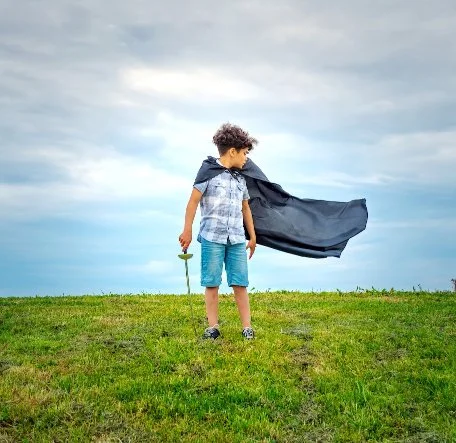



Dragons for Michaelmas
It’s almost time for Michaelmas…
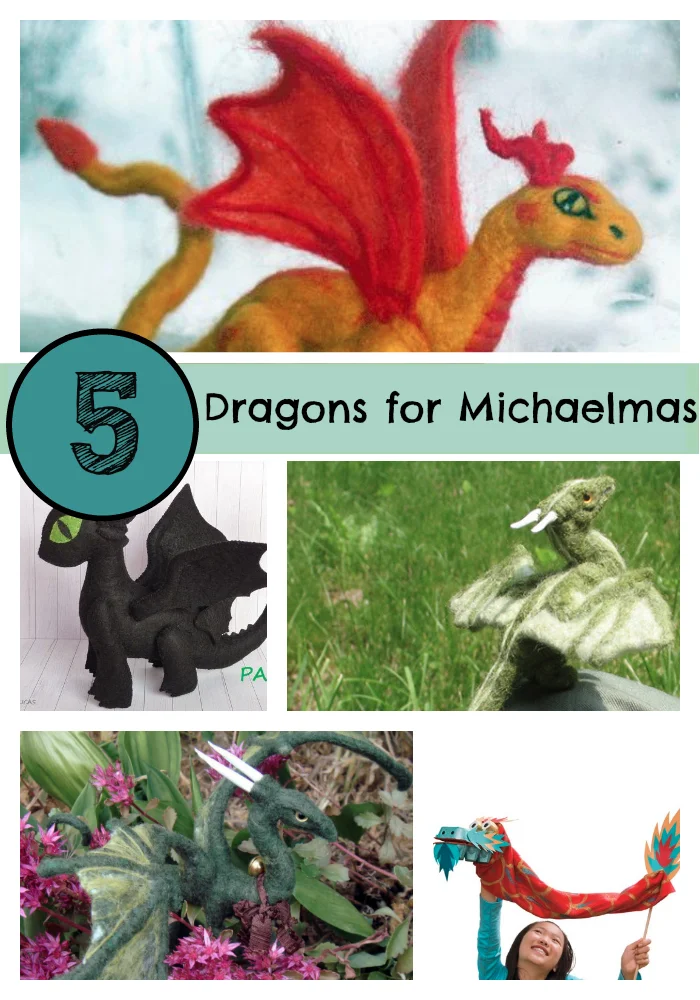
Here are 5 ideas to inspire your Fall crafting! There are options here for little hands and big hands alike.
Enjoy!
More festival resources from Waldorfish:
*smiles*
Some pretty special feedback for the Story Starters kits arrived today :)
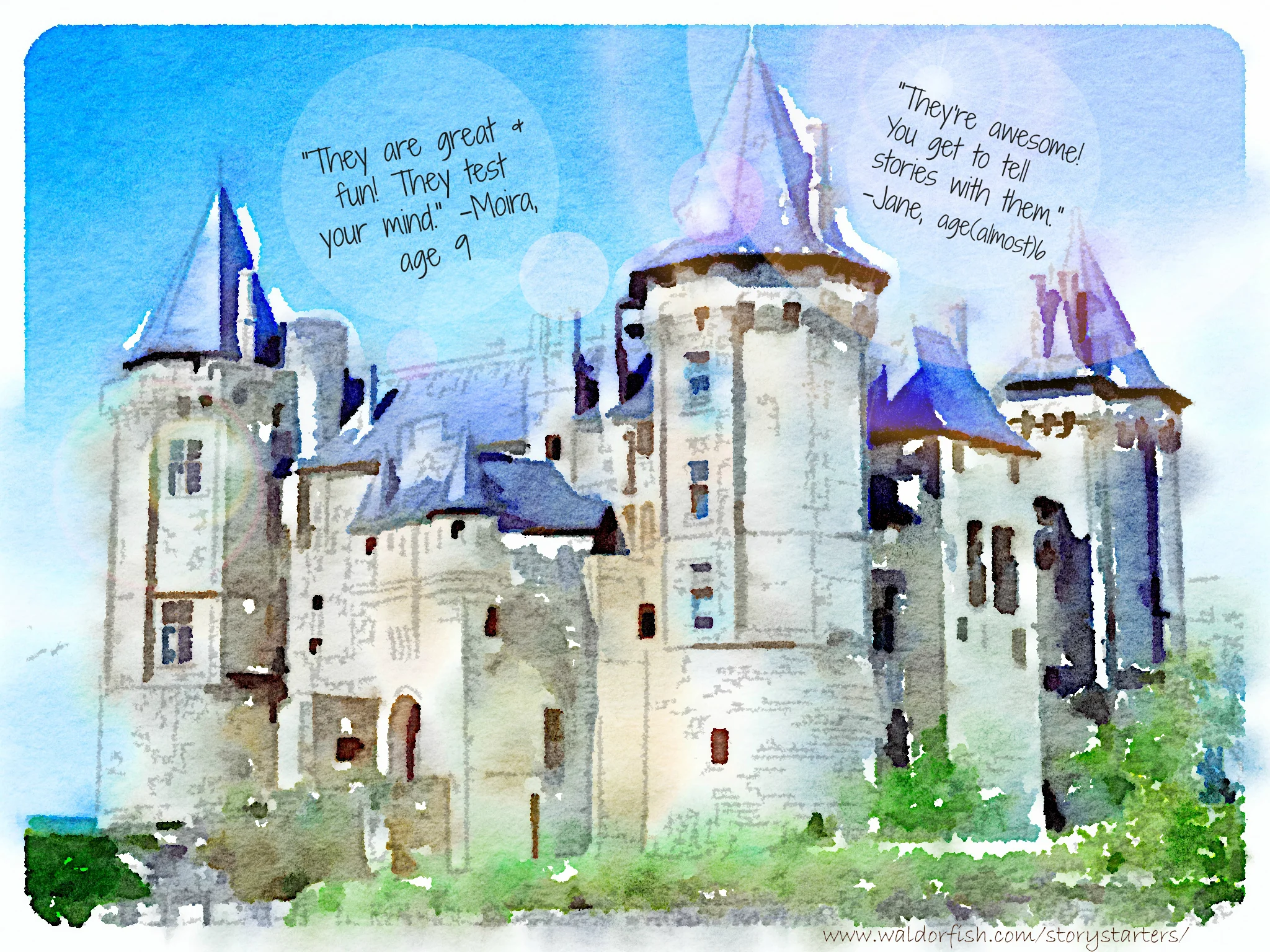
Yes, please? Come check out our Story Starter kits here! The goodness includes your own 40-card deck of original images, audio files and an ebook filled with ideas and inspiration, + bonus goodies throughout the year.
The ideal gift for bringing more storytelling and conversation into your home!

Waldorf chalk-drawing (photo) tutorial
I was finishing up my plans today, for a storytelling video I'm working on for the BEarth Institute. It occurred to me that I should probably have a relevant chalk drawing behind me in the background while filming... but of course I didn't think of this 3 days ago when I had all the time in the world to draw it.
Needing something "easy" that my brain already has a template for, I opted to recreate a drawing I did when my former class was in the 6th grade. The original version of this particular drawing has been floating around out there in the internet for a few years now, and I often get questions about how it came together on the board. At the time, I didn't think to take pictures of the original work in progress, but I grabbed my camera today. My hope is that having a visual record of this process will be useful to you! Here we go.....
Humble beginnings....a simple wash with orange and then some dark blue layered over the top section. Not thinking too much here....just spreading the colour around.

Starting with the background....clouds. Trying to bring in the colors of the night sky, along with some shadows & depth, aided by black chalk. Love black chalk! The story I'm pairing this drawing with comes from the very beginning of Roman History... it is here in the curriculum that the stories we tell begin to transition from stories to "real", recorded history. We leave behind the mystery, and start looking towards the concrete.

Full moon, partially obscured by the clouds. Tucking the moon behind another part of the background layer helps continue adding depth and interest. More black chalk used.

Beginning to think about the middle ground now. Added a couple of islands sinking into the ocean at the horizon line to add more visual interest. Used white chalk to show moon light/highlights on the sides where it would naturally be brightest (ask yourself - where is the light in my drawing coming from?) And of course, more black chalk ;)

Light blue wash. Layer it right over the orange...it's nighttime, it's dark, and water hardly ever looks blue in real life anyway.

Moving to the foreground. More white for highlights, and black to emphasize where things overlap + shadows.

At this point I stepped back and realized I was neglecting the right side of my drawing. I'm saving room in the middle of the ocean for the boat, but when I stood back I could see that there was room for a couple of middle ground rocks. I intentionally drew the blue one so that it crosses over the horizon line. Again, visual interest....it helps to break up that line a bit.

Speaking of boats....
(Notice that the ship also crosses the horizon line....)

....yes, this isn't a completely accurate representation of a Roman ship. During our second Roman History block, later in the year, we got into vivid stories involving the newly formed Roman navy & their spectacular ships. However, I figured this was safe for the first block. (For the second block, I did a chalk drawing of Hannibal crossing the Alps).


Look back at the last image, and then at this one. In the previous image, the boat sort of looks like it's in the water....but in this drawing, it really looks like it's IN the water, yes? Using white chalk to highlight the tops of the waves as well as the water right around the boat itself helps to "ground" the boat. This same principle is true when drawing trees, or anything resting on the ground, really. Adding some small plant or grass details around the base of a tree, really helps to solidify its' place in the drawing.
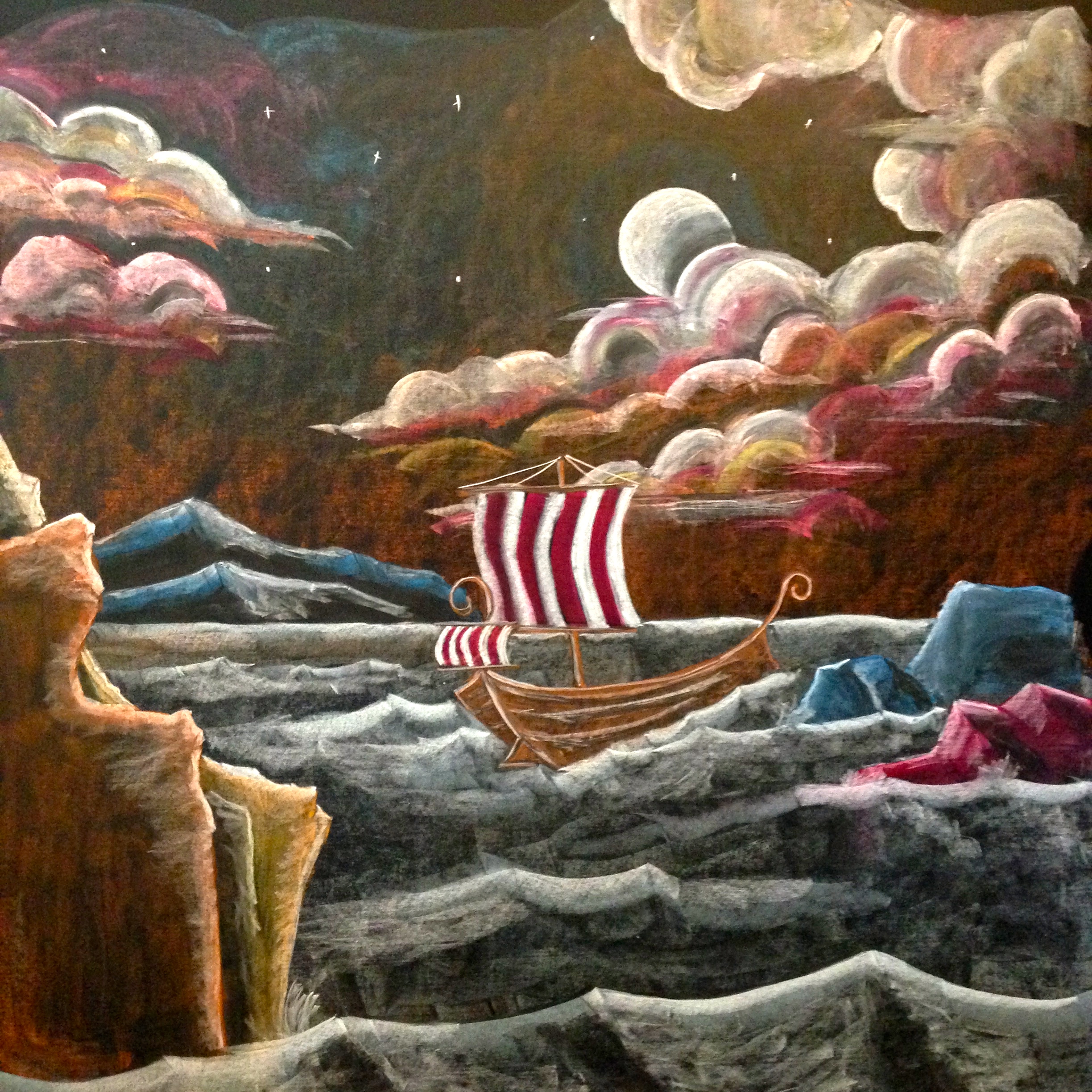
All done! As an afterthought, I added a bit of the moon's reflection in the water, behind the boat.

I hope this is helpful!
We offer a variety of other (video) tutorials. Take a look at the options, here!
Looking for something?

Welcome to Waldorfish! We started this adventure in 2012 out of a desire to make Waldorf training more accessible to class teachers in remote locations and to homeschooling families everywhere! Read more, click here.




WE WON! Our Weekly Art courses were voted “best interactive art program.” Learn more about the award, here.


Click here for a full list of schools we work with.
A few of our most popular blog posts:

Who are our courses for?

Starting Waldorf First Grade

4 Things to Know Before Planning Your Homeschool Year

In Praise of Balance: A Healthy Festival Life
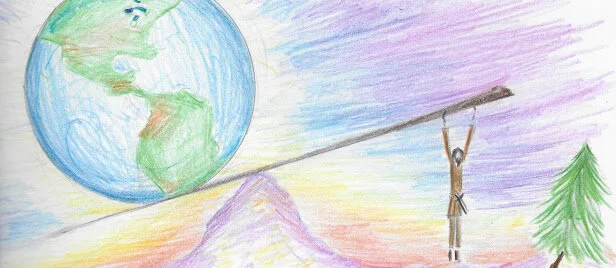
Science in Waldorf Middle School: Starting Something New!