
Waldorfish Blog
Working in the Round: Macramé, Knitting, and 3D Thinking
We’re excited to share a piece from authors, educators, and all around amazing humans, Shellie Smith and Elizabeth Seward! With decades of experience, they will be sharing insights into Waldorf handwork.
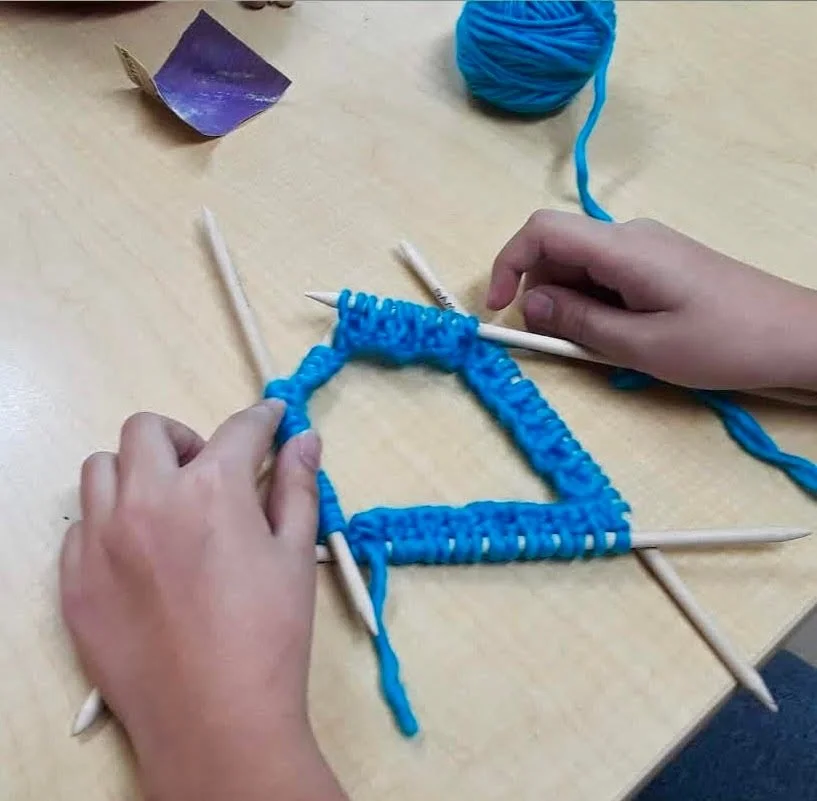
Handwork curriculum builds many skills, including spatial visualization!
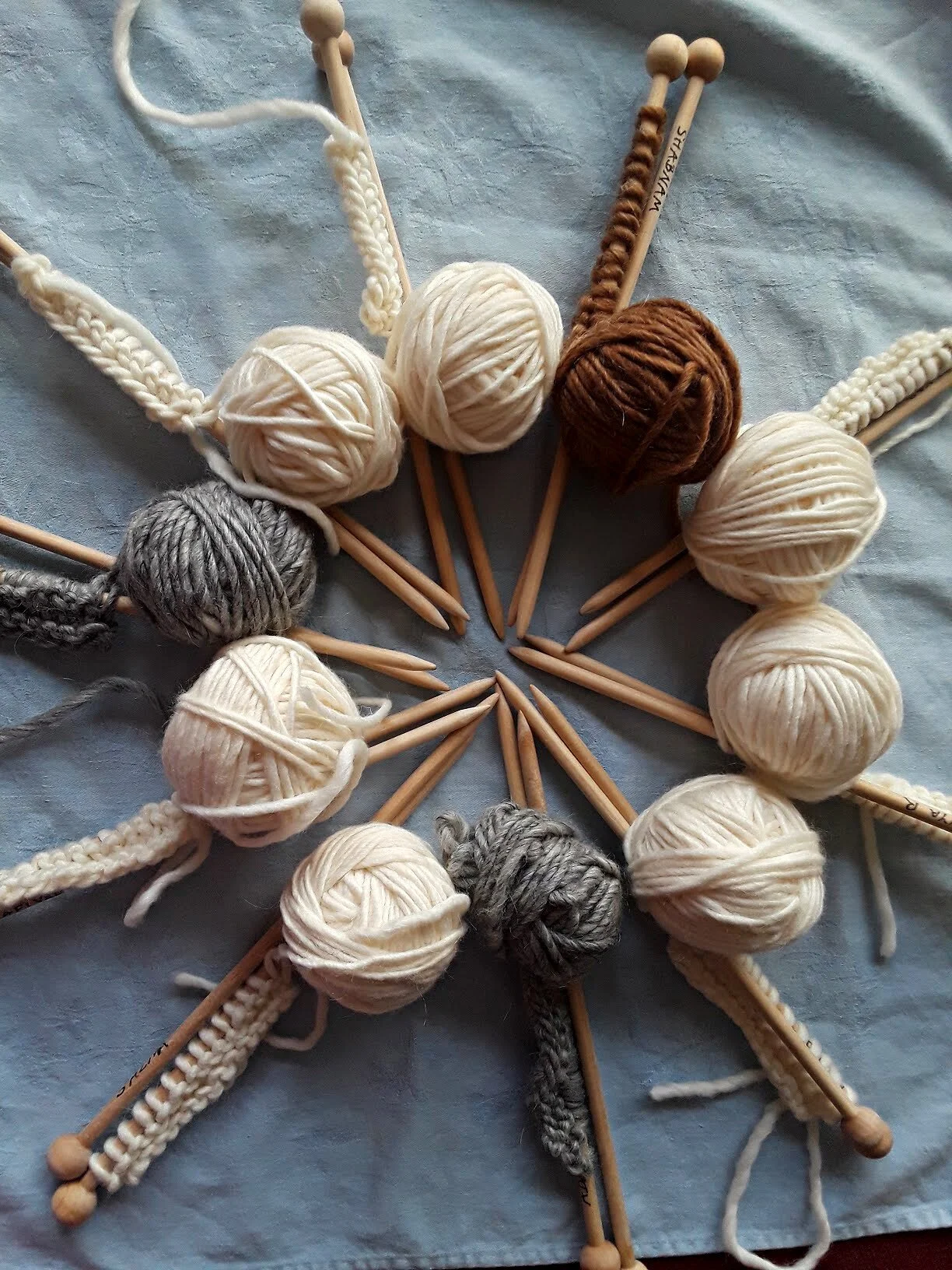
Handwork, by its very nature, is three-dimensional.
From the earliest grades, children work with real, tangible materials that respond to touch and are transformed through the work of their hands. And yet, something new begins to emerge in fifth grade.
In first through third grade, children knit or crochet flat pieces that are later folded, shaped, and sewn into three-dimensional forms. In fourth grade, they embellish the surface, bringing individuality and design into what has already been made. But in fifth grade, there is a shift. Instead of transforming something flat, they begin working directly in the round—the form emerging stitch by stitch from the very beginning.
Three-dimensional thinking—sometimes called spatial visualization—is the ability to mentally hold, rotate, and understand complex forms.
It is the capacity to see beyond one perspective, to imagine how parts relate to a whole, and how that whole exists in space. This kind of thinking lives at the foundation of so many human endeavors: architecture, engineering, medical work, scientific research, and even the ability to navigate social situations with depth and understanding.
In contrast, two-dimensional thinking keeps us fixed in a single viewpoint. But in these middle years of childhood, something is awakening that calls for more.
Fifth graders stand at a threshold. They are no longer fully immersed in the world as younger children are; a quiet distance begins to emerge—a growing awareness of themselves in relation to others and the world around them.
With this comes a readiness for greater precision and complexity. They are preparing for geometry, formal scientific observation, and the study of history as something recorded and examined. Their thinking becomes more objective, their observations more careful, and soon—by sixth grade—they begin to question and debate.

Fifth grade handwork projects challenge the student to look at an object from different points of view.
Handwork meets this moment in a profound and practical way. When children work in the round—whether through knitting, macramé, basketry, netting, or other crafts native to your geographical location—they are actively creating a three-dimensional form in their hands.
This is not abstract. It is lived, tactile, immediate. Stitch by stitch, knot by knot, they build something that exists in space, quietly developing the inner capacity to imagine and work with complexity.
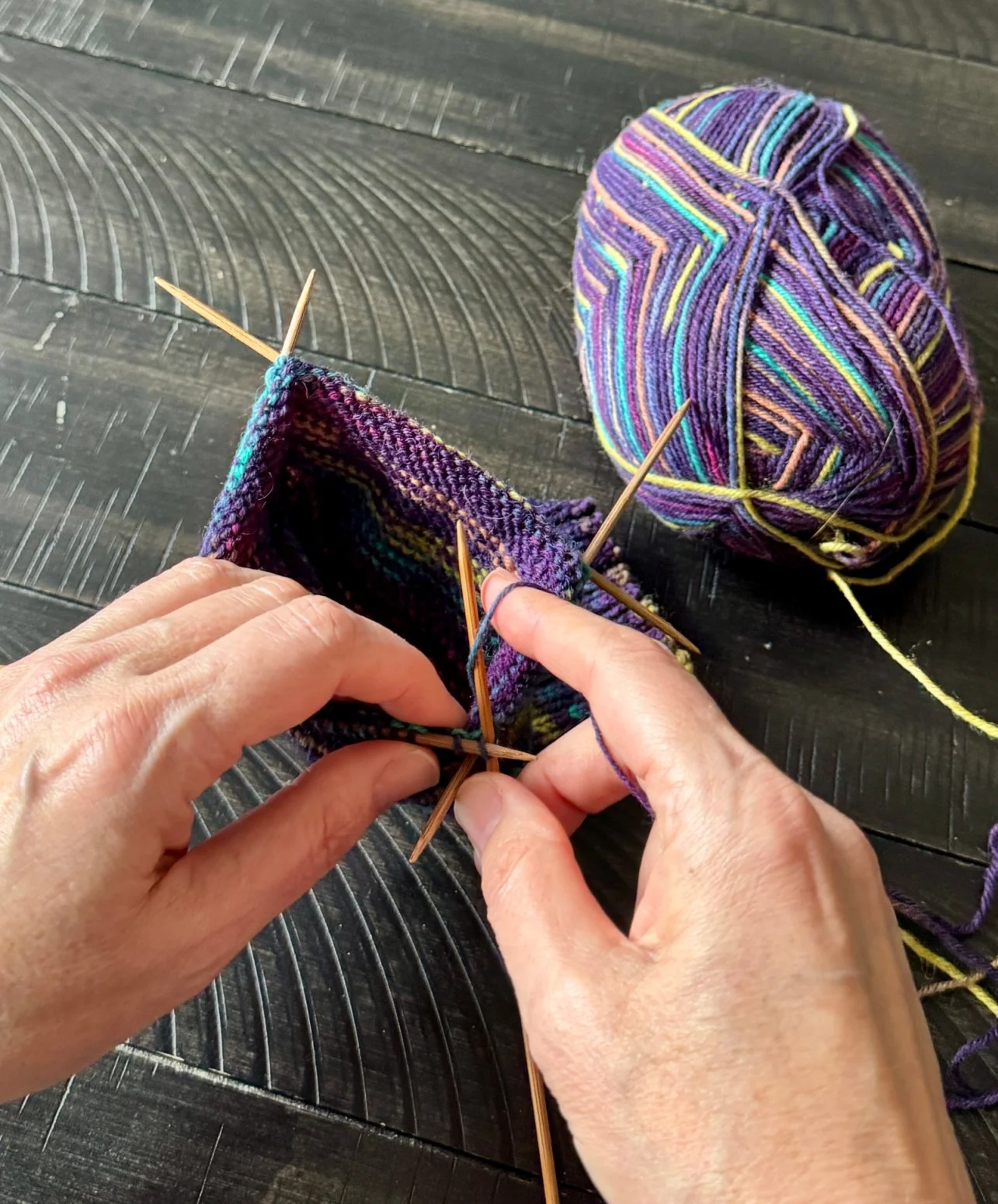
At the same time, something else is being asked of them. They must learn to focus and expand their awareness simultaneously. In knitting in the round, this might mean working with two active needles while holding the others in space, keeping them from slipping or tangling. In macramé, a student might work with twelve cords—focusing on four at a time while holding the remaining eight in the periphery.
This gesture is significant. Children are learning to attend to what is immediately in front of them while maintaining awareness of the larger whole.
This is not only a technical skill—it is a lived experience of balanced attention. Over time, this physical practice lays the groundwork for something much larger: the ability to hold multiple perspectives, to think around a question, and to recognize that more than one viewpoint can exist at the same time.
We see here one of the central principles of Waldorf education: experience first, understanding later. The hands lead, and thinking follows.
Traditionally, knitting in the round has been one way we meet this developmental moment in fifth grade. It is a beautiful, time-honored practice. At the same time, macramé bears a remarkable similarity. It calls for the same kind of three-dimensional thinking—working rhythmically, round and round, to build form through repetition.
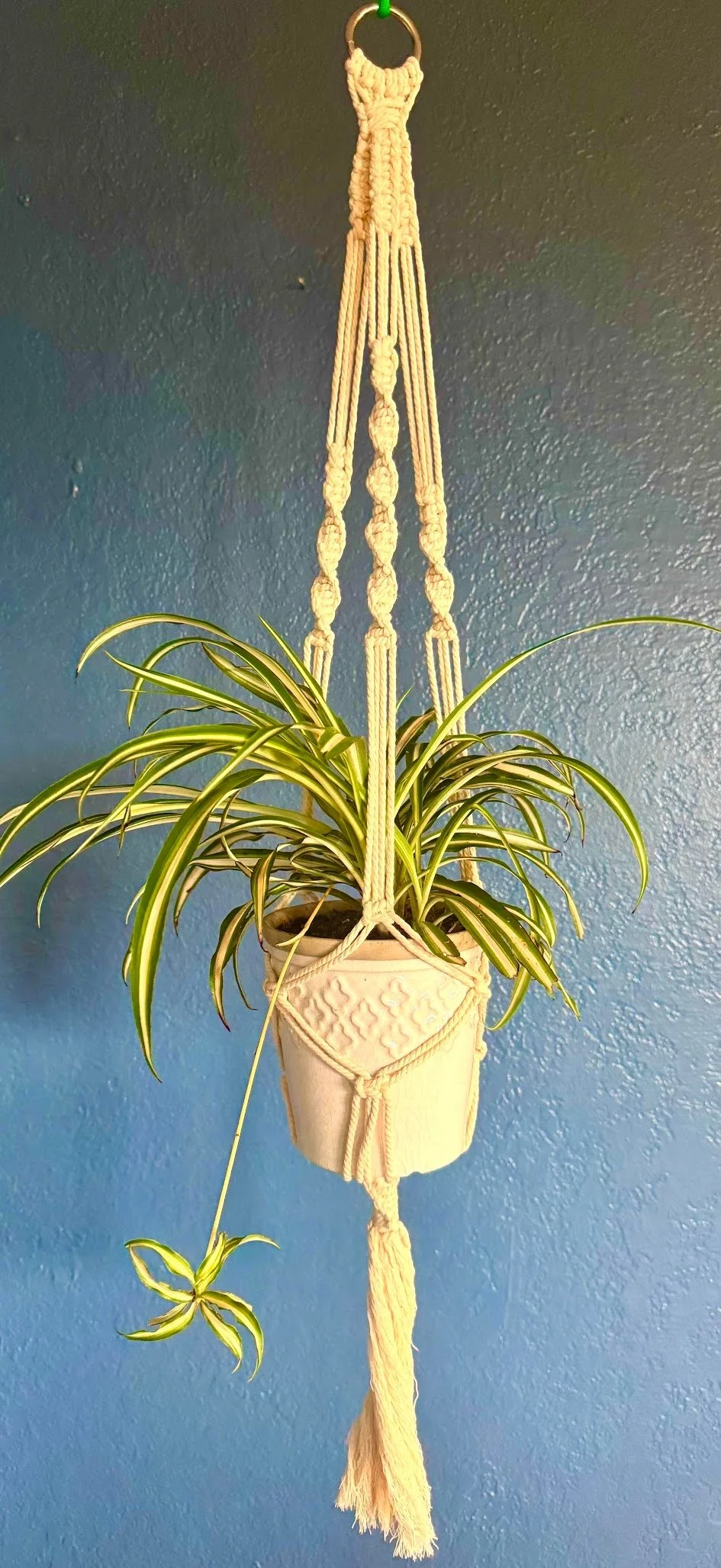
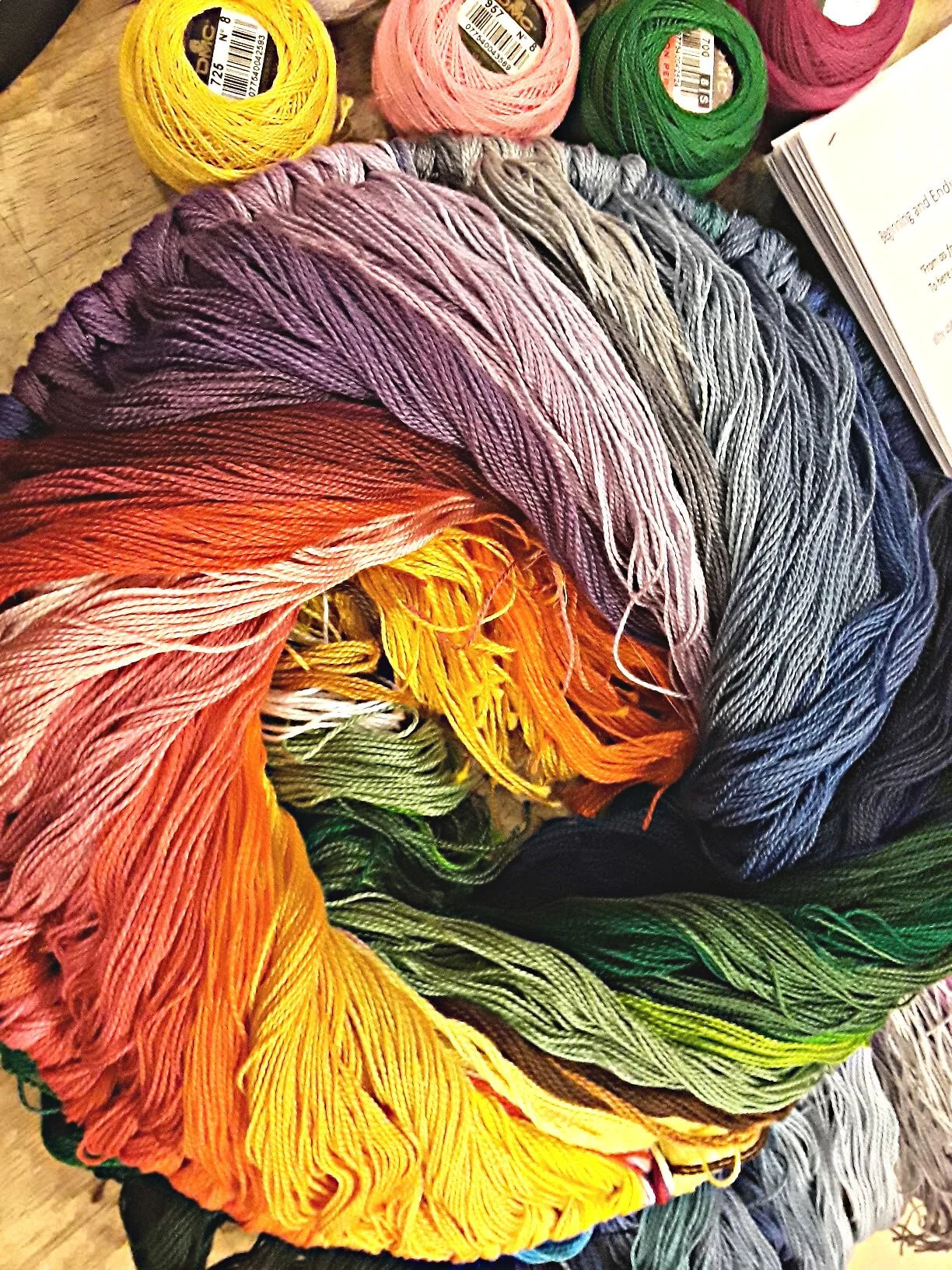
Macramé asks students to work with multiple stands at a time while learning knotting techniques.
In a macramé plant hanger, for example, students might work with twelve individual cords—focusing on four at a time while holding the other eight in awareness. Just as in knitting, where a child learns to “read” their stitches, students begin to read their knots. The work itself offers clues, guiding them forward with increasing independence.
While macramé saw a decorative revival in the 1970s, the knots themselves belong to a much older and nearly universal tradition. For centuries, knotting was used to secure, strengthen, and finish textiles so they would endure. Across cultures, these simple knots have formed everything from functional nets and bags to finely detailed lacework.
And macramé is just one example. Across cultures and environments, this same gesture appears in basketry, netting, and coiling traditions that invite children to work directly in three dimensions. If knitting wool socks does not feel suitable in your climate or context, we can look to what is local, meaningful, and practical while still meeting the same developmental need.
This brings us back to an essential question:
Does everybody have to knit socks?
If our goal is to support their development, to strengthen their capacities, to bring thinking, feeling, and willing into balance—then we can begin to widen our lens.
What matters most is not the specific technique, but the gesture:
Are the students working in three dimensions?
Are they holding multiple elements in relationship?
Are they practicing focused attention alongside peripheral awareness?
Are they creating something meaningful, purposeful, and real?
Is it challenging enough to give them something to strive for while also ensuring their success?
If the answer is yes, then we are heading in the right direction.
In fifth grade, we are doing more than teaching skills. We are laying the groundwork for a way of thinking, a way of perceiving, and ultimately, a way of being in the world. First, a secure sense of self is built in the early grades. Then, slowly, the capacity grows to recognize and genuinely respect the perspectives of others.
This is the future we are working toward.
Interested in bringing this into your classroom? Waldorf Handwork Educators offers a 5th Grade Handwork Curriculum Guide that includes both knitting in the round and alternative projects like macramé—helping you meet your students in developmentally appropriate and meaningful ways.








About the Authors
Elizabeth Seward, PhD, founder, director and co-owner of Waldorf Handwork Educators has over 40 years experience teaching Handwork and other subjects in public, private, and homeschool Waldorf settings. Elizabeth is a trained Waldorf class teacher in the grades, and she was co-director of a nationally recognized Waldorf teacher training institute from 2000 - 2003. She holds a PhD in Education, an MA in second language learning, and an MA in Education and Spirituality. Elizabeth has three children and four grandsons who enjoy the lifelong benefits of Waldorf Education. She enjoys Scottish Country Dancing, swimming, gardening, and teaching basic handwork skills to children and adults! She is author of Teaching Through Stories: Jane and Jeremy Learn to Knit

Shellie Smith is the founder, director, and co-owner of Waldorf Handwork Educators, an international initiative supporting teachers through online professional development, global conferences, and individualized mentoring. She finds profound joy in guiding and empowering handwork teachers around the world.
Shellie has taught in public, private, and homeschool settings for over 25 years. With a background in social work and elementary education, and formal training in Waldorf handwork education from the Rudolf Steiner College, She brings a rich blend of skill, heart, and experience to her work. She believes that teaching through the imagination and fostering authentic relationships are the keys to meaningful, lasting learning. Shellie is also the author and illustrator of A Twisted Tangled Tale: A Handwork Fairy Tale, a whimsical story that celebrates the magic and metaphor of the handwork journey.

The Importance of Rhythm in Early Childhood.
Enjoy this piece from guest writer and Storytime in the Schoolhouse founder, Becca Lane! For over thirteen years, she has been creating magical moments for families with young children in the classroom and online.
What is rhythm?
Rhythm is the flow of our day and week; what happens in what order.
When we hear “rhythm,” we often think of music. A song has rhythm when it has a steady and predictable beat. The beat holds the song together.
When we talk about the rhythm of our lives, we mean how our day flows. Our day has a rhythm when the parts unfold in a predictable order. For example, your child knows what to expect when they wake up, or bedtime has a similar flow every night, or what you do after school each day is always the same.
The more predictable and consistent the flow of your day is, the more rhythm you have.

Clean-up time can be a rhythmic aspect of the day for the whole family!
A rhythm is different from a schedule.
Rhythm and schedule are often confused, so let’s take a moment to clear up the difference.
A schedule is based on clock time. We write “scheduled” events on our calendar—at a specific day and time.
A schedule is often externally imposed. Your job or school has a schedule. You schedule appointments. These happen at a particular time on a specific day.
On the other hand, rhythm is based on flow and order. It is loosely based on clock time but not dependent on it.
Rhythm has layers.
Our day has a flow or rhythm, as do our week, month, and year. Even the smaller parts of our day have a rhythm. We can add rhythm to any of these layers.
Even the busiest/most chaotic lives can create rhythm.
As little as one new “beat” of rhythm creates consistency and predictability.
Rhythm benefits adults as much as children.
We often focus on our children and the benefits for them but a rhythm benefits adults just as much. I am amazed each time I make the effort to create a new rhythm in our day or week--I see how much it benefits me and eases some of my own overwhelm.

Rest and reset: an essential aspect of daily rhythm!
What are the benefits of rhythm?
Rhythm is one thing we can add to our life that actually simplifies it.
Children can feel anxious, overwhelmed, and out of control when their days unfold randomly without any underlying consistency or predictability. They don’t know what will happen, when, or what is expected of them if/when it does.
Rhythm creates predictability and consistency.
Research shows children experience less anxiety and overwhelm and more connection and ease when their days are predictable and consistent; when they generally know what to expect during the day.
Rhythm reduces anxiety.
We live in an increasingly unpredictable world that makes many (most?!) adults and children anxious. One way to protect our children from the anxiety this creates is to add predictability to our family life.
Creates time for what matters.
Life can become busy, full, and chaotic once you become a parent! Creating a rhythm allows you to carve out time for what matters for your family, whether it be regular family dinners, weekly hikes, or slow Sundays at home.
(The Waldorfish community saves $10! Use code RHYTHM4WALDORFISH .)
How do I get started?
Pre-made rhythms rarely work.
You’ll likely find lovely rhythms posted on social media or included in purchased curriculum. However, taking a pre-created rhythm and making it work in your life is hard. Our individual lives and all the moving pieces are just too different.
One small, doable change.
Most of us assume we are supposed to create a new rhythm from morning until night, Monday through Sunday, and wake up one Monday morning and implement the whole thing. Well, I hate to tell you, but this usually doesn’t work! This level of change takes a tremendous effort to pull off and is unsustainable in the long run. Humans can’t create this many changes at once!
Instead, adopt the principle of “one small, doable change.” Create one new rhythm, implement it, and wait until it becomes a habit. Then, add another. Repeat until you reach a rhythm that works for your family.
First, focus on connection.
When we add our first “beats” of rhythm to our day, adding a tidy-up time or cleaning rhythm can be tempting. Instead, start with a consistent and predictable moment of connection with your child. Let the foundation of your rhythm be built on connection. Once the foundation has been laid, you can add on from there, including more practical elements like tidy-up time or dinner prep.
Start with sleep times and mealtimes.

Keep it simple: share a meal together!
When you are beginning to build your rhythm, start with a sleep time or mealtimes. Add one new “beat” of rhythm to that time of the day.
Add something you can easily do the same way every day. (Hint: it shouldn’t have lots of steps or involve a lot of materials.)
Keep doing this until it is a habit. Just one steady “beat” will create rhythm!
Then, add another “beat” to another time of day.
Repeat until you have a unique rhythm that works for your family.
Examples of “beats” of rhythm that add connection:
Go on a walk after breakfast each day.
Have warm tea and muffins after school every day.
Light a candle at dinner each evening and share a family blessing. (“Blessings on our meal, and everyone near and dear.”)
Read books together on the couch for 30 minutes each night before bed.

About the Author
Becca Lane creates magical moments of connection between children, families, and the natural world.
For over thirteen years, Becca ran Little Round Schoolhouse, a mixed-age children’s garden for 3-7-year-olds. In 2020, her work shifted online with the creation of Storytime in the Schoolhouse, an online program that helps parents provide their young children with a rhythm of songs, stories, and creative projects.
*This post contains affiliate links. Waldorfish is a big fan of Storytime in the Schoolhouse, and believe it will help support you and your family! 
Merging Occupational Therapy with Waldorf Homeschooling
Enjoy this special piece fromWaldorfish guest writer, Kristin Palen!
She’ll be looking at how to support your child using a Waldorf inspired, holistic learning approach from an occupational therapy perspective.
What is an Occupational Therapist?
An Occupational Therapist (OT) helps people of all ages participate in purposeful and meaningful activities through the therapeutic use of occupations. A child’s occupations are embedded in play!

Waldorf education and OT therapy agree: play is powerful!
Think of the developmental skills that encompass play: sensory processing, self regulation, sensory motor, executive functioning, perceptual motor, gross and fine motor skills. What are these skills essential for: effective learning!
OT is holistic, individualized and child centered - treating their mind, body and soul. OT utilizes evidence-based practices with assessment, clinical reasoning and task analysis to facilitate a child’s successful participation in their occupations by adapting, modifying, and enhancing the environment and task to foster independence.
Blending OT and Homeschooling
I truly love being an OT. The mix of science, human connection and thinking outside the box gets my creativity flowing!
When we first began homeschooling 7 years ago , I structured our day similar to an OT session. I developed a daily rhythm balancing calming with alerting multi sensory activities, attuning to my child’s needs. My child gravitated towards outdoor exploration, thus much of our day was spent outside encouraging open ended play. Our schedule was created with intention being cognizant of over stimulation. (By the way, if you’re wanting some support in your OWN homeschool planning, click here!)
Doesn’t this sound similar to Waldorf?
At the time, I had a basic understanding of Waldorf philosophy. When I dove into the foundations, I discovered rhythm was at the forefront and reaching the whole child through their head, heart and hands. This was what I was already naturally creating!
“OT and Waldorf Education seamlessly blend together in a harmonious manner using a holistic approach to facilitate connection, bonding, and creative exploration. ”
Steiner said it himself, “Where is the book in which the teacher can read about what teaching is? The child themselves are the book.” (Steiner, Rhythms of Learning). The beauty of homeschooling is curating and individualizing a curriculum for your child, which is the essence of OT!
Fast forward 5 years, I have two children ages 10 and 4 who I have been homeschooling using a Waldorf inspired approach, with added OT flare!

Play doesn’t need to be complicated- let your child be the guide!
So you might be wondering how this can help you if you are not an OT?
I will demonstrate how to utilize a holistic approach in your homeschooling rhythm to facilitate successful learning with four guiding principles to follow when devising your lesson plans. This will ensure that you are using a child centered approach to customize any curriculum specifically for your child.
Place connection at the forefront.
Waldorf homeschoolers are masters at holding the space. We attune to our child’s needs, creating flexibility in our rhythm. We adjust our presence to the ebb and flow of our child’s emotions enabling them to feel in control and connected. If we notice our child is resistant or withdrawing from a lesson it is our responsibility to investigate what is underlying the behavior. Then we can make adjustments to facilitate emotional regulation, which in turn will improve their overall engagement and interest.
Use interest led learning strategies.
Naturally weave your child’s interests directly into the lessons. Think about what is motivating, their passions, and what sparks their creativity; create lessons around those interests. Then they can be fully immersed and absorb the lesson. For example, my son is interested in woodworking. Our lessons incorporate this; our main lesson books may not be as filled as others, but he is motivated and participating in experiential learning activities.
Incorporate your child’s strengths.
Set up your child for success by gearing your lessons around your child’s strengths. What is their learning style; are they a kinesthetic, visual, or auditory learner, etc. and how can you utilize these strengths to optimize their engagement? Observe them closely and their sensory preferences. For example, decide if they are more inclined to seek out movement with kinesthetic activities, tactile (touch) input, visual demonstrations, or through auditory input with singing. If your child is more focused and attentive with specific sensory activities, make those a priority in your lessons.
Adapt the lesson and environment to your child’s needs.
Think about how you can adapt the environment and lessons to optimize your child’s learning. How can you structure your daily rhythm and lesson plans to support your child? Your child may benefit from shorter lessons throughout the day; they may be more regulated doing lessons outside; they may be more motivated if lessons involve playing games, adjust accordingly.
The emphasis above is to focus and connect with the child in front of you! Try not to get caught with what they “should” be doing, instead follow Steiner’s advice, meet them where they are, let that guide your lessons.
We want our children to feel connected with themselves, with us and their environment so they can be confident to let their minds soar. This instills the confidence to face challenging and unpredictable life experiences. If a child seems uninterested, reluctant, or bored with an activity, search for direction with the guiding principles above.
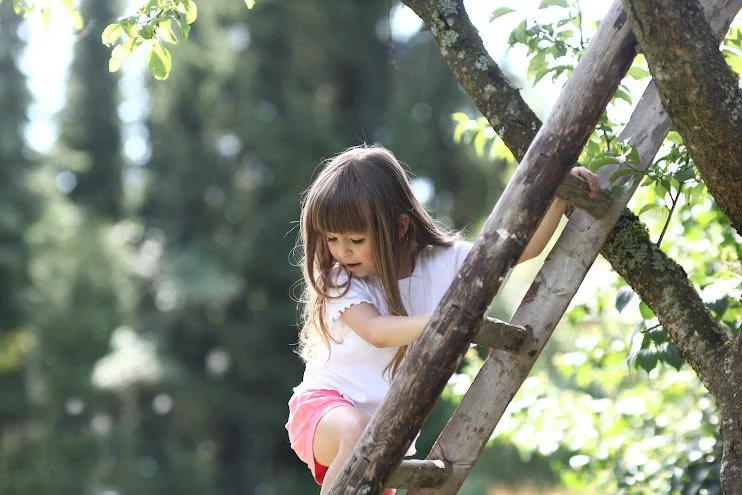
Try placing connection with your child at the forefront of your daily routine- you’ll be amazed at what comes!
“The basis of Waldorf Education is to create independent and creative thinkers. We want to be cognizant of the whole child by problem solving how to adapt, modify, customize and facilitate an experience that will empower our children to guide their lifelong learning! ”
Following these guiding principles will lead you in the direction of bringing meaning, purpose and joy to your child; my ultimate goal as an OT!
How to connect with Kristin:

Kristin Palen, OTR/L is homeschool mom and an occupational therapist with over 19 years of experience solely in pediatrics. Kristin is the owner of Coastal Connections Pediatric Therapy, in the Outer Banks North Carolina. Her practice provides direct nature based occupational therapy services, virtual parent coaching and masterclasses coming soon. Kristin’s areas of interest and specialty are sensory integration, emotional regulation, and nature based occupational therapy. Being part of a neurodiverse family Kristin particularly enjoys supporting and coaching fellow neurodiverse homeschool families to adapt, accommodate and meet the needs of their unique children.
Website: www.coastalconnectionsot.com

4 Tips for Planning Your Homeschool Curriculum
Whether you’re a home or classroom educator, summer involves a different kind of work for many of us: preparation for the year to come!

Self-rejuvenation is just as important as curriculum planning!
I’m all about prepping for the future school year, but I’m also a huge believer that a teacher must actually take a break and recharge! For educators who are at-home or in a classroom, preparation is key to a successful year, but it can also become all consuming and stressful, and can burn-out an educator before the school year has even begun. In most Waldorf schools, and in the homeschool classroom, we move on to a new grade every year- which means learning and prepping new material every year!
When I started teaching, I prepped for hours every day during the summer, and yet, I also still prepped for hours during the school year. Why so much? Because I wasn’t working in a smart way- somehow along the road, I associated lots of prep with success (more work, more reward!) but I quickly learned this was very inaccurate.
Working smart gives more reward.
Here’s some things I learned (and asked myself) along the way to preparing wisely, and finding balance in prepping for a new year.
How do I learn the best?
When I first began teaching nearly ten years ago, I was given a big box of thick books to read over the summer as my prep materials. I would spend hours, and hours (and hours!) trying to trudge my way through them, taking copious notes and trying to squeeze out the information I would actually use for future blocks.

What new planning methods are you going to try?
However, I came to realize something about myself- I am a slow reader. I enjoy reading, and like to take my time. Trying to rush through a dense book, and desperately trying to identify any helpful information gave me a stress headache, and was slow (like...tortoise slow) going. So, I reassessed.
How do I learn best? How do I retain information well?
For me, it’s through auditory learning. Give me an audio book, or listen to a documentary, and I’ll be good to go, especially if I can keep my hands busy. I’d often draw future chalkboard drawings/MLB pages while listening to my prep. Not only did my days get less headache-y, but I was working smarter! So ask yourself, how do you learn best, and go with it! Honor how you learn, and don’t feel like you “have” to prep in some specific way. It’s got to work for you!
What are my strengths and areas of weakness?
Prep smart! I learned to take my summer months to prep for those things I struggled with, and knew the least about. For these blocks, I needed sufficient time to gain my confidence and feel strong enough to bring the material to my students. For me, these blocks were always having to do with science and math. So I took my time in the meandering summer hours to practice chemistry experiments or complicated algebra without the stress of having to teach it the next day.

How can your interests help you become a better planner?
On the other hand, my personal strengths are in history and language arts, so I would prepare for these blocks in the summer by listening to documentaries, podcasts, and reading children’s books – I made general outlines of what I wanted to accomplish, and the skills I wanted to highlight for my students. I knew that when these blocks came around in the school year, I’d be familiar with the material well enough to do my prep the weekend or evening before, without much stress or anxiety.
So, ask yourself- where does my stress lie, and what can I do to mitigate it?
Do you want to take an hour everyday to draw? A once-a-week “science day”? A week dedicated to practicing woven forms? What will help you gain confidence, and what subjects can be put off for a little while without stress?
Focus on those areas where you feel less than confident in these summer weeks where you have the gift of time- you won’t regret it!
Choose materials made for children.
In Waldorf education, we’re all about painting pictures with words, setting a scene, and enlivening stories of the past with language. So why not prep by using stories? Once I discovered the youth/children's section of the library, I fell in love and jumped for joy.
“Children’s books offer so much to us as teachers- there is beautiful language, images, and more that we can be inspired by!”

A change of scenery can be a source of inspiration- try somewhere new!
Can you create your own stories and images as you see fit? Of course! But why not start with materials meant to be seen through a child’s eyes? Supplement with other materials as well if you choose, and build your lessons with a little boost from established authors, historians, and mathematicians.
Where can I add a little something special? (And also give myself a little break!)
As educators, we are used to holding each and every day and many subjects by ourselves. Some are lucky to have the support of specialty teachers, but in general, we are still holding the whole picture of the day. It can be a lot!
So- can you give yourself a moment or two during a block where you don’t have to hold the whole lesson by yourself?
Where would be a good place to bring in a guest speaker?
Visit a museum with a docent?
Go on a hike for student-lead nature observation?
Of course, you’ll still have planning on your part, but there is so much value in having your students or child learn from someone else or be given space to work independently, and to allow you to step back for a moment! I would suggest adding these special activities especially in blocks that are not one of your “strengths.”
“As educators, we aren’t always good at asking for or giving ourselves support, but we really want to encourage you to work smart, and allow yourself the gift of help and time. I’ll say it again- give yourself the gift of help and time! ”

What resources can provide support to enlivening your curriculum?
At Waldorfish, we offer fully online courses built for educators and/or students that do so much of the prep for you! Instead of having to start from zero, our courses provide a full block or year’s worth of content, along with detailed supply lists and support from our experienced instructors.
*So, where do you need support?
Art, geometry, science courses, watercolor painting, form drawing, inspiration for festival life?
Start here and let the stress go, we’ve got you!
Sit back for a moment, have a sip of iced coffee (that’s what we’re drinking in blazing California, at least!) and reflect upon your remaining weeks of summer.
How can you prep smart, and take plenty of time to rest, rejuvenate, and enjoy?
More support for your planning:













About the Author:

Caitlin Amajor taught in the Waldorf middle school for seven years, and is also a Waldorf student herself. She currently works as an administrative assistant for Waldorfish, and is also the instructor for their grades 5 and 6 geometry courses. Caitlin enjoys baking, gardening, and spending time with friends and family.
Looking for something?

Welcome to Waldorfish! We started this adventure in 2012 out of a desire to make Waldorf training more accessible to class teachers in remote locations and to homeschooling families everywhere! Read more, click here.


WE WON! Our Weekly Art courses were voted “best interactive art program.” Learn more about the award, here.


Click here for a full list of schools we work with.
A few of our most popular blog posts:

Who are our courses for?

Starting Waldorf First Grade

4 Things to Know Before Planning Your Homeschool Year

In Praise of Balance: A Healthy Festival Life

Science in Waldorf Middle School: Starting Something New!