
Waldorfish Blog

More Than Meets The Eye: The Role of Art in Waldorf Education.
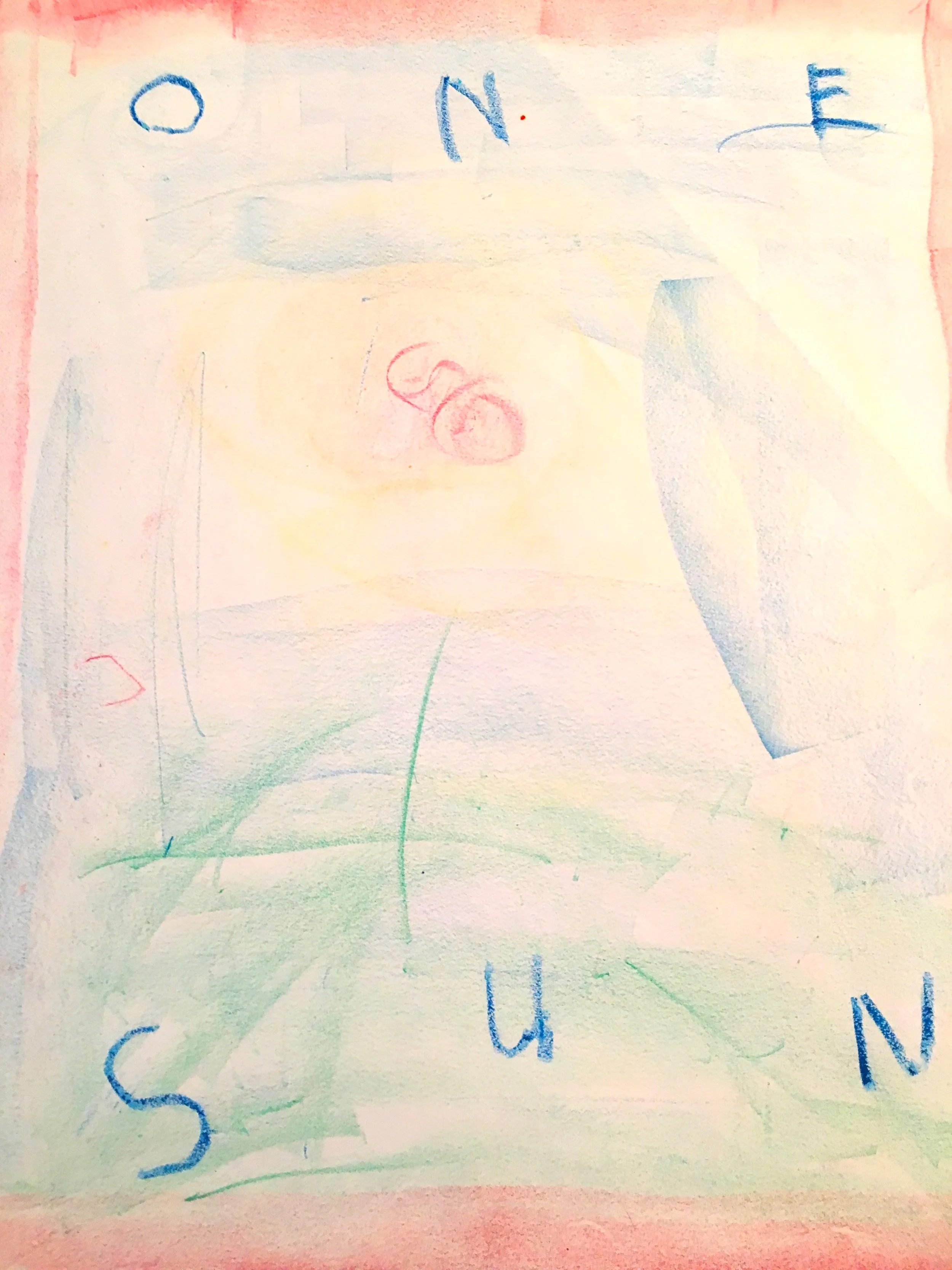
Photo: Cristina Havel
The liberal use of color that infuses all aspects of a Waldorf Education is not only delightful, it’s deliberate.
Beautiful main lesson book entries created by students, beginning in first grade with the heartwarming “One Sun”, increase in complexity throughout the grades. Color, form, technique, and meaning converge to animate all subject matter from math to science, foreign language and native language studies (and for more on art in the classroom, click here!). What is the value of this approach?
“The important thing is to arouse in children a real feeling for life, and color and form have the power to lead right into life...these details are essential to the vitality of the work.” -- Rudolf Steiner, 1922, The Spiritual Ground of Higher Education
Shaping and Perceiving
Artistic endeavors sharpen two very important human skills: the ability to shape, or see, and the ability to perceive, or distinguish. When practiced over time using diverse techniques across a variety of subjects, something very special emerges: the ability to shape and perceive new ways of looking at the world. In 1st grade, “One Sun” might become “one son” -- or “one bun”, as my son said to me, giggling, as I ate a hamburger when he was six. As the Waldorf student develops, connections continue to be made on ever deepening levels and the creative process is strengthened, resulting in students who are able to make connections across a variety of subjects. This skill is highly valued in our culture and is known as interdisciplinary thinking. It’s a truly holistic way of looking at the world and contributing effectively.
I am always doing things I can't do, that's how I get to do them. -- Pablo Picasso

Photo: Robyn Wolfe
The idea that a child cannot succeed in Waldorf Education unless he or she has excellent artistic skills is a myth to be dispelled. One child may draw endlessly in the early grades while another may be adept at origami or painting, or lose herself in handwork. Skills and interests “come in” at different times and under different circumstances. The creative process is sometimes mysterious and always transformative, no matter when and how it reveals itself. There is no wrong way to express oneself artistically. We must teach our children to create without judgement, only then will they be free from inner constraints and available to capture a world in perpetual motion. Therein lies the magic and power of art.
What is Waldorfish Weekly Art?
Waldorfish Weekly Art Foundations is a unique series of online art classes aimed at teaching a variety of methods widely practiced in Waldorf schools around the world. These classes can be used as weekly art classes that are folded into existing homeschool routines of any kind, as refresher courses for brick-and-mortar Waldorf school teachers, and, for those with far-reaching goals with respect to Waldorf homeschooling, as foundation courses that can be applied to different subjects as your student progresses through the grades.
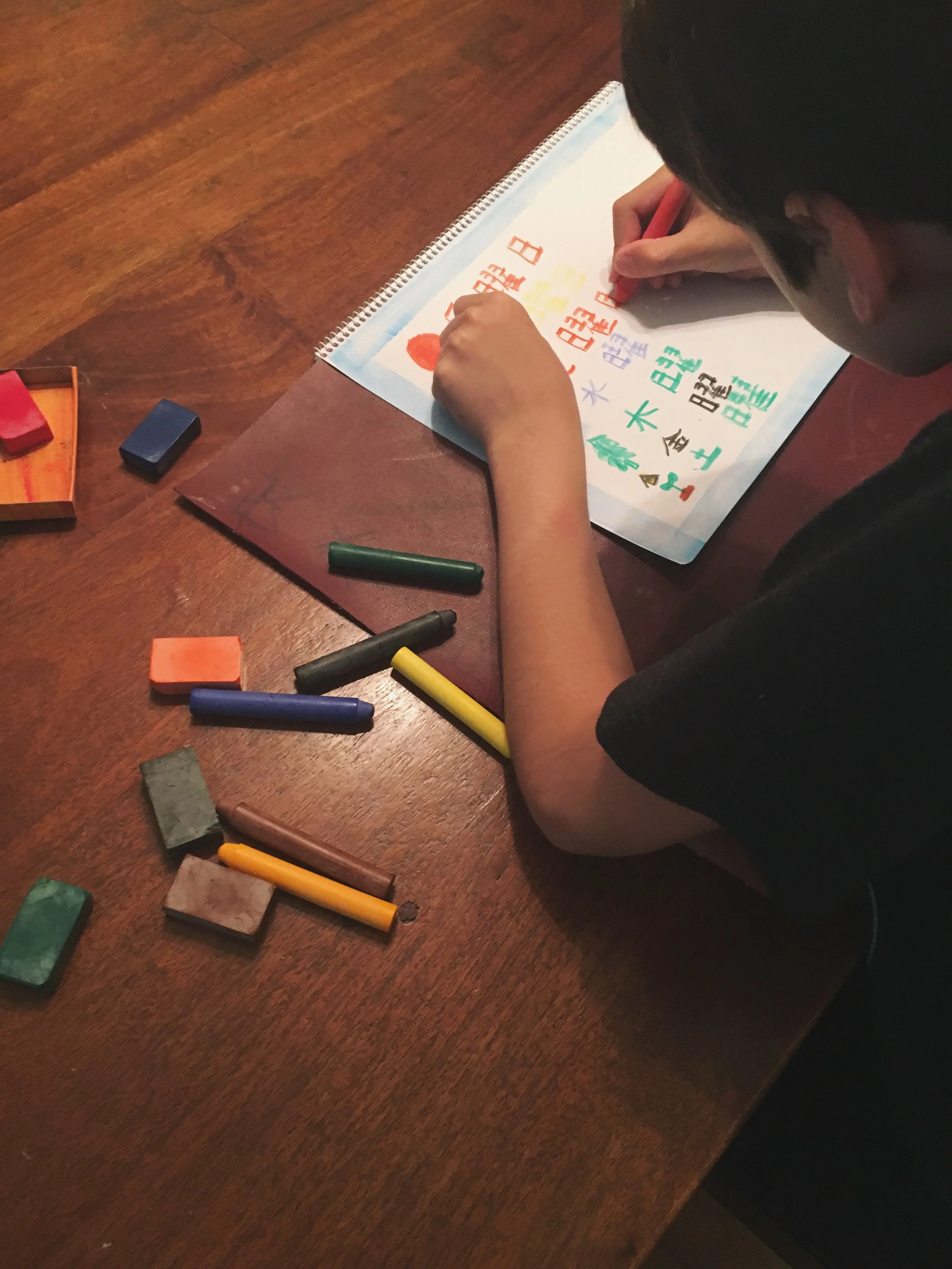
Photo: Cristina Havel
"I’m so pleased to have found art lessons that draw on the Waldorf style as opposed to all of the “outline and color in” art lessons that seem to be popular online. We are really enjoying them!” ~ Heidi
"As a teacher - drawing figures for my chalkboard drawings has always been difficult, and I was rarely happy with the results. Learning how to first draw the gestures and then detailing it. Soooo much easier and successful! I will play more with this one!" ~ Debra

Learning art as a metaphor for living well.
Miranda Altice at The Indigo Teacher has been working her way through our Waldorf art training program, Waldorf Art for Beginners over the past few weeks.
She has written about her process of shedding & peeling away the layers of anxiety and fear that so many of us carry when it comes to Art. We're sharing some of her revelations here, and you will find a link to her full piece below.
Taking the Waldorf Art for Beginner’s course from Waldorfish was honestly a summer treat for myself and would, in turn, help me in my quest to teach tiny humans how to enjoy expressing themselves through art.
But it taught me more than that. Robyn and Brian’s super simple, self-paced classes reminded me how to feel confident in my artwork… and in my life… both of which could turn out any which way the blank paper and unpredictable watercolors decide.
A few things I learned… in metaphors:
Slow down. No really… SLOW DOWN. (There is no reason to rush through each part of the process. I even slowed down getting the paintbrushes to the table. And it felt good. I felt more in the moment, and my pace rubbed off on the kids.)
Shut everything else out and OBSERVE.(Watch how the watercolors blend together and are in no rush to become something unique. Observe how the chalk clings to the fibers as it glides over the cardstock. Stop multi-tasking for just a moment and just be there.)
Be PATIENT. (The colors will absorb, they will transform, and it’s not worth raising my blood pressure when it is not meant to turn out a certain way.)
TRUST the Process. (It’s just as much about the process as it is the end result, which may turn out better than expected. Even if it doesn’t, trusting the process and keeping my cool was so worth it.)
Don’t beat myself up, and don’t be afraid. (See 3 &4. One of my favorite things Brian said in his mellow tone during one of the videos was, “Don’t be afraid… it’s not supposed to look like anything in particular.” I noticed myself going with the flow, trusting the process, and accepting the outcome… and also daring to swivel my brush a little more.)
FRAME it. (I’m allowed to admire my work and accept compliments without following up with negative, picky comments.)
Let GO. (Allow yourSelf the opportunity to be immersed in water to better prepare for absorption of watercolors – now contemplate that metaphor.)
Take what was learned off of the workspace and into the world. (I often advise this to my yoga students, “Take your practice off your mat.” The spiritual and emotional lessons learned are meant to enrich my life as a whole, not just while I’m sitting at my workspace.)
As with yoga, I found my experience with diving into the Waldorfish classes to be a meditation in movement… one that I will continue to practice....
Read the full piece here.

Photo: Miranda Altice
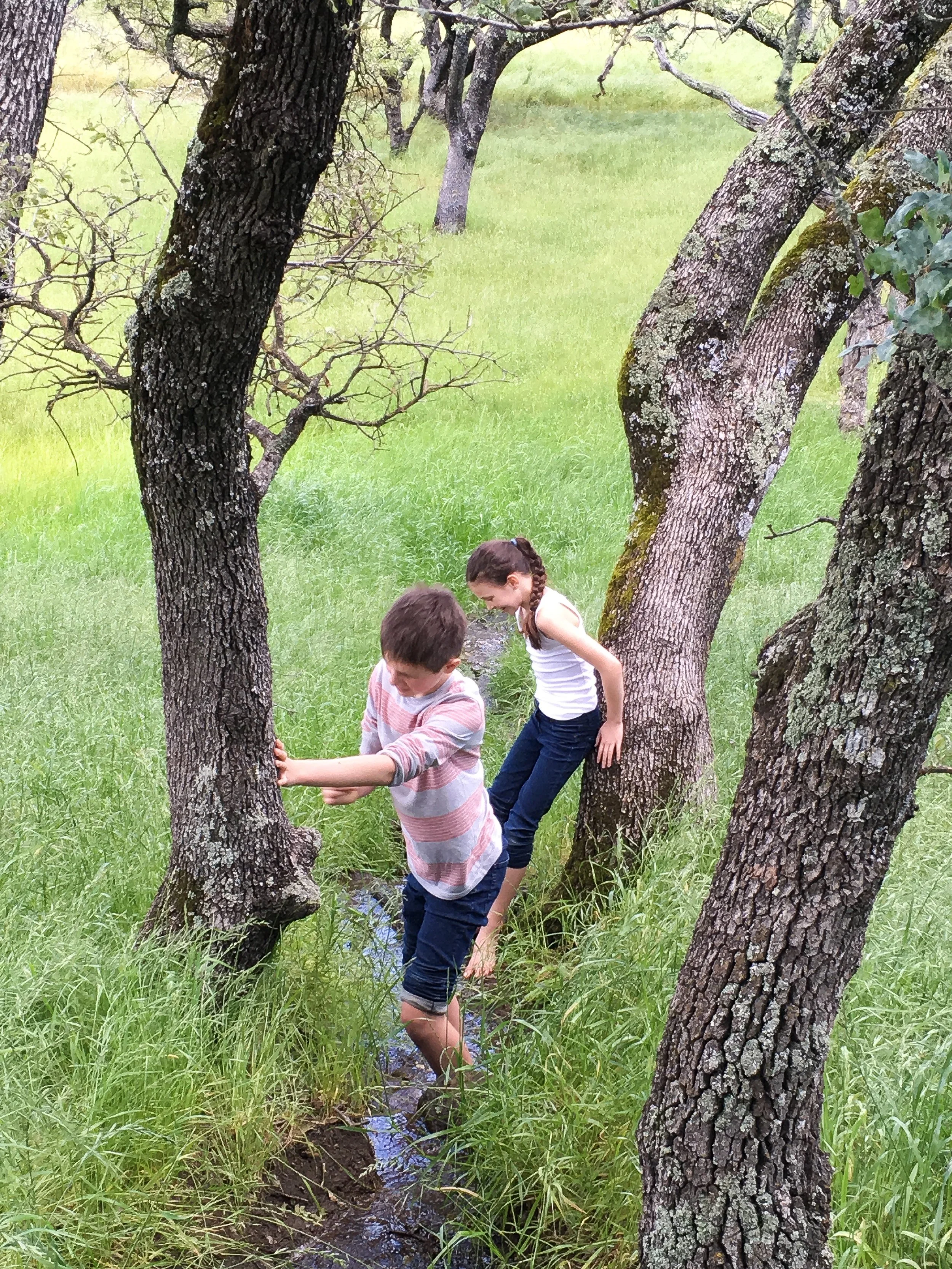
Transitioning Your Child Into Summer
The transition to summer is easier for some children than it is for others.
Changes in rhythm and routine can be unsettling. For adults, a child’s irritability at this time of year can be baffling. Isn’t this when they are supposed to be the happiest and most care-free?
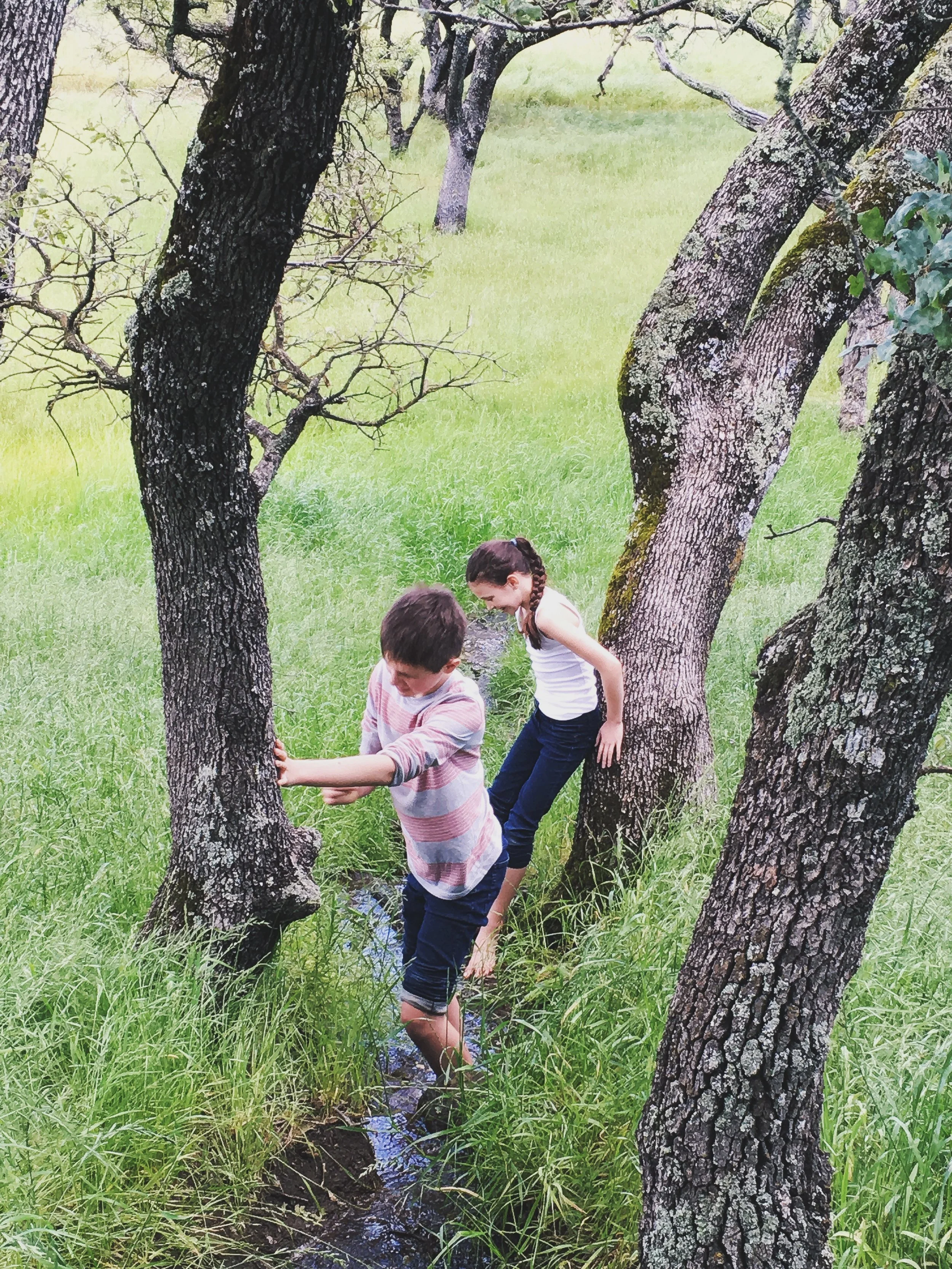
Photo: Robyn Wolfe
As parents it helps for us to remember that the end of a school year is the end of something known, an identity they have worked daily to reinforce through 9 months of schoolwork: 1st grader, 3rd grader, 7th grader. What follows is something as yet unknown. Our children need support as they work with the feelings that this time holds (and for more in supporting your child’s daily rhythm, click here!). Every child will process it a little differently.
This is the first summer in which our son’s transition has been relatively smooth. In the past, it took until the month of August for our family to find our current and hum happily. What’s different about this year?
I worked with his temperament.
My son is choleric. The first thing I did was set a piano practice challenge for him. We set a high number with 2 milestones to cross and prizes to be earned along the way. Music is a huge part of his life and these goals bring a sense of order and familiarity to the summer months, as well as some fun (as cholerics well understand!).
At the end of the school year, when he wanted a taste of what was to come the following year, I allowed him to explore the work. We home school, and our 4th grade Math book arrived during the final week of 3rd grade lessons. When he was the first to wake up the following morning and took the time to create practice problems on the blackboard, I acknowledged his curiosity and the time he spent learning something new.
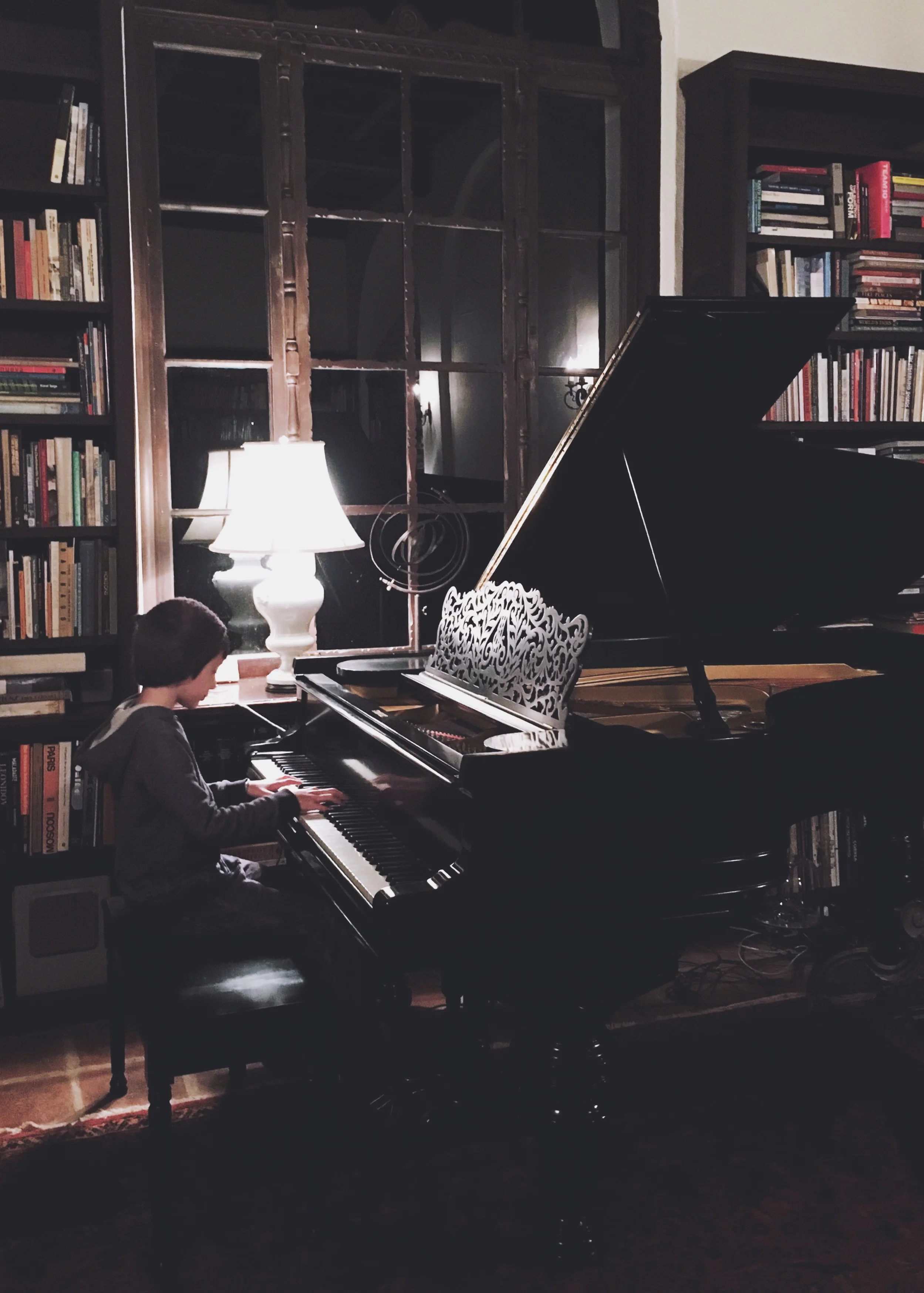
Photo: Cristina Havel
His completion of 3rd grade was understated. These transitions are much more pronounced for us than they are for our children, as they have no idea what it’s like to raise a child, watching them learn and grow in what feels like the blink of an eye. I avoid talk of him being a 4th grader. I have learned from years past that even the most well-intentioned build-ups over the course of a summer can have unintended consequences involving undue stress. If we look deeply, we may find that such discussion is an attempt to relieve our own ambivalence about the passage of time. Many children won’t even ask who or what they “are” -- they know! But if they do, a gentle discussion that begins with asking them why they feel the need to know, or how they would characterize themselves, is a good starting point.
We have been engaging in a lot of creative projects and play. Cooking, baking, playing cards, playing basketball, playing music, and being outdoors with our dogs are a few of the things we like to do as a family. We have doubled up, over the past couple of weeks, on time spent doing these sorts of things. This is nourishing for all of us, and appears to bring real comfort to our son. It’s often when our children's minds are most at ease that the pathway to their inner lives are most accessible. Encourage them to communicate. Their answers may be surprising! More importantly, it will free them up to enjoy their time off as well as create space for deep connection.
Bed time has remained consistent. Summer is the season in which all the work from the previous year has time to grow deep roots. Just as we would give a sapling the right conditions to grow into a strong tree, so we do with our son. Plenty of sleep and winding down at the same time every night is invaluable, including -- whenever possible -- throughout travels, entertaining house guests, an increase in sleepovers, and all the other fun that accompanies this time of year. Be sure to allow plenty of time for rest, and don't be afraid to schedule it in like you would anything else.
Happy Summer!
Don’t forget to celebrate the Solstice with a special meal outdoors, a sunset hike, or any other ritual that is meaningful to your family. If you don’t have one yet, create it now -- it’s never too late!
~Cristina





Cristina Havel lives in Southern California where she and her husband have worked together for nearly 2 decades. They homeschool their son using the Waldorf pedagogy as a guide and believe in the transformative powers of art and nature.

4 things to know before planning your Waldorf homeschool year.
Anyone who has come into contact with Waldorf education -- and those of us who have invested our hearts and souls into it’s tenets -- know firsthand the misunderstandings that arise within and around this extraordinary system of education.
The aim of this article is to help clear up some fundamental misunderstandings about the Waldorf approach to life and learning (for more on Waldorf curriculum, click here!), as well as share some of our experiences with the hope that those reading this will be able to better serve the children they are educating. (Initials in parenthesis indicate which author is speaking.)
pedagogy:
noun - ped·a·go·gy \ˈpe-də-ˌgō-jē also -ˌgä-, especially British -ˌgä-gē\
"...concerns the study of HOW best to teach."
curriculum:
noun - cur·ric·u·lum \kə-ˈri-kyə-ləm\
" ...refers to the lessons and academic content taught in a school or in a specific course or program.." (Or, in other words, WHAT to teach.)
If you’d prefer to listen to the audio version of this post, you can do that right here:
#1. Waldorf education is a pedagogy (not a curriculum).

Photo: Cristina Havel
Waldorf education is a set of ideas about HOW to teach, laid out by Rudolf Steiner. Waldorf Education is NOT a curriculum - in it's purest form it does not specify which topics and lessons to teach in the classroom. This is a very important distinction to make. It allows an important shift to take place: away from a blanket approach to education, which puts a child’s heart and mind to sleep, and toward an open-hearted and living tradition in which the learning process takes on its true purpose: to awaken personal gifts that allow one to be of maximum service to society.
“In a Waldorf school outer forms do not follow set patterns, so that it is quite possible for one teacher to teach his class of nine year olds well, while another, who takes a completely different line, may be an equally good teacher. In this way we plan the curriculum for each year in accordance with the nature of the growing child. As long as the teacher feels in harmony with the underlying principles and with the methods employed, he must be given freedom in his work instead of being tied to fixed standards...” ~Rudolf Steiner, The Renewal of Education, 1920.”
(RW) Conversations with mentors over the years have continually reminded me that Steiner never gave specific indications about which topics and subjects should be taught in which grades. This notion of "saints in second grade, farming in third grade", etc. is a convention created by schools needing to be able to assure parents that all children will receive an equal (or at least similar) education from grade to grade no matter who the teacher is. After all, a school can hardly market its’ program to tuition-paying parents using the slogan "Our teachers do whatever they feel like!"
#2. Rudolf Steiner felt that freedom was the key.
Photo: Cristina Havel
(CH) It’s not quite that simple, of course, for Steiner believed freedom was essential for teachers, and that they should ideally be able to discern what their students need from grade to grade, based on deep and unbiased observation of the children themselves. Freedom was not viewed in a negative light, as irresponsible or out-of-touch. On the contrary, Steiner felt that freedom was the lynch pin of his pedagogy, and as such that which would most effectively serve the developing child.
Central to the idea of freedom in music is the concept of improvisation. Jazz pianist Marcus Roberts, in the documentary “Note by Note: The Making of a Steinway”, says the following about creativity and improvisation:
“Improvisation...does not mean “random”. It means that you can only play something that you know. But you can present it in a context that you didn’t know was going to happen, that’s the beauty of it. So in the same way that you live day to day, and you don’t know exactly what the day’s gonna be, you can only do or say or achieve things that are within your grasp of understanding.”
Steiner is well understood in this context. Freedom in education is not the absence of knowing but the deepest of knowledge, coupled with the sense of responsibility to bring it to life in ourselves and the children we teach.
#3. A pre-packaged curriculum is a good *starting point*.
(RW) While often a great place to start, a packaged curriculum is unlikely to perfectly meet the children in front of you every step of the way. They can create an artificial standard .... a set of "shoulds" and "supposed to's" for each grade that could start to resemble dogma, depending on who the facilitator is and how it is being implemented. Of course, packaged curricula offer benefits too. They provide form to a family just beginning their homeschooling journey, when parents are still determining how their children learn best. They provide structure and predictability, two things which are appealing to many families.

Photo: Cristina Havel
(CH) I have a son that is finishing the 3rd grade. After trying to approach the Old Testament block from several different angles, I found myself questioning whether these studies (an absolute staple, in my mind, of the 3rd grade Waldorf curriculum) were right for my child. The stories I read to him -- which I drew from more than one source -- did not make his eyes light up, a hallmark of connection in education. Instead, perplexed looks were followed by lackluster book work. After giving it a lot of thought, I sent a message to Robyn. The following exchange ensued:
Me: Hey! I'm thinking about skipping Old Testament altogether. I'd like to do something more along the lines of Dharma stories. Will that get me kicked out of Waldorf home school?
RW: Have I ever told you what Steiner said about specific subject matter for specific grades?
Me: NO! What? What did he say??
RW: Nothing concrete, actually.
(RW) We went on to discuss Steiner's original intentions for Waldorf education. I explained that the key is to examine your (story, lesson, activity) options and then choose consciously, knowing what the big picture ideals are for the specific age or grade of your child. Grade 3 -- and what is commonly referred to within Waldorf circles as Middle Childhood -- is about the emerging sense of self, or being. Origin stories at the macro level down to stories related to self-knowledge and self-regulation at the micro level are the guiding stars of this age and grade. It is possible to use Old Testament stories from the Bible, Dharma stories from Buddhism, or stories from a number of other belief systems to achieve the same goal. What is important is that you find stories and images and activities that speak to the child's heart based on their current stage of development. THIS is the cornerstone of Steiner's educational philosophy: everything must awaken the child before you. It’s what makes Waldorf education successful and timeless.
#4. Waldorf homeschooling families are uniquely positioned to carry forward a faithful interpretation of Rudolf Steiner's vision for education.
(CH) Small-scale learning environments are best suited for the kind of exchanges that foster awakening both internally and externally. Creativity and flexibility are hallmarks of Steiner's pedagogy. If an activity isn't engaging a child, find another one that does. The point is not to cycle endlessly through activities with the hope that "something will stick". On the contrary, this approach stems from the belief that children long to engage in the world around them and if he or she isn't doing so, it is the responsibility of the educator to remedy the situation. If a child is not ready to write, if math is the source of frustration, try bringing the material to life in a different form. Scale back the amount of book work a child does, or use an established topic of interest as the foundation for handwriting practice, language arts and recall. Tell more stories around Math — or none at all. If she loves languages, recognize her interest in other cultures and encourage her to express herself to whatever degree she would like, including reading and writing. Never hold children back from their interests because they do not conform to a formalized schedule or curriculum. This is antithetical to Waldorf education. The point is to develop creative and generative habits that make learning a lifelong priority, as opposed to education being an act of conformity.
Photo: Cristina Havel
(RW) Now that we're a few years into this journey, we understand deeply that if a particular block or story isn't meeting a child, it should be considered a hint that something needs to shift. We recognize the signs now, when it's time to select a different set of stories, or change our daily routine to make room for something else. Mostly we understand that there are very few should's and have-to's in Waldorf education, and that our children themselves will help us discern what is needed.
(CH) My son is on the young side for 3rd grade. For this reason I chose to wait until the end of the year to do what is typically the block reserved for Old Testament. I sensed that the material would speak to him on a deeper level once he reached the age of 9 (and the 9-year change, perhaps the subject of another essay).
(RW) I am frequently asked what curriculum we use for homeschooling our two children. I answer this question hesitantly and always with the disclaimer that what we use may not be the right program for other children. In truth, we use many resources. We use one program for math because it speaks to one of our children, and something entirely different for the other child. We design many of our own blocks, but also use a few that are pre-packaged because we know the content will cause our kids' eyes to light up. These are decisions we can make now, only after spending a few years learning the intimate details of their unique learning styles. Truth be told, we initially picked a lot of "wrong" things. Finding your curriculum groove can take some time. Be patient, be open to trial and error, borrow things from friends, and take advantage of the free sample lessons that many curriculum companies offer. Trust that your children WILL let you know what works for them and what doesn't.
Related posts on curriculum planning and Steiner's thoughts on freedom:
Bring good chocolate (1st of a 3-part series)
Freedom! (part 2, includes a George Michael-inspired dance break)
It won't fit in a box (part 3)

Cristina Havel lives in Southern California where she and her husband have worked together for nearly 2 decades. They homeschool their son using the Waldorf pedagogy as a guide and believe in the transformative powers of art and nature.

An early career as a park ranger led Waldorfish co-founder, Robyn Beaufoy, to her love of illustrating and education. Trained initially as both a public school and Waldorf teacher, she has been involved in art + education for over 20 years, including homeschooling her two children. Robyn is currently working as the manifestor of the creative vision held by the Waldorfish team. Working out of the premise that life is short (but sweet!), she empowers soul-filled teachers & families to (re)find their JOY in teaching and making art.
Looking for something?

Welcome to Waldorfish! We started this adventure in 2012 out of a desire to make Waldorf training more accessible to class teachers in remote locations and to homeschooling families everywhere! Read more, click here.




WE WON! Our Weekly Art courses were voted “best interactive art program.” Learn more about the award, here.


Click here for a full list of schools we work with.
A few of our most popular blog posts:

Who are our courses for?

Starting Waldorf First Grade

4 Things to Know Before Planning Your Homeschool Year

In Praise of Balance: A Healthy Festival Life

Science in Waldorf Middle School: Starting Something New!