
Waldorfish Blog
An Autumn Harvest of Wonder :: Kim Allsup
“Can we have a water break soon?” We have just started gardening class and I know these fifth graders are more thirsty for wonder than they are for water.
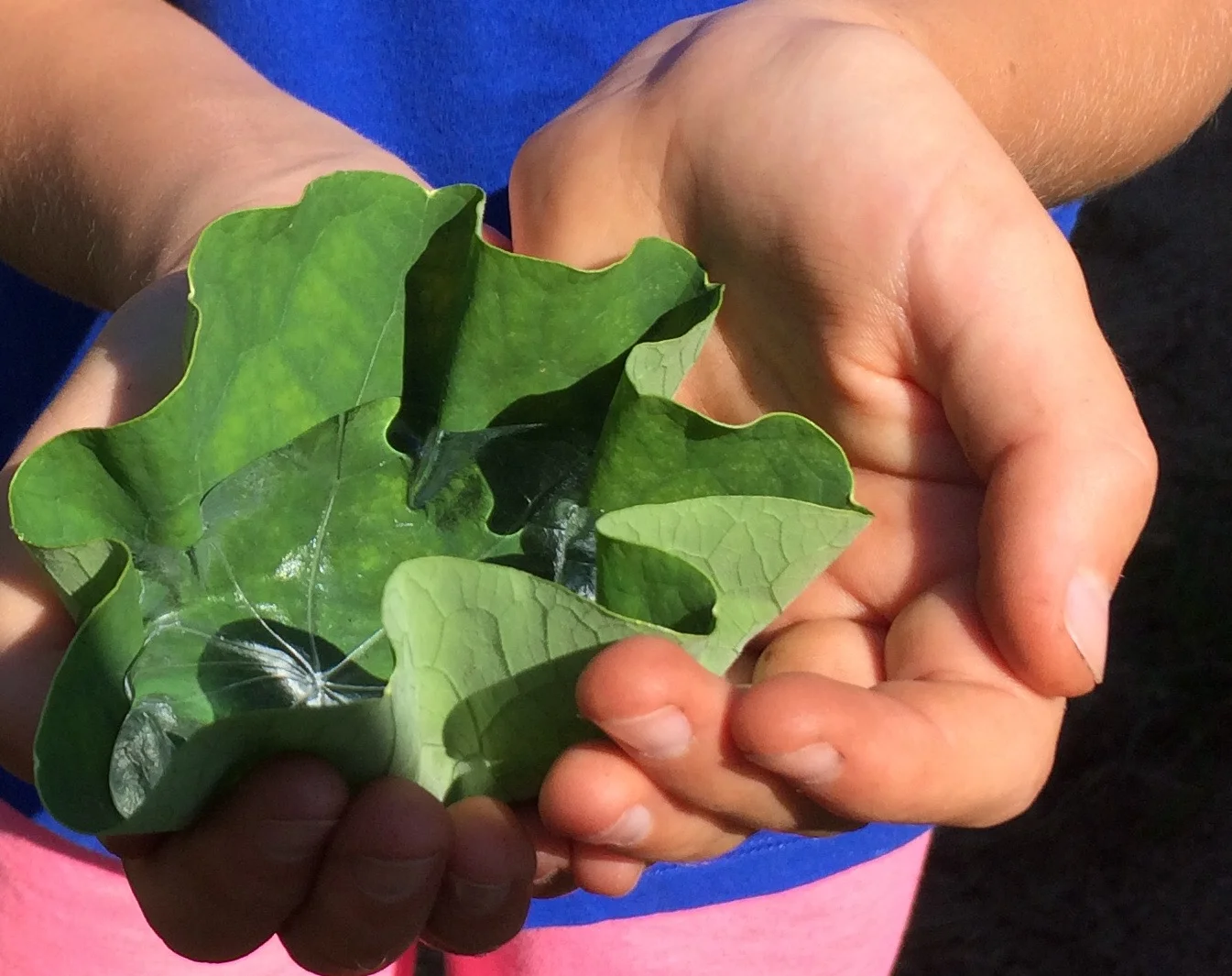
“We’ll break for water in a little while,” I promise, knowing that the children’s carefully lined up water bottles will not be touched.
It is Autumn, a season for a harvest of pumpkins and the last tomatoes, for planting garlic, improving soil, and waiting as long as possible to harvest the carrots before they are buried under deep snow. At our school, Autumn is also a time to turn our attention to our hoop house where we plant and harvest all year long. The hoop house is uncovered for the summer months so it doesn’t overheat and so the soil can receive direct sunlight. Then, at Michaelmas, an enormous plastic sheet is unfurled on the baseball field (for more on celebrating Michaelmas, click here!)
Middle school students surround the sheet, grasping it firmly and carefully pull it over the ribs of the 48 foot long greenhouse in the same way the kindergarteners might pull a blanket over a doll cradle.
I like to think that our practice of adding a layer of clear plastic to the uncovered hoop house (to create a protected sun-filled space) is a fitting tradition for the Michaelmas season, a time when we turn inward, searching for light and strength.
Just as Michaelmas is a time to call on the courage we need to face the frigid months ahead, we call on the most courageous plants of the vegetable world to thrive in the demanding environment of the winter hoop house. Lettuce, kale, leeks, carrots, peas and spinach can tolerate the alternation of sun-warmed days and frigid nights. Of these, it is spinach which grows best, the iron-rich Saint George of the plant kingdom. Now, in early autumn, beds of green bunny ears, the spinach cotyledons, appear. Soon they will develop the first of the true leaves and come under the protection of the clear plastic protective sheet that will hold in the warmth of the sun. We will harvest from these same spinach plants until well into spring.
But it is not spinach that rouses the curiosity of the fifth graders. Mid-way through class I ask a student to hold a running hose over a strawberry bed and ask him to call his classmates individually for their water breaks. (Note: it is important to use a lead free hose for drinking.) One at a time, the fifth graders bend over a flowerbed, searching for the biggest round nasturtium leaves they can find. The best leaves for their purpose are about six inches across, large enough to make a pouch held between two hands. The entire nasturtium plant is edible including the round leaves which are crisscrossed with pale stripes in an asterisk pattern. The children carry these unique, disposable leaf-cups to the running hose and fill them again and again, drinking eagerly from their leaf-lined hands.
Then the magic. Everyone keeps a silvery drop of water on the leaf, gazes at it in amazement and then begins to roll the little ball of water around the leaf.
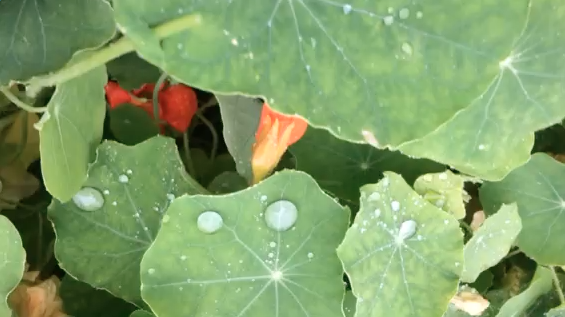
If you and your children have never swirled a drop of water in a nasturtium leaf, you must find a nasturtium plant and give this a try or, ideally, play with nasturtium leaves in the rain as I did recently with a fourth grade class (see video below.) Water drops on these leaves behave in a most unusual way. They don’t thin out and run across the leaf. Rather, they bead up into round transparent balls that roll merrily around the leaf when it is moved.
This activity is not new to the fifth graders. Exploring nasturtium leaf magic has been an autumn ritual at our school for some time. Long ago, I showed this unusual phenomenon to a group of children, but I no longer have to do this. Each Autumn, children excitedly carry these round leaves into the recess yard to show this marvel to new students, first graders and their teachers.
Wouldn’t it be lovely if all knowledge could be shared with such eagerness?
The younger classes are more likely to create experiments with the interaction of water and leaf than to ask an adult for an interpretive commentary. However, by fourth or fifth grade, when wonder blossoms into a deep curiosity, queries emerge about why water behaves differently on a nasturtium leaf than it does on, say, an oak leaf. It is then that I tell them about the nano-hairs on the nasturtium leaves that elevate the drops on a layer of air.
At the end of Autumn gardening classes baskets of beans and corn, carrots, squash, lettuce, cucumbers and more are delivered with delight to the kitchen door where our school chef takes delivery from our little farmers and then incorporates what we grow into lunch. But, while the autumn harvest of wonder and curiosity do not fill baskets, these too provide a type of nourishment that sustains.

Kim Allsup is happy with her hands in the soil, surrounded by children planting seeds, watering plants and discovering earthworms. A Waldorf teacher at the Waldorf School of Cape Cod, and a writer, she blogs at Growing Children. She loves this quote from Rudolf Steiner, "It is absolutely essential that before we think, before we so much as begin to set our thinking in motion, we experience the condition of wonder".
(interested in sharing your work on Waldorfish? Check out our submission guidelines, here.)
StoryStarters!
We're bringing our storytelling kits back!
Over the past few weeks we've had many, many requests for support around storytelling...something about Autumn maybe? We're coming closer together after the wild open freedom of summer (at least here in the Northern Hemisphere anyway...happy Spring to our friends in the south!). That closeness is so perfect for sharing and listening to stories.
We created this deck and accompanying online classroom last year. 40 unique watercolor illustrations on the front, 4 unique words on the back of each one.
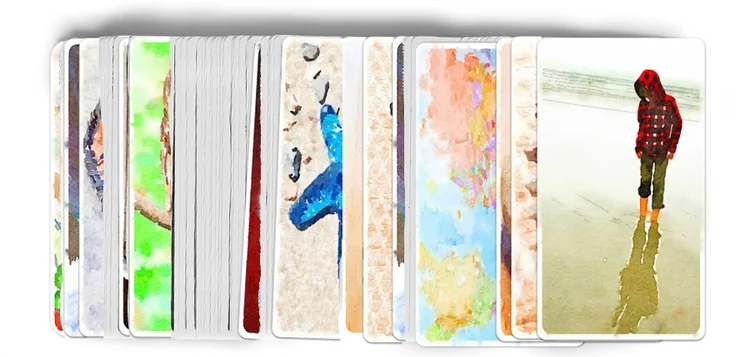
The deck alone didn't feel like enough though....we wanted to give you more support. More inspiration.
And so....the online classroom was created.
Here you will find 3 audio recordings (over an hour total) and a 19 page e-book. The first audio is filled with ideas and insights about how to bring more storytelling into your home & classroom. The other two are sample stories told by me, using cards from the deck. Enjoy a sample from the beginning of the first audio, below.
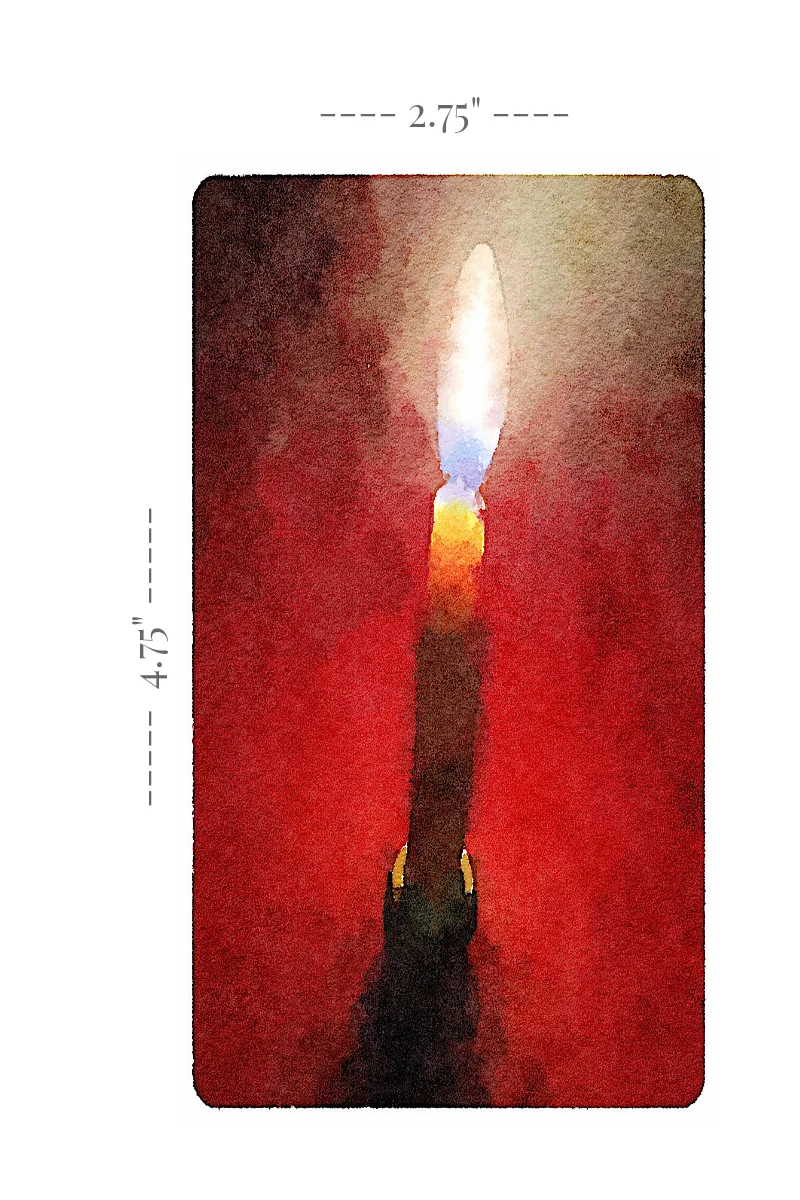
The cards are tarot-sized..so big enough for even little hands to hold, but not too big. I had them made with a water resistant coating (because, well...children). And they come tucked safely inside a small muslin sack that you can easily toss into your bag when your family is on the go.

We're offering a special pre-order discount until 10.16.15.
This price also includes shipping (within the US...contact us if you live elsewhere). A total deal! Your kit will ship by Nov 1st...(is it to soon to mention what an amazing family-gift this would make?) You can read more about the StoryStarters here.
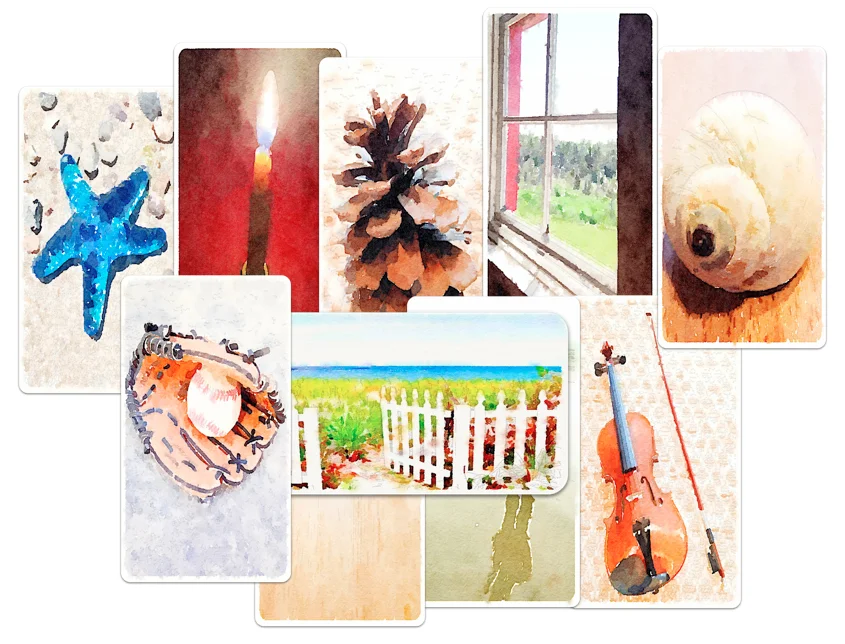

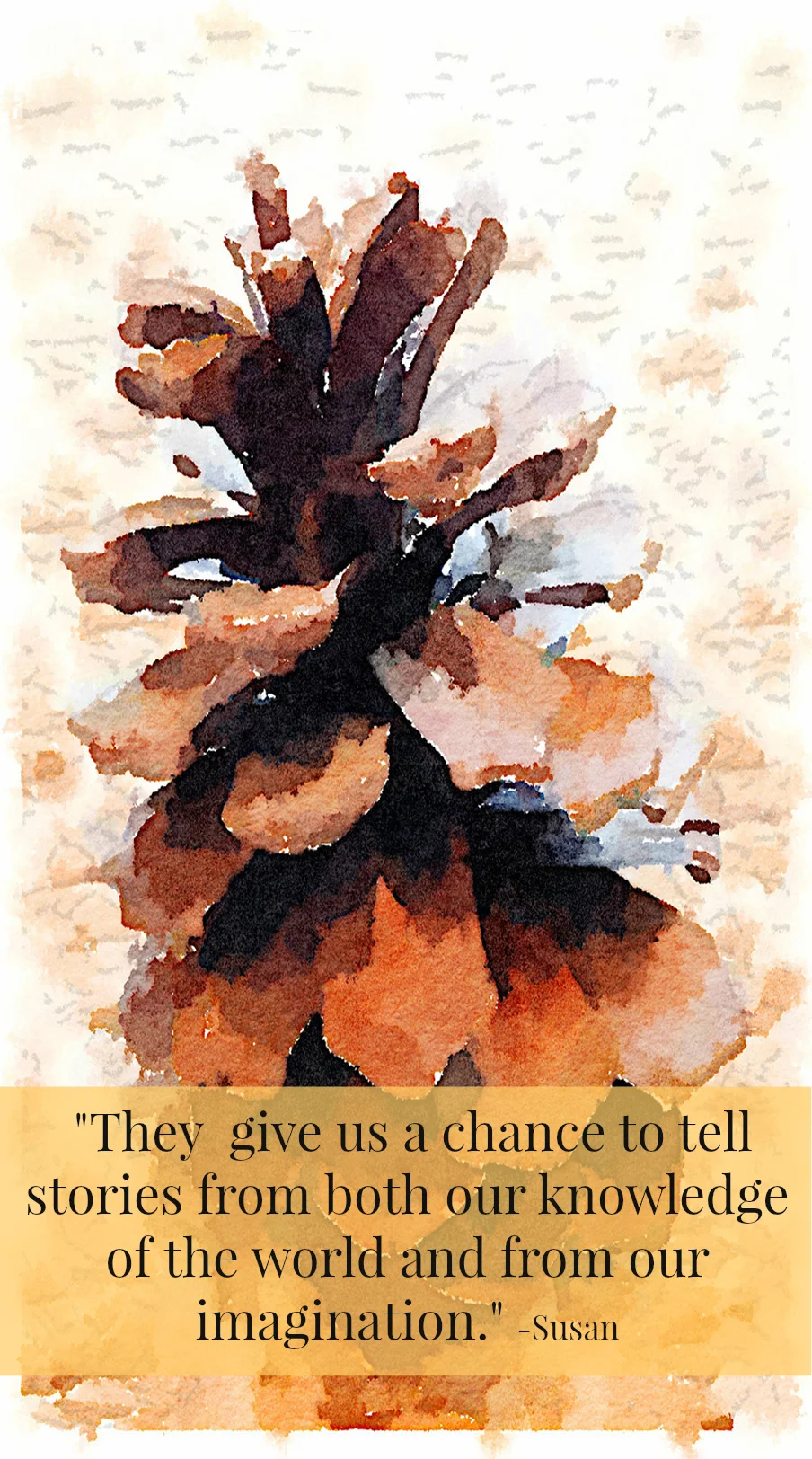
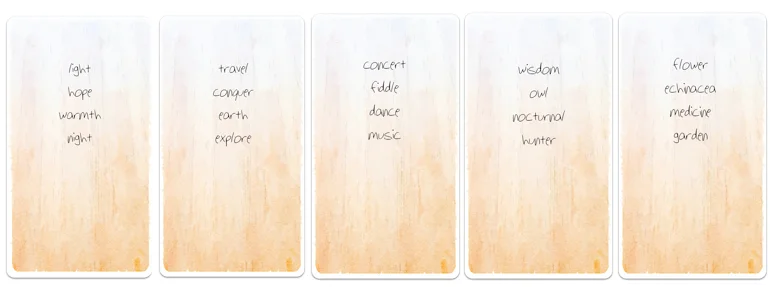
Each back has 4 unique words related to the illustration on the front. Use one, use them all, or none! It's your story to create ;)
e-Workshops :: week #1
Thank you all who participated in our inaugural e-workshop last Friday (9/25/15)! Brian survived a technical glitch at the beginning and rallied to spend an hour discussing the temperaments. This workshop will be the foundation upon which all future workshops are built.
Brian introduced each of the 4 temperaments, and then went deeper, exploring how we can better use them to understand our children & students. He also discussed the temperaments as they relate to the arts.
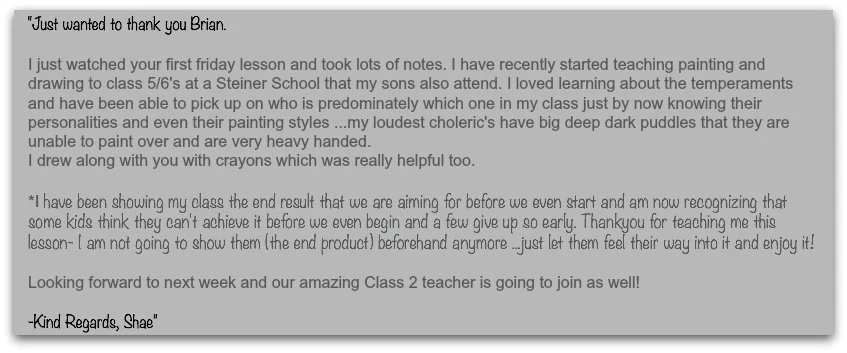
Some sweet feedback:
This workshops series is pay-what-you-can! We have a minimum suggested payment of $5 for the first 3 days after we air the workshops, however, we truly want this to be accessible to EVERYONE. If the minimum payment is a stretch for you right now, then please participate anyway :)
We'll be posting the topic for week #2 in the next couple of days!
Until then,
Robyn & Brian
New workshop series!
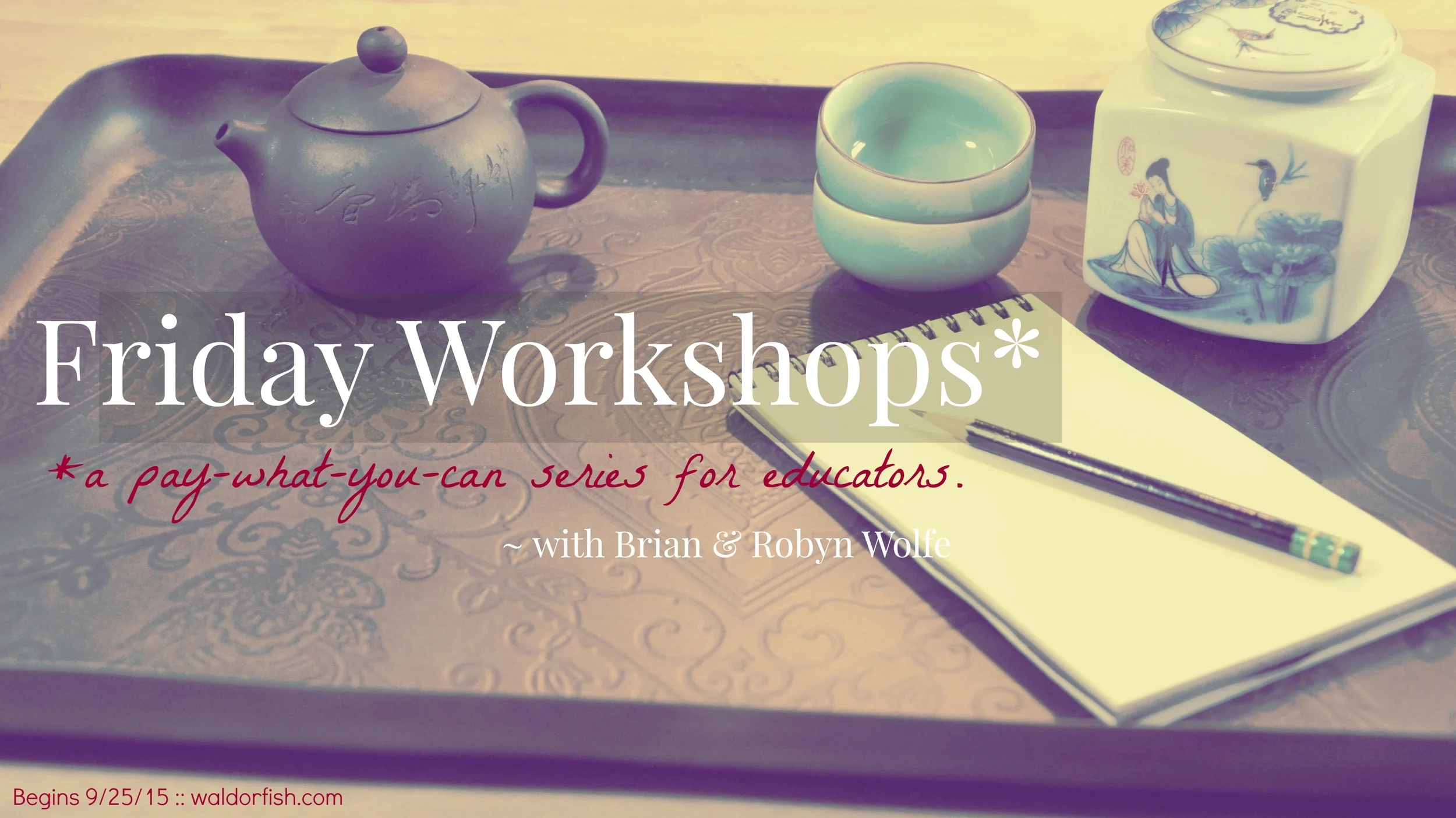
You're invited!
Beginning Friday, September 25th, we will be offering a weekly workshop series - Join us online, in our studio, for an hour of conversation and exploration.
This series is idea for home educators, class teachers & teacher-trainees...but really, anyone looking to deepen their understanding of waldorf pedagogy is welcome!
Guaranteed to be casual (because we're not capable of being anything else), we invite you to bring a notebook, a steaming mug, and your questions!
Example Topics
* Form-drawing & Geometry - how to build a living picture of numbers. We'll look at how form drawing prepares children for academic learning. Journey from straight line, curved line all the way to platonic solids!
* Rainbow to Black & White - Art from childhood to adolescence. How do children develop as artists? How does the Waldorf art curriculum meet the developing child? We'll look at the temperaments as they relate to painting/drawing. Inward and outward gestures in Waldorf art.
Why so generous?
For three years now, the question in the back of our minds has always been "how can we make our Waldorfish resources affordable for EVERYONE (and yet still earn a living at the same time)?" We have always operated our business in a style modeled after the idea of Sacred Commerce -- an idea which posits that business can be a center for personal transformation as well as a source of right livelihood.
When we started planning this online workshop series, it wasn't too big of a leap for us to decide on a pay-what-you-can fee structure.
Really. We mean it. You decide what you can afford.
For those who have asked for minimum donation guidelines, let's say $5 per workshop. If you can afford to donate more than that, you are helping to make this resource available to someone who cannot. *If you cannot afford the minimum donation, please still attend!
Our goal is for this to be accessible to everyone!
xoxo-Robyn & Brian
Looking for something?
Welcome to Waldorfish! We started this adventure in 2012 out of a desire to make Waldorf training more accessible to class teachers in remote locations and to homeschooling families everywhere! Read more, click here.


WE WON! Our Weekly Art courses were voted “best interactive art program.” Learn more about the award, here.

Click here for a full list of schools we work with.
A few of our most popular blog posts:

Who are our courses for?

Starting Waldorf First Grade

4 Things to Know Before Planning Your Homeschool Year

In Praise of Balance: A Healthy Festival Life

Science in Waldorf Middle School: Starting Something New!