
Waldorfish Blog
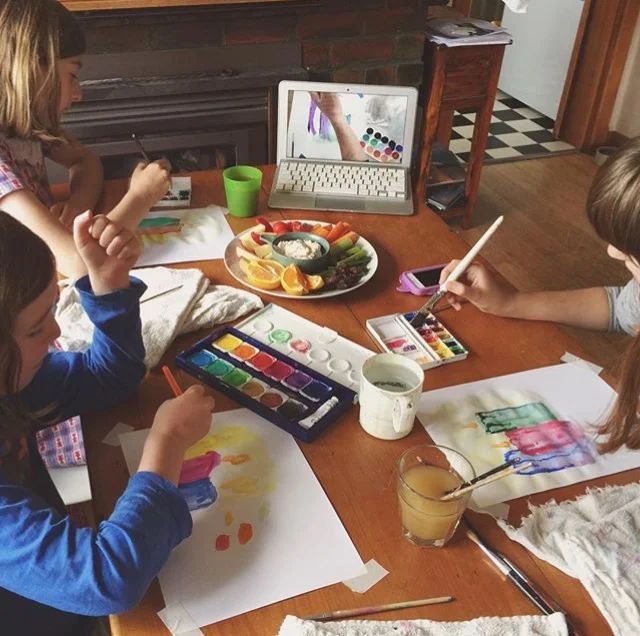
Helping our children create realistic expectations around Art.
Very often children and adults alike have unrealistic expectations when it comes to their initial attempts at art.
So often we are quick to move into frustration when our art work doesn't match the images we have in our minds.
Brian and I sat down (on the floor. we do our best thinking there.) to discuss this situation, and some ways to help ourselves and our children shift mindsets into one of growth.
Drawing from 14 years of teaching Waldorf art education and coaching basketball, Brian points out that
"practice is as important in art as it is in music, or sports, or math....
you wouldn't expect to only ever need to do one long-division problem to completely grasp the concept! Art is no different."
Password: rainyday
Looking to outsource some art lessons this year? Take a look at our Weekly Art program…
Is Weekly Art right for my family?
To help you answer the question "is this program right for my family?" we're giving folks the opportunity to try out a lesson for free. Fill out the form below and tell us where to send yours!

A finished example created using our free sample lesson.

Jean Miller's review of Waldorfish Weekly Art.
Jean Miller of Waldorf-Inspired Learning recently played with several of our Waldorf art lessons and wrote a review of the Weekly Art Program.
We loved having another teacher experience our lessons, and share their thoughts from the perspective of someone who also works closely with homeschooling families! Here's a taste of her thoughts:
"When I talk to parents about planning mean lesson blocks, they often ask, “How can I easily focus on Waldorf painting and drawing?”
Here’s how the conversation usually goes. I am explaining the 3-part lesson in a 2-day rhythm like this, “on day one, you present new material with a story, and then you paint a picture or draw into the main lesson book. On day two, you revisit that story and write a summary into the book.”
Most parents reply, “OK, I can do that. Except I don’t really know how to paint or draw.”
Well, then what?
Often I find myself saying you just have to do it. Just start, and you will learn as you go along.
But over and over again, I hear from clients that they never get to it because they feel inadequate, not prepared. They don’t know how to do the drawing and painting in the Waldorf style, so this stops them. Many parents simply avoid moving forward with their main lesson block. They get stalled and hung up here.
(Can you tell this is all very familiar to me? When my children were young, I had this fantasy that if only I could freeze them for about five years to go and learn everything I needed to about Waldorf, then maybe I could come back and feel prepared to homeschool them!)"


More Than Meets The Eye: The Role of Art in Waldorf Education.
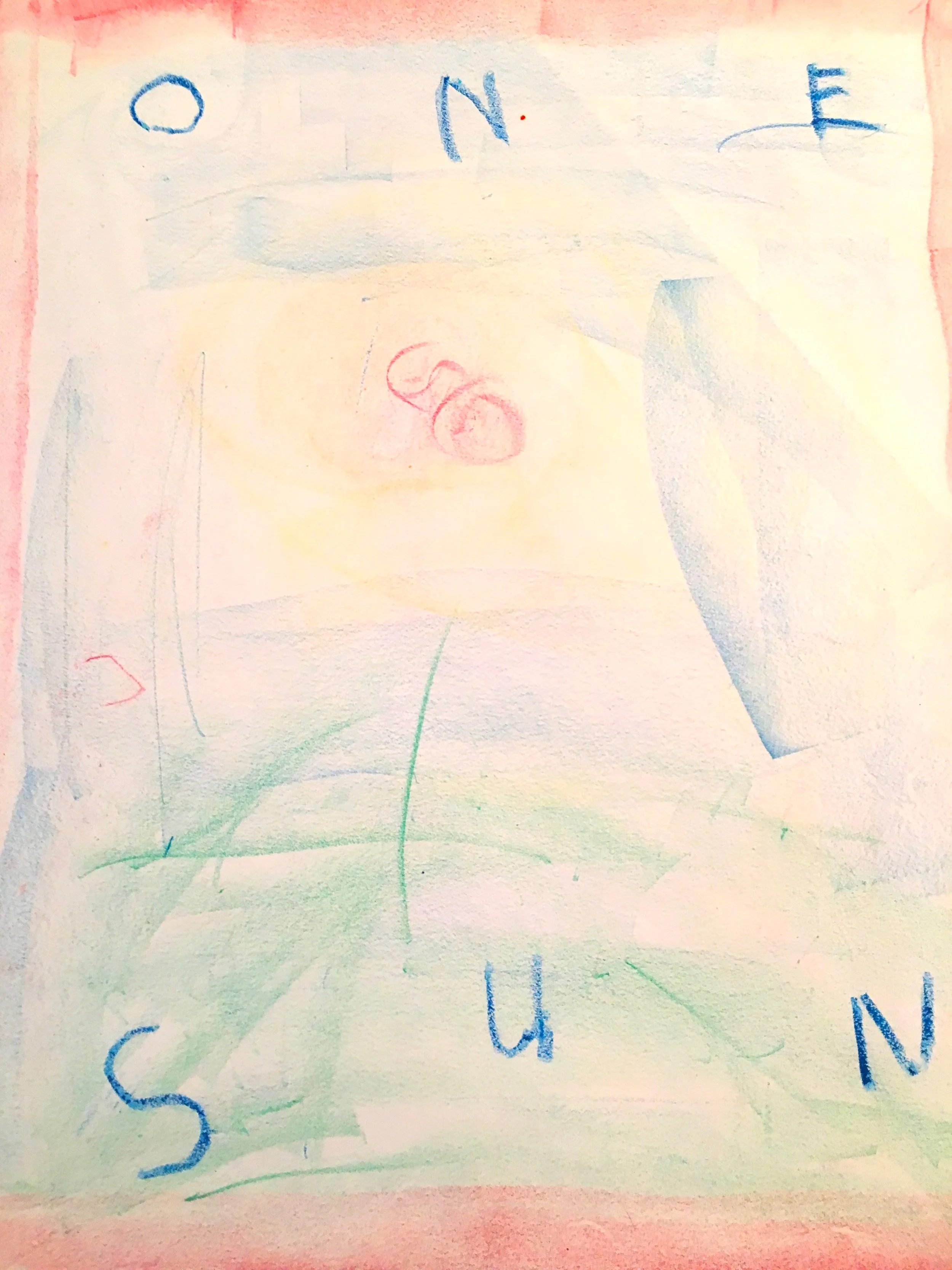
Photo: Cristina Havel
The liberal use of color that infuses all aspects of a Waldorf Education is not only delightful, it’s deliberate.
Beautiful main lesson book entries created by students, beginning in first grade with the heartwarming “One Sun”, increase in complexity throughout the grades. Color, form, technique, and meaning converge to animate all subject matter from math to science, foreign language and native language studies (and for more on art in the classroom, click here!). What is the value of this approach?
“The important thing is to arouse in children a real feeling for life, and color and form have the power to lead right into life...these details are essential to the vitality of the work.” -- Rudolf Steiner, 1922, The Spiritual Ground of Higher Education
Shaping and Perceiving
Artistic endeavors sharpen two very important human skills: the ability to shape, or see, and the ability to perceive, or distinguish. When practiced over time using diverse techniques across a variety of subjects, something very special emerges: the ability to shape and perceive new ways of looking at the world. In 1st grade, “One Sun” might become “one son” -- or “one bun”, as my son said to me, giggling, as I ate a hamburger when he was six. As the Waldorf student develops, connections continue to be made on ever deepening levels and the creative process is strengthened, resulting in students who are able to make connections across a variety of subjects. This skill is highly valued in our culture and is known as interdisciplinary thinking. It’s a truly holistic way of looking at the world and contributing effectively.
I am always doing things I can't do, that's how I get to do them. -- Pablo Picasso

Photo: Robyn Wolfe
The idea that a child cannot succeed in Waldorf Education unless he or she has excellent artistic skills is a myth to be dispelled. One child may draw endlessly in the early grades while another may be adept at origami or painting, or lose herself in handwork. Skills and interests “come in” at different times and under different circumstances. The creative process is sometimes mysterious and always transformative, no matter when and how it reveals itself. There is no wrong way to express oneself artistically. We must teach our children to create without judgement, only then will they be free from inner constraints and available to capture a world in perpetual motion. Therein lies the magic and power of art.
What is Waldorfish Weekly Art?
Waldorfish Weekly Art Foundations is a unique series of online art classes aimed at teaching a variety of methods widely practiced in Waldorf schools around the world. These classes can be used as weekly art classes that are folded into existing homeschool routines of any kind, as refresher courses for brick-and-mortar Waldorf school teachers, and, for those with far-reaching goals with respect to Waldorf homeschooling, as foundation courses that can be applied to different subjects as your student progresses through the grades.
Photo: Cristina Havel
"I’m so pleased to have found art lessons that draw on the Waldorf style as opposed to all of the “outline and color in” art lessons that seem to be popular online. We are really enjoying them!” ~ Heidi
"As a teacher - drawing figures for my chalkboard drawings has always been difficult, and I was rarely happy with the results. Learning how to first draw the gestures and then detailing it. Soooo much easier and successful! I will play more with this one!" ~ Debra

Learning art as a metaphor for living well.
Miranda Altice at The Indigo Teacher has been working her way through our Waldorf art training program, Waldorf Art for Beginners over the past few weeks.
She has written about her process of shedding & peeling away the layers of anxiety and fear that so many of us carry when it comes to Art. We're sharing some of her revelations here, and you will find a link to her full piece below.
Taking the Waldorf Art for Beginner’s course from Waldorfish was honestly a summer treat for myself and would, in turn, help me in my quest to teach tiny humans how to enjoy expressing themselves through art.
But it taught me more than that. Robyn and Brian’s super simple, self-paced classes reminded me how to feel confident in my artwork… and in my life… both of which could turn out any which way the blank paper and unpredictable watercolors decide.
A few things I learned… in metaphors:
Slow down. No really… SLOW DOWN. (There is no reason to rush through each part of the process. I even slowed down getting the paintbrushes to the table. And it felt good. I felt more in the moment, and my pace rubbed off on the kids.)
Shut everything else out and OBSERVE.(Watch how the watercolors blend together and are in no rush to become something unique. Observe how the chalk clings to the fibers as it glides over the cardstock. Stop multi-tasking for just a moment and just be there.)
Be PATIENT. (The colors will absorb, they will transform, and it’s not worth raising my blood pressure when it is not meant to turn out a certain way.)
TRUST the Process. (It’s just as much about the process as it is the end result, which may turn out better than expected. Even if it doesn’t, trusting the process and keeping my cool was so worth it.)
Don’t beat myself up, and don’t be afraid. (See 3 &4. One of my favorite things Brian said in his mellow tone during one of the videos was, “Don’t be afraid… it’s not supposed to look like anything in particular.” I noticed myself going with the flow, trusting the process, and accepting the outcome… and also daring to swivel my brush a little more.)
FRAME it. (I’m allowed to admire my work and accept compliments without following up with negative, picky comments.)
Let GO. (Allow yourSelf the opportunity to be immersed in water to better prepare for absorption of watercolors – now contemplate that metaphor.)
Take what was learned off of the workspace and into the world. (I often advise this to my yoga students, “Take your practice off your mat.” The spiritual and emotional lessons learned are meant to enrich my life as a whole, not just while I’m sitting at my workspace.)
As with yoga, I found my experience with diving into the Waldorfish classes to be a meditation in movement… one that I will continue to practice....
Read the full piece here.

Photo: Miranda Altice
Looking for something?

Welcome to Waldorfish! We started this adventure in 2012 out of a desire to make Waldorf training more accessible to class teachers in remote locations and to homeschooling families everywhere! Read more, click here.




WE WON! Our Weekly Art courses were voted “best interactive art program.” Learn more about the award, here.


Click here for a full list of schools we work with.
A few of our most popular blog posts:

Who are our courses for?

Starting Waldorf First Grade

4 Things to Know Before Planning Your Homeschool Year

In Praise of Balance: A Healthy Festival Life

Science in Waldorf Middle School: Starting Something New!