
Waldorfish Blog

Waldorf Eighth Grade Physics: A Culmination of the Curriculum
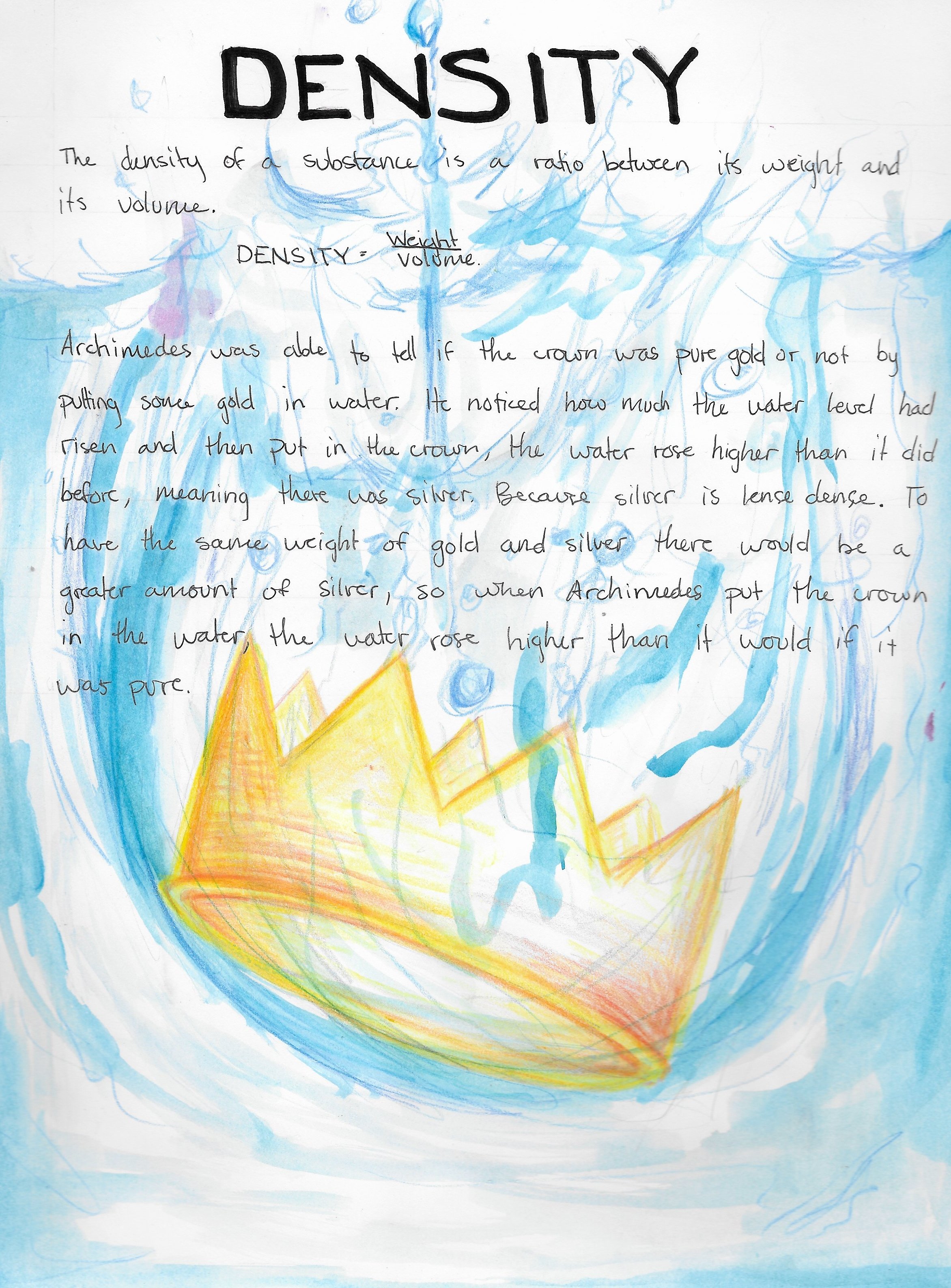
Student work from our eighth grade Physics course.
Waldorf eighth grade physics represents the culmination of the full physics curriculum, beginning formally in sixth grade.
At this age, eighth graders are experiencing a meaningful shift in how they meet the world.
Around thirteen, students begin to think with greater independence and clarity, moving more fully into abstract reasoning while still needing to learn to remain grounded in direct experience. In Waldorf education, this stage is understood as a time when thinking begins to come into its own, supported by the student’s growing capacity for judgment and discernment.
Rudolf Steiner described this period as one in which young people are ready to encounter the lawful nature of the physical world in a more conscious way.
Physics meets them here beautifully - offering not only an exploration of natural phenomena, but also a way to strengthen clear thinking, careful observation, and an emerging inner sense for truth.
While the content becomes more advanced, the teaching approach remains rooted in phenomenology. Students learn by doing, with the goal being as much active participation and experimentation as possible.
The major areas of focus in eighth grade physics are fluid mechanics, aeromechanics, electromagnetism, and acoustics. The educator may decide to incorporate other topics as well, and many of their decisions will depend on what the students have learned in prior grades. The goal is to deepen concepts that have been learned before, so the student can enhance their connection with the natural laws of nature.
First we’ll look at fluid mechanics, where students explore the behavior of water and how it flows.
They may consider questions such as: Where do we see water in the world—rivers, dams, or oceans—and what power does it hold? By observing a small creek, for example, students can notice where water flows quickly or slowly and begin to understand the factors influencing its movement. From these observations, they explore concepts such as flow, hydraulics, pressure, surface tension, and density. These studies reveal how water behaves and how humans harness its power in engineering and design.

Waldorf physics explores the curriculum through real-life examples.
Closely related is the study of aeromechanics, which examines the nature of air.
Students discover that air, like water, follows similar physical laws, even though it is less visible. They investigate how air moves, the shapes it can take, and how pressure operates within it. Topics such as compressed air and meteorology—particularly the interaction of warm and cold fronts—help students connect their learning to weather patterns and the natural world around them.
Electricity is another key component of the eighth grade curriculum, building on concepts introduced in earlier years.
Students explore conductivity by investigating which materials allow electricity to flow and which do not, with common examples including metals and water. They work with circuits, gaining practical experience in how electricity moves through a system. Often, this culminates in hands-on projects such as constructing a simple motor, allowing students to see the direct application of electrical principles.
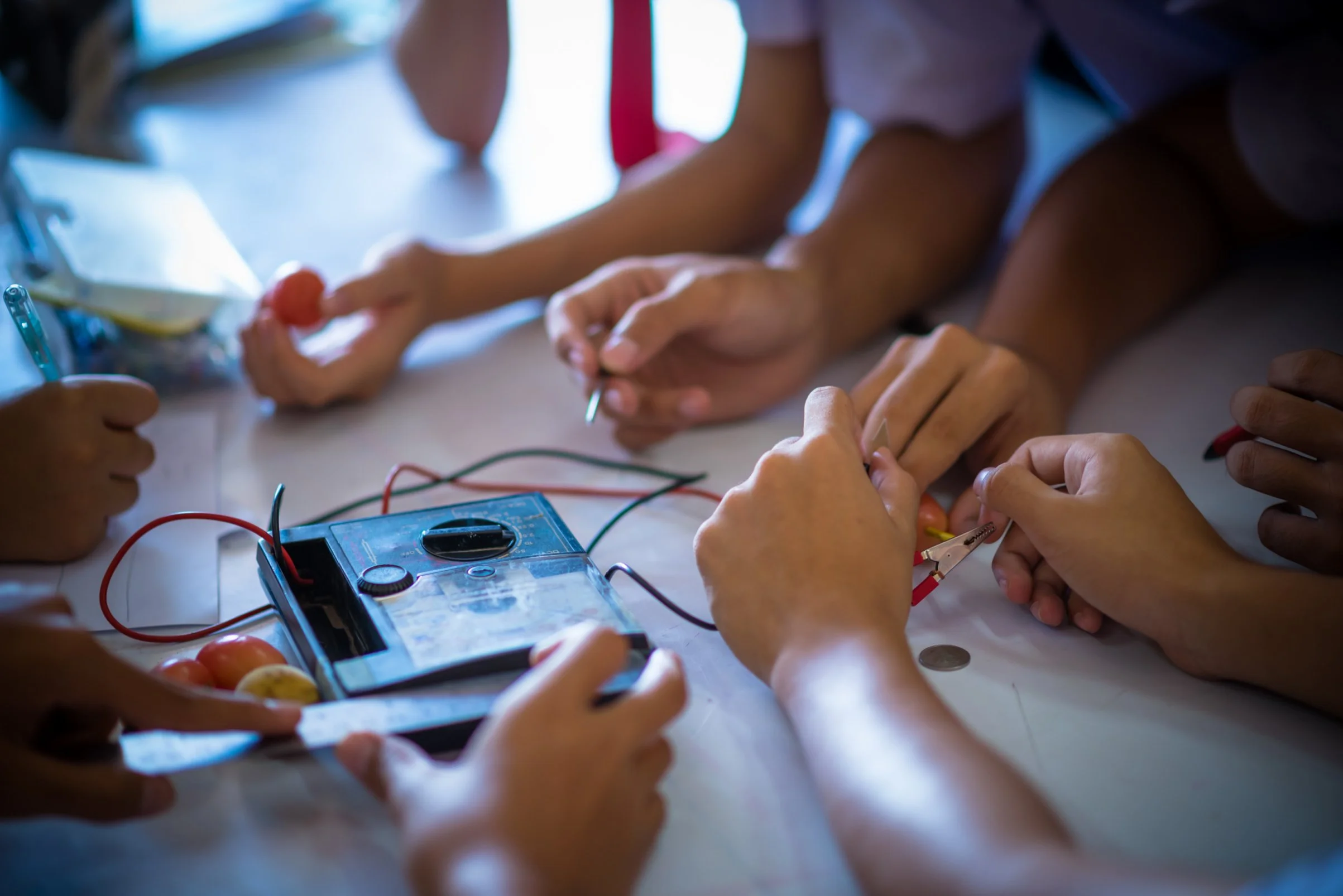
Science comes to life through doing and observing!
Finally, acoustics further explores the physics of sound. Students will explore how sound is produced, transmitted, and received.
A particularly engaging activity is the creation of a simple speaker, which helps students understand vibrations and sound waves in a tangible way.
Altogether, the eighth grade physics curriculum in Waldorf education integrates fluid mechanics, aeromechanics, electricity, and acoustics into a cohesive and meaningful whole.
Through hands-on experiences, thoughtful observation, and guided reflection, students not only learn scientific principles but also develop the ability to think deeply about the world around them.






About the Authors
Robyn Beaufoy is Waldorfish’s CEO, and also a course instructor for Simple Season, Waldorf Art for Beginners, and Weekly Art Foundations. You’ll find her intuitive touches and influences throughout everything Waldorfish offers. Robyn has been in the world of education for over 25 years, with an MA in Education and a certification in Waldorf teaching - she also homeschooled both of her children for some of that time. In 2012 Robyn co-founded Waldorfish.com, creating it with the vision of making Waldorf inspired-art and pedagogy more accessible, joyful, and doable for homeschoolers all over the world.
Caitlin Amajor is Waldorfish’s course instructor for Geometry grades 5 & 6, Botany, and Geology as well as our Administrative Assistant. From a young age, Caitlin has been immersed in Waldorf education, attending a Waldorf school from K-8. After receiving a BA in History, Caitlin gained her certification in Waldorf teaching, and is a teacher in the upper grades. With a special fondness for watercolor painting and geometry, Caitlin loves bringing Waldorf education to her students all over the world, and seeing their own individuality and style bloom from the curriculum!
Waldorf Seventh Grade Physics Curriculum: Challenging the Laws of Nature

Waldorf Physics curriculum offers plenty of opportunities to experience the laws of nature!
Seventh grade physics curriculum in Waldorf education is designed to meet students where they are in their development.
Students at this age are beginning to be more critical of the world around them, pose difficult questions, and form steadfast opinions about almost everything. By bringing in the study of physics in a phenomenological way the students explore the laws and rules of nature, and are asked to think in more abstract ways. They are ready for something challenging, and the curriculum offers just that!
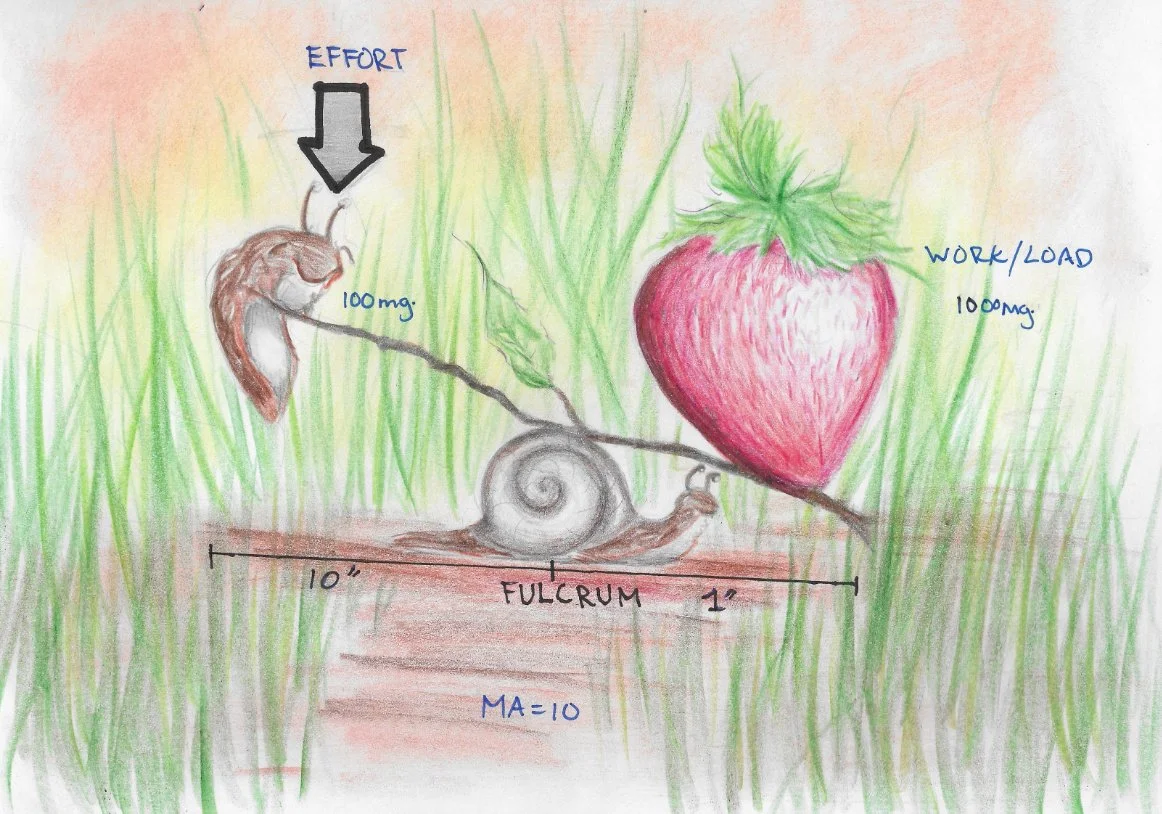
A central focus of seventh grade physics is mechanics through the exploration of simple machines: the lever, pulley, wheel and axle, inclined plane, screw, and wedge.
For each machine, students investigate how work is accomplished and how force can be redirected, multiplied, or balanced. This exploration is done by doing. Students may set up a pulley system to lift something very heavy; it is not uncommon to see a teacher’s car being lifted out in the parking lot! Other activities such as constructing seesaws, pulling a palette of bricks up a ramp, and building Rube Goldberg machines all provide the student opportunities to explore physics in the physical and analytical realms.
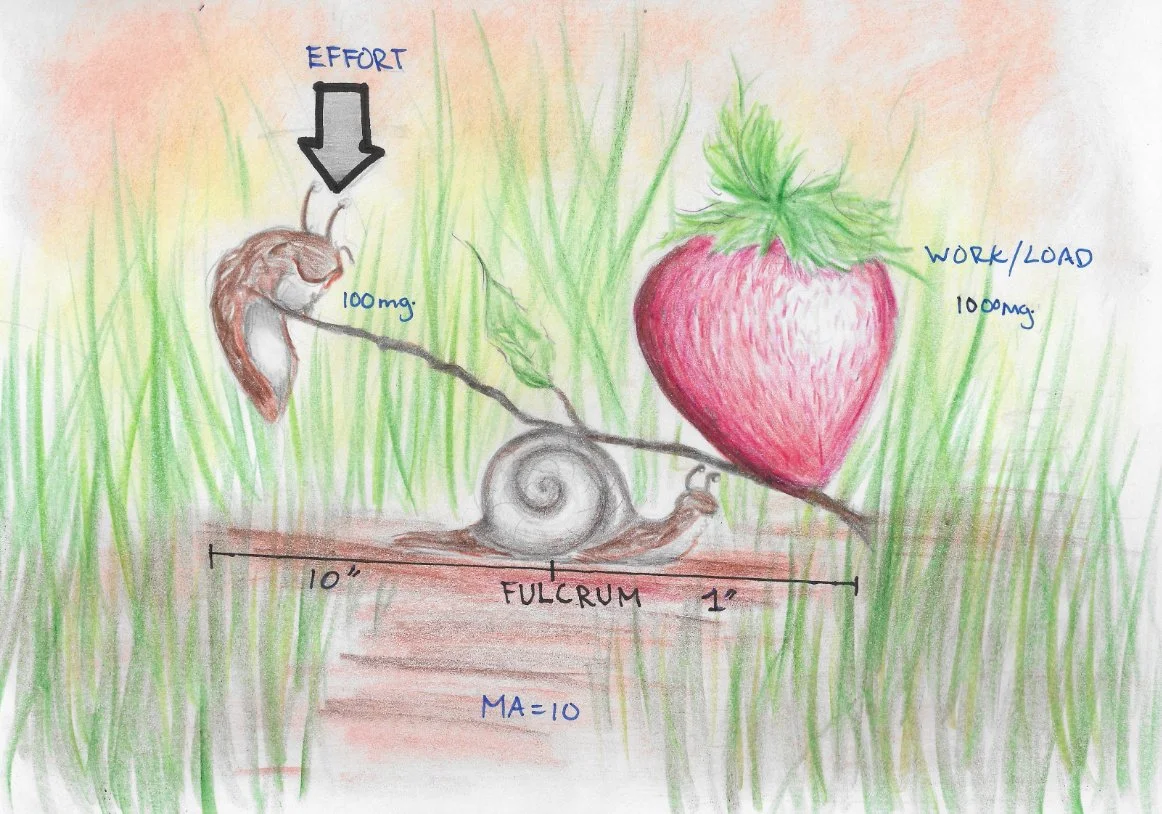
An example main lesson book page from our Seventh Grade Physics course.
Seventh grade physics also deepens the exploration of optics, and begins the study of simple electromagnetism.
In optics, students work with mirrors, lenses, prisms, and the camera obscura to explore reflection, refraction, and how images form. Introductory studies around electromagnetism may include creating simple circuits and building a simple motor, which seamlessly incorporates the study of simple machines.
As with all topics in Waldorf education, the Physics block also provides an opportunity for the educator to weave in biographies of great scientists, and the scientific discoveries of the Renaissance and Age of Exploration. As well, the Physics block offers the perfect opportunity to bring in mathematical topics such as the study of ratios, measurement, and more.
The seventh grade Waldorf physics curriculum provides fresh perspectives and a new way of looking at the world around us, perfect for the seventh grader who is ready for more challenges and creative thinking!



About the Authors
Robyn Beaufoy is Waldorfish’s CEO, and also a course instructor for Simple Season, Waldorf Art for Beginners, and Weekly Art Foundations. You’ll find her intuitive touches and influences throughout everything Waldorfish offers. Robyn has been in the world of education for over 25 years, with an MA in Education and a certification in Waldorf teaching - she also homeschooled both of her children for some of that time. In 2012 Robyn co-founded Waldorfish.com, creating it with the vision of making Waldorf inspired-art and pedagogy more accessible, joyful, and doable for homeschoolers all over the world.
Caitlin Amajor is Waldorfish’s course instructor for Geometry grades 5 & 6, Botany, and Geology as well as our Administrative Assistant. From a young age, Caitlin has been immersed in Waldorf education, attending a Waldorf school from K-8. After receiving a BA in History, Caitlin gained her certification in Waldorf teaching, and is a teacher in the upper grades. With a special fondness for watercolor painting and geometry, Caitlin loves bringing Waldorf education to her students all over the world, and seeing their own individuality and style bloom from the curriculum!
Looking for something?

Welcome to Waldorfish! We started this adventure in 2012 out of a desire to make Waldorf training more accessible to class teachers in remote locations and to homeschooling families everywhere! Read more, click here.




WE WON! Our Weekly Art courses were voted “best interactive art program.” Learn more about the award, here.


Click here for a full list of schools we work with.
A few of our most popular blog posts:

Who are our courses for?

Starting Waldorf First Grade
4 Things to Know Before Planning Your Homeschool Year

In Praise of Balance: A Healthy Festival Life
Science in Waldorf Middle School: Starting Something New!