
Waldorfish Blog

Waldorf Form Drawing in Grade Three
Third grade is very often a time of tremendous change for children…
…and thus it can require that we make tremendous changes in how we meet them.
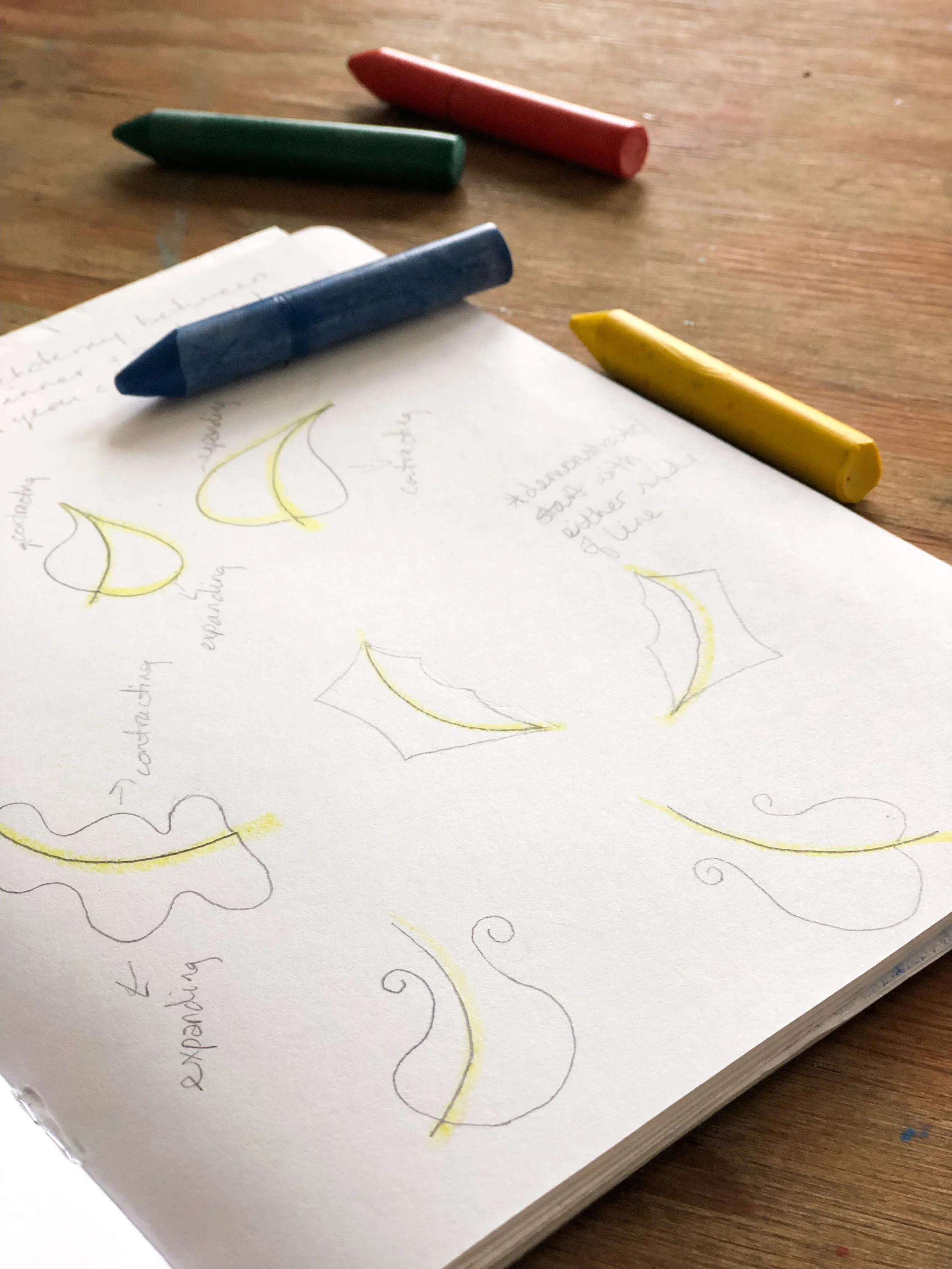
Form drawing in grade three (teacher training notes)
There is perhaps no more archetypal image that can help us understand the third grade child than that of any creation mythology in which the human being, once united with the Creator, now finds himself separated, forlorn, and bereft. The developing consciousness of the 8-9 year-old begins to have a sense of separateness. There is now an awakening sense of an inner world. The signature of one-ness that holds and sustains the young child is lost. It is a dramatic and necessary step toward individuation. So, the third grade elements of form drawing incorporate this experience.
Forms in third grade
Now we work with forms that explore relationships and change. We bring about forms that challenge us to explore and create new harmonies. This is an exciting time because the forms that we set up for the child can be balanced in many different ways. There is not a “perfectly correct” answer. The “rightness” must be felt by the child and by the teacher.
Learning to live as an individual on the earth is a constant exercise of attempting to find harmony in new ways as new elements arise in our lives. So, the teacher can be as creative in providing new “quests” for the student and then remain open to the practically infinite possibilities that the child has for discovery of corresponding forms. This has a mutually-inspirational quality that provides a lift to the child who struggles with this new sense of the bigness of the outer world and the isolation of the inner world.
“They should be given sufficient space to engage in the process in an exploratory manner. If this is achieved, a rich opportunity for differentiation and mutual inspiration is created.”
Peter Giesen, Form Drawing Workbook
Learn more about our Form Drawing series for homeschooling families and class teachers.
Grades 1-4 are OPEN!
*Click the button below to read about pricing and payment options.
Related content:
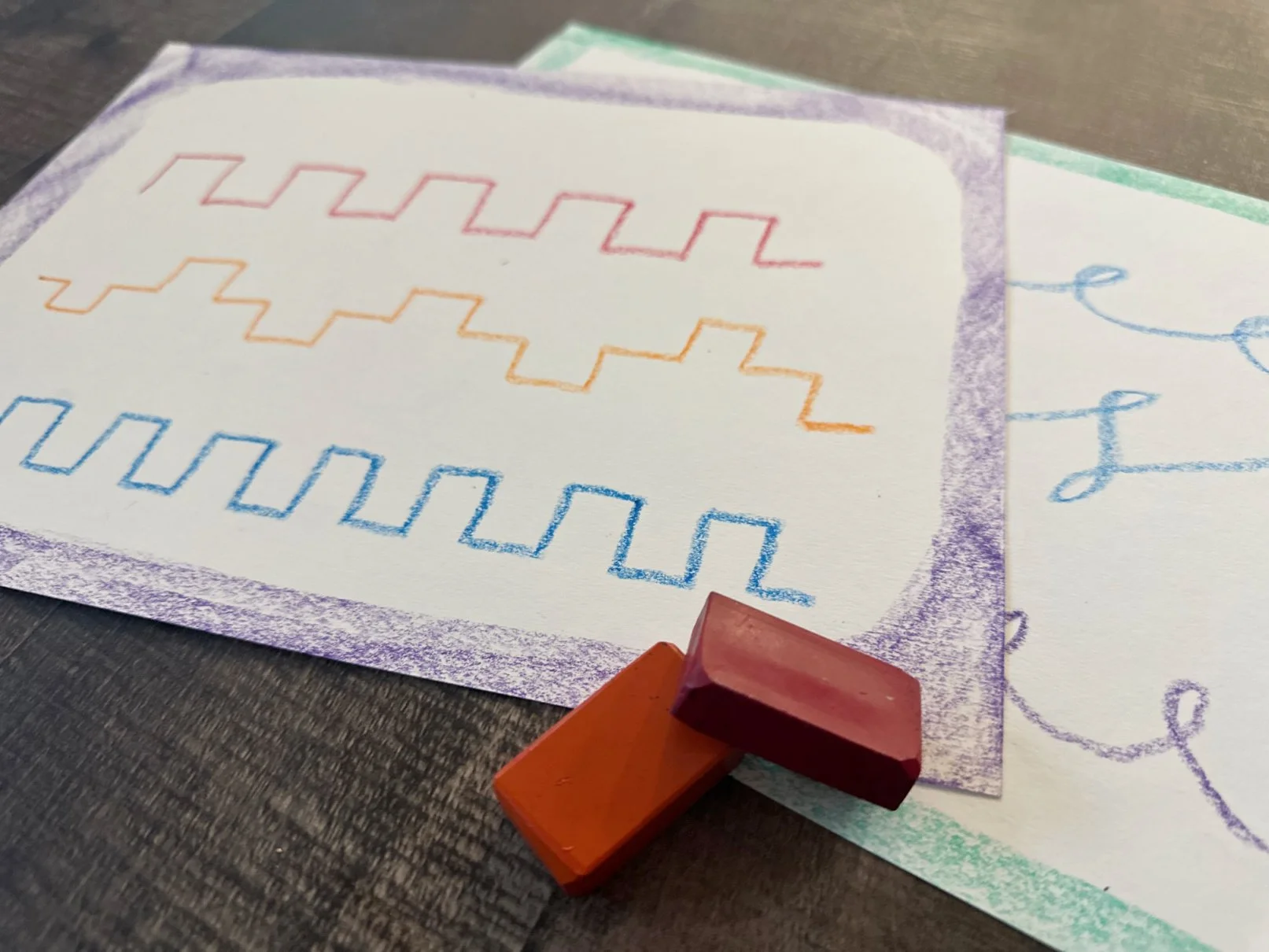
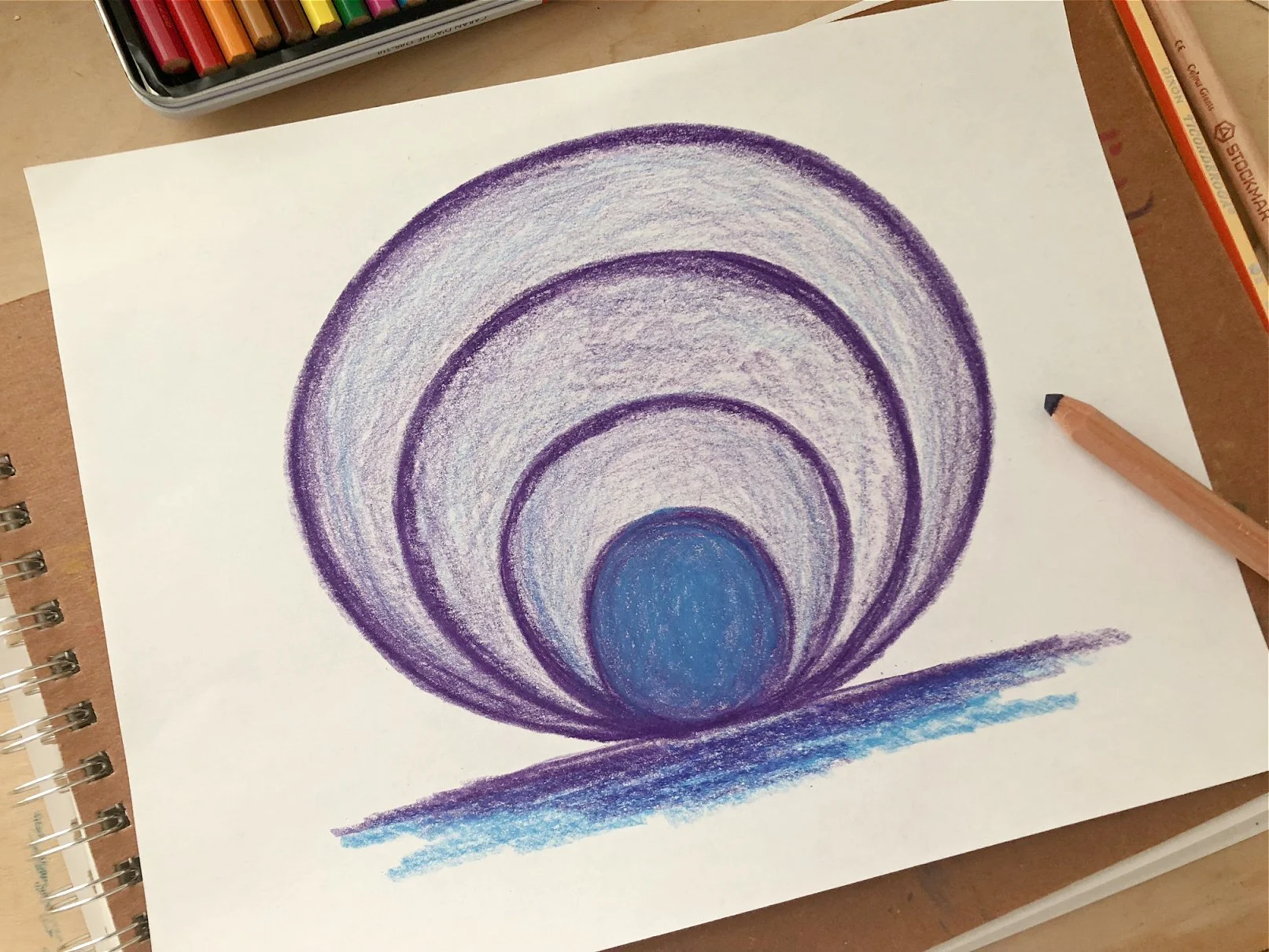




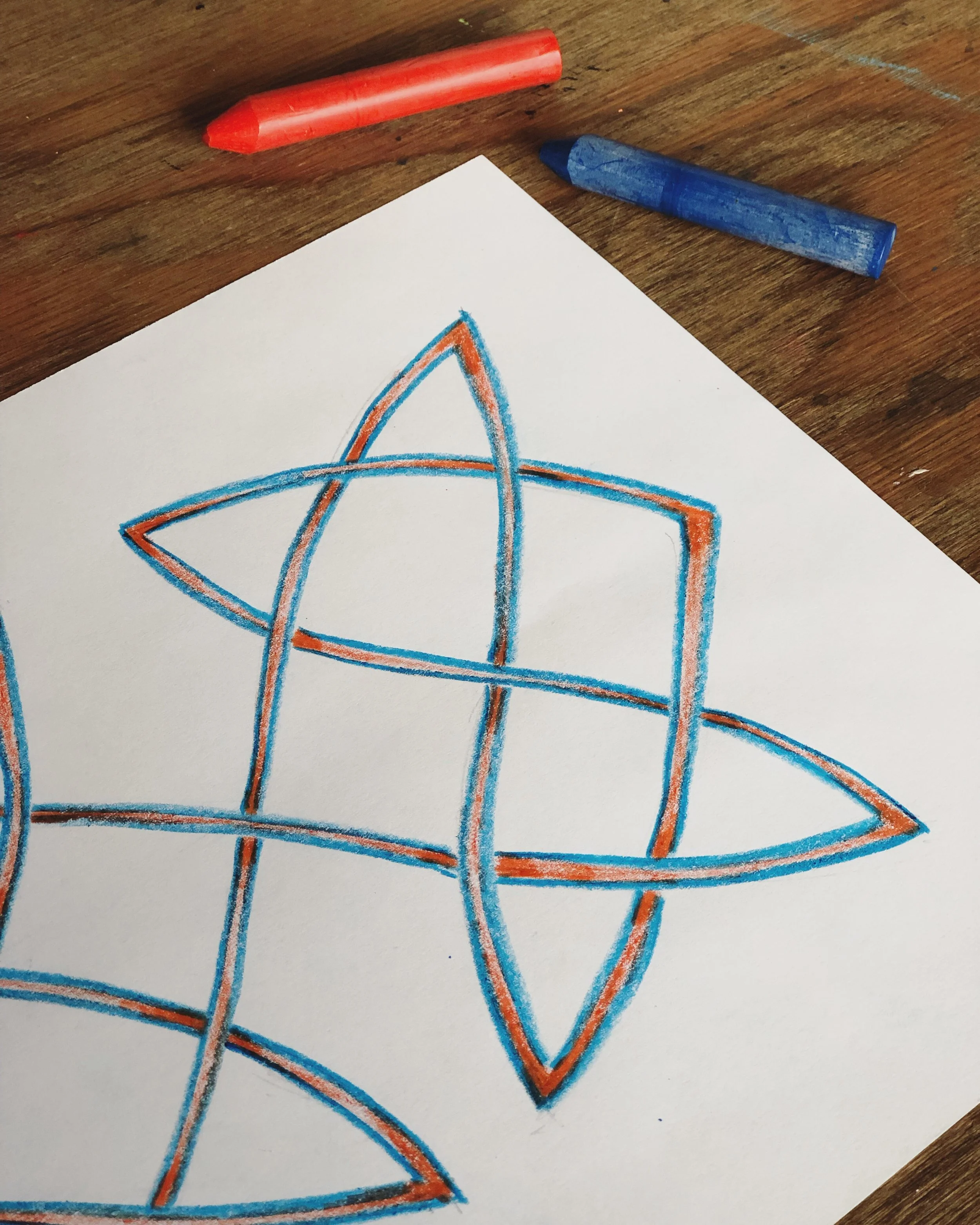
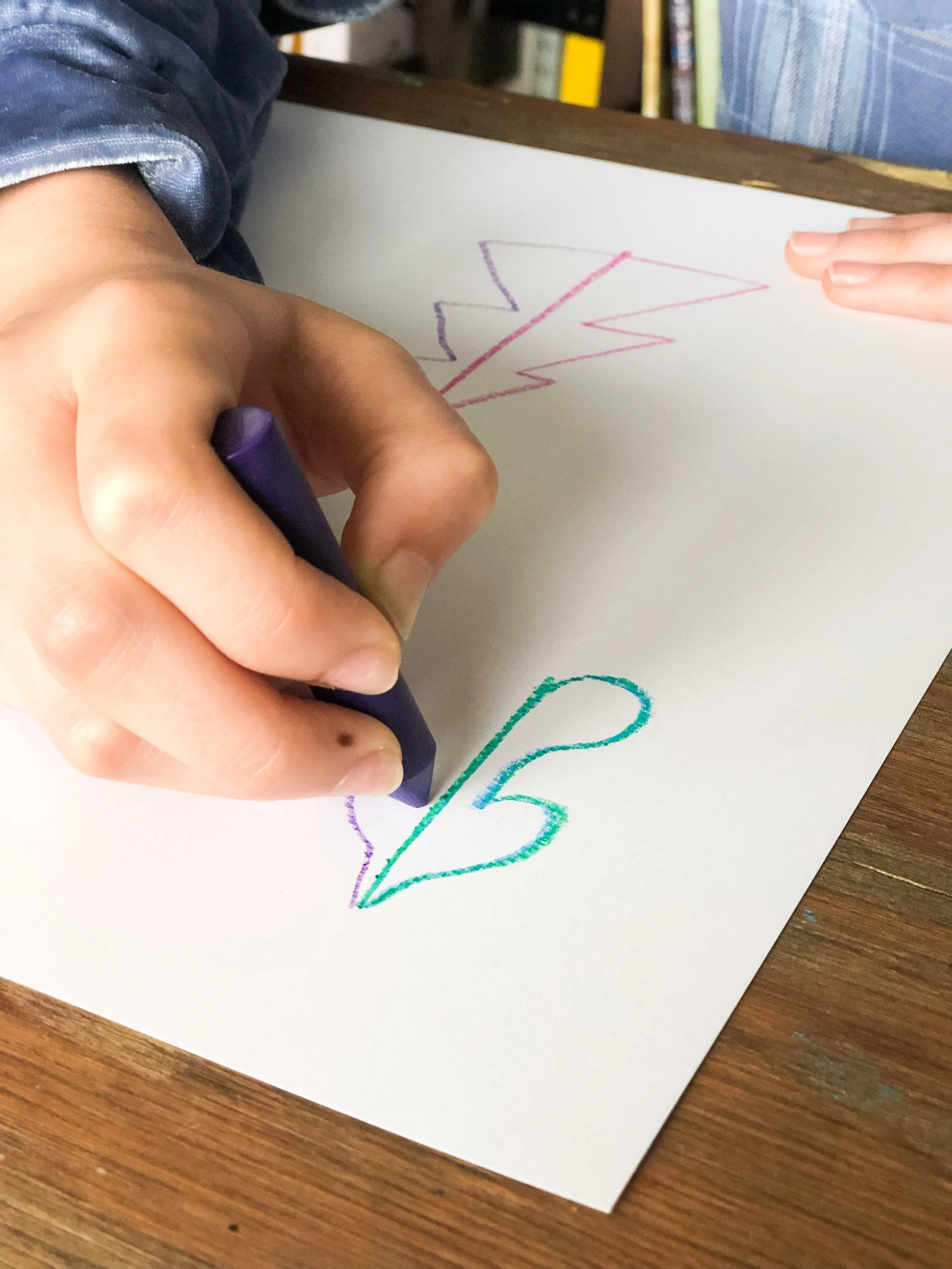
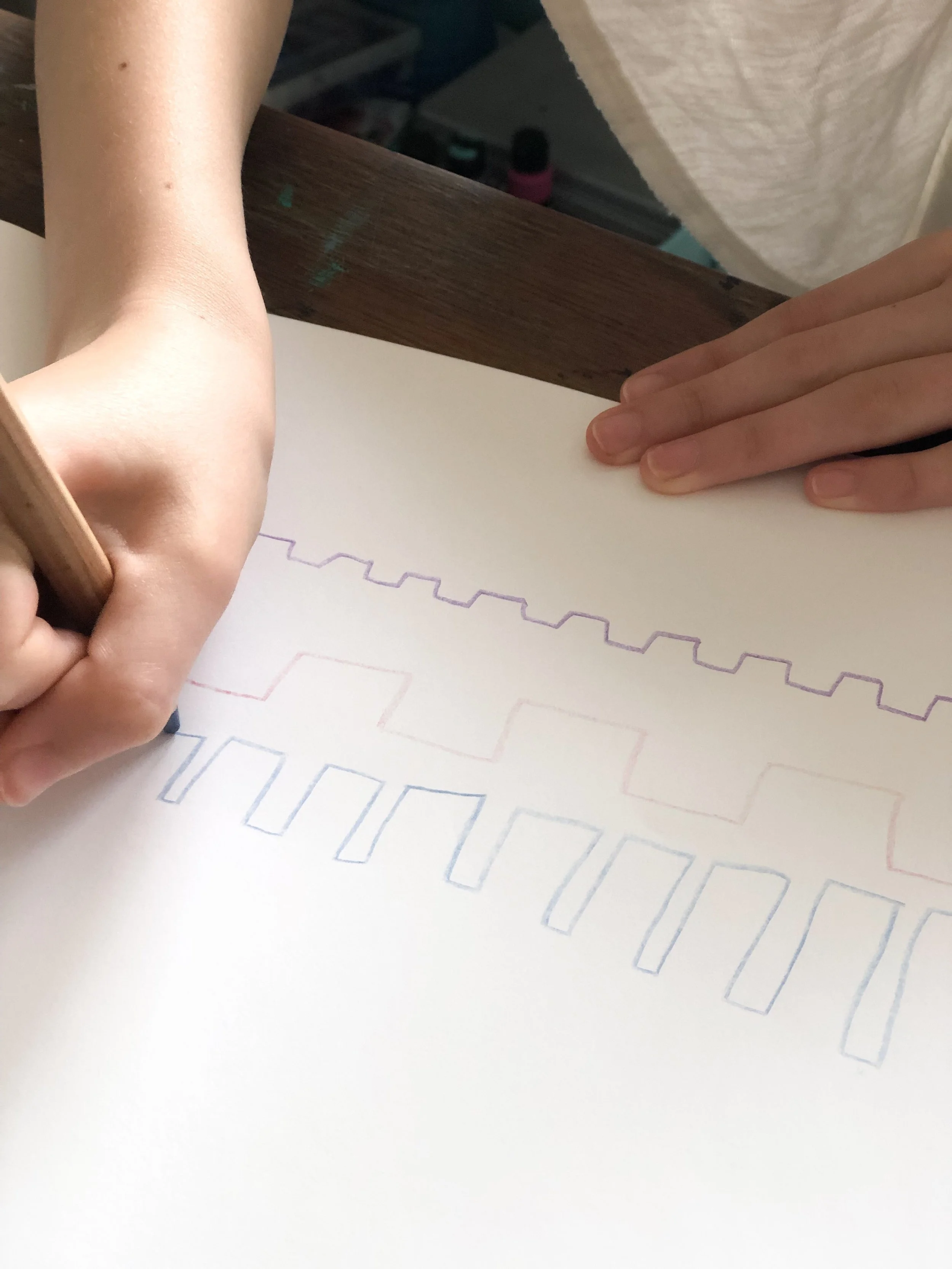
Waldorf Form Drawing in Grade Two
While we continue many of the same kinds of forms explored in first grade, we begin a new impulse in second grade.
Click here to read an introduction to this topic, as well as Rev’s piece Form Drawing in Grade One.
The second grader begins to experience a vague sense of duality or polarity in the world. For this reason, the second grade stories told in Waldorf schools will revolve around the tales of human virtue, such as those of the saintly beings from various traditions, as well as the tales of lower nature, such as those found in Aesop’s Fables.
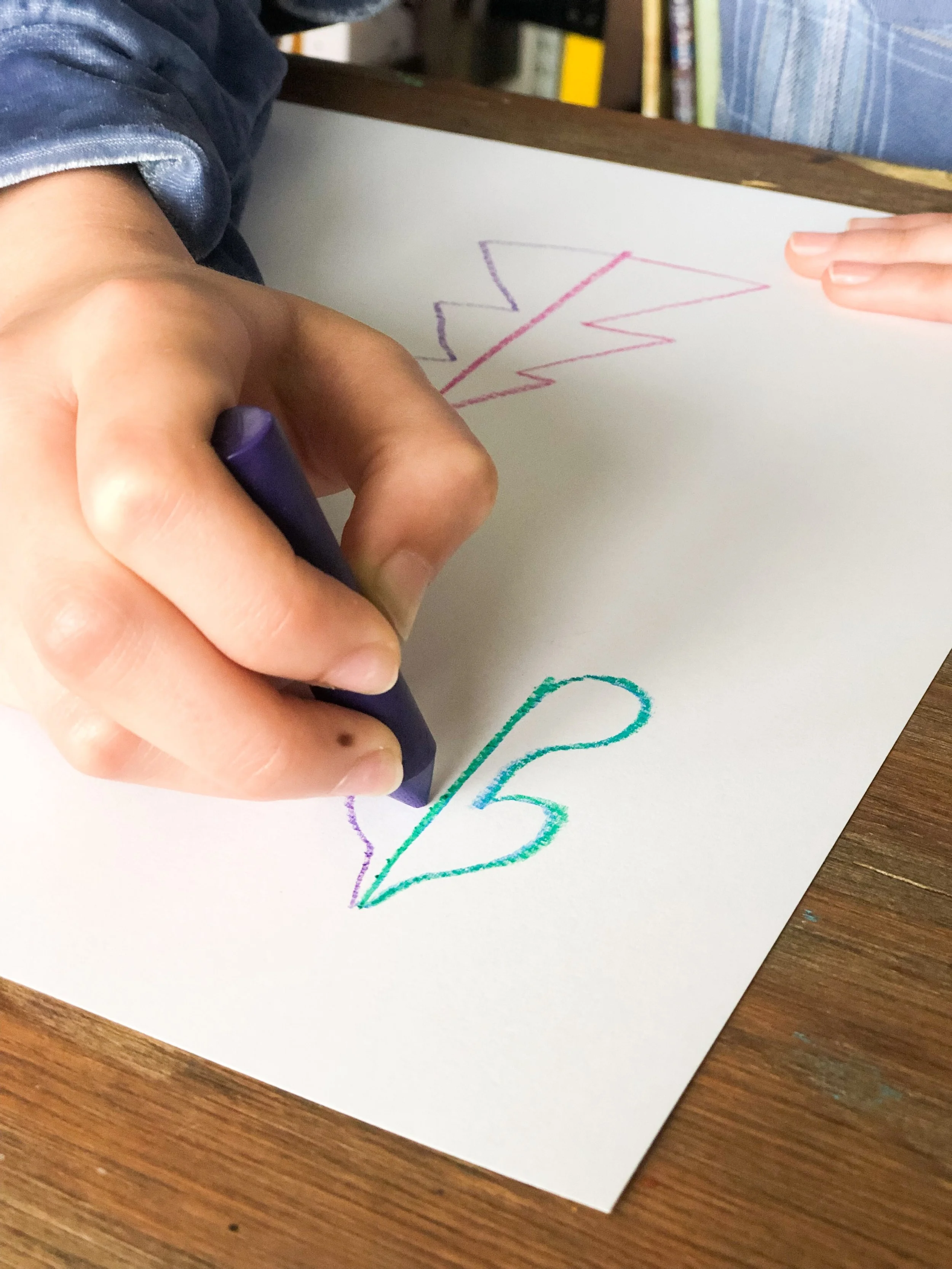
Vertical symmetry in grade two form drawing.
The child is only dimly awakening to these same qualities in the world and within herself. So the stories provide an imaginative realm of soul in which such themes may be explored. Likewise, there are movements and forms that can provide a similar exploration and arena for discovery. It is important to note that the Waldorf teacher will not end a fable by explicitly recounting some abstracted moral. It is important to allow the child to “digest” such lessons herself.
With the movements and forms, we would also not muddy the child’s experience with some intellectual explanation of its value.
We simply bring the movements and forms for the child for her experience. We trust the profound wisdom at work in the cosmos and in every human being. We do not need to explain this “soul digestion” any more than we need to explain our physical digestion in order for it to happen after a meal. We simply bring them new movements and forms that provide an even more direct experience of the above and below, the right and the left, and the cross-lateral.
Rudolf Kutzli, in his book Creative Form Drawing, reminds us that this inherent power of Waldorf form drawing “leads to an activating process of unfolding creative forces that lie dormant in every human being. It speaks to the inner rhythms that bring harmony to the forming and dissolving, the challenging and quietening, the cosmic and earthly in the human being. It thereby strengthens the very center, the ‘I’ between the constant threat of tendencies toward sclerotic thought, barrenness of soul, and the aimlessness or apathy in the whole sphere of the will.”
Learn more about our new Waldorf Form Drawing series for homeschooling families and class teachers.
Enrollment is OPEN!
Related content:
Waldorf Form Drawing in Grade One
An introduction to Waldorf Form Drawing.
Movement is the way in which we explore the cosmos and ourselves within it. The very act of breathing is movement. Movement is one of the most primary activities of nature and of the human being. As such, movement is at the very foundation of all learning and development.
When we engage in archetypal, healthy movements, we revitalize and harmonize our physical bodies, we strengthen and balance our life forces, and we lift our consciousness. Form drawing is the process of exploring such healthy, archetypal movements in the cosmos and bringing them into ourselves, rendering them into lines.
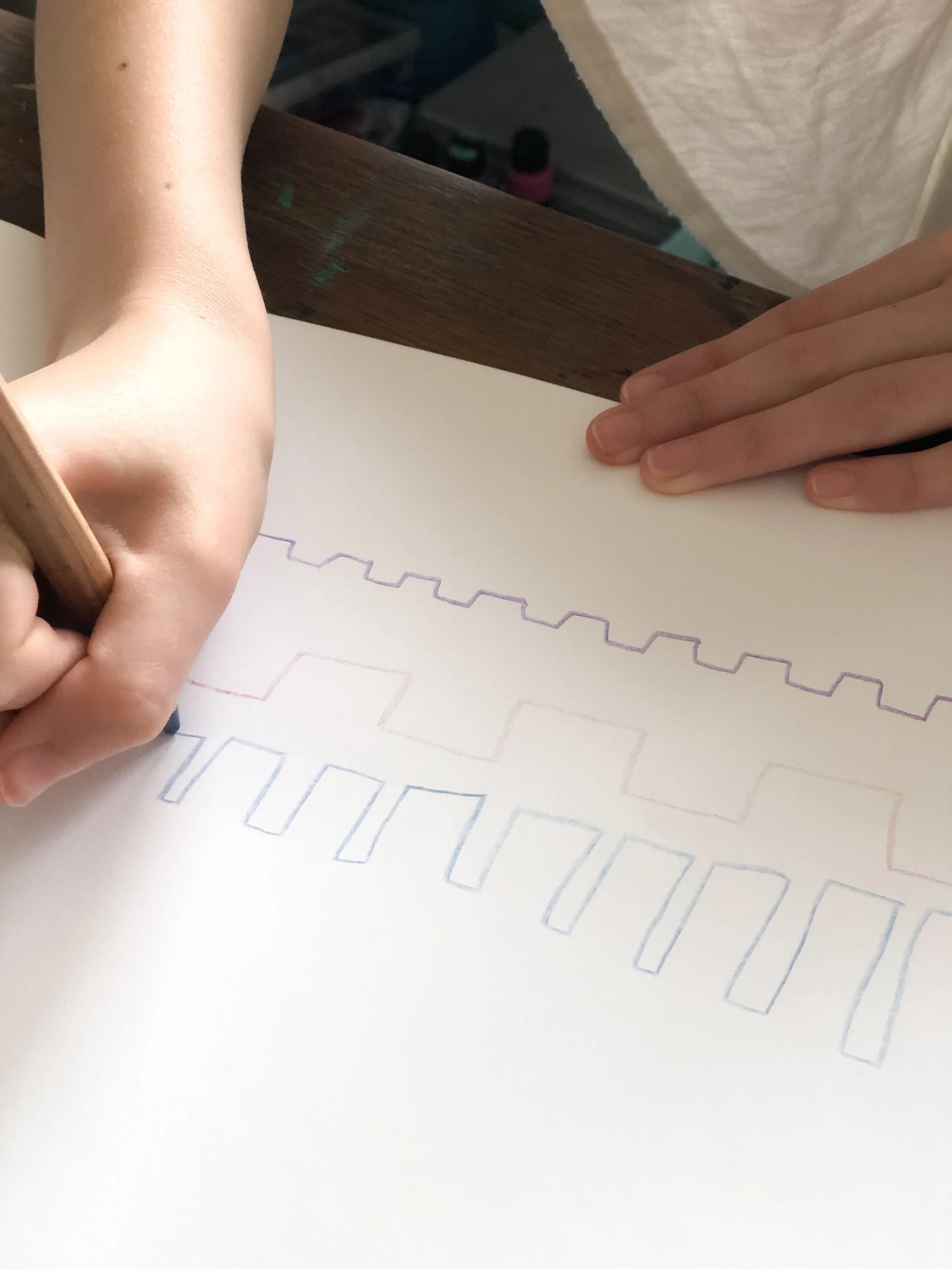
Running forms from first grade form drawing curriculum.
(For additional information about form drawing, click here!)
The forms themselves, as finished works, may become beautiful, but they are not nearly as important as the processes through which we explore and embody the movements. Form drawings, as finished pieces, are merely the footprints left in a medium such as pencil on paper, evidence of the wonderful movements of the human being and the cosmos. Form drawing, as a practice, can be an essential path of human development.
“It is not easy to see the educational value of form drawing by looking at the children’s drawings; for its effectiveness is realized in the process, not the product...Form drawing is a present record of a past movement...just as the meander of a dried up water-course records the flow of a river.”
Rosemary Gebert, “Form Drawing”
Form Drawing in Grade One
In first grade, we strive to bring the child into a balanced relationship with inner and outer space. This is achieved by highlighting very basic elements of movement/space. The child needs a basic introduction to the simple but profound truth that there are really only two kinds of movements and/or lines, the straight and the curved.
We can apply these movements in a horizontal plane, a vertical plane, or on a diagonal. Likewise, many movements and/or lines can be a harmonious blend of straight and curved elements. With only these basic elements, we have more then enough possibilities to work with fundamental and profound forms for the rest of our lives. Though they are basic, these elements help us to develop a healthy relationship to the world around us and to begin to feel the world within us. In this early stage of exploring forms, it is always first to be experienced through the grand movements of our limbs and then, only later, in the actual drawing.
“To develop a feeling for form, the hands must be brought to feel the form; we need to see with our hands. We need to describe the feeling of the movement. We need to work through a form until it is incorporated into us.”
Embry-Stine and Schuberth, Form Drawing
Next week we’ll share more from Rev about Form Drawing, this time through the lens of Grade Two. We’ll also share a video clip from inside one of the Grade One lessons!
Click below to learn more about our Form Drawing series for homeschooling families and class teachers.
Enrollment is open year round!
Try a free Form Drawing lesson!
Related content:

Jean Miller & Robyn Wolfe talk Waldorf homeschooling and planning!
We’re pretty excited about sharing this conversation with the Waldorfish community!
Jean and I have been long-distance friends for a while now, and finally got to meet in person in Atlanta at the Waldorf Homeschooling Conference, in March 2019.
We talked and talked and TALKED during every spare second we had at the conference, but ultimately decided we needed to keep talking once we returned home!
This video is the continuation of those conversations. The first of what we hope will be many more that we record and share with you :)
Enjoy!
P.S. Be sure to check out 4 Things to Know Before Planning Your Homeschool Year - This is the article from Waldorfish that we mention in the video!
P.P.S. Bonus points to anyone who can identify the points at which our cat Hendrix decides to weave himself through my legs while we were filming!
*Password: planning

Timeline:
0-10:28 Introduction. Robyn & Jean talk about the life events that led them both to Waldorf education, and ultimately to homeschooling.
11:30-15:00 Some common mistaken ideas we often hear about Waldorf-inspired homeschooling.
15:21-18:16 Curriculum? Pedagogy? What does “responsible innovation” mean for Waldorf homeschoolers?
18:20-21:42 Jean shares a story from her own homeschool years as it relates to planning.
21:48-24:53 Robyn talks about homeschooling in the freedom that Steiner intended… and a couple of foundational ideas to make this possible.
24:53-26:56 Jean shares some information about her planning and mentoring services.
29:25-30:20 Jean shares some thoughts about homeschooling being an ideal setting to bring forth the Waldorf pedagogy.
30:20-33:41 Some concluding thoughts from both Robyn & Jean!
Some gifts from Jean!
Plan It Out (click here to sign up):
Plan It Out is Jean’s step-by-step program that helps parents like us confidently build out homeschool lessons without the draining effects of confusion and overwhelm - can I get an amen?
(I have been through Plan It Out in the past and found it to be an INVALUABLE resource for helping to reign in my sanguine tendencies! I’ll definitely be sitting in on the next live run-through of the course, which starts in June.)
The 3 week online program includes videos and print materials with specific action steps to help you create a clear vision and plan for next month, season, or year.
You get lifetime access to the lessons & private Facebook group, which means you can come back again and again for boosts, guidance & inspiration.
*Remember, the next live run-through of Plan It Out starts in June! 6/9/19 - 6/28/19
Your Guide to Lively Homeschooling: Jean’s free guide loaded with doable ideas for weaving the lively arts into your lessons!
Looking for something?

Welcome to Waldorfish! We started this adventure in 2012 out of a desire to make Waldorf training more accessible to class teachers in remote locations and to homeschooling families everywhere! Read more, click here.



WE WON! Our Weekly Art courses were voted “best interactive art program.” Learn more about the award, here.


Click here for a full list of schools we work with.
A few of our most popular blog posts:

Who are our courses for?

Starting Waldorf First Grade

4 Things to Know Before Planning Your Homeschool Year

In Praise of Balance: A Healthy Festival Life
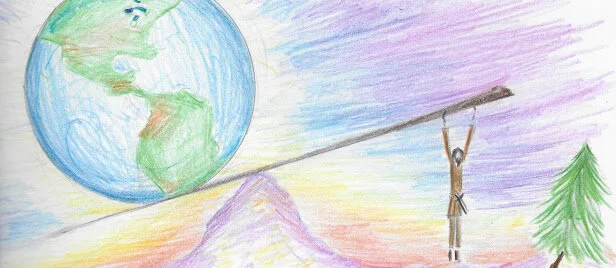
Science in Waldorf Middle School: Starting Something New!