
Waldorfish Blog

Lazure Basics - by Charles Andrade
We're excited to have Lazure master Charles Andrade joining us on Waldorfish!
We invited Charles to share the basics of this art form. His work is, in a word, stunning.
What is Lazure?
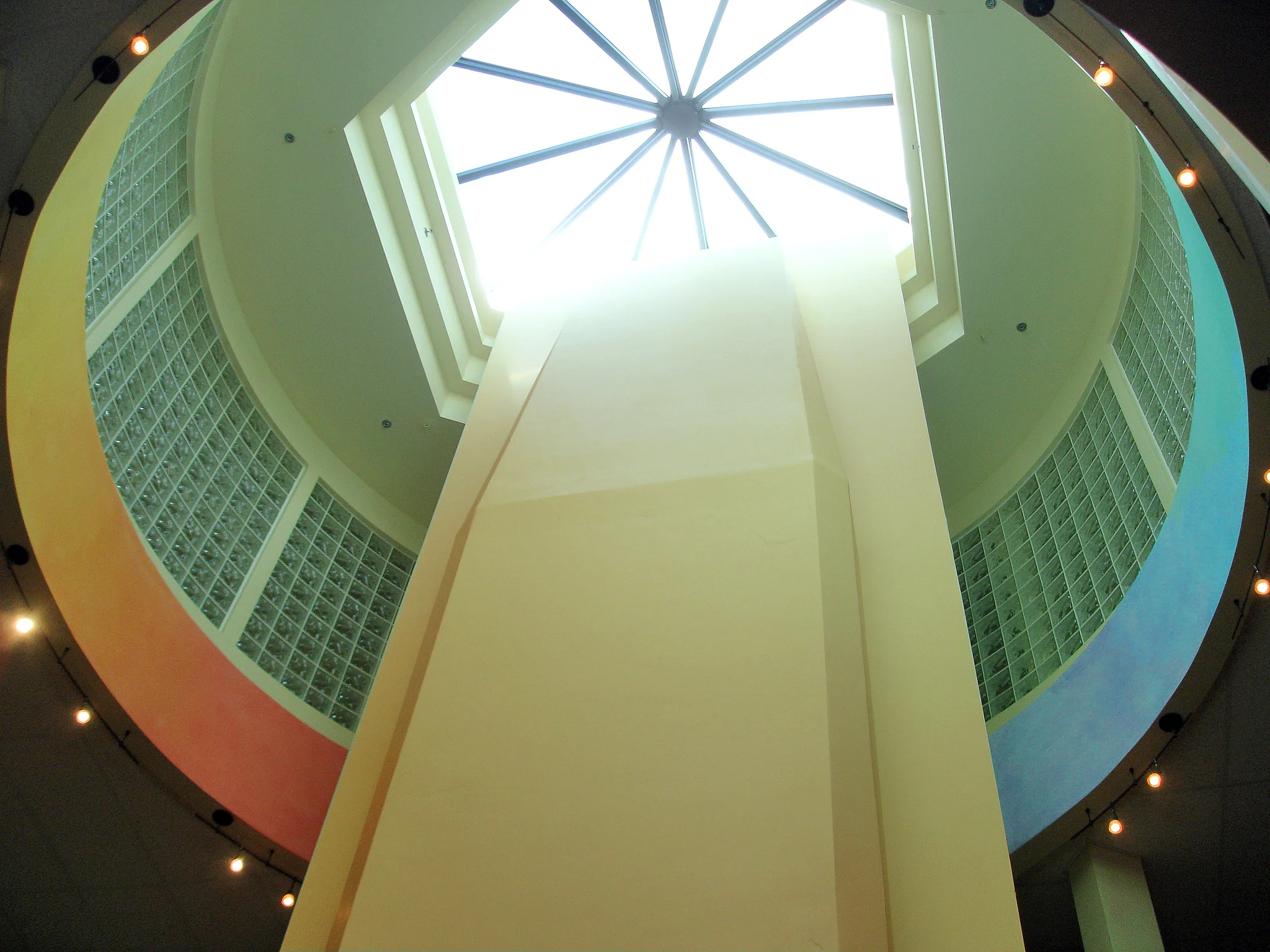
Win Institute Atrium
Lazure is a decorative paint finish using layers of color wash over white walls that allows the light to pass through and reflect back giving a pure color experience that can have a powerful healing influence. Lazure distinguishes itself from other decorative techniques in that it doesn't rely on "visual texture" (ie: ragging, bagging), but instead, on the atmospheric blushing of analogous colors, offering a calming or dynamic movement of color on the walls that changes tones throughout the day.
Lazure painting was initially created by Rudolf Steiner for the performance hall ceilings of the Goetheanum, which is the headquarters of the international Anthroposophical Society, located in Dornach, Switzerland. He developed Lazure as a means to bringing the most luminous quality of color. Years later, after he had created and developed the Waldorf School movement, Steiner instructed the teachers and parents in how to ensoul the walls of the school with Lazure.
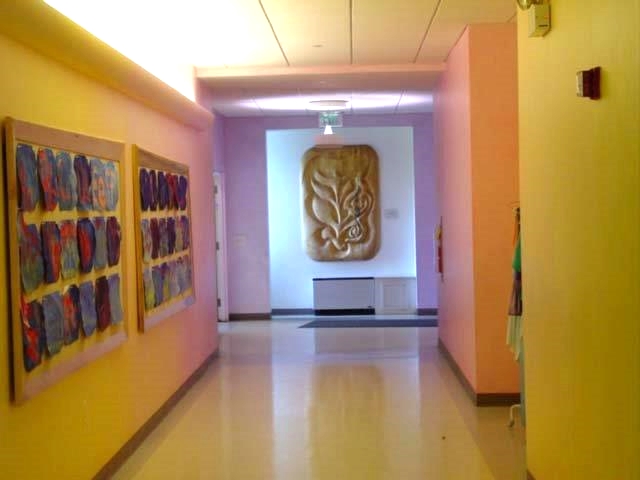

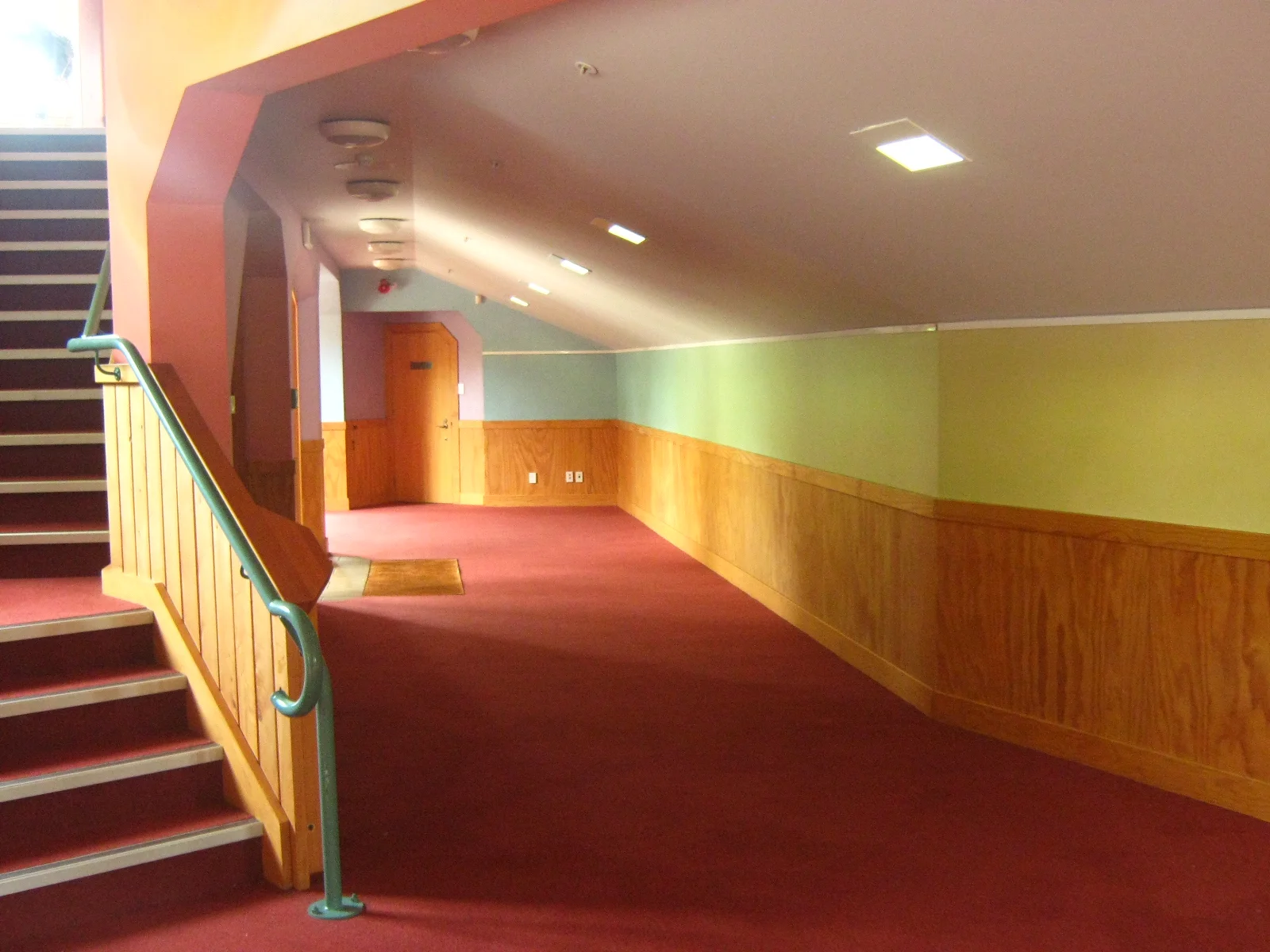
(Photos left to right: Baltimore Waldorf School, Westside Waldorf School, Michael Park Waldorf school)


(Photos left to right: meditation room, private residence)
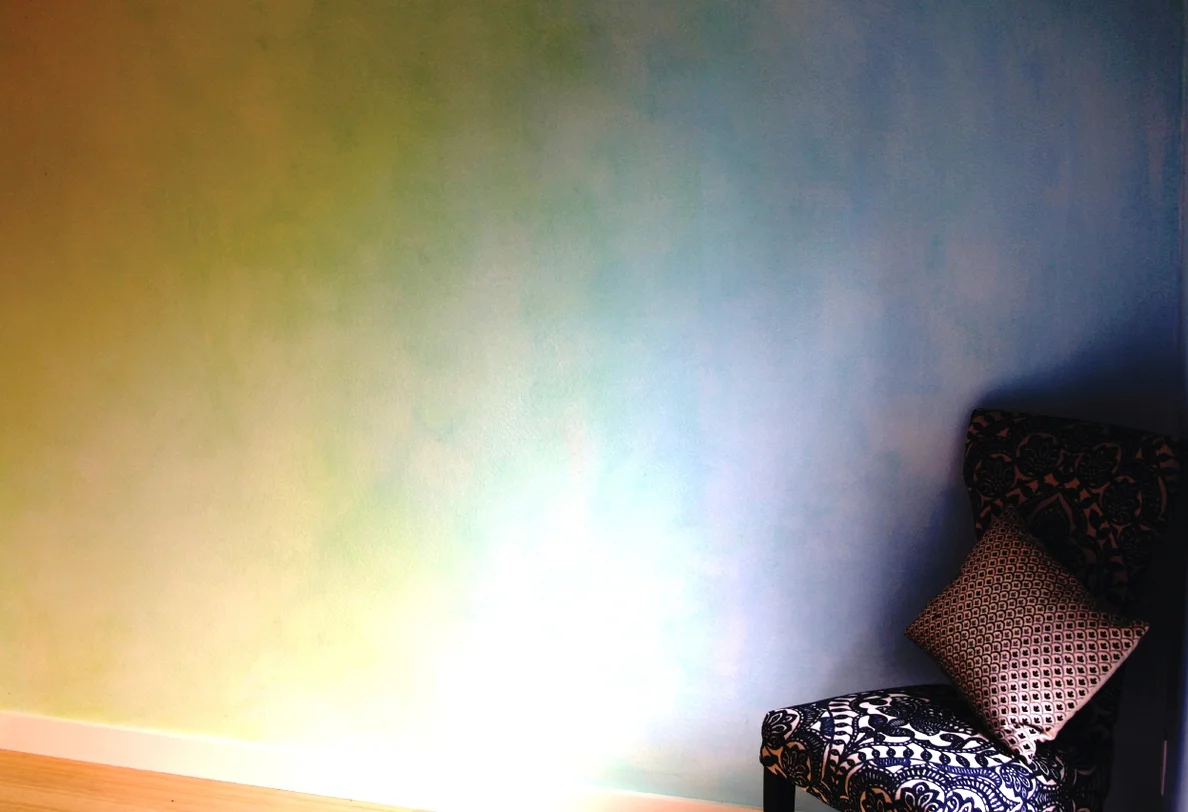
Private residence.

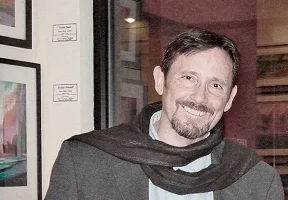

Artist and Lazurist, Charles Andrade has had a life-long fascination with color and painting that has evolved from his initial training in Anthroposophic Art therapy at the Tobias school in England. There, he also learned Lazure, a unique European wall treatment creating healing interior environments. Andrade has owned and operated Lazure Custom Wall Designs for over 25 years – a mural and decorative/faux painting business, specializing in Lazure.
Additionally, he lectures, teaches fine art classes and offers Lazure workshops worldwide.
Try a free art lesson, on us!

Curious about Waldorf-inspired art?




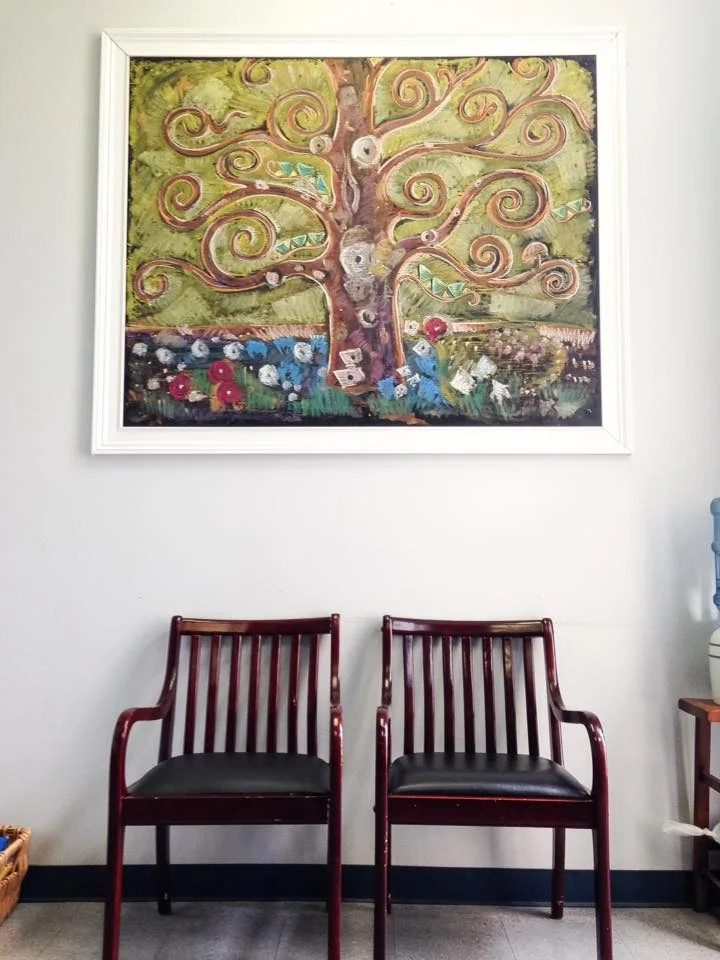
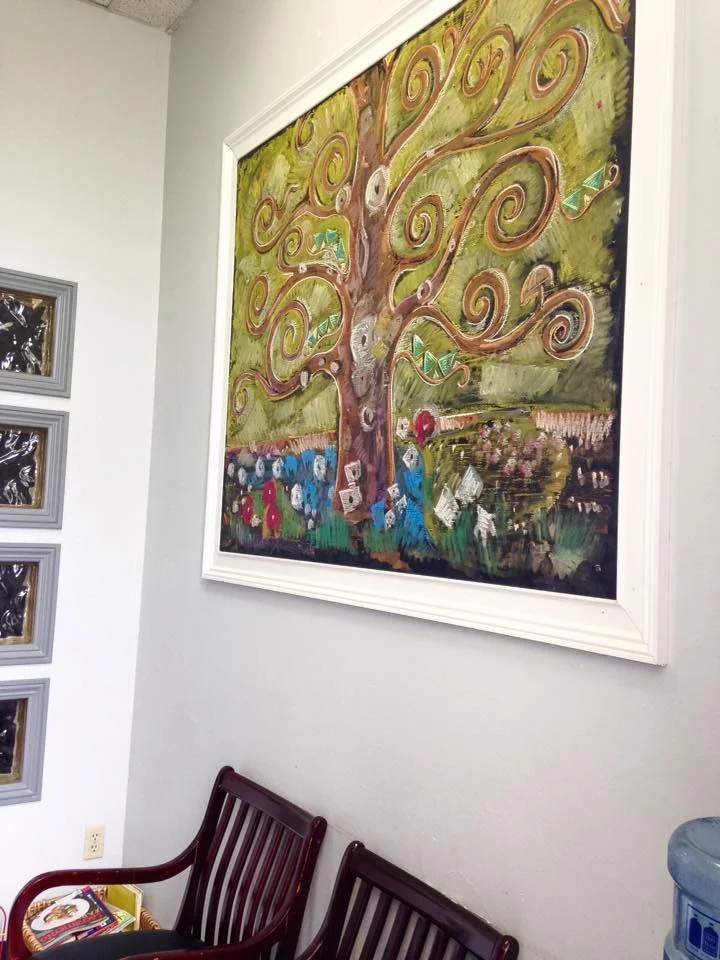
Klimt inspired ...
Brian and I are excited to be curating a changing gallery of chalkdrawings on this 4' x 5' board in a local chiropractors office!
Dr. Lynn loves Gustav Klimt & abstract art - Brian decided to start the series with a piece loosely inspired by Klimt's Tree of Life. We will be changing the drawing out every 6-8 weeks and are thinking about working in the style of a different artist each time.
Van Gogh inspired chalk art up next!
The things that matter...
Let’s play a game. When I say Waldorf, give me the first word that comes to mind.
Okay? Go.
“Waldorf”
“Astoria”, “salad”, “gnomes,” “beeswax,” “silks,” “Michaelmas,” “watercolors,” “main lesson,” “form drawings.”
And here is my answer: “teenagers.”
So many Waldorf blogs, newsletters, and even school websites focus on the idyllic, peaceful rhythms of early childhood and lower grades curriculum – the pastel silks, the smell of freshly baked bread, the crayon recreations of fables and fairytales. We hear about the nine-year change, about crossing the midline, about the impact of handwork on development.
Don’t get me wrong, these things matter.
But, they aren’t the whole; they aren’t the goal;
they are points on the journey.
As our family prepares to graduate our second 8th grader from our local Waldorf school, with the third and final child getting ready for her 5th grade Pentathlon, I’m struck once again about how this pedagogy and dedication comes together. Waldorf schooling isn’t “for little kids.” It is for the young adults they will become.
I’m in the process of rounding up volunteers for our school’s annual benefit dinner. This morning I received a Facebook message (Yes, they do grow up to use technology; try not to panic.) from one of our alumni. This young woman, a senior in high school, will be heading out on a marine biology research trip the day of the event, but she asked me to please add her to my list – to serve food at the end of what will be a long day. “I just love being any part of Waldorf events.”
These are the moments that bring the tears to my eyes. Not the children in sun hats, sprouting from the garden like so many pastel flowers. Not the chubby fingers painstakingly tracing forms. The part that gets me is the signs of the adults they are becoming:
That first overnight farm trip in 3rd grade
Hours of strings practice
Climbing Cindercone in Lassen National Park
6th graders helping their second grade reading buddies
Older kids mentoring the younger ones on the basketball court and playground
8th graders welcoming the brand new first graders into the life they love
8th graders using their history lessons – their knowledge of revolutionaries speaking truth to power -- to understand and take agency in life and their community
Teen boys on the basketball court fist-bumping and consoling each other over a missed shot
Graduation speeches in which each graduate in turn refers to their “sibling” and “family”
Alumni returning to the school -- to play in orchestras and ensembles, to coach basketball, to volunteer at festivals, to teach classes.
The divisions in our society are stark these days, rifts that were once blurry seem bottomless and miles wide. A friend and I were talking as we drove along Texas highways near Austin, in a space where philosophical viewpoints tip on knife edges. He said, so much of this could be solved in a couple generations if we taught our children empathy in schools.
How could we change the world if we taught our children differently? If this question sounds familiar to Waldorf families, it should.
In 1917, Otto von Lerchenfeld, a member of the Bavarian State Council in Germany, was in despair over the World War that was taking place. He decided to ask Rudolf Steiner for his opinion on what it would take to restore order and create a lasting peace. – Gary Lamb, The Social Mission of Waldorf Education
Lamb goes on to recount how this same question plagued Emil Molt, the company director of the Waldorf Astoria cigarette factory. “Molt ascribed the terrible events of World War I to a failure in education…”
It was out of this desire to educate the spirits of the young as well as their minds that the Waldorf schools were born.
When my oldest daughter was in 8th grade, her class’s boys’ basketball team made school history. They did so, not by showcasing the couple of truly outstanding players on the team, but by deciding amongst themselves, to put ego aside and make sure the ball always went to the person who was best positioned to pass or shoot. 13 and 14 year-old boys made the autonomous decision to work for the team rather than for individual glory.
My son and his buddies were in 5th grade at the time, one year away from forming their own team. They watched every one of those games with shining eyes and told us how they were going to do the same thing when they were in 8th grade.
Here is the magic.
A handful of boys from that older team, now juniors in high school, came back this year to coach the younger ones. And this younger team made school history in their own way and when they didn’t meet their ultimate goal, they, as a group, were their own best therapists. Even after a bitter loss, there was no blame, no name calling. Instead, they went to breakfast as a team, joking around, sitting on each others’ laps, hugging and high-fiving. They knew they were more than their individual disappointment; they were part of an ongoing legacy of respect, teamwork, and empathy.
When the hatred, fear, and intolerance I see in the world makes me want to weep, I think of the teenagers I know, the ones who actively move past their own adolescent angsts to reach out to each other and their communities. They do this because they have learned to work in groups: to nurture plants, to feed their school and community, to create art, to join their instruments into one song, to support each others’ triumphs and failures.

Christy Corp-Minamiji is our reluctant muse. A mom of three distinctly divine, loved-by-us kids, she takes everything, and mostly herself, with a grain of salt. Blogging veterinarian, freelance writer, runner, and soon-to-be author, she took our beg and ran with it. Literally.
Free Geometry e-workshop
Thanks to all of you who joined us this morning!
We had fun, as aways :) Brian spent about 30 minutes talking us through bisecting a line, and then creating this beautiful construction. The main lesson page below is an example of one you could make with your students, whether in the classroom or at home.
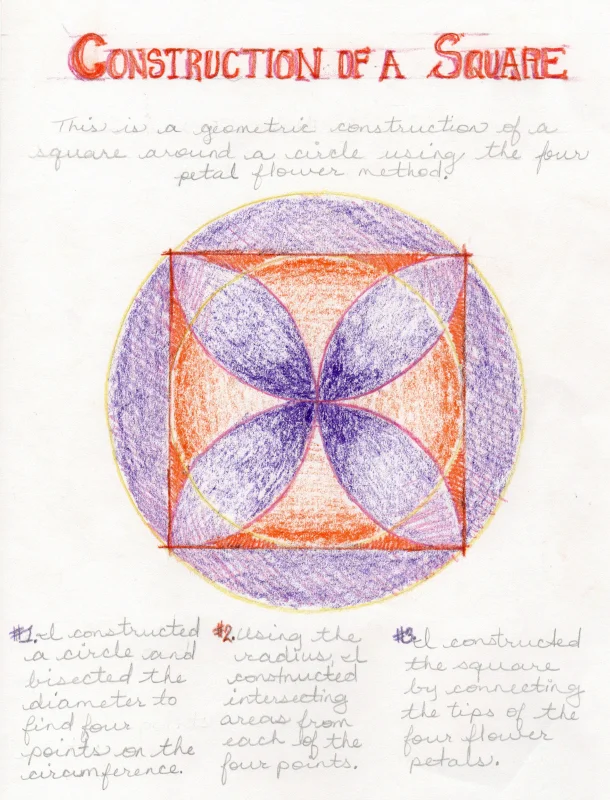
**Note on some of the terms we used..... yes, a straight-edge IS a ruler....unless you're Brian, and then it's a straight-edge ;) I think his thinking is that you could really use anything for that tool (the side of a book, for example)...it doesn't necessarily have to be a ruler. Also, YES! White-out IS liquid paper, for all our Canadian/Aussie/European friends!
xoxo-Robyn
Looking for something?

Welcome to Waldorfish! We started this adventure in 2012 out of a desire to make Waldorf training more accessible to class teachers in remote locations and to homeschooling families everywhere! Read more, click here.




WE WON! Our Weekly Art courses were voted “best interactive art program.” Learn more about the award, here.


Click here for a full list of schools we work with.
A few of our most popular blog posts:

Who are our courses for?

Starting Waldorf First Grade

4 Things to Know Before Planning Your Homeschool Year

In Praise of Balance: A Healthy Festival Life

Science in Waldorf Middle School: Starting Something New!