
Waldorfish Blog

Why Waldorf Storytelling? (Introducing Sara Renee Logan!)
I was a Waldorf classroom teacher for many years, starting out as a kindergarten assistant, then a subject teacher, and finally taking on four different grades classes, with whom I journeyed for varying lengths of time.
The part of the day I loved best was story time. A hush would fall over the students, and together, we would travel on waves of words, through mysterious forests, over sparkling seas, and under the earth, sometimes passing through towns and schools that looked a lot like our own.
It was similar when my own son was small, and he wanted a story about Boy and Cat and their adventures together each night. We’d sit in the candlelit darkness of his room, and I’d struggle to stay awake as Boy and his talking Cat went on adventures.
Some of the adventures were magical, some as ordinary as a trip to the grocery store, but all were met with equal joy.
Waldorf education relies heavily on storytelling.
From the nursery to the high school, narrative retellings of all kinds of stories lie at the heart of the lesson (for more on storytelling in the Waldorf classroom, click here!). Even in middle school science lessons, we retell the story of the experiment or observation. This week, I want to focus on why storytelling is so important. Next time, I’ll get into how you might get started with storytelling for the children in your life.
So, why? Why can’t we just open a book, or show a movie, or let the children read or observe or tell their own stories. The answer is, “WE CAN!” All of those things are good and worthy ways to learn and to share learning. There is nothing wrong with books, or movies, or going out into the world to see it for yourself. So why the focus on storytelling?
First off, when I say “storytelling,” I specifically mean oral storytelling without a book. Sometimes, it feels like I might as well say, “without a net.” To tell a story from the heart, without words on the page or an image on the screen to fall back on, is to be vulnerable. That vulnerability is an invitation to our listeners to be in relationship with us. The teller needs the listener. My stories about Annika and Her Dresses when I was 8 were fun, but they became even more so when I had a friend who would listen!
The Waldorf curriculum is rich in story, from nature stories and fairy tales, through great myths and legends, to biographies and historical stories. These aren’t the only stories we can tell, though, nor should they be! Sharing stories from our own experience, family memories, and stories we create right in the moment for our children are amazing ways for our children to connect to their own place in the world. As they listen, they are building a treasure trove of stories to pass on to their own children one day, and they are learning to tell their own stories.
Telling stories allows us to make the lesson content into something that is alive. Words on paper are dead; they will not grow or change. They are fixed as they are. This is not me tearing down reading, or being anti-books, but it’s a fact; that’s part of what I love about my favorite books: they are always the same, even when I am changing, and I can meet them in new ways. A story, told aloud, from one person to another or to a group of people, is alive. It can change to meet the needs of the listener. It can be dramatic or calm. The storyteller can draw out the parts of a biography, for instance, that paint the clearest picture of a time in history, or which are the best example of a figure’s character or personality.
With a story, we can make the most daunting material feel approachable, if not familiar and friendly. We might be worried about teaching long division, or medieval law, or the American Civil War, because it feels hard or strange, or overwhelming in scale. By telling a story about dragons sharing pancakes, or a young page who must help his king in a difficult matter, or a family making decisions about whether or not to fight, we can add a drop of humanity, and sometimes even a little levity, to subjects that threaten to feel heavy.
Storytelling demands that we be absolutely present to the story. In this, it is a present, a gift to our listeners. We bring our whole selves into that moment, and together, teller and listeners weave a tapestry of experience. It is a beautiful way for us to connect with our children.

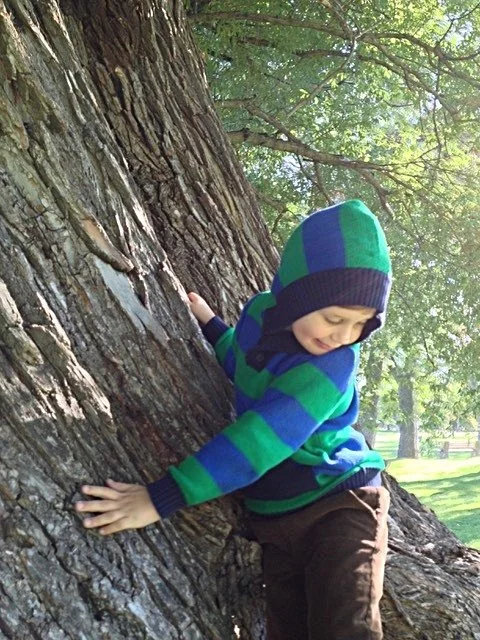
Photo: SRLogan
So, again, why should we tell stories? In short, my deepest answer, the one I get when I stop dancing around the academic benefits and Steiner’s recommendations and so on, is this: Because it is their birthright. Humans tell stories. We tell stories about ourselves, about our homes, about our countries, about our Gods, about our heroes, and about our deepest fears. Children deserve to have access to that magic, to that history, and to themselves. We can offer it to them word by living word, drop by delectable drop. We can offer it to them in the car, cuddled up in bed, on a beach, on a subway platform, over dinner, in a hospital, at the zoo, on an airplane, on a mountain, waiting in line at the grocery store — there is nowhere we cannot share a story, so it is available and accessible. It is their inheritance as story-telling creatures. We owe it to them. We, as adults, owe children not only pre-written, pre-illustrated, pre-digested stories, but new stories, old stories, stories burning like fire on our tongues, and stories flowing like water between us. And if we tell them our stories, we may be lucky enough that they will tell us theirs.
Related content:




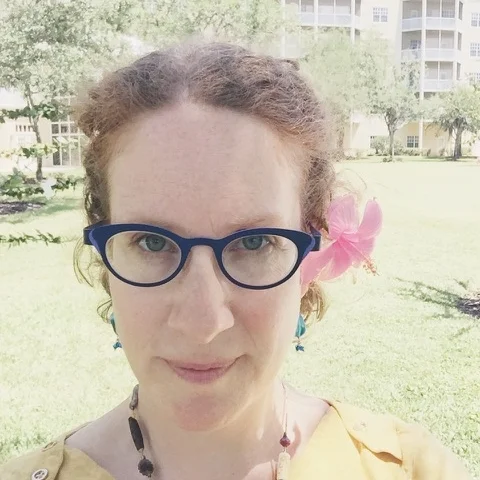
Sara Renee Logan has been telling stories to anyone who would listen since she was seven. Many years as a Waldorf teacher allowed her to tell stories about everything from Baba Yaga's hut on chicken legs, to the water cycle, to the life of Joan of Arc. She continues to share her love of storytelling and stories with audiences of all ages, specializing in bringing the wild beauty of folktales to young and old.
Sara has a home on the web at sarareneelogan.com where she shares stories of her life, tips, and ideas for parents and other storytellers. Sara offers coaching services and the Story/Reading process of story-based biography exploration that guides seekers to look deeply into their own life stories through the lens of traditional tales. Sara shares her life with her partner, Melanie, their son, and an unreasonable family of pets.
Find Sara on Instagram @seven_ravens_sara

A Letter To Our Homeschooling Friends.
As you start the school year, you may be feeling like your family doesn’t understand your decision to pursue home education.
Or it may be your friends that are questioning it. Or the school you made the decision to depart from. Some will openly challenge and judge you. Others will do so silently.
You will find that a handful will wholeheartedly trust and support you. (Nurture those relationships, they have great value.)
Keep your eye on the ball. Don’t engage the naysayers. How can any of us know what it's like to walk in another person’s shoes? The only skillful (and soulful) response when people are not supportive is to not take the bait. Practice seeing what’s good in them.
Cultivate faith in yourself. Let go of the rest. There is a lot of work to do.
You will hear it all. That your children won’t know how to socialize. That the kind of socialization they are getting is not enough, or not the right kind. That they will become overly attached to you. That you don’t have enough of “your own thing” going on. That you are depriving them. That they need more activities, or those of a different kind. That they need mean peers and mean teachers to teach them about the world, and to build resilience. That you are not educated enough to educate them. Some criticism will come from people you deeply love and respect, and it will sting. Some will come from complete strangers and you might find yourself laughing at the absurdity of it all.
The list could go on forever. In the short time we have been homeschooling I have developed the following response:
Thank you, but I’ve got this. My husband and I know what's best for our son, we know what's best for our family, and he is not your responsibility. He is ours.
I trust my life and how it unfolds. As a result, I don’t take any of these ultimately well-meaning offerings personally. You don’t have to, either.
Good luck this year.
You’ve got this!

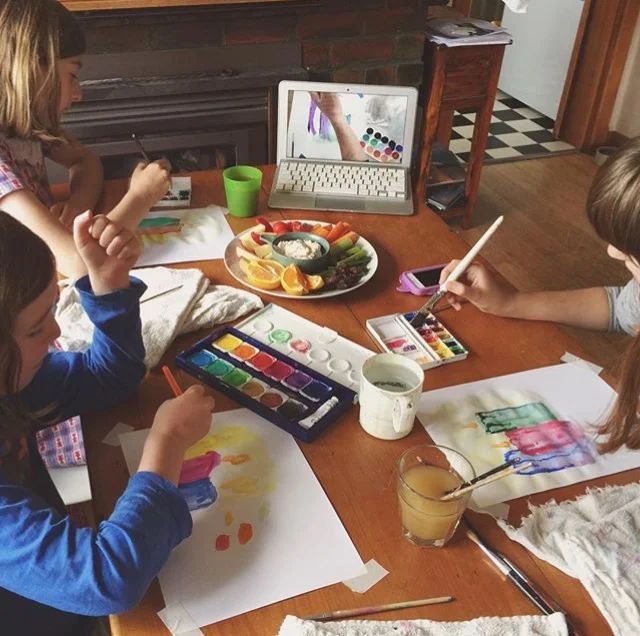
Helping our children create realistic expectations around Art.
Very often children and adults alike have unrealistic expectations when it comes to their initial attempts at art.
So often we are quick to move into frustration when our art work doesn't match the images we have in our minds.
Brian and I sat down (on the floor. we do our best thinking there.) to discuss this situation, and some ways to help ourselves and our children shift mindsets into one of growth.
Drawing from 14 years of teaching Waldorf art education and coaching basketball, Brian points out that
"practice is as important in art as it is in music, or sports, or math....
you wouldn't expect to only ever need to do one long-division problem to completely grasp the concept! Art is no different."
Password: rainyday
Looking to outsource some art lessons this year? Take a look at our Weekly Art program…
Is Weekly Art right for my family?
To help you answer the question "is this program right for my family?" we're giving folks the opportunity to try out a lesson for free. Fill out the form below and tell us where to send yours!

A finished example created using our free sample lesson.

Jean Miller's review of Waldorfish Weekly Art.
Jean Miller of Waldorf-Inspired Learning recently played with several of our Waldorf art lessons and wrote a review of the Weekly Art Program.
We loved having another teacher experience our lessons, and share their thoughts from the perspective of someone who also works closely with homeschooling families! Here's a taste of her thoughts:
"When I talk to parents about planning mean lesson blocks, they often ask, “How can I easily focus on Waldorf painting and drawing?”
Here’s how the conversation usually goes. I am explaining the 3-part lesson in a 2-day rhythm like this, “on day one, you present new material with a story, and then you paint a picture or draw into the main lesson book. On day two, you revisit that story and write a summary into the book.”
Most parents reply, “OK, I can do that. Except I don’t really know how to paint or draw.”
Well, then what?
Often I find myself saying you just have to do it. Just start, and you will learn as you go along.
But over and over again, I hear from clients that they never get to it because they feel inadequate, not prepared. They don’t know how to do the drawing and painting in the Waldorf style, so this stops them. Many parents simply avoid moving forward with their main lesson block. They get stalled and hung up here.
(Can you tell this is all very familiar to me? When my children were young, I had this fantasy that if only I could freeze them for about five years to go and learn everything I needed to about Waldorf, then maybe I could come back and feel prepared to homeschool them!)"

Looking for something?

Welcome to Waldorfish! We started this adventure in 2012 out of a desire to make Waldorf training more accessible to class teachers in remote locations and to homeschooling families everywhere! Read more, click here.


WE WON! Our Weekly Art courses were voted “best interactive art program.” Learn more about the award, here.


Click here for a full list of schools we work with.
A few of our most popular blog posts:
Who are our courses for?

Starting Waldorf First Grade

4 Things to Know Before Planning Your Homeschool Year

In Praise of Balance: A Healthy Festival Life
Science in Waldorf Middle School: Starting Something New!