
Waldorfish Blog
A Different Way to Think About the End of the School Year.
Take a moment to reframe the end of the school year.
There is a particular feeling that sometimes surfaces in the final stretch of the homeschool year. A bit of tightness. A sense of urgency. A quiet question just under the surface… have we done enough?
Sometimes, this feeling passes quickly. But sometimes, it lingers - and begins to shape how we move through these last weeks. And not always in ways that feel good.
If you’re noticing that something feels a little “off” as you approach the end of your year, it may be worth pausing - not to fix anything immediately, but simply to notice.
Here are a few gentle red flags I’ve come to look out for:
1. “We have to finish everything.”
This one can sneak in quietly.
A growing pressure to complete every lesson… to make sure nothing is left undone.
You might notice the pace picking up. Your tone shifting. Maybe your days are feeling a little more strained.
Underneath this is often a belief that coverage equals learning.
But (and, the wisest version of you already knows this) learning doesn’t unfold as a checklist.
When we prioritize completion over connection, something important can begin to slip.
Sometimes, finishing well looks less like doing everything - and more like protecting what matters most.
2. Measuring the year only by what can be seen
At this point in the year, it’s easy to look for proof. What has my child learned? What can they show for it? And when the answers feel unclear, doubt can creep in. But so much of learning - especially in a home environment - is not immediately visible.
It lives in:
growing confidence
increased resilience
a deepening relationship to learning itself
There is a version of homeschooling that quietly mirrors the systems many of us were hoping to step away from - where only measurable outcomes “count.”
But much of what matters most cannot be neatly measured.
And it is still real.
3. Everything feels heavy, but we push through anyway
Late in the year, energy naturally shifts. What once felt manageable may now feel like a stretch.
And yet, it can be tempting to respond by pushing harder - trying to maintain the same pace, the same expectations, the same load.
You might notice:
more resistance
more fatigue (for you and your child)
less joy
It’s easy to interpret this as a need for more discipline. But sometimes, it’s simply a sign that something needs to soften. Knowing when to lighten the load is not a failure of commitment. It’s part of wise, responsive teaching.
4. Letting rhythm slip in favor of urgency
When the end of the year approaches, rhythm can begin to unravel.
Days become less predictable. There’s a sense of trying to “fit it all in.” The steady flow that once supported your homeschool starts to feel harder to hold.
But rhythm isn’t just a nice idea - it’s a foundational support. Especially when energy is low. In fact, this is often when it matters most.
A simple, familiar structure can carry both you and your child when motivation fades. Not by adding more - but by holding what’s already there.
5. Reaching the end… and moving on too quickly
And then, suddenly, it’s over.
The books are closed. The materials are put away. Attention shifts to what’s next.
Without much pause to acknowledge what has been, you can be left with a quiet sense of incompleteness. Not because something was missing - but because it was never fully seen.
Closure doesn’t need to be elaborate.
But even a small moment of reflection can help bring a sense of meaning to the year. A way of saying:
Something happened here. And it mattered.
Reframe
If you recognize any of these patterns, take heart, there’s nothing here to fix or judge! These are common currents - shaped not just by our own expectations, but by the wider homeschooling culture we’re part of.
A culture that can, at times, emphasize:
productivity over presence
visible results over lived experience
And yet, many of us came to homeschooling for something different. Something slower, more human, more connected.
The end of the year can be a gentle invitation to return to that.
Finishing with Care

Finish the school year with intention and care.
Finishing well isn’t about proving something. It’s not about tying everything up neatly or arriving at a perfect endpoint.
It’s about noticing what has unfolded… honoring it… and allowing it to be enough. Even if parts are unfinished.
Especially then. Because something real has taken place over these months.
In the movement of living day by day, learning has happened.
Growth has unfolded.
About the Author
Robyn Beaufoy is Waldorfish’s CEO, and a course instructor for some of our courses - Waldorf Art for Beginners, Weekly Art Foundations, and Simple Season. You’ll find her intuitive touches and influences throughout everything Waldorfish offers! Robyn has been in the world of education for over 25 years, with an MA in Education and a certification in Waldorf teaching - she also homeschooled both of her children. In 2012 Robyn co-founded Waldorfish.com, creating it with the vision of making Waldorf-inspired art and pedagogy more accessible, joyful, and doable for homeschoolers all over the world.

The Middle Grades Research Project: Four Ways to Challenge and Inspire
The middle schooler is in a particularly special and challenging time in their development.
They are undergoing great change in the physical body, and also cultivating their own inner world as an individual.
Research projects create space for students to draw on existing skills, cultivate new ones, and immerse themselves in a subject more deeply than ever before!

The middle schooler is ready for new challenges and approaches to learning.
As the educator gently guides the process, the student becomes the driving force behind the learning - perfectly suited to the middle grader, who is beginning to experience themselves as a more independent individual. Many schools introduce such projects in sixth grade, though they can be utilized throughout middle school.
Research projects may include some or all of the following components, each requiring unique skills:
Written portions that include summaries and detailed descriptions.
Artistic components that portray the subject at hand through the students’ own work.
A physical representation, which could be in booklet, poster, or other form.
An oral presentation, which asks the student to be well-versed in their subject.
A social component, which asks others to assist in their learning. This could be an interview, written letter, or some other form of person-to-person communication.
Putting all of these elements together is certainly a challenge, and it provides an opportunity for the middle grader to experience and learn in new ways.
Here are a few examples of learning opportunities offered by a research project:
Discovering the Greater World
A project allows the student to connect with a topic outside of what they currently know; something brand new and unfamiliar! This awakens inspiration, and a curiosity about what else there is to know and explore.
Students learn from authors through research materials, such as guide books, biographies, articles, and more. As well, this is the perfect opportunity to discuss the importance of citations and bibliographies!
2. Skill Building and Application
Projects require the student to apply many skills at one time: reading comprehension, note-taking, the ability to summarize, provide detail, and much more. They also need to communicate their findings to others in a clear and dynamic way: a new challenge in itself.
3. Awakening New Artistic and Presentation Skills
With a research project, the students are not working out of their own creative imaginations. Instead, they are using the power of observation and artistic representation to illustrate and portray the beauty of their subject. For example, students may be asked to draw a state flag, a specific animal, or a recognizable landmark- all requiring attention to detail, careful drawing, and other artistic skills.
Some projects may require a poster, booklet, or other display. It is the students’ job to present their information clearly, and also make things balanced, colorful, and eye-catching.
4. Stepping into the Social Realm
The middle school student is ready for a challenge, and is ready to communicate in a more mature, focused, and purposeful way. A research project is the perfect time to introduce an opportunity to speak to and ask questions of a professional, either in oral or written form. Learning from experienced professionals is a direct and personal way to learn, and also asks middle school students to be prepared with their questions, respect others’ time, and be in charge of the conversation.
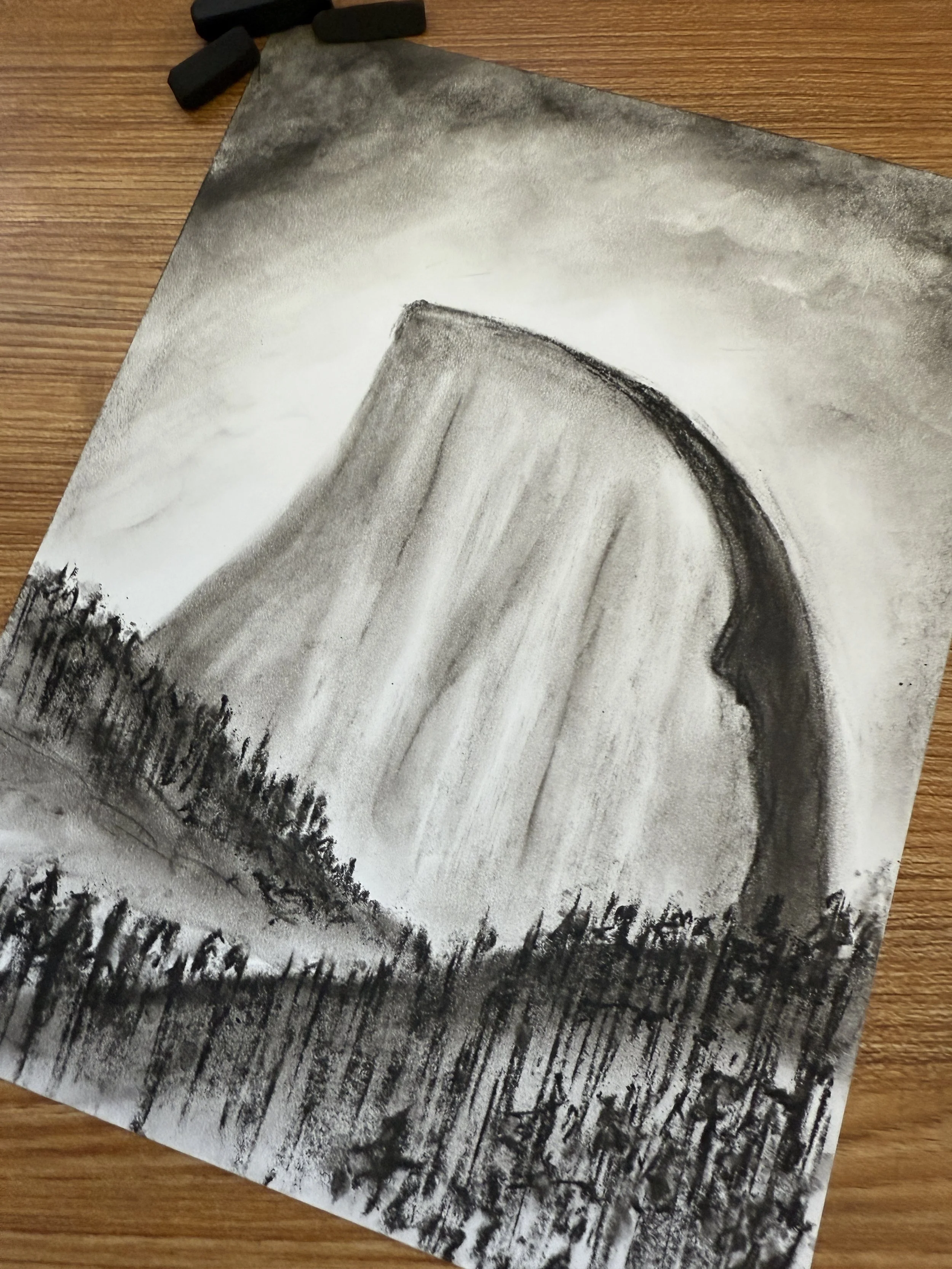
A charcoal drawing lesson of Half Dome is included in our Geology course.
If you’re feeling called to offer your middle schooler a thoughtful research experience - but aren’t quite sure where to begin - our Geology course would be a gentle place to start.
Included is a carefully structured research journey called The National Parks Project, designed to support both student and educator every step of the way.
You’ll find language arts components, artistic extensions, clear outlines, citation and note-taking guidance, and even optional interview questions for a park ranger or other professional in the field.
With these pieces already in place, you’re free to spend less time planning and more time learning alongside your child!
Together, you can choose a national park that sparks curiosity and allows the project to unfold naturally, guiding your student into a deeper understanding of geology, flora, fauna, and the living landscape as a whole.
And if questions arise, you’ll have access to the course instructor, Caitlin Amajor, one of our trained Waldorf teachers, offering steady guidance and support along the way!
More from Waldorfish!






About the Authors
Robyn Beaufoy is Waldorfish’s CEO, and also a course instructor for Simple Season, Waldorf Art for Beginners, and Weekly Art Foundations. You’ll find her intuitive touches and influences throughout everything Waldorfish offers. Robyn has been in the world of education for over 25 years, with an MA in Education and a certification in Waldorf teaching - she also homeschooled both of her children for some of that time. In 2012 Robyn co-founded Waldorfish.com, creating it with the vision of making Waldorf inspired-art and pedagogy more accessible, joyful, and doable for homeschoolers all over the world.
Caitlin Amajor is Waldorfish’s course instructor for Geometry grades 5 & 6, Botany, and Geology as well as our Administrative Assistant. From a young age, Caitlin has been immersed in Waldorf education, attending a Waldorf school from K-8. After receiving a BA in History, Caitlin gained her certification in Waldorf teaching, and spent seven years as a Waldorf class teacher in the upper grades. With a special fondness for watercolor painting and geometry, Caitlin loves bringing Waldorf education to her students all over the world, and seeing their own individuality and style bloom from the curriculum!
The Beauty of a Slow Start to the School Year

The new school year is an exciting, and sometimes overwhelming, time of year.
The Beauty of a Slow Start
When we think of the “first day of school,” many of us picture sharpened pencils, crisp notebooks, and a flurry of lessons and activities packed into the schedule. It’s exciting!
But if we’re honest, it can also feel a bit like going from lounging in a hammock to suddenly running a marathon - without so much as a stretch in between.
And that’s not just true for our children. As parents, we feel the weight of this seasonal shift too. Our kids are learning to release the rhythms of summer while stepping into new ones, and at the same time, we’re holding the invisible threads - schedules, meals, moods, energy levels - while also trying to find our own rhythm again. It’s a lot. It’s hard. And, you’re not doing anything wrong.
That’s why I’ve always loved the idea of a slow start to the school year. Rather than jumping straight into a full load of lessons and activities on day one, we give ourselves (and our children) space to ease in. This approach isn’t just kinder to everyone’s nerves - it also happens to align beautifully with both Waldorf rhythms and modern science.

How can you make your daily routine a bit more gentle?
Why Gentle Transitions Support the Nervous System
Transitions are tricky. Even happy changes -like beginning a new grade - ask our nervous systems to adjust. When we add too many changes at once, children (and parents!) can slip into “fight or flight” mode, which is not exactly the best state for joyful learning.
By starting slowly - adding one or two elements at a time - we give the nervous system a chance to stay regulated. Children feel secure, parents feel less frazzled, and the household atmosphere stays more harmonious. (And let’s be honest: fewer meltdowns are always a win.)
Research tells us that habits stick best when introduced gradually. Instead of overhauling everything on One Big Monday Morning, layering in small changes helps new rhythms take root.
A Waldorf Perspective on Rhythm
In Waldorf education, rhythm is central. Breathing in and breathing out, balancing activity with rest, honoring the flow of the seasons - all of this creates a sense of steadiness for children.

Taking time to transition is healthy for the whole family.
A slow start to the school year mirrors this wisdom. We don’t need to hit the gas right away. Instead, we can begin with simple songs, a morning walk, or a story to set the tone. Lessons and projects can be layered in gradually, like brushstrokes in a painting.
And just as autumn ripens slowly, the festival of Michaelmas at the end of September often feels like a natural settling point. By then, many families discover that their rhythm has gently rooted itself - just in time to celebrate courage and strength in the turning of the year.
Practical Tips for a Slow Start
Here are a few ideas to make this approach simple and doable:
Week 1: Focus on rhythm. Establish your morning circle, enjoy stories, and reconnect with your learning space. Keep lessons light and playful.
Week 2: Add one main lesson subject or block. Keep afternoons simple with nature walks, handwork, or drawing.
Week 3: Gradually layer in more lessons/activities, while keeping an eye on how everyone is adjusting. Flexibility is your friend.
Week 4: Notice how much you’ve already established without the stress of a “big bang” start. Celebrate progress - and maybe bake some bread while you’re at it (bonus points if it’s dragon-shaped for Michaelmas ;)
Parents Benefit Too
We often talk about children’s needs, but parents also have nervous systems that crave gentleness. A slow start gives us space to shift gears - because honestly, the end-of-summer transition can feel bumpy no matter how long we’ve been at this. Easing into the year reduces stress and helps us sustain energy for the long haul. And it reminds our children, by example, that growing into new rhythms is something we all do together, one step at a time.

Slowing down builds a strong foundation- you’ve got this!
A Final Word of Encouragement
If you’re worried that a slow start might end up feeling like you’re “behind” in some way - let me reassure you: you’re not. You’re actually laying a stronger foundation for the months to come. The school year is long, and what matters most is creating rhythms that nourish your family rather than drain it.
This seasonal transition is challenging for everyone - kids and parents alike - but just as we’ve done in other times of change, we’ll gradually settle into steadier days and familiar rhythms.
So this September, consider giving yourself permission to slow down. Notice how the seasonal shift happens little by little, not all at once. Your homeschool year can unfold the same way - with steadiness, warmth, and maybe even a little more joy.
(And if anyone asks why you’re taking things slowly, just smile and say you’re giving your family the gift of nervous system regulation. That’ll either impress them… or end the conversation quickly. Win-win ;)
About the Author
Robyn Beaufoy is Waldorfish’s CEO, and a course instructor for some of our courses - Waldorf Art for Beginners, Weekly Art Foundations, and Simple Season. You’ll find her intuitive touches and influences throughout everything Waldorfish offers! Robyn has been in the world of education for over 25 years, with an MA in Education and a certification in Waldorf teaching - she also homeschooled both of her children. In 2012 Robyn co-founded Waldorfish.com, creating it with the vision of making Waldorf-inspired art and pedagogy more accessible, joyful, and doable for homeschoolers all over the world.
The Quiet Power of a Weekly Art Rhythm

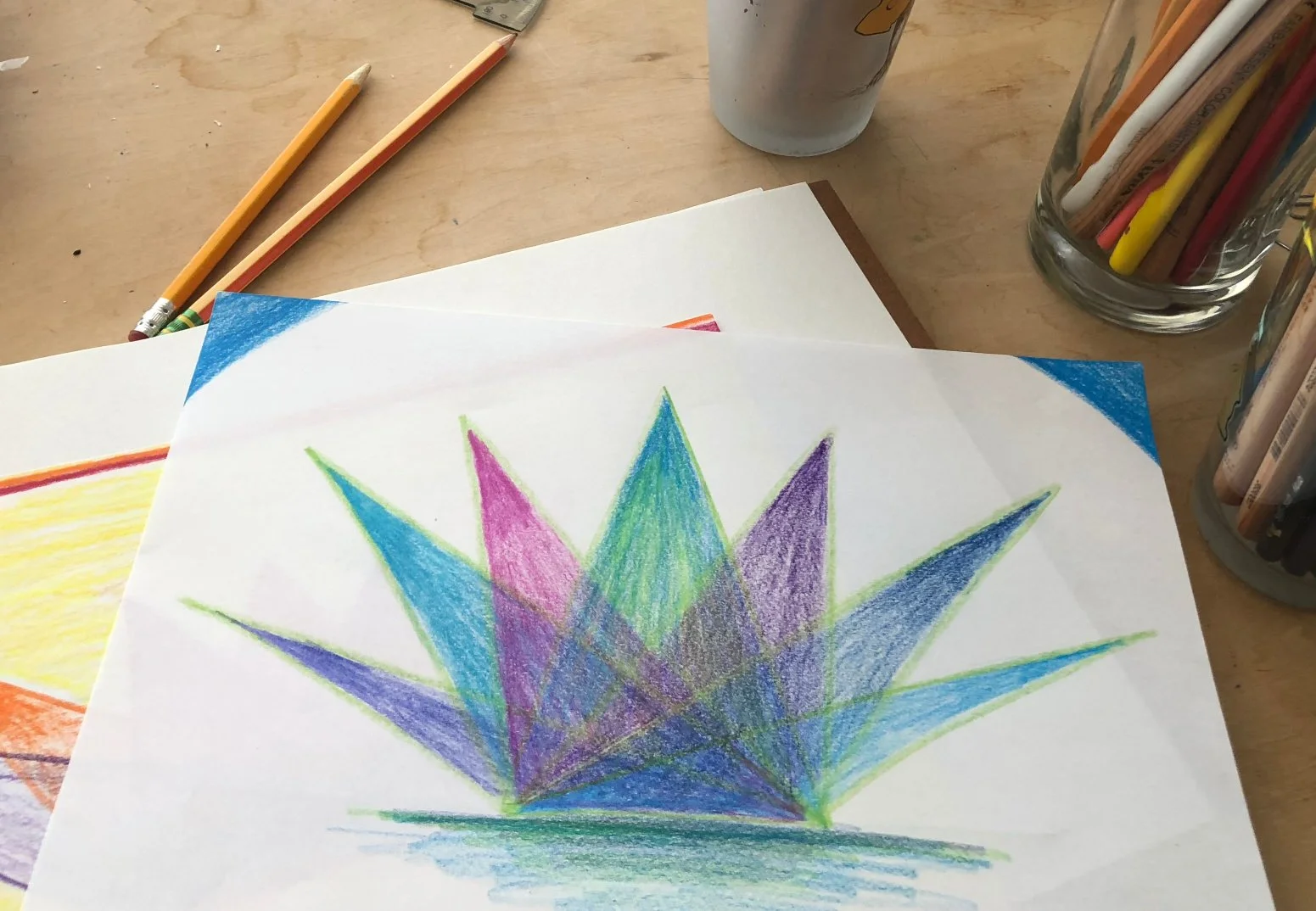
Where can you find a place for art in the rhythm of your home life?
In the busyness of homeschooling life, it’s easy to feel like we’re constantly moving - navigating lessons, meals, dishes, and the emotional weather of a growing family.
Amid all that motion, creating (and returning to) a weekly rhythm that includes art can feel like a gentle anchor.
This rhythm doesn’t have to be elaborate. It doesn’t require hours of free time or a perfectly tidy table. It’s about carving out a small space, once a week, for quiet creativity. A simple drawing session, a watercolor moment, a bit of modeling with beeswax or clay. These moments aren’t “extra.” They’re essential. (And, if your rhythm is sometimes more of a gentle intention than a fixed schedule, that’s okay too. Even coming back to art ‘when you can’ has power.)

Engaging with art has many benefits for the whole family.
When art is woven into our weekly rhythm, it becomes more than just another subject to check off the list.
It becomes a shared moment of stillness. A way to regulate together. The repetition alone - of knowing art will come again next week - offers calm. It trains us (and our children) to expect beauty, to make space for process, and to feel safe in the creative unknown.
Over time, this rhythm builds a quiet kind of confidence. We learn to show up, even when we’re tired or distracted. And our children see us doing that - not perfectly, but consistently. They learn that creativity isn’t reserved for artists or experts. It’s something humans do - week after week, rain or shine.

Taking time to reconnect through art.
In that rhythm, we reconnect with each other. With the moment. And perhaps most importantly, with ourselves.
So if you’re looking for a way to ease the pace, to nourish the atmosphere of your homeschool, or simply to feel more grounded, consider this: a little art, once a week. No pressure. Just presence.
And let that be enough.
If you’d like some support creating your own weekly art rhythm, reach out and/or take a look at our Weekly Art Foundations course.
About the Author
Robyn Beaufoy is Waldorfish’s CEO, and a course instructor for some of our courses - Waldorf Art for Beginners, Weekly Art Foundations, and Simple Season. You’ll find her intuitive touches and influences throughout everything Waldorfish offers! Robyn has been in the world of education for over 25 years, with an MA in Education and a certification in Waldorf teaching - she also homeschooled both of her children. In 2012 Robyn co-founded Waldorfish.com, creating it with the vision of making Waldorf inspired-art and pedagogy more accessible, joyful, and doable for homeschoolers all over the world.






Looking for something?

Welcome to Waldorfish! We started this adventure in 2012 out of a desire to make Waldorf training more accessible to class teachers in remote locations and to homeschooling families everywhere! Read more, click here.




WE WON! Our Weekly Art courses were voted “best interactive art program.” Learn more about the award, here.


Click here for a full list of schools we work with.
A few of our most popular blog posts:

Who are our courses for?

Starting Waldorf First Grade

4 Things to Know Before Planning Your Homeschool Year

In Praise of Balance: A Healthy Festival Life

Science in Waldorf Middle School: Starting Something New!