
Waldorfish Blog

A Guide to Finding the Right Course from Waldorfish.com
Q: I’m new to Waldorf homeschooling and I’d like to incorporate your courses; what should I choose?
(This post is part of a series in which we answer the most common questions we receive in our inbox re: homeschooling, Waldorf curriculum/pedagogy, and whatever else comes our way! Click here to read more from the series!)
A: First off, welcome! We’re so glad you’re here!
We offer courses crafted by master teachers, all designed with the Waldorf pedagogy and the homeschooling family in mind. Our courses are suitable for a wide range of ages, grades, and abilities, and include subjects in art, science (physics, chemistry, and botany), form drawing, geometry, and festival life.
So, how do you know which one is best for you and your child?
First, it’s important to note that we do not offer a full curriculum for a specific grade, or as it is sometimes called, a “boxed curriculum”.
We offer courses in an à la carte fashion, meaning they are stand alone courses that focus on a certain subject or skill.
What does that mean for you?

A landscape drawing using block crayons.
It means you can use our courses to supplement and enhance your homeschool curriculum, and essentially plug-in our offerings where you feel they will serve your family the best!
A quick pep talk: just because you’ve chosen to homeschool, does not mean you have to do everything yourself! Really, you don’t! Take the time to identify your strengths and challenges, and find support where you need help.
One way to do this is with our courses.
So, which course should you start with?
Here are a few questions consider:
Are you looking for a grade-specific course, or something more general and designed for a wide range of ages? Do you plan to have children of various ages work together with one course?
Is your child in the lower, or the upper grades (grades 1-4, or grades 5-8 and beyond?)
As the adult educator, are you hoping to have your child working independently with the lessons, or are you hoping to take the course on your own and then present the material to your child? Maybe you envision working in tandem with your child through the lessons?
Are you hoping to begin the course right away? (All but one of our courses are open for enrollment year-round; our Weekly Art Foundations course has two enrollment windows a year- click here to join our newsletter and receive more info!)
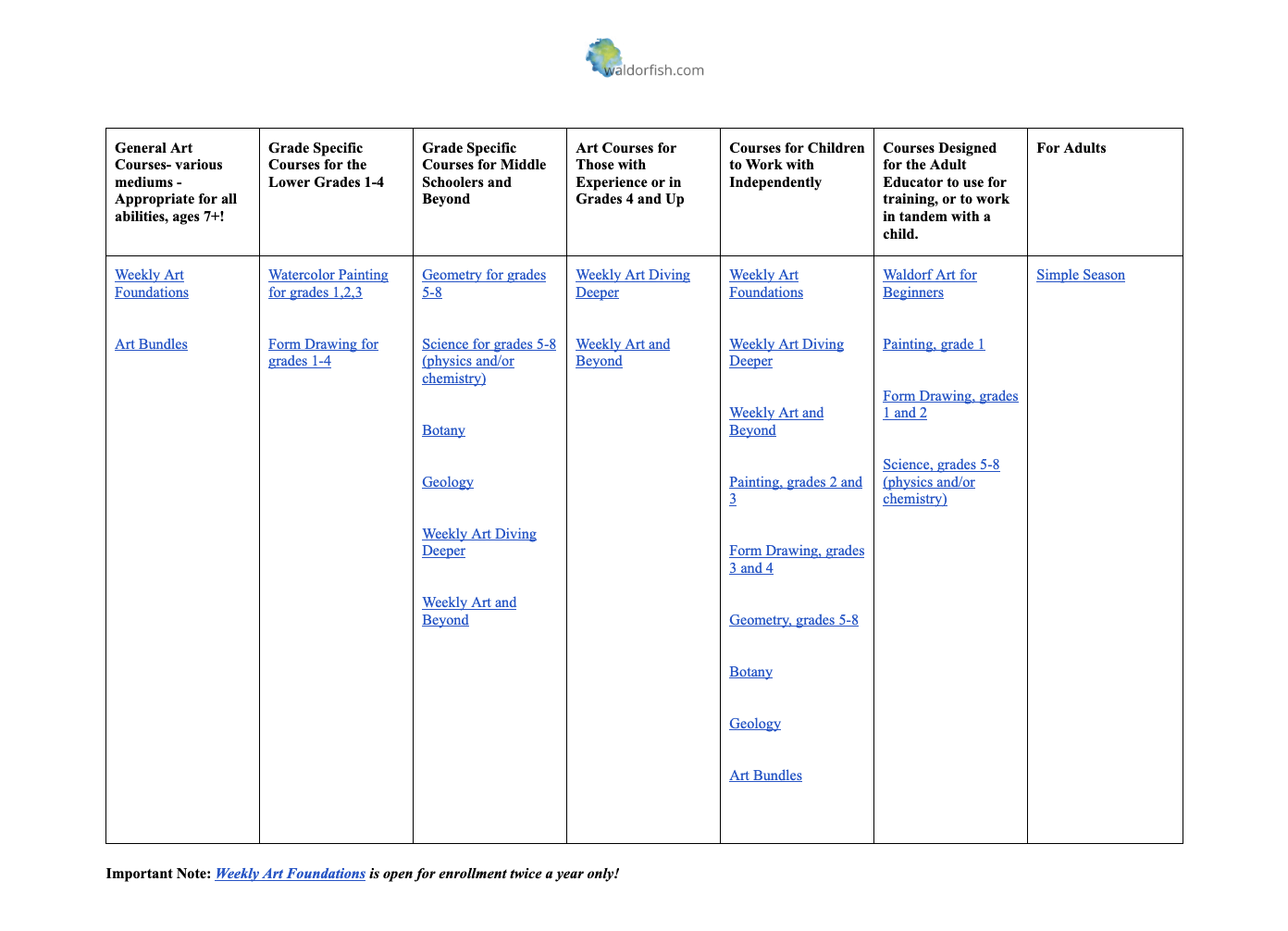
Once you’ve asked yourself these questions, check out the chart below. You’ll find courses that overlap in various categories, and others that are more specific to a grade or age.
Where would you like the most support?
Click here or on the chart below to explore!
For all of our courses, you can expect:
Lifetime access (this means you can circle back to the lessons anytime - with younger children as they age up too!)
Instructor support
Detailed supply lists
Pedagogical and practical support ideas
Original courses inspired by Waldorf curriculum created by experienced, master teachers and home educators

Once you’ve identified where you’d like the most support, take some time to check out our Free Sample Lessons.
Each free lesson is pulled directly from the course itself- there is no better way to get an idea of the instructor’s style, a lesson’s pace, and overall, how our courses work!
There are a lot of options to choose from- if you’d like some help making the right choice, send us a message - we’re happy to help!
Enjoy, and we can’t wait to see what you choose!

About the Authors
Robyn Beaufoy is Waldorfish’s CEO, and a course instructor for two of our courses - Waldorf Art for Beginners and Weekly Art Foundations. You’ll find her intuitive touches and influences throughout everything Waldorfish offers! Robyn has been in the world of education for almost 30 years, with an MA in Education and a certification in Waldorf teaching - she also homeschooled both of her children. In 2012 Robyn co-founded Waldorfish.com, creating it with the vision of making Waldorf inspired-art and pedagogy more accessible, joyful, and doable to homeschoolers all over the world.
Caitlin Amajor is Waldorfish’s course instructor for Geometry grades 5 & 6, and Botany, as well as our Administrative Assistant. From a young age, Caitlin has been immersed in Waldorf education, attending a Waldorf school from K-8. After receiving a BA in History, Caitlin gained her certification in Waldorf teaching, and spent seven years as a Waldorf class teacher in the upper grades. With a special fondness for watercolor painting and geometry, Caitlin loves bringing Waldorf education to her students all over the world, and seeing their own individuality and style bloom from the curriculum!








Waldorfish Homeschool Courses: Four Steps To Creating The Ideal Schedule for Your Child
Welcome! You’ve purchased a Waldorfish course, and now you’re ready to bring the curriculum into your student’s world.
You may be asking yourself “How do I fit these courses into our schedule? How often should they do the lessons, how much time will they take, what will work best for us?”
The good news is that whatever plan you decide to run with, you can always change your mind, adjust, and keep exploring what works best!
There is no wrong way to schedule our courses - it’s all about what works best for your family.
Our courses are designed to be flexible.
Nearly all of our programs deliver the full course and all the lessons at once, meaning you have all the material at your fingertips- no waiting for new lessons to be released. You can jump right into your planning and scheduling.
Lessons can be done each day, one per week, one every other week, or whatever rhythm works best for your family.

Homeschooling courses should work for you and your child’s schedule- not the other way around!
But how to decide what schedule is best?
We encourage you to observe how your child typically responds to their daily and weekly rhythm, and consider these four things:
Finding the right rhythm:
When starting something new, does your child jump right in and want to fully immerse themselves in the subject? Or do they prefer to ease in, and take their time bringing the new lessons into their rhythm? Your answer here will help you decide how to schedule things. Once a day, once a week, or somewhere in between? No matter what you decide, keep it consistent, and keep it on the calendar. (If it’s not on your calendar, it’s much less likely to get done!
How much support will your child need?
Take into account the material: Is this material in your child’s “wheelhouse,” something they generally enjoy, or is it something that they find more challenging? How involved will you need to be to make the most of the lessons?
What amount of prep time is required?
Consider the course at hand: what are the supplies needed? Is the student working with the lessons independently, or are you presenting the information to them? Make your prep time a part of the lesson- remember: preparation is key to a smooth lesson!
What works for you?
And don't forget about YOU! What feels doable to you? While the lessons are designed to be watched by the student, some children need more support from their adults than others. Is your child one to self-direct and able to do the lessons on their own (mostly)? Or, do they need you more on hand in a supportive role? If the latter feels more true, don't forget to take your own schedule and needs into consideration as well!

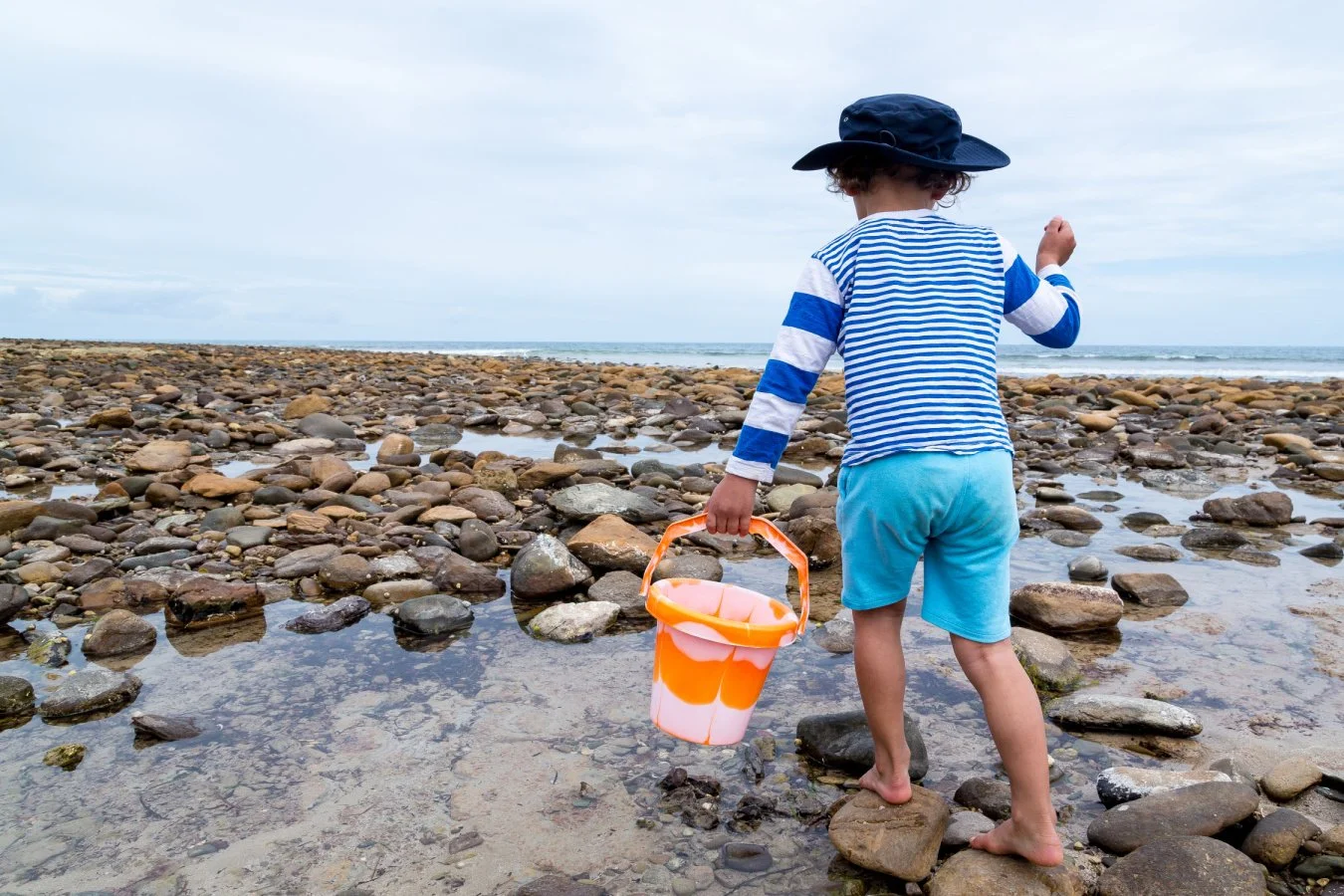
The outdoors are a wonderful place to learn and grow together!
You’ve got this.
With some experimentation, flexibility, and planning, we’re confident you’ll find the best way to incorporate our courses into your homeschool schedule!

About the Authors
Robyn Beaufoy is Waldorfish’s CEO, and a course instructor for two of our courses - Waldorf Art for Beginners and Weekly Art Foundations. You’ll find her intuitive touches and influences throughout everything Waldorfish offers! Robyn has been in the world of education for almost 30 years, with an MA in Education and a certification in Waldorf teaching - she also homeschooled both of her children. In 2012 Robyn co-founded Waldorfish.com, creating it with the vision of making Waldorf inspired-art and pedagogy more accessible, joyful, and doable to homeschoolers all over the world.
Caitlin Amajor is Waldorfish’s course instructor for Geometry grades 5 & 6, and Botany, as well as our Administrative Assistant. From a young age, Caitlin has been immersed in Waldorf education, attending a Waldorf school from K-8. After receiving a BA in History, Caitlin gained her certification in Waldorf teaching, and spent seven years as a Waldorf class teacher in the upper grades. With a special fondness for watercolor painting and geometry, Caitlin loves bringing Waldorf education to her students all over the world, and seeing their own individuality and style bloom from the curriculum!

Our Best Waldorf Homeschool Planning Resources
As the school year rolls along, you may be finding your groove in some areas, identifying challenges in others, and looking to solidify plans for the months to come.
We’re here to help.
We’ve collected many of our planning resources here in one spot - our goal is for you to feel empowered to work through your school year in the way that serves your family best!
When planning your homeschool year, it can be difficult not to get sucked into FOMO, comparison (especially if you go on social media, *ahem*,) or just not knowing where to start.
Here’s something to remember:
FREEDOM is the cornerstone of Waldorf education!
Now, we know that freedom can feel a little intimidating- sometimes too many options actually breeds indecision. But take a breath, explore, and trust your gut. You know your child(ren) best; their interests, challenges, needs, and wishes. Really, you do! So take some time, and enjoy the planning process. You’ve got this.
Click on the link or image to explore some resources that we hope inspire, empower, and give you confidence to do things your way:

Michaelmas is celebrated every year on September 29th!
Doing It Your Way: Celebrating Michaelmas
Michaelmas is just around the corner, and there are many things we see out there that feel like requirements to celebrate the day. Building a dragon, sewing golden capes, dragon bread? All or none of the above? Where to begin? Start here, and get some encouragement for doing it your way!

Four Things to Know Before Planning
Just getting started with homeschooling AND Waldorf education? Here’s four things to know as you get started with your planning. This piece is less of a “things to do” list, and more of a “things to bring you peace” list.

Four Questions We Should All Be Asking On Behalf of our Children
Crafting the rhythm of our children's days and school year can start to feel daunting when we consider all the various options available to our families. Take time to read this piece that includes four very important questions we should all be asking on behalf of our children. Their answers will bring you peace. Promise.

Work smarter, not harder!
4 Tips for Planning Your Curriculum
Taking care of yourself as an educator is just as important as taking care of your child’s day and education! Empower yourself to prepare curriculum and lessons in ways that work for you! Find some inspiration here for ideas on making the most of your time, and explore ways to work smarter, not harder.

Get the Biggest Bang for Your Homeschool Dollars
Have you purchased homeschool curriculum or Waldorfish.com courses? Not sure exactly how to make the most of them? We’ve compiled the most doable and meaningful advice from our customers to get everything you possibly can out of your homeschooling dollars.

Organized art supplies brings great peace of mind- we’ll help you get started!
Getting Your Supplies in Order
This next resource brings the phrase “the devil is in the details” to mind. Be sure to read this piece to discover the importance of taking some time to plan ahead and get all the things you need on hand in order.

Allowing Your Children to Write Their Own Stories
It feels like we run into “shoulds” around every corner when educating our children. It’s not hard to get overwhelmed with tracking our childrens’ progress based on rubrics and a grade’s expectations. These have value AND we want to empower you to not worry too much. A little flexibility, time, and faith in your child’s growth and development goes a long way in making your homeschool year meaningful and educational.
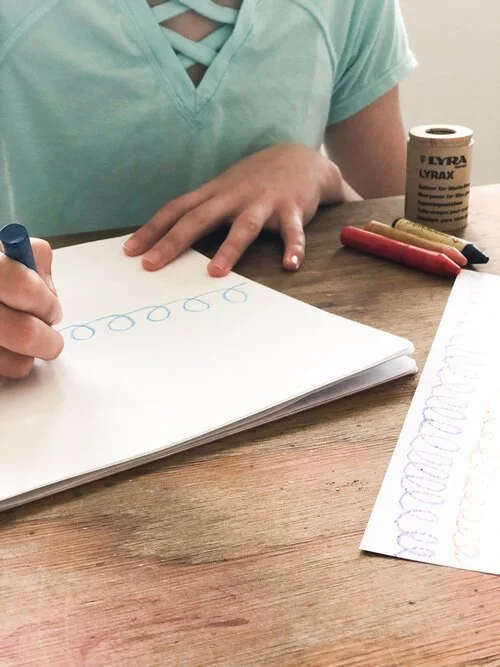
Especially in the younger grades, Waldorf education puts a lot of emphasis on the importance of including stories with lessons, such as in form drawing. But do we have to include a story every time? Is there another way? Explore this piece about stories by our form drawing course creator Rev Bowen, and find out where more isn’t necessarily more.
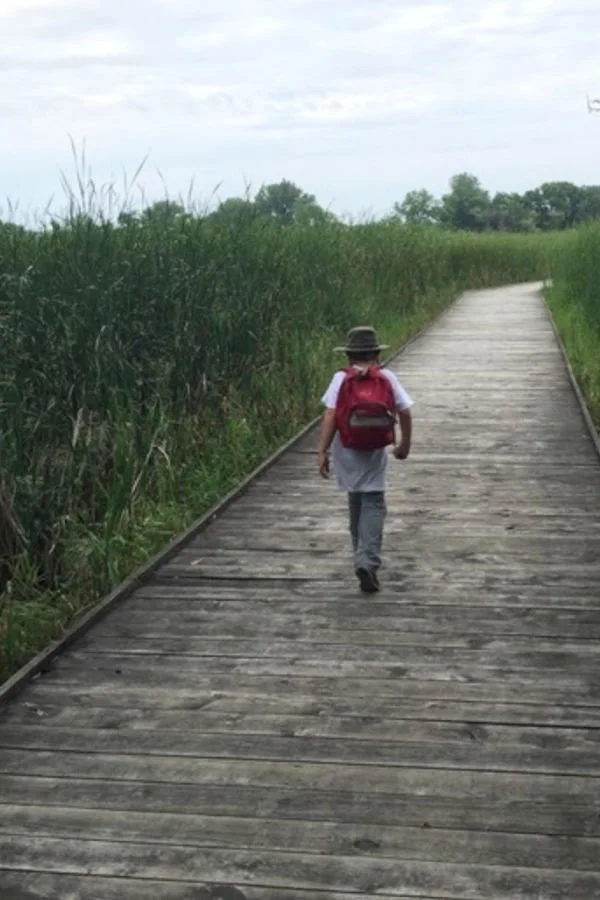
Storytelling is a pillar of Waldorf education, but it can be one of those things that feels daunting, especially to those that are just getting started. But, storytelling is about so much more than memorizing and reciting- it’s about connection, sharing, and enlivening even the most simple stories. Be sure to check out our full, 3-part storytelling series by Sara Renee Logan, and discover that in fact, you already are a storyteller!

About the Authors
Robyn Beaufoy is Waldorfish’s CEO, and a course instructor for some of our courses - Waldorf Art for Beginners, Weekly Art Foundations, and Simple Season. You’ll find her intuitive touches and influences throughout everything Waldorfish offers! Robyn has been in the world of education for over 25 years, with an MA in Education and a certification in Waldorf teaching - she also homeschooled both of her children. In 2012 Robyn co-founded Waldorfish.com, creating it with the vision of making Waldorf-inspired art and pedagogy more accessible, joyful, and doable for homeschoolers all over the world.
Caitlin Amajor is Waldorfish’s course instructor for Geometry grades 5 & 6, Botany, and Geology as well as our Administrative Assistant. From a young age, Caitlin has been immersed in Waldorf education, attending a Waldorf school from K-8. After receiving a BA in History, Caitlin gained her certification in Waldorf teaching, and spent seven years as a Waldorf class teacher in the upper grades. With a special fondness for watercolor painting and geometry, Caitlin loves bringing Waldorf education to her students all over the world, and seeing their own individuality and style bloom from the curriculum!
More from Waldorfish:






Waldorf Grade Three Painting: Growing in Color
In Waldorf education, the third grade curriculum includes studying agriculture, shelters around the world, ancient creation stories, and more.

Third grade painting curriculum includes form, color, and beauty!
Through explorations of agriculture and house-building, the children are literally brought down to earth as they carry out practical farming and building activities. In painting lessons, we begin to see more forms and detail than ever before: wheat stalks, log cabins, or a knight overcoming a dragon. Why this shift towards detail and realism in the painting curriculum? Because as educators, it is our task to support the third grade child as they orient themselves in the world.
In the lower grades and in early childhood, children have a deep connection and relationship to the world and people around them. But as they grow into third grade, their independence and individualism begins to bud. Children begin to feel more separate from their friends and family (an appropriate shift at this stage!), they begin to notice some of the challenges and injustices in the world around them, and overall, the world is suddenly new and a bit unfamiliar.

Stories come to life through the watercolor curriculum.
As we can imagine (or maybe even remember) this is not an easy place for a child to be in their development.
It can feel uncomfortable, exciting, or uncertain. As educators, our task is to strive to communicate this overall theme: human beings have lived, thrived, and overcome. Humans have figured out how to make homes and live in community, wherever they may be, with whatever resources they may have. Even through the greatest of challenges and obstacles, humans find a way to persevere.
In Waldorf education, the painting curriculum is designed to meet the growing child right where they are.
The activity of painting mirrors what the children are also exploring in other parts of the curriculum: how human beings live in the world in all different places, circumstances, and challenges.

The third grade shelter curriculum melds perfectly into watercolor painting class.
Painting shelters is not simply painting a structure, but includes observing and appreciating the beauty of the surrounding natural landscape. A log cabin comes to life on the page through the shady forest; an adobe home emerges from the warm and arid desert landscape; snow houses appear through an icy blue snowstorm.
To deepen their studies of farming, the children paint wheat stalks ready for milling, apples ready for picking, and carrots pulled from the carefully tilled earth.
After immersing themselves in ancient creation stories, the children’s paintings of rainbows are not just a combination of colors, but the representation of humanity surviving a storm, and their celebration of all the beauty and potential the world has to offer.
Third grade is a new kind of school year for the child: the world is something new and unfamiliar, and through the painting curriculum, the educator can support their journey in bringing the beauty of the earth, its resources, and the resilience of the human spirit to life!

About the Author
Amanda Ziadeh Mercer is a dynamic Waldorf Teacher! She has had the pleasure of working with children in varying stages of development, ranging from infants in Parent-Child programs to the more mature students of the eighth grade. This wide range of experiences has gifted her a full picture of the developmental stages of childhood.
MORE FROM WALDORFISH CONTRIBUTORS AND TEACHERS:
Looking for something?

Welcome to Waldorfish! We started this adventure in 2012 out of a desire to make Waldorf training more accessible to class teachers in remote locations and to homeschooling families everywhere! Read more, click here.


WE WON! Our Weekly Art courses were voted “best interactive art program.” Learn more about the award, here.


Click here for a full list of schools we work with.
A few of our most popular blog posts:

Who are our courses for?

Starting Waldorf First Grade

4 Things to Know Before Planning Your Homeschool Year

In Praise of Balance: A Healthy Festival Life
Science in Waldorf Middle School: Starting Something New!