Waldorf Seventh Grade Chemistry: Starting with the Basics

Students learn by doing in Waldorf science!
Seventh grade marks a significant turning point in a student's development.
As young adolescents begin to think in more complex and nuanced ways, they become ready to explore subjects that require both careful observation and emerging abstract thinking.
Chemistry is especially well-suited to this stage.
It invites students to look beyond what can be immediately seen, ask deeper questions about the nature of matter, and begin investigating the invisible processes that shape the world around them. Through the study of chemistry, seventh graders are challenged to develop new ways of thinking while satisfying their growing curiosity about how the world works.
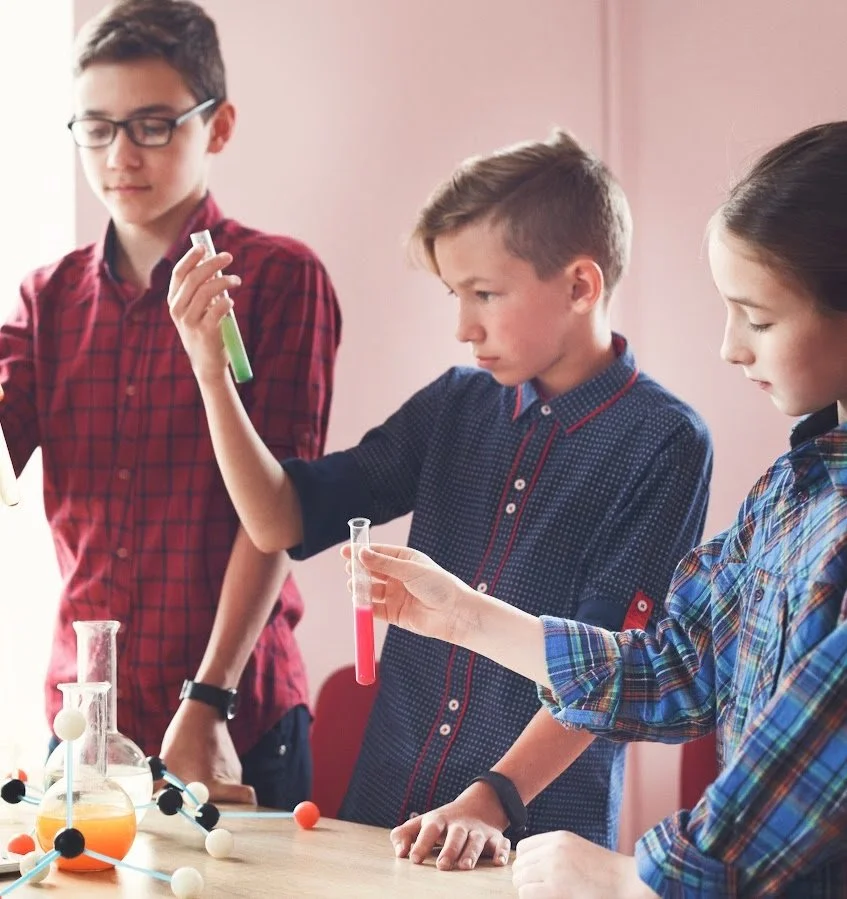
Hands-on learning is present throughout the Waldorf seventh grade chemistry block.
Unlike many sciences that can be directly observed in nature, chemistry asks us to look beneath the surface. Students begin to wonder: What is everything around us made of? How do substances interact with one another? What causes change?
The beauty of a Waldorf chemistry block is that no prior expertise is required, including for the educator! Students begin with direct experiences and observations, building a foundation from which deeper understanding can grow in eighth grade and beyond.
A central theme throughout the block is understanding the difference between physical changes and chemical changes. A physical change occurs when a substance changes its form or appearance but remains the same substance. For example, water can exist as a solid, liquid, or vapor, yet it remains chemically the same substance: H₂O.
A chemical change, on the other hand, produces a completely new substance. When wood burns, for example, it changes into ash, smoke, and gases. The wood is no longer wood at the molecular level - it has been transformed into something entirely different. Students learn to recognize and distinguish between these two important types of change as the lessons unfold.
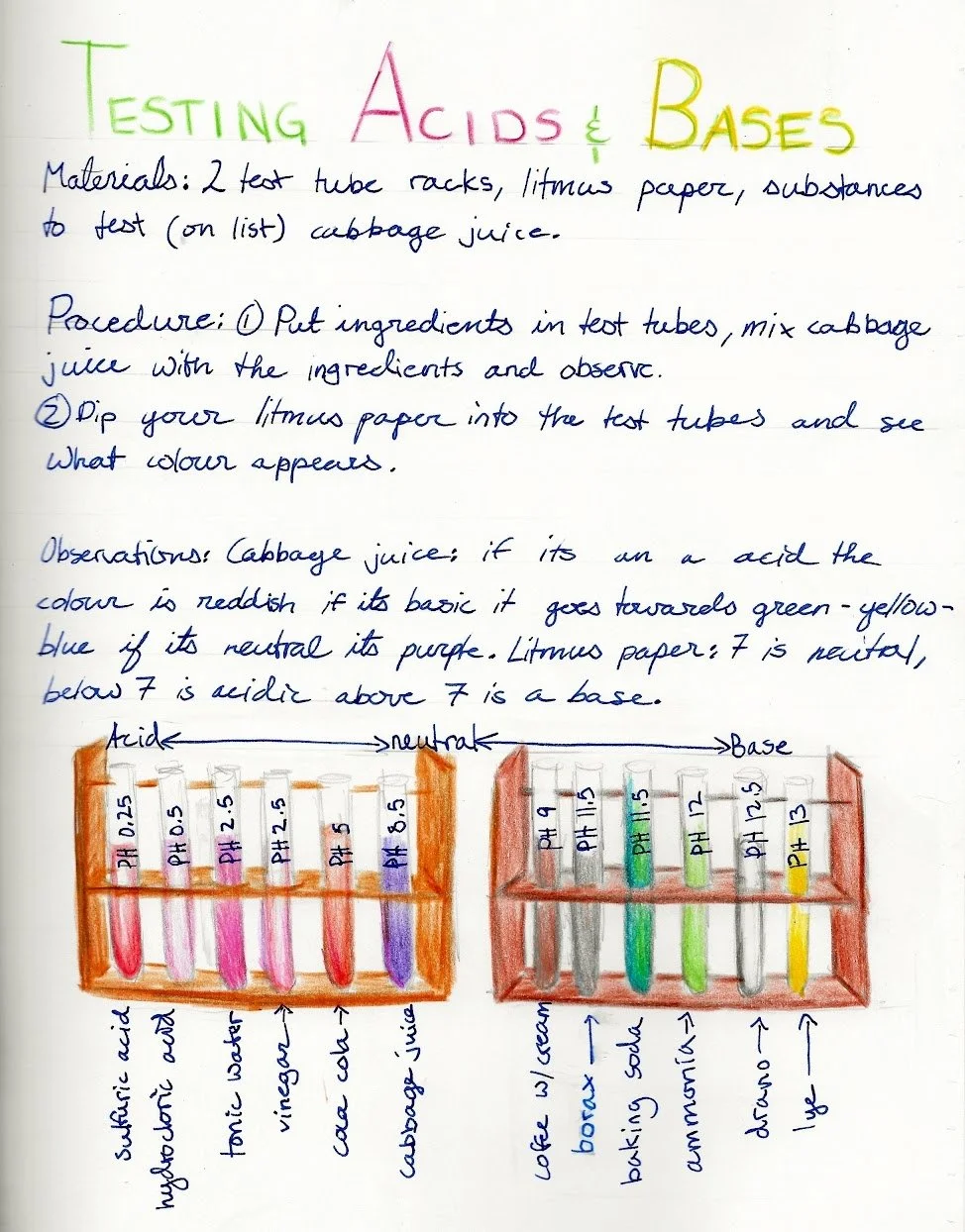
A student’s main lesson book illustrating their work with acids and bases.
Students explore the themes of the block through a variety of hands-on experiments and demonstrations.
During studies of combustion, they observe different materials as they burn, and discover how substances can produce colorful flames. Through crystallization activities, students create salt paintings and grow sugar crystals, witnessing how beautiful and orderly structures emerge from solutions.
The study of acids and bases brings another layer of discovery. Using purple cabbage as a natural indicator, students investigate how common household substances such as soap interact with acids and bases, revealing dramatic color changes that make invisible chemical properties visible.
The block often culminates with the lime cycle, a process that has connected human civilization to chemistry for thousands of years. Through stories, demonstrations, and observations of a lime kiln, students follow limestone as it undergoes a remarkable series of transformations, illustrating the interconnected processes of heating, burning, dissolving, and hardening.
Throughout the chemistry block, students are not simply memorizing facts.
They are learning to combine careful observation with emerging abstract thinking, developing the capacity to understand processes that cannot be seen directly. In doing so, they uncover a deeper layer of understanding about the ever-changing world around them.





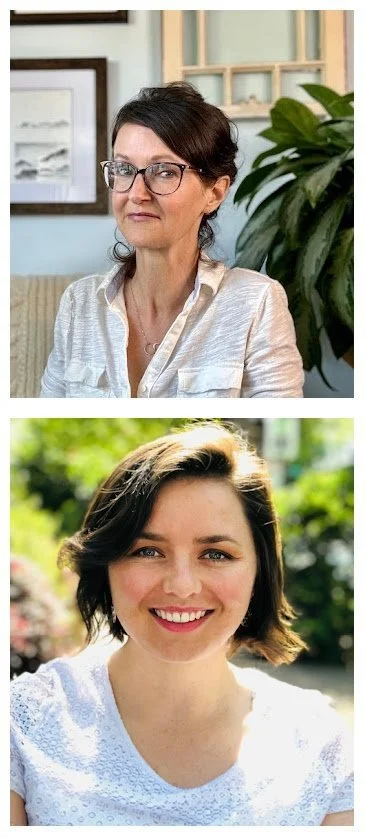
About the Authors
Robyn Beaufoy is Waldorfish’s CEO, and also a course instructor for Simple Season, Waldorf Art for Beginners, and Weekly Art Foundations. You’ll find her intuitive touches and influences throughout everything Waldorfish offers. Robyn has been in the world of education for over 25 years, with an MA in Education and a certification in Waldorf teaching - she also homeschooled both of her children for some of that time. In 2012 Robyn co-founded Waldorfish.com, creating it with the vision ofmaking Waldorf inspired-art and pedagogy more accessible, joyful, and doable for homeschoolers all over the world.
Caitlin Amajor is Waldorfish’s course instructor for Geometry grades 5 & 6, Botany, and Geology as well as our Administrative Assistant. From a young age, Caitlin has been immersed in Waldorf education, attending a Waldorf school from K-8. After receiving a BA in History, Caitlin gained her certification in Waldorf teaching, and is a teacher in the upper grades. With a special fondness for watercolor painting and geometry, Caitlin loves bringing Waldorf education to her students all over the world, and seeing their own individuality and style bloom from the curriculum!