
Waldorfish Blog

Waldorf Fifth Grade Botany: Growing with the Child
A fifth grade child is in a very interesting and important part of their development.
(Exciting news! Our Botany course is now open for enrollment! Click here to learn more!)
Students in this grade aren’t yet middle schoolers, and they also don’t feel as if they belong in the same space as a younger child anymore.
A fifth grader still has a sense of childlike wonder and imagination, but they are also beginning to gain interest in the more “realistic” world around them.
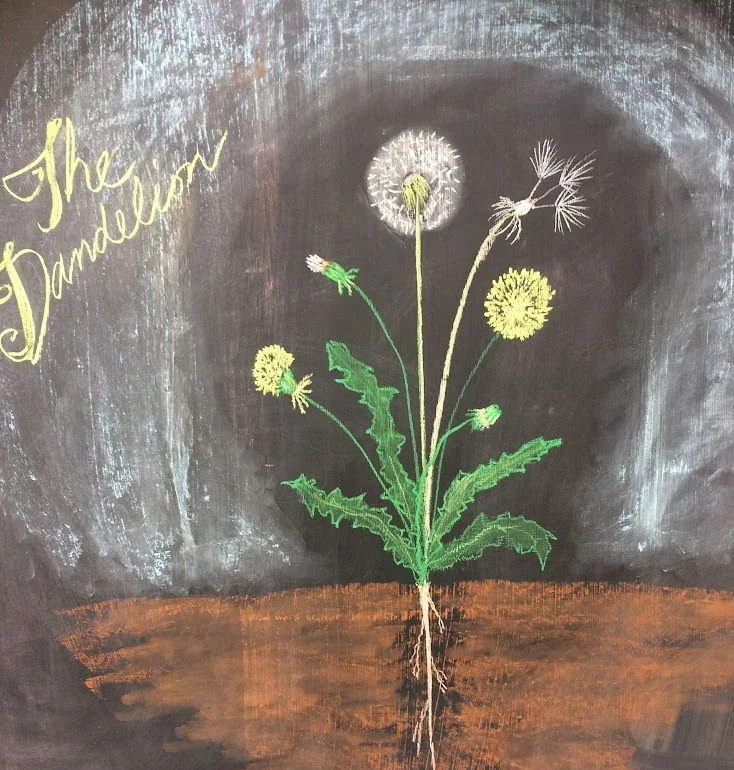
An educator’s chalk drawing of a dandelion, which is often studied in the first Botany block of the year.
I remember seeing my fifth graders out at recess near the beginning of the school year. They loved to play; skipping, laughing, playing “kitchen” with leaves and pine cones, searching for fairies in the garden.
At the end of the year, it was different. The students played more sports, especially with the older grade students , talked together in more private spaces, and complained about being “bored” (which always made me smile a little, what a teenager-y thing to say!)
This transition is bittersweet, but it is an important one.
I’ve found these two images to be helpful when thinking about a fifth grade child:
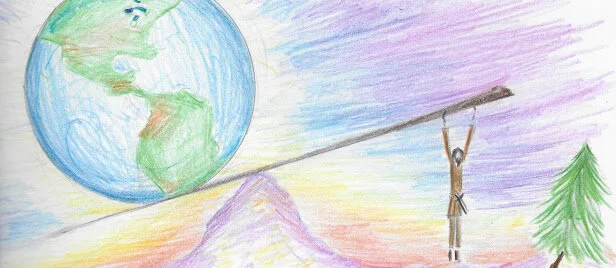
In one sense, they are coming down from the sky; the moon, the sun, stars and clouds, and finding their footing on earth. They are finding where they stand, and will work on finding a solid, confident footing throughout their pre-adolescent and teenage years (and beyond).

From trees, to plants and flowers, the Botany curriculum is vast and varied.
In a very real sense, the fifth grader is growing up, as if they were a seed breaking through the ground and beginning to sprout. In their younger years, a student is in the warm, safe care of their surroundings; they are being held, their potential still contained. But in this transitional year, they begin to sprout, grow, and stand on their own.
So, where does the curriculum come into this? (You knew we were going to tie this into the curriculum!) Among other subjects, we have one of the most important subjects of the year: Botany.
How does a seed grow to meet its fullest potential? What must it rely on to develop and grow? What happens when its needs aren’t met? What is its purpose, and how does it contribute to the health and well being of others in this world? What does it give, what does it take?
It may be hard to believe at first glance, but the botany curriculum really does ask and answer many (if not all) of these big questions in a subtle, yet impactful way, and the material grows with the child in a meaningful and purposeful way.
Let’s start at the beginning…
Traditionally, there are two botany blocks in the fifth grade, one in the fall and one in the spring (though of course, this varies from place to place).
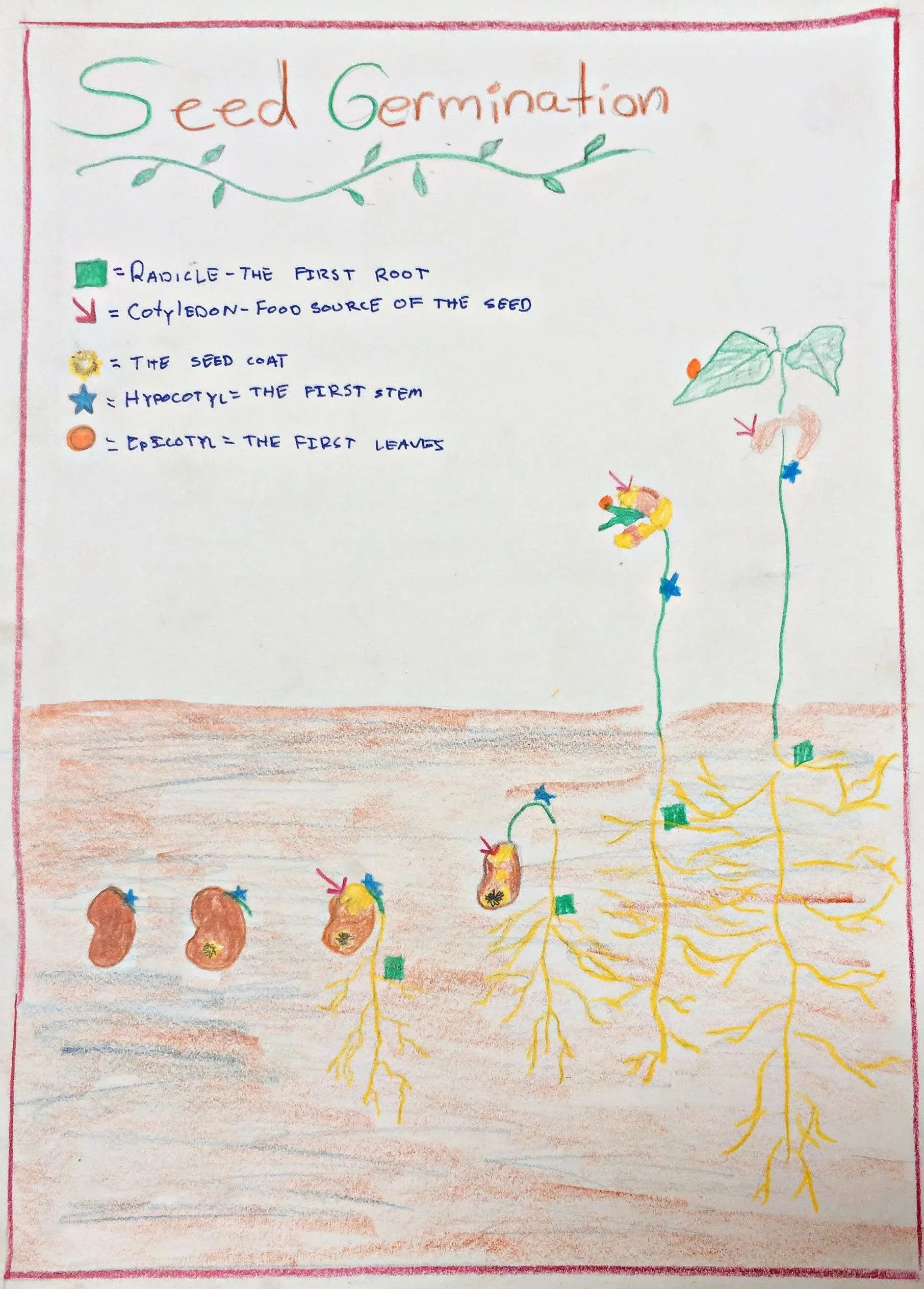
Growth and change- a continuous theme through the Waldorf Botany blocks!
The first block begins in a soft, slow fashion. It is magical, and has a feel of mystery and wonder to it. Imagine a forest in a fairytale; one might find bright lichens clinging to the side of a shady tree, soft mosses where the princess rests, and algae that paints the running river with bright greens and blues. The teacher uses poetry, stories, and asks the students to use their senses as they study these special plants and fungi.
As the fifth grader is still in a more childlike and imaginative place, this first block meets them perfectly where they are in their development. Lichens and mosses rely on others, such as a sturdy tree trunk, to thrive and grow; just as the fifth grader is still more comfortable in the safe embrace of their imaginations and guidance of others.
The second botany block, usually done a few months later, shifts significantly in how the curriculum is presented, and what it includes. Trees and flowers are the main subjects studied, but in far more scientific detail than before.
Trees are now categorized into monocots and dicots by observing their different structures and characteristics; flowers are celebrated for their beauty, and also dissected carefully to identify their many parts, such as the petals, stigma, pistil, and more. The plants studied in this second block are far more independent in how they function, and have many individual features that make them unique and special in the vast plant world.
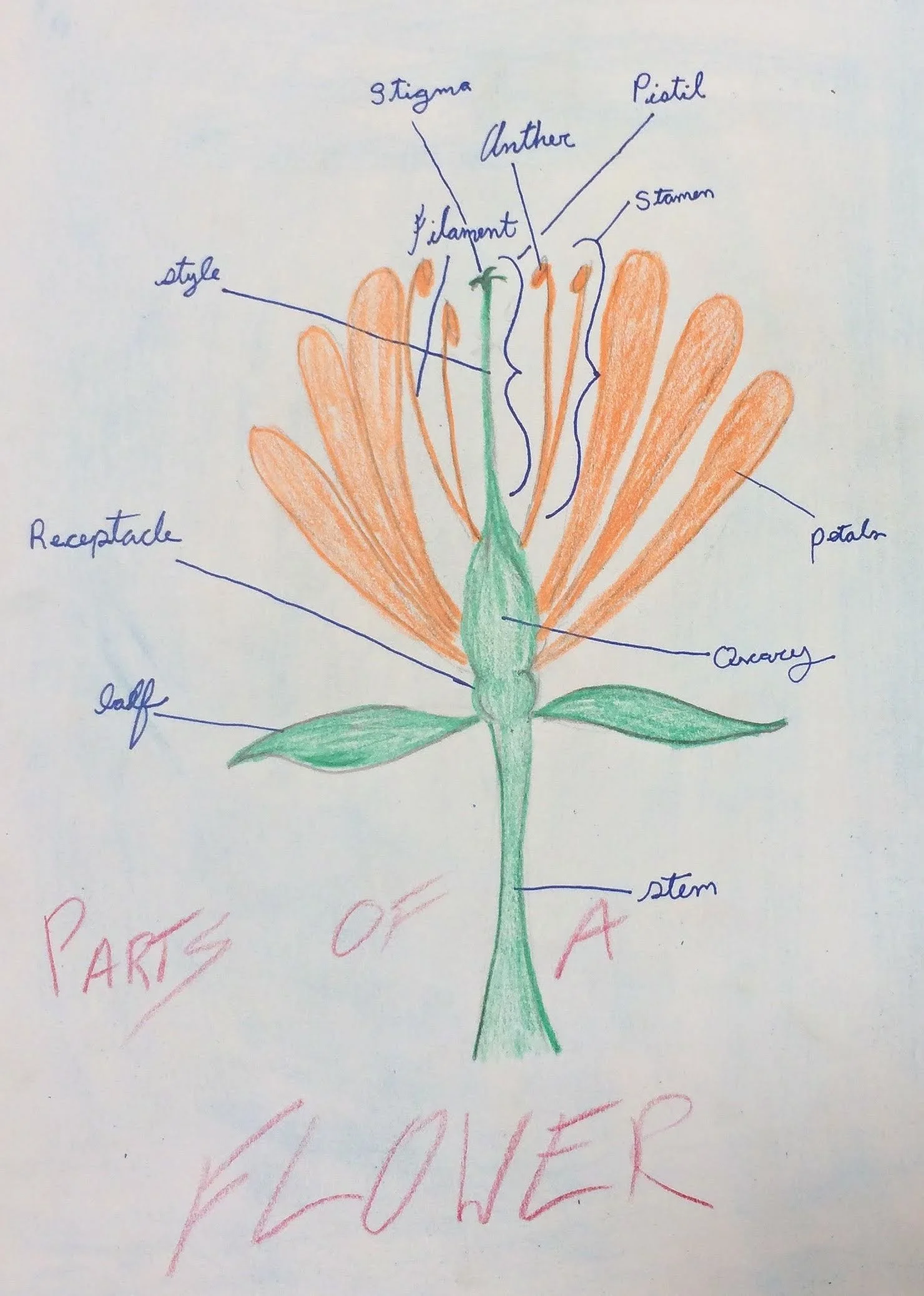
Botany main lesson book pages are an opportunity for students to show their own style, and illustrate what they’ve learned!
This is the developing fifth grader: ready to exercise more independence, beginning to discover themselves as individuals, and ready to enter a more realistic world.
As with all things in Waldorf education, the botany curriculum plays an important role in mirroring the development of the child. From its beginning, the botany blocks grow with the child. Starting with the plants that need a little more support and care from others, such as lichen clinging to tree branches, and ending with the independent, strong, and unique flower.
Simple to complex, dependence to more freedom, soft and magical to more formed and realistic. It’s all about growing up, and supporting the children to bloom into their best, most colorful and dynamic selves (botany pun intended!)

About the Authors
Robyn Beaufoy is Waldorfish’s CEO, and a course instructor for two of our courses - Waldorf Art for Beginners and Weekly Art Foundations. You’ll find her intuitive touches and influences throughout everything Waldorfish offers! Robyn has been in the world of education for almost 30 years, with an MA in Education and a certification in Waldorf teaching - she also homeschooled both of her children. In 2012 Robyn co-founded Waldorfish.com, creating it with the vision of making Waldorf inspired-art and pedagogy more accessible, joyful, and doable to homeschoolers all over the world.
Caitlin Amajor is Waldorfish’s course instructor for Geometry grades 5 & 6, and Botany, as well as our Administrative Assistant. From a young age, Caitlin has been immersed in Waldorf education, attending a Waldorf school from K-8. After receiving a BA in History, Caitlin gained her certification in Waldorf teaching, and spent seven years as a Waldorf class teacher in the upper grades. With a special fondness for watercolor painting and geometry, Caitlin loves bringing Waldorf education to her students all over the world, and seeing their own individuality and style bloom from the curriculum!
more on the blog…








Science in the Waldorf Middle School: Starting Something New

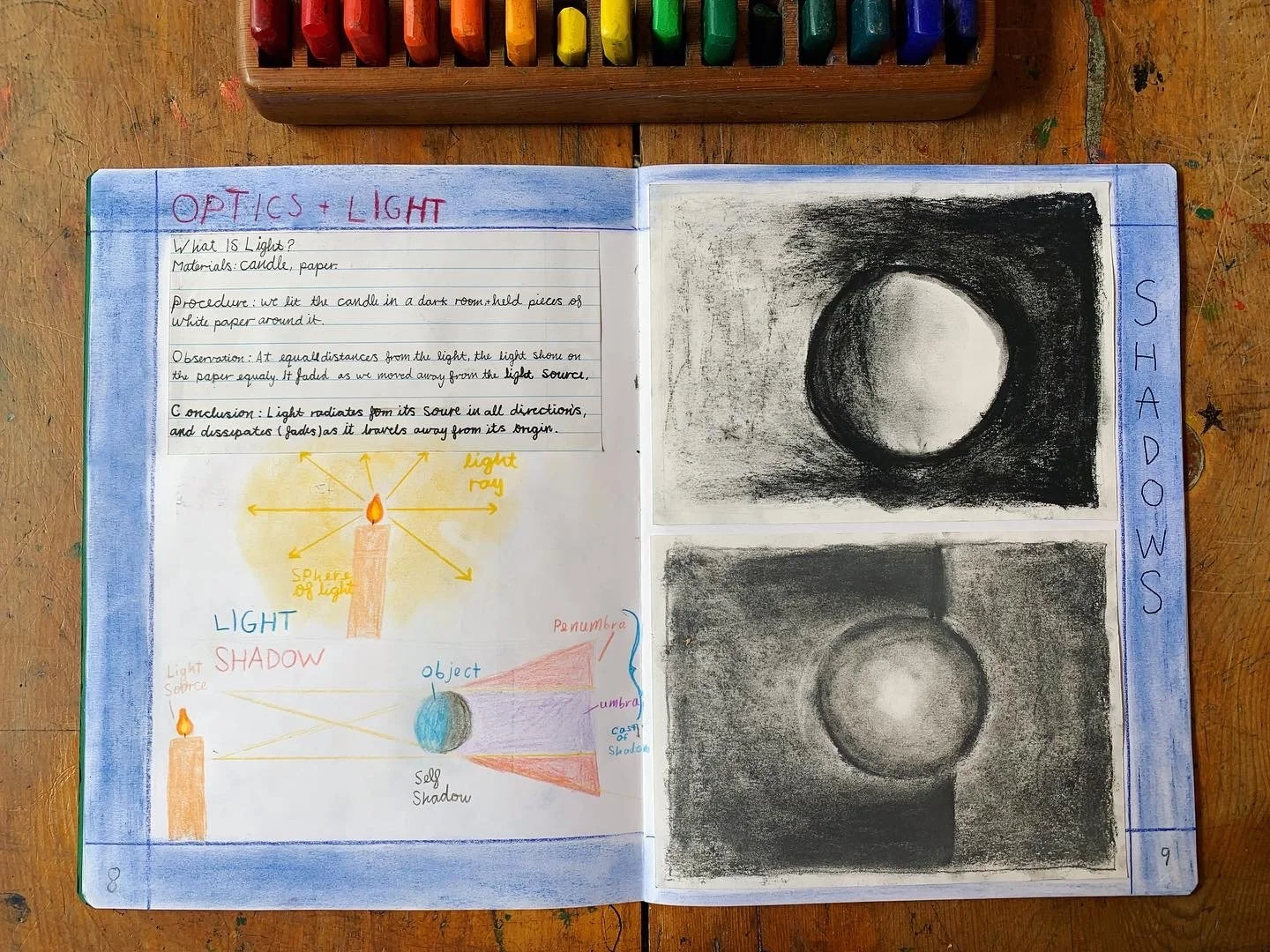
Student work from a Waldorf seventh grade physics main lesson book.
Teaching “science” oftentimes sounds a little bit overwhelming, especially to those of us teaching at home, or who haven’t opened a science textbook in a while!
Throw in trying to make science appeal to middle schoolers, and it may sound downright scary to jump in and teach!
Additionally, when one begins to research how science is taught in the traditional Waldorf way, it doesn’t take long to run into big words like “phenomenology,” quotes from Goethe, and long, vague supply lists.
Phew. No wonder we get overwhelmed, right? But no fear!
Teaching science for grades 6-8 really is possible for any educator who is enthusiastic, takes a little time to get organized, and is ready to explore the natural world in a new, exciting, and downright fun way!
(Honestly, this mindset applies to teaching the middle grades in general! To learn more about Waldorf middle school curriculum, click here!)
Though science is woven into the early grades from day one (think: teeter totters in kindergarten, botany in fifth grade, the study of man and animal in fourth grade, the study of agriculture in third, and so on) sixth grade marks the beginning of focused, scientific study. More specifically, we’re talking about physics and chemistry.
There are many reasons for this shift, and with most (all?) things in Waldorf education, it has to do with the development of the child, and where they find themselves around middle school age (12-14 years old).
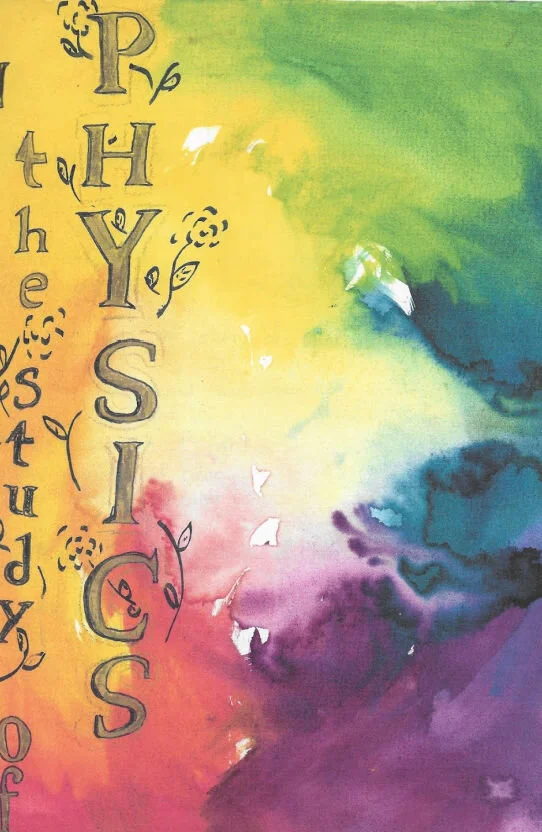
In Waldorf education, studying science is a colorful, vibrant experience!
A middle schooler is moving out of early childhood, and losing some of their awe and curiosity and inquisitiveness for their surroundings, and are beginning to ask what the natural world has to hold for them. And of course, many children are experiencing puberty, which is a huge shift in their emotional and physical body, to say the least!
So, why science? Studying subjects such as physics and chemistry in middle school rekindles excitement for the natural world through a child’s own observations.
The child is asked to use their senses, and budding logical thinking in new ways to discover laws of the natural world. The scientific demonstrations provide a chance for the child to see the cause and effect of nature right in front of them: “If this…, then that…'' How comforting for a child living in the tumultuous chaos that is so often associated with puberty, middle school, and teenage years!
Teaching science is also a shift for the educator.
Instead of memorizing stories or material, prep for these blocks require gathering of supplies, and practicing demonstrations (which we highly suggest doing early on and with plenty of time to play and prepare!)
It’s hands-on, active, and engaging, and perfect for the middle schooler! Remember that word “phenomenology?” That’s what the educator is curating here: a study of nature’s lawful phenomena in accessible, doable, and fun ways.
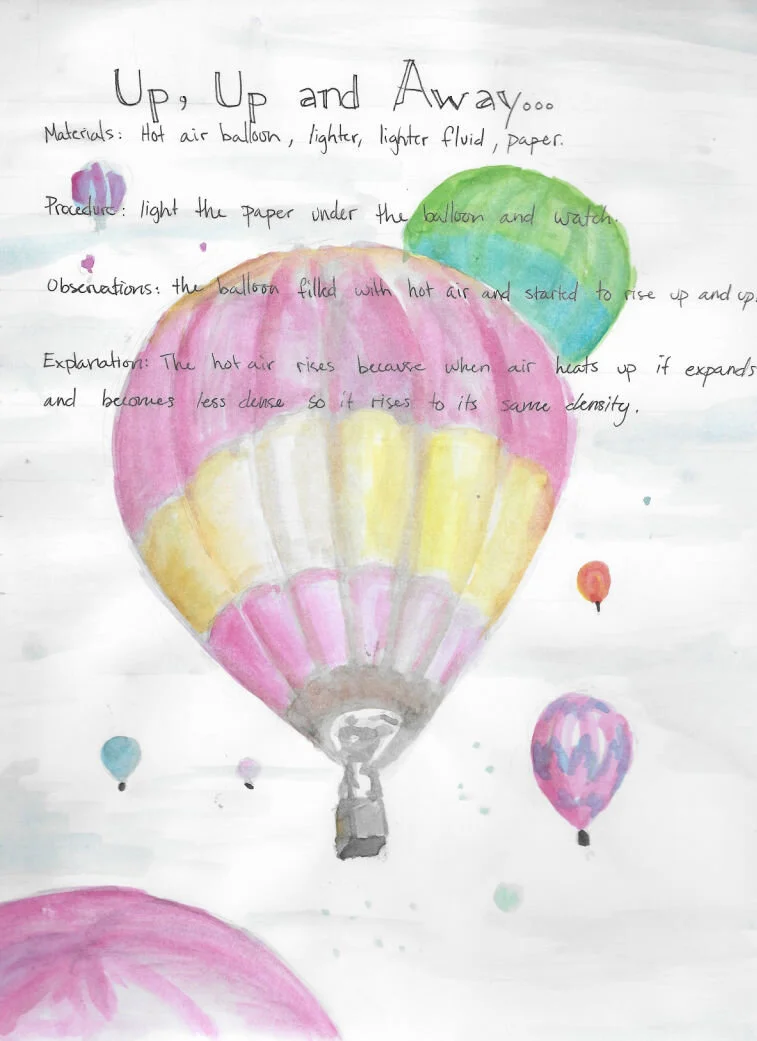
Student work from a Waldorf science main lesson book.
Instead of presenting information through story or otherwise in front of the child, the teacher is now demonstrating a law of nature through an experiment, without saying much of anything!
That’s right: the educator uses conversation to guide and moderate, but ultimately, it is the job of the child to discover scientific law.
A teacher may ask “What did you hear? See? Smell? Feel? What did you notice? How do you know that to be true?” and consistently brings the children back to using their concrete observations, while allowing them to find their way to a solid scientific conclusion.
The educator doesn’t do much “telling,” but instead validates, confirms, and encourages a middle schooler’s growing ability to discern and discover nature’s many laws.
It’s exciting stuff, and marks a shift into a new paradigm for both the teacher and student, one where the educator takes on less of a direct role, and cultivates the independence and skills of the student to bloom.
So, are you ready to jump in and teach some science? We promise, with sufficient preparation, and faith in your own and your student’s abilities, you’ll enjoy teaching science more than you ever expected!
Are you interested in bringing Waldorf-inspired science courses to your homeschool curriculum?
Check out our physics and chemistry courses for grades 6-8! Our amazing instructor, Ari Magruder, has created online courses that provide everything you need to bring the joy of discovery and exploration to your student’s educational experience.

About the Author
Ari Magruder is currently the middle school science and math teacher at Sacramento Waldorf School. She also contributed to the teacher education and summer Art of Teaching programs at Rudolf Steiner College for many years.
Looking for something?
Welcome to Waldorfish! We started this adventure in 2012 out of a desire to make Waldorf training more accessible to class teachers in remote locations and to homeschooling families everywhere! Read more, click here.


WE WON! Our Weekly Art courses were voted “best interactive art program.” Learn more about the award, here.


Click here for a full list of schools we work with.
A few of our most popular blog posts:

Who are our courses for?

Starting Waldorf First Grade
4 Things to Know Before Planning Your Homeschool Year

In Praise of Balance: A Healthy Festival Life
Science in Waldorf Middle School: Starting Something New!