
Waldorfish Blog

What is Weekly Art Foundations?
Q: What is Weekly Art Foundations, the art course you offer on Waldorfish.com?
Weekly Art Foundations is a fully online course designed for homeschooling families, children, and also adult educators seeking training in the arts.
Providing weekly lessons in watercolor painting, crayon and pencil drawing, chalk work, (and more!), this course provides enough lessons for an entire school year- all with instructor support and lifetime access.

This watercolor landscape is one of the 34 lessons from Weekly Art Foundations!
The instructors of the WAF program are experienced Waldorf teachers and home educators, Brian Wolfe and Robyn Beaufoy. They have both been involved in art & education for over 25 years.
They share a LOVE of helping adults and children shift mindsets from one focused on comparison and the final product, to one focused on the JOY of the journey!
Q: Who is Weekly Art Foundations for?
A: Weekly Art Foundations is a step-by-step program for diving into Waldorf art in a meaningful way. It’s perfect for homeschoolers, adults and children ages 7 years and up.
This program is for those who want to learn about, enjoy and experience Waldorf inspired-art.
No previous Waldorf experience is required! WAF is more about a way of teaching (and learning) art than it is about following a specific educational pedagogy.
Robyn was a public school teacher before she was a Waldorf teacher .... she and our other course instructor, Brian Wolfe, incorporate the best practices from everything they’ve encountered in their careers.
Q: I’m an at-home educator, how will this course help me?
A: This course will help you buy back some *time by providing you with complete lessons, materials lists, and a forum for discussion and support.
Typically, when a family is looking at purchasing the WAF course, some or all of the following things are true for them:
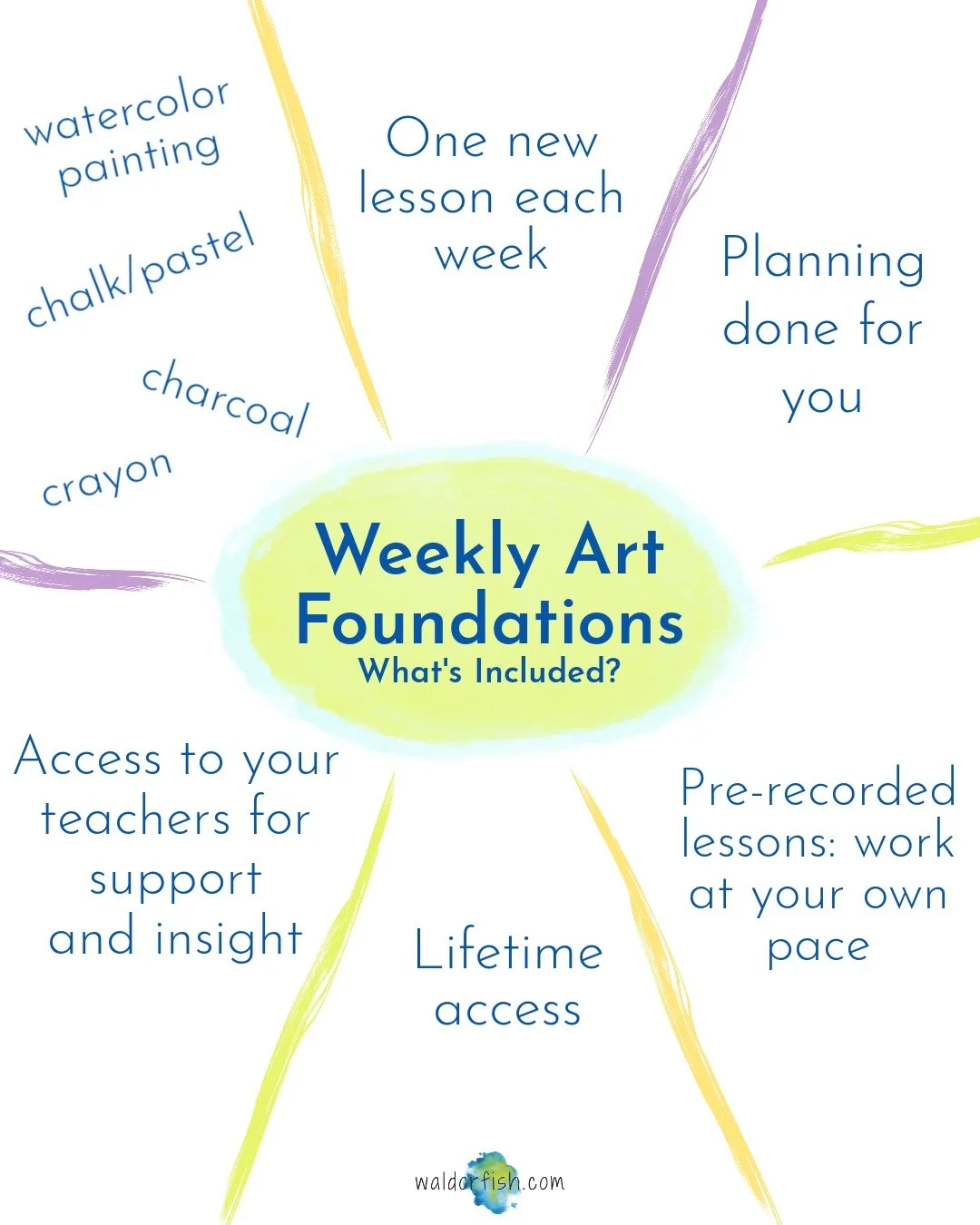
How can Weekly Art Foundations help you in your homeschooling journey?
They have purchased art supplies, but then feel too overwhelmed, and hesitant to use them.
They want to make art a part of their child’s rhythm, but don’t know how, or where, to start.
They are already doing The Most, and adding art into the schedule feels like just one.more.thing. to figure out.
The child (or even the adult!) struggles with “comparison syndrome,” and needs help shifting their mindset around the creative process.
Weekly Art Foundations was built to address all of this!
Our course includes a master supply list, and in-depth, step-by-step instructions on how to set up, and use your art supplies. You’ll only buy what you need, and use it all!
All of the planning is done for you. No need to think about what your lesson will be and what supplies you’ll need- we’ve got that covered for you.
We’re here to support you throughout the full course, whenever you need us! Support is available via email and in the lesson discussion areas. You won’t be in this alone.
You’ll receive training in our “Art Show” method - a toolkit for keeping everyone focused on the process and fun.

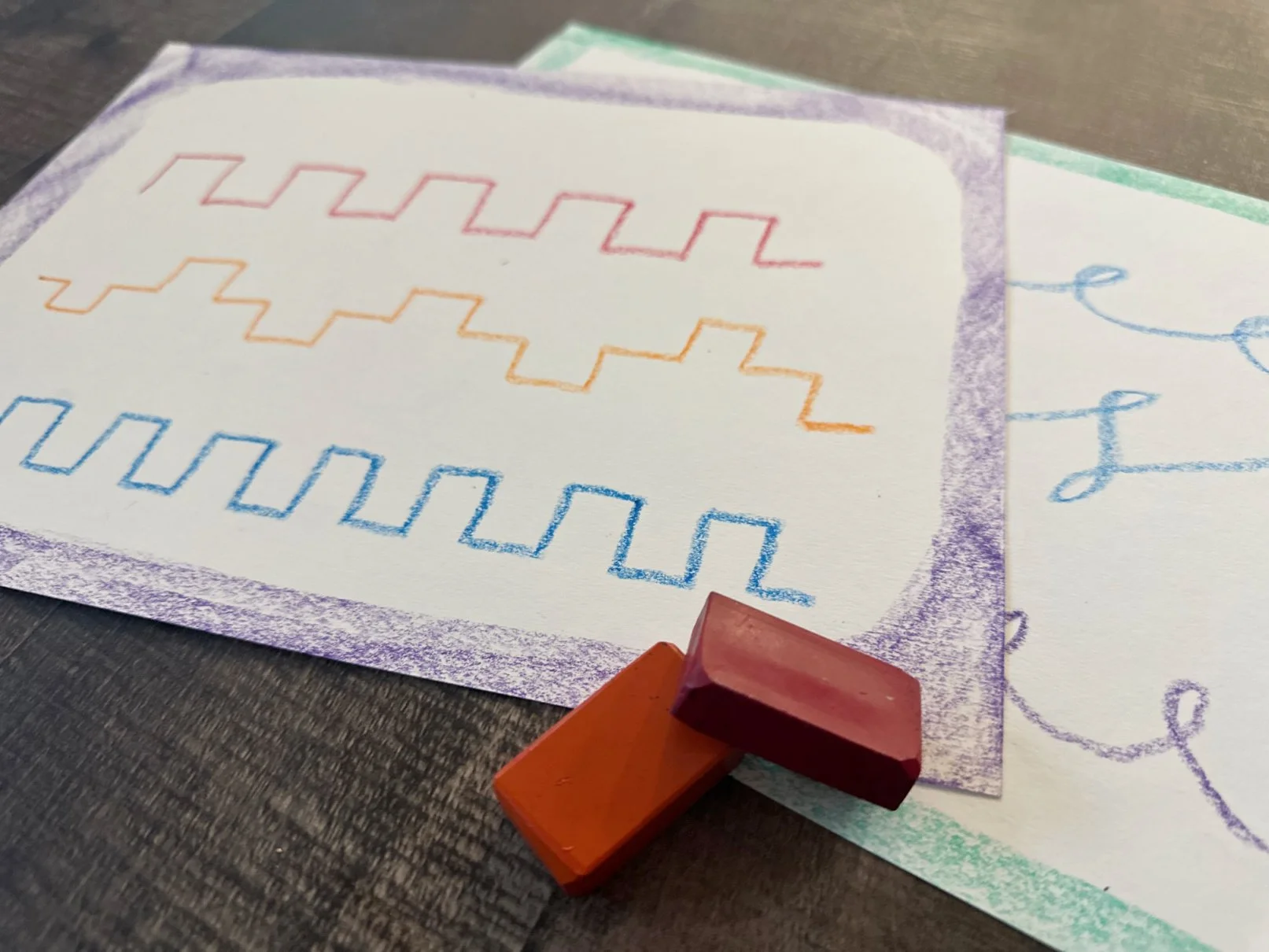
Crayon and figure drawing- all explored in a single lesson!
Q: What kind of art is included in the course?
A: Weekly Art Foundations is perfect for those looking to become familiar with common Waldorf art mediums, and for those who love variety!
Instead of focusing on just one artistic skill, the course will expose you to many. WAF includes lessons in watercolor painting, crayon drawings, chalk work, charcoal lessons, and pencil drawings.
Q: How many lessons are included, and how long do I have access to them?
A: The course includes 34, pre-recorded lessons (plus one bonus lesson!) Lessons are delivered once per week, and can be accessed at any time. Feel free to pause, rewind, and take as much time as you need to complete the lessons.
Upon completion of your payment method, this course comes with lifetime access. You can circle back to the lessons as often as you want to, over multiple school years (and yes, with multiple children!)
Q: My child has never taken online art lessons, how do I know if they’ll like it?
A: The best way to answer this question is for you to try our Free Sample Lesson. This full-length lesson is pulled directly from the course, and will give you a great idea of how things are paced, how your child interacts with it and the instructor’s style.
As the at-home educator, you can take the lessons on your own, in tandem with your child, or have your child take the lessons independently.
Q: When can I enroll?
A: Weekly Art Foundations is open for enrollment twice a year- usually for one week in the fall, and for one week in the winter.
Our next enrollment period begins July/early August '26.
Q: My child attends a charter school, can I use those funds to purchase this course?
A: Yes! We work with a wide variety of schools. Some send us Purchase Orders, and others order directly from our website on behalf of their students.
Please ask your teacher about the process they would like you to use once you identify a course of ours that you would like to purchase. If you are reimbursed by your school after purchasing curriculum out-of-pocket, we are happy to provide you with a more detailed receipt.

Q: Where can I learn more?
A: Click here to view student work, find more FAQ’s, and additional details about the course. As well, feel free to send us a message by clicking here - we’re happy to help!
Weekly Art Foundations is a course designed for families, homeschooling students, the growing artist, the teacher who desires more confidence in their artistic skills, and those who are looking to explore Waldorf-inspired art curriculum.
We’re ready to give you all the support, inspiration, and structure you need to get started.
It would be an honor to be a part of your art class this year!

About the Authors
Robyn Beaufoy is Waldorfish’s CEO, and a course instructor for Weekly Art Foundations, Waldorf Art for Beginners, and Simple Season. You’ll find her intuitive touches and influences throughout everything Waldorfish offers! Robyn has been in the world of education for over 25 years, with an MA in Education and a certification in Waldorf teaching - she also homeschooled both of her children. In 2012 Robyn co-founded Waldorfish.com, creating it with the vision of making Waldorf inspired-art and pedagogy more accessible, joyful, and doable to homeschoolers all over the world.
Caitlin Amajor is Waldorfish’s course instructor for Geometry grades 5 & 6, and Botany, as well as our Administrative Assistant. From a young age, Caitlin has been immersed in Waldorf education, attending a Waldorf school from K-8. After receiving a BA in History, Caitlin gained her certification in Waldorf teaching, and spent seven years as a Waldorf class teacher in the upper grades. With a special fondness for watercolor painting and geometry, Caitlin loves bringing Waldorf education to her students all over the world, and seeing their own individuality and style bloom from the curriculum!

Waldorf Geometry: Why Do We Wait Until Sixth Grade to Introduce Tools?
Q: Why does Waldorf Geometry wait until grade six to introduce the compass and straightedge?
(This post is part of a series in which we answer the most common questions we receive in our inbox re: homeschooling, Waldorf curriculum/pedagogy, and whatever else comes our way! Click here to read more from the series!)
A: Waldorf education approaches geometry differently than other pedagogies, especially when it comes to the progression of how the material is presented and explored.
One of the primary ways that Waldorf geometry curriculum sets itself apart from other methods, is in the fact that we wait to introduce the compass and straightedge until the sixth grade.
Why? It all goes back to where the child is in their development!

Though simple, geometry tools help to create intricate, varied forms!
To explore sixth grade geometry, we first need to take a step back to fifth grade. The fifth grader is in a very special place in their development. They are experiencing a time of true balance in their physical body, and are still connected with the more mystical and magical aspects of the natural world, while beginning to explore the realities of the world in which they live.
Fifth grade geometry is designed to meet the child right where they’re at in this unique phase of development.
The geometry curriculum is explored using only freehand techniques, (no tools quite yet!) which allows the student to utilize their sense of balance, symmetry and appreciation of beauty all through the lens of geometry. Working freehand allows the child to truly connect on a deep, soul level with the forms; their ability to draw, create, and apply their skills in geometry comes only from within, independent of outside influence or assistance.
When a student enters into sixth grade, everything is beginning to change. They are entering puberty, meaning their emotional and physical being is in flux, and they are often ready for new and more challenging ways to learn.
It’s the perfect time to bring tools into the geometry curriculum: a straightedge for the lines, and a compass for the arcs!

A geometry form in progress- all created with a compass and straightedge!
The sixth grader craves a new way of learning, a different way of being challenged, and is looking for order in the new chaos they are experiencing inwardly. The geometric tools provide this experience in deeply impacting and meaningful ways.
With the compass and straightedge, the sixth grader is able to create forms that are precise, orderly, and follow a certain set of rules that are true not only on their paper, but in the whole of the natural world. They have explored these rules in fifth grade, but in a more artistic, free way, and now, they are ready to add in the tools to find a new, more precise perspective on geometry.
Because the student has already explored geometry in fifth grade, the sixth grader does not rely on the tools, instead, tools are used as a way to deepen and enhance their understanding of the vast world of geometry.
As the student is changing, so too must the curriculum, and sixth grade is the perfect time to bring in the addition of tools to geometry. The compass and straightedge, though seemingly simple, provide a vehicle for the student to further their exploration into geometry, and therefore, their exploration into the whole world- mathematics, biology, chemistry, art history - geometry is truly found in everything!
More of your questions answered below!






About the Authors
Robyn Beaufoy is Waldorfish’s CEO, and also a course instructor for Simple Season (coming soon!), Waldorf Art for Beginners, and Weekly Art Foundations. You’ll find her intuitive touches and influences throughout everything Waldorfish offers. Robyn has been in the world of education for over 25 years, with an MA in Education and a certification in Waldorf teaching - she also homeschooled both of her children for some of that time. In 2012 Robyn co-founded Waldorfish.com, creating it with the vision of making Waldorf inspired-art and pedagogy more accessible, joyful, and doable for homeschoolers all over the world.
Caitlin Amajor is Waldorfish’s course instructor for Geometry grades 5 & 6, and Botany, as well as our Administrative Assistant. From a young age, Caitlin has been immersed in Waldorf education, attending a Waldorf school from K-8. After receiving a BA in History, Caitlin gained her certification in Waldorf teaching, and spent seven years as a Waldorf class teacher in the upper grades. With a special fondness for watercolor painting and geometry, Caitlin loves bringing Waldorf education to her students all over the world, and seeing their own individuality and style bloom from the curriculum!
Waldorf Botany: Adapting the Curriculum to Your Region
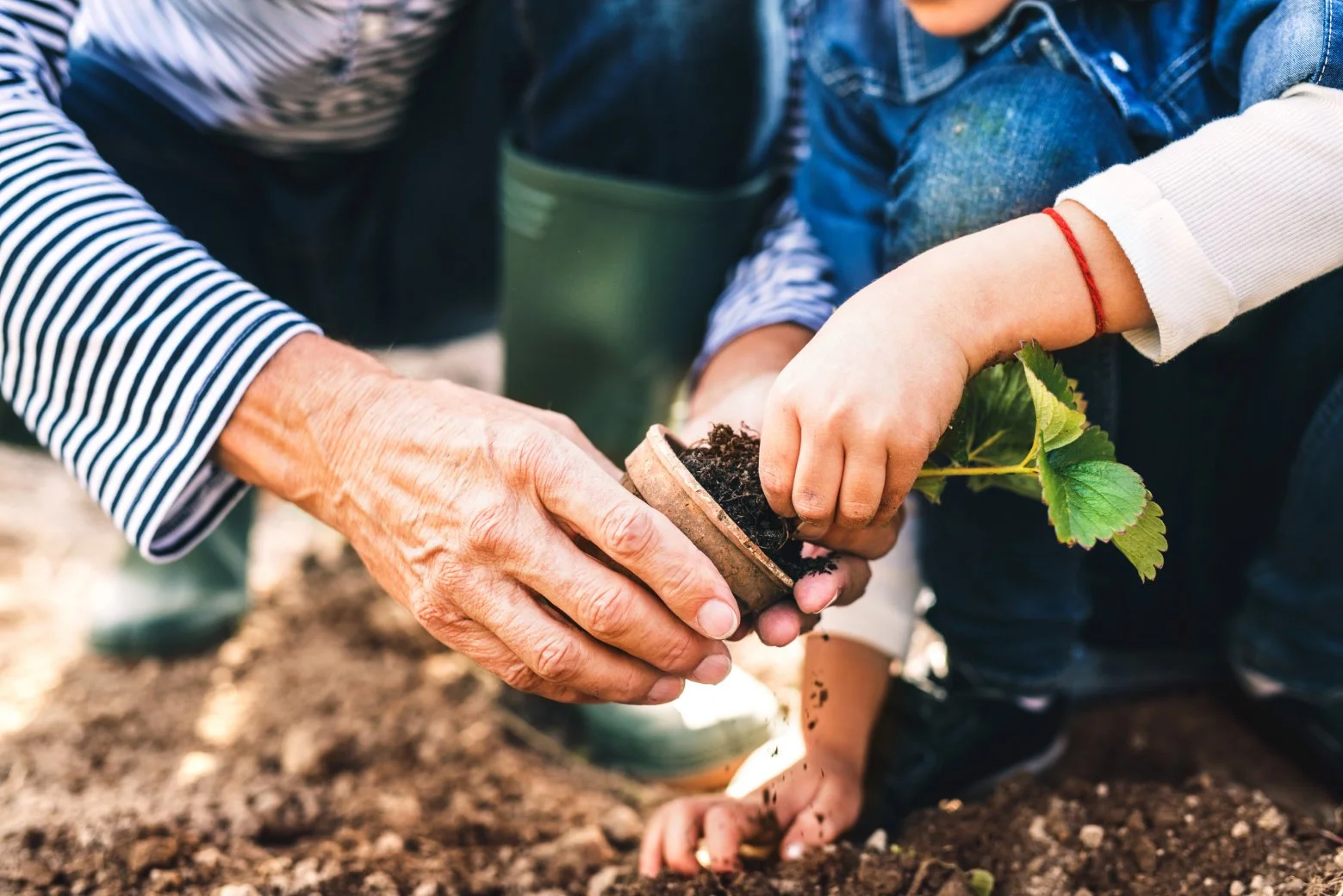
One goal of Waldorf Education is to foster a child’s connection to the world and all its parts - this begins with cultivating observations of their own surroundings and the environment in which they live.
Waldorf education thrives when the curriculum is tailored to the region in which it is presented, enjoyed, and experienced.
This is true throughout the grades and across subjects - especially in fifth grade Botany!
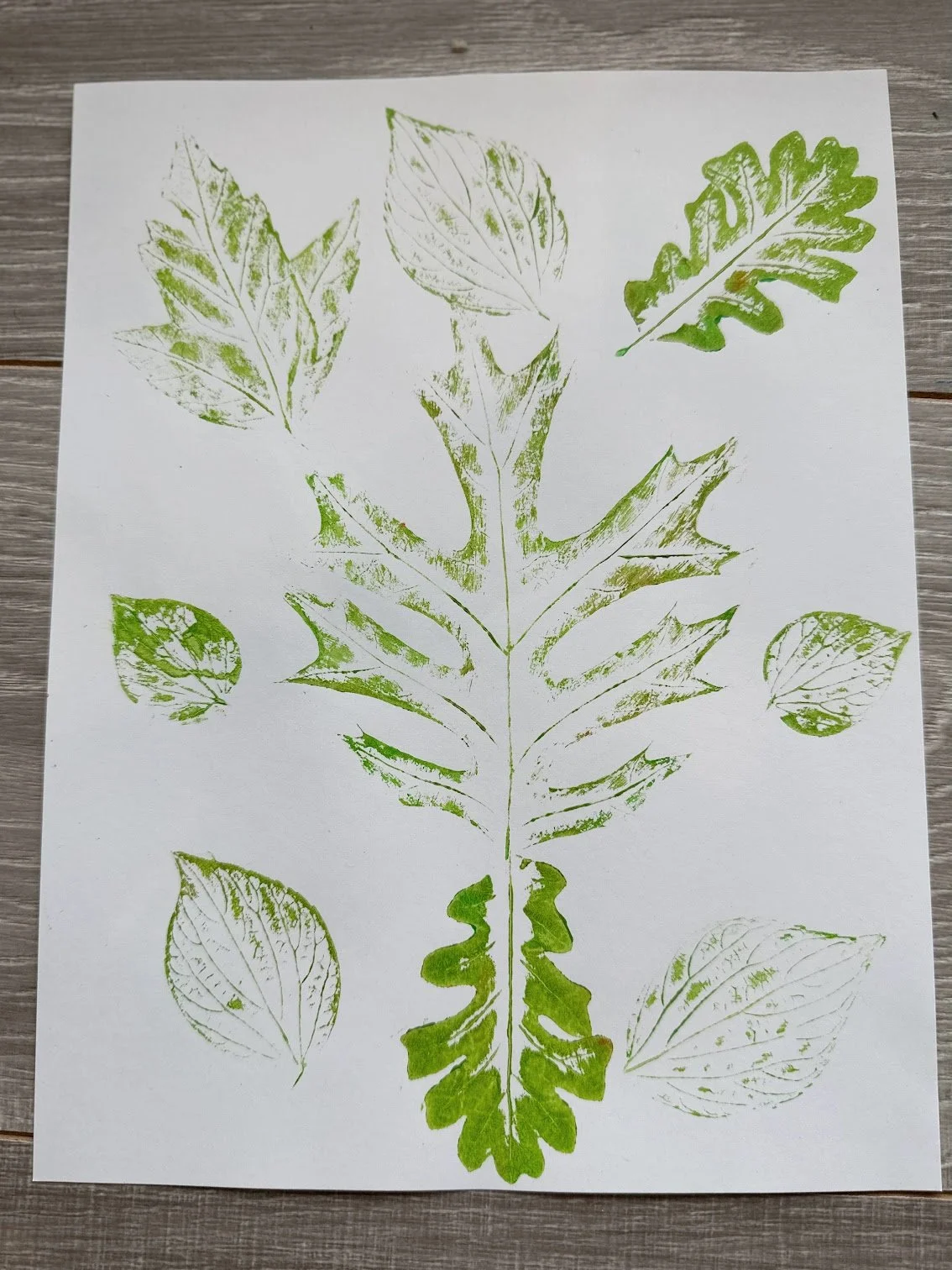
This leaf printing activity is found in our Botany course- it’s a great way to mix art and nature in one!
At the beginning of the Botany blocks, students engage in a general exploration of the plant world, including examples that are familiar to everyone, no matter their location, such as the dandelion or the honeybee (as a pollinator.)
But to make the Botany curriculum really resonate with the student, educators can imbue the material with examples that connect the child to the region in which they live. After all, from the desert to the coast, to the most rural or urban setting, plant life is everywhere!
Our Botany course provides over 75 lessons, enough for two blocks of fifth grade Botany curriculum, as well as supplemental activity suggestions that will help you make the curriculum your own. Plus, it provides a multitude of in-depth tips, suggestions, hands-on demonstrations, a detailed supply list, and much more to tailor the curriculum to you and your region.
Here are some simple tips to get you started!
1. Get outside
Whether this outside time is in a park, on a hike, on your balcony, or in your backyard, encouraging unstructured time outdoors to observe and connect with the living things around you is incredibly valuable. Keep it simple- go outside!
2. Explore through food
Botany studies and food go together perfectly. Go to the grocery store, and pick out three new items from the produce section to try- what part of the plant are we eating? How does it taste? How does it make us feel? Try a new veggie soup recipe, brew an interesting new herbal tea, or make a colorful salad- the possibilities are endless!
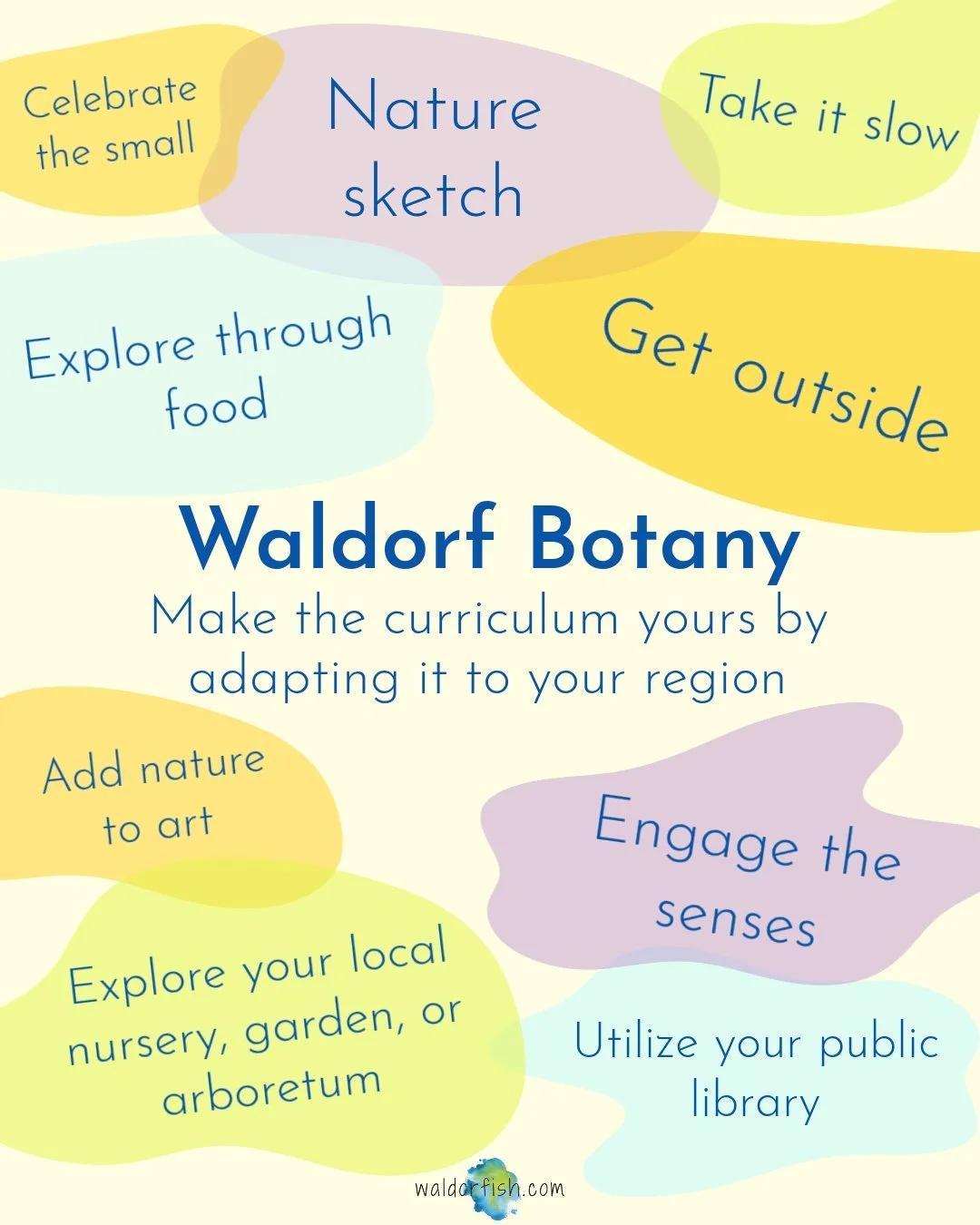
Go with what inspires, interests, and feels doable to you. Making Waldorf Botany curriculum fit your region can be simple and yet still fun, with big a impact!
3. Nature sketch
Nature sketching (which is explored more in-depth in our Botany course) is a simple yet impactful way to create connection between the child and the natural world. Slow down, sit in nature, and sketch what you see!
4. Take it slow
Whether you are sketching, cooking, or taking a walk, enjoy the process, and take it slowly. When it comes to encouraging observations and building connections, doing less truly cultivates more.
5. Celebrate the small
Sometimes, it feels like we need to do it all. For some, long strenuous hikes to see impressive landscapes and plant life is doable, but it’s also okay if small and simple is more your style! Appreciating the small, like your own little houseplant or the apartment complex’s flower bed, is a practice in finding the beauty of the plant world that is often overlooked.
6. Add nature to art

Wreath making is an activity that combines getting outside, engaging with the plant world, and creating something beautiful!
Celebrate the beauty of nature by incorporating it into your art lessons! Use your local vegetation to create a beautiful wreath (there’s a tutorial for this inside our Botany course!), collect leaves to use for paint printing, weave flowers and grasses for a crown…the options are endless! Working with the plant life around you to create beautiful artwork is a wonderful way to build appreciation and wonder of the natural world in your own region.
7. Engage the senses
The Botany blocks are the perfect opportunity to smell, feel, taste, see and touch! Make your own essential oils, create a moss garden, taste a variety of new grains or vegetables, observe the fall colors change, and enjoy touching the different textures of tree bark. So much can be learned from these sensory experiences.
8. Explore your local nursery/garden/arboretum
Your local plant nursery, community garden or arboretum will be a wonderful, inexpensive place to explore, see new plants, and gain the insights of experts as well! Enjoy the minimal prep a visit requires, and see what treasures you discover.
9. Utilize your public library
Your local librarian is an excellent resource- ask where your local plant section is, and see what you find! Books on local plant life, gardening books, cookbooks that utilize local ingredients - you never know what you might find that will spark interest and inspiration!
Waldorf Education's emphasis on fostering a child's connection to the world is found throughout the fifth-grade Botany curriculum, and there are so many simple yet impactful ways to make the curriculum yours.
Enjoy!

About the Authors
Robyn Beaufoy is Waldorfish’s CEO, and also a course instructor for Simple Season (coming soon!), Waldorf Art for Beginners, and Weekly Art Foundations. You’ll find her intuitive touches and influences throughout everything Waldorfish offers. Robyn has been in the world of education for over 25 years, with an MA in Education and a certification in Waldorf teaching - she also homeschooled both of her children for some of that time. In 2012 Robyn co-founded Waldorfish.com, creating it with the vision of making Waldorf inspired-art and pedagogy more accessible, joyful, and doable for homeschoolers all over the world.
Caitlin Amajor is Waldorfish’s course instructor for Geometry grades 5 & 6, and Botany, as well as our Administrative Assistant. From a young age, Caitlin has been immersed in Waldorf education, attending a Waldorf school from K-8. After receiving a BA in History, Caitlin gained her certification in Waldorf teaching, and spent seven years as a Waldorf class teacher in the upper grades. With a special fondness for watercolor painting and geometry, Caitlin loves bringing Waldorf education to her students all over the world, and seeing their own individuality and style bloom from the curriculum!
More Botany resources you will enjoy:


What are Waldorf Main Lesson Books Used For?
Q: In Waldorf education, main lesson books are used throughout the grades as part of a student’s educational experience: what are they used for?
(This post is part of a series in which we answer the most common questions we receive in our inbox re: homeschooling, Waldorf curriculum/pedagogy, and whatever else comes our way! Click here to read more from the series!)
A: It is common to hear that Waldorf students “make their own textbooks,” which are called main lesson books. But, this image of “textbook” isn’t quite accurate.
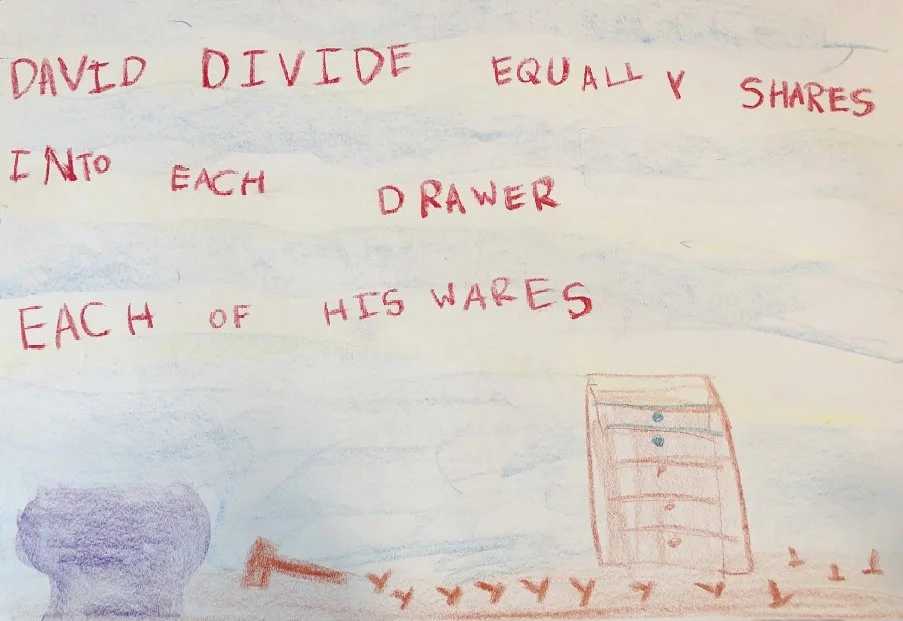
A first grader’s main lesson book page from mathematics- “David Divide” sharing equally!
A Waldorf main lesson book does not show what a student will learn, it shows what a student has learned. The main lesson book is a tangible representation of a student's developmental and artistic growth, serving as a unique account of their educational journey.
They are a living record of the child’s development– they show what they have experienced, mastered and enjoyed!
A main lesson book is slowly built over the course of a block*, one page at a time with the guidance of the educator. Students don't just write in main lesson books; they illustrate, draw, and craft visual representations of the concepts they are learning. They truly are a product of art and academics integrating as one!
*What is a block, exactly? Waldorf education is often organized into blocks, where one subject such as History, Language Arts or Math, is studied each day for about three to four weeks. This structure encourages the student to progressively build up their understanding and mastery of a single subject, and a chance to really focus on and explore the curriculum.
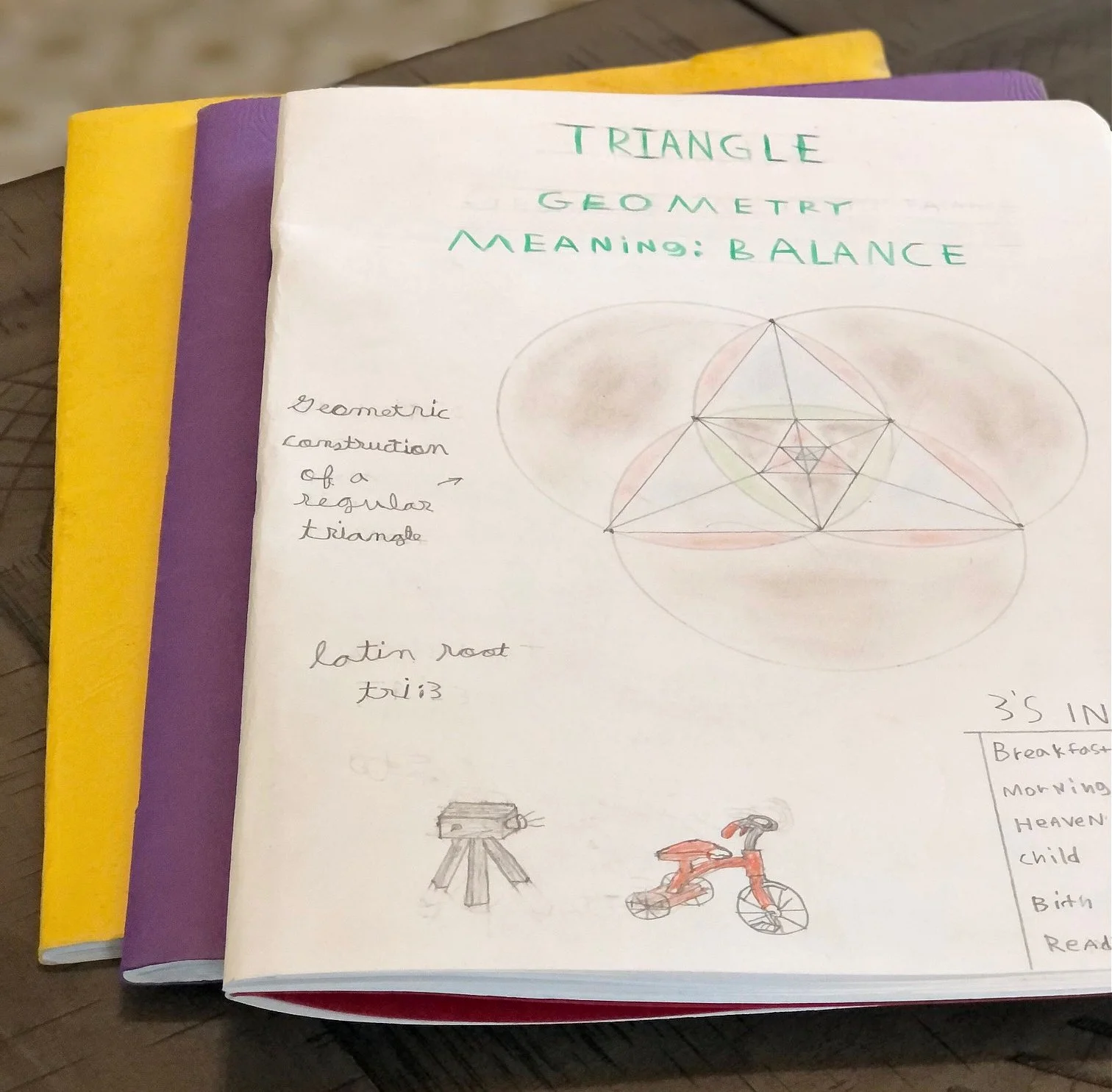
A seventh grader’s geometry main lesson book- notice the customized details!
In the early grades (1-4), main lesson books often emphasize foundational skills. For instance, in mathematics, students may start with the basic concepts of numbers and counting, with corresponding illustrations to reinforce understanding, such as “Prince Plus” to represent the process of addition. In language arts, students may draw letters and images inspired by classic fairy tales, enhancing both writing and artistic skills.
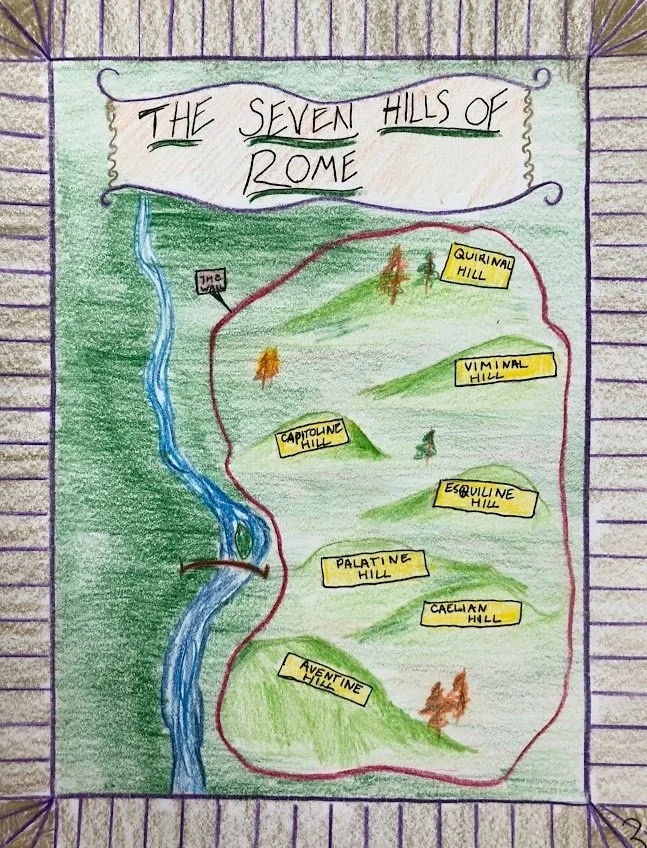
A student’s main lesson book page from the sixth grade Roman History block- a strong border is a wonderful way to frame the page!
As students progress through elementary school, the complexity of their main lesson book entries grows as well, and the students’ individuality is expressed more and more. Science lessons may involve detailed drawings of plant life cycles or experiments, while history lessons might include detailed timelines with illustrations depicting key events.
Here are some examples of main lesson book page ideas across the grades:
A first grader’s drawing of the four processes (multiplication, addition, subtraction, and division) as four little gnomes during a Math block
A fifth grader’s illustration of the stages of a sprouting seed during a Botany block
A seventh grader using a compass and straightedge to recreate Leonardo da Vinci’s “Vitruvian Man” in the Renaissance block
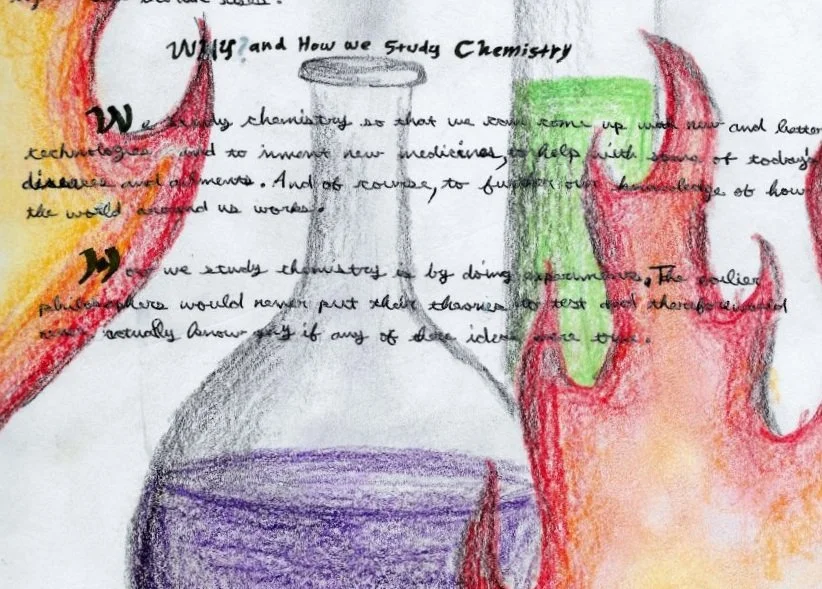
An eighth grader creating a chart to show their observations of different sugar products during their Organic Chemistry block
A fourth grader writing a paragraph about a cuttlefish, to demonstrate their newfound ability to use adjectives and adverbs.

Our own Caitlin Amajor’s fourth grade animal report main lesson book page!
The possibilities are endless when it comes to creating main lesson books - and Waldorf schools, Waldorf educators, at-home educators, homeschooling groups, etc. all have their own methods, standards and approaches to creating them!
Overall, there is no wrong way to create a main lesson book- they are, in the end, a method for the student to actively show their educational journey through artistic and academic expression.

About the Authors
Robyn Beaufoy is Waldorfish’s CEO, and also a course instructor for Simple Season (coming soon!), Waldorf Art for Beginners, and Weekly Art Foundations. You’ll find her intuitive touches and influences throughout everything Waldorfish offers. Robyn has been in the world of education for over 25 years, with an MA in Education and a certification in Waldorf teaching - she also homeschooled both of her children for some of that time. In 2012 Robyn co-founded Waldorfish.com, creating it with the vision of making Waldorf inspired-art and pedagogy more accessible, joyful, and doable for homeschoolers all over the world.
Caitlin Amajor is Waldorfish’s course instructor for Geometry grades 5 & 6, and Botany, as well as our Administrative Assistant. From a young age, Caitlin has been immersed in Waldorf education, attending a Waldorf school from K-8. After receiving a BA in History, Caitlin gained her certification in Waldorf teaching, and spent seven years as a Waldorf class teacher in the upper grades. With a special fondness for watercolor painting and geometry, Caitlin loves bringing Waldorf education to her students all over the world, and seeing their own individuality and style bloom from the curriculum!
Looking for something?

Welcome to Waldorfish! We started this adventure in 2012 out of a desire to make Waldorf training more accessible to class teachers in remote locations and to homeschooling families everywhere! Read more, click here.

WE WON! Our Weekly Art courses were voted “best interactive art program.” Learn more about the award, here.


Click here for a full list of schools we work with.
A few of our most popular blog posts:

Who are our courses for?

Starting Waldorf First Grade

4 Things to Know Before Planning Your Homeschool Year

In Praise of Balance: A Healthy Festival Life
Science in Waldorf Middle School: Starting Something New!