
Waldorfish Blog

Waldorf Geometry: How it Meets the Sixth Grader
A running theme of the sixth grade Waldorf curriculum is the phrase “cause and effect.”

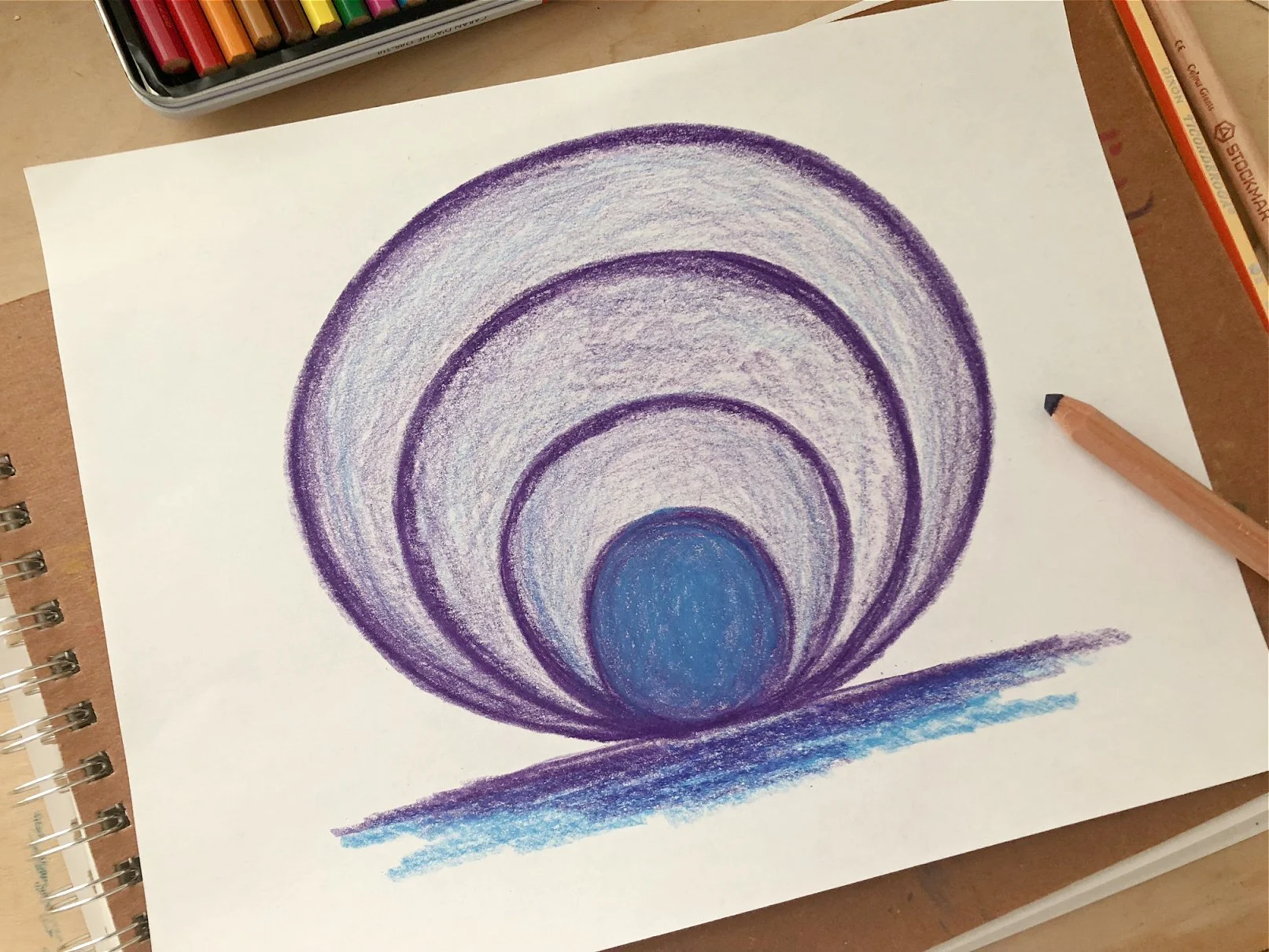
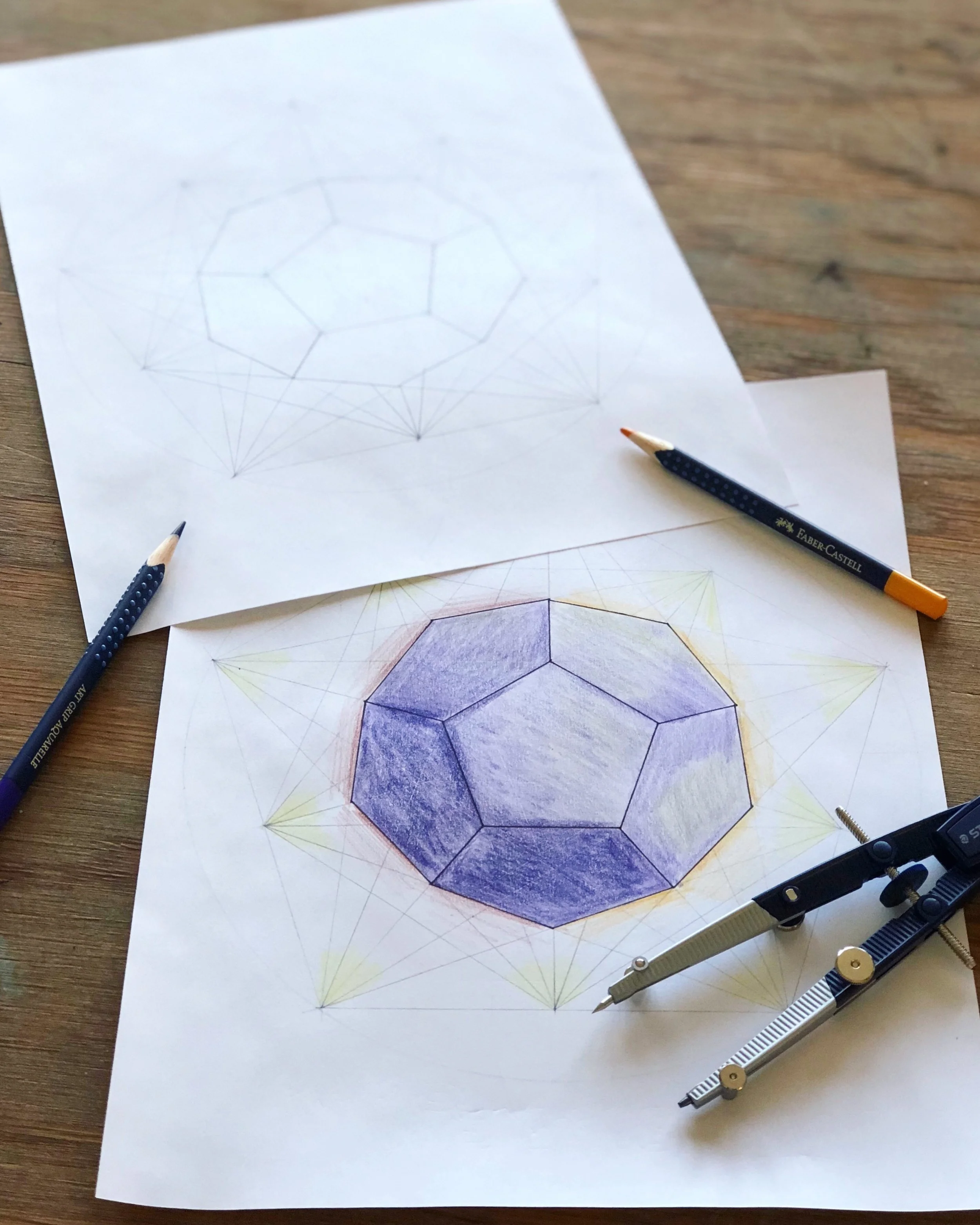
A twelve pointed circle becomes something beautiful with some color and shading!
Students at this age are ready to experience and observe more on their own than ever before, which is why we introduce the formal study of science, history, and more (and if you’re interested in learning more about the middle grades science, click here!)
My favorite subject to teach in sixth grade is geometry (not a big surprise to you, I’m sure!) It’s a block I look forward to, and deeply love, and not just because it speaks to me personally, but because I truly enjoy watching the transformation the materials create space for within the young middle schoolers.
The students have experienced geometry in fifth grade, so the subject isn’t completely new to them. They are familiar with the vocabulary, and have discovered and experienced the balance, symmetry, and beauty that freehand geometry provides.
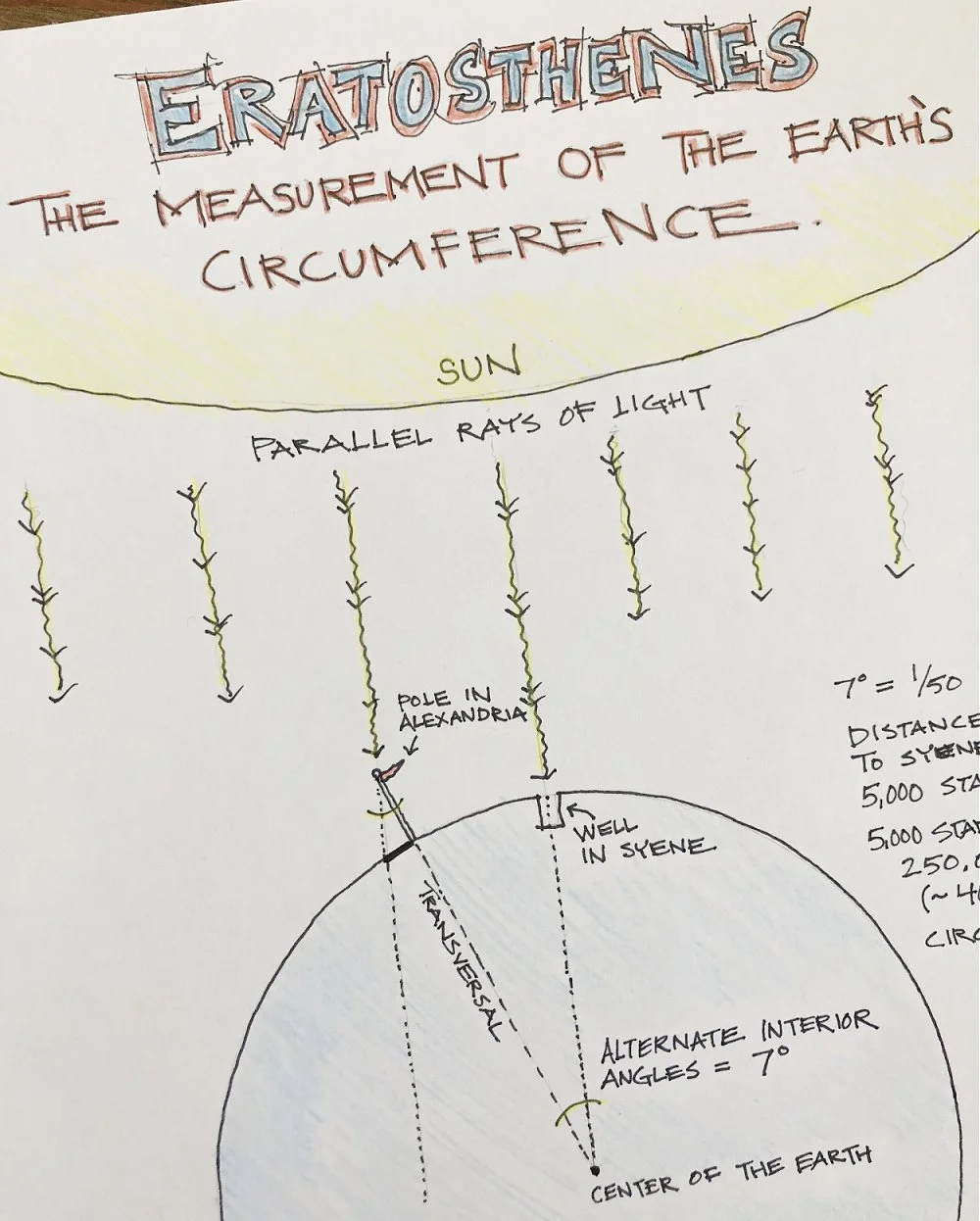
In sixth grade, the geometry block brings a new experience for the student, and it's one that doesn’t always get the credit it deserves! But in my experience, it is perhaps the most important and developmentally appropriate block of sixth grade: it is all about cause and effect, the beauty of order, and the laws of nature.
So, how does the geometry curriculum reinforce the sixth grade theme of “cause and effect”?
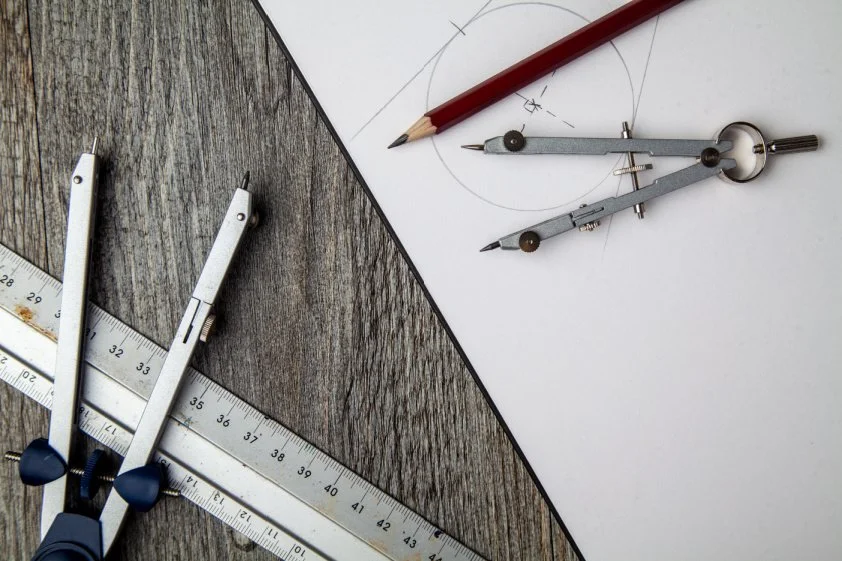
If we’re constructing a six pointed form, the compass point must lay on the intended point as perfectly as possible. If it’s a little off, then the whole form will be a little unbalanced.
If we are constructing parallel lines and don’t use our straightedge accurately, then we simply won’t end up with parallel lines when we are done.
If we construct six equidistant points on a circle’s circumference, and connect them one by one with straight lines, then we’ll create a hexagon.
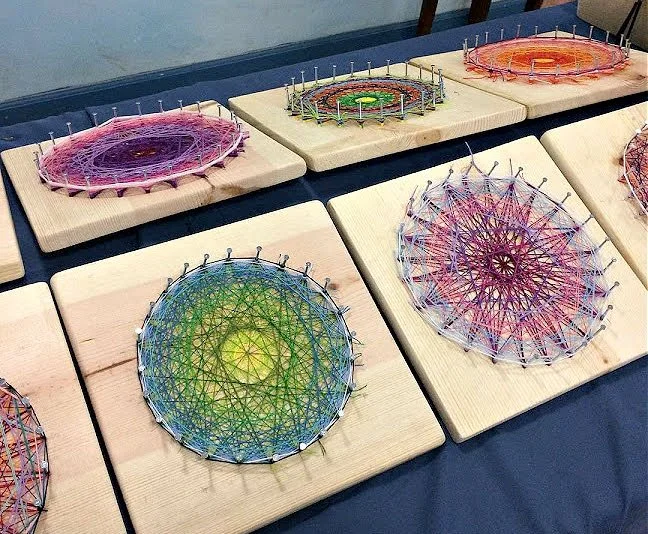
We include a string form lesson in our sixth grade geometry course!
Notice the “if….then…” wording?
If this, then that.
Rule, order, and natural consequences that exist without opinion or judgement- kind of perfect for a sixth grader, who probably feels judged often, unsure of where they stand in the world, and feels change all around them and in their physical body.
Truly feeling the reality of cause and effect, as well as the challenges and satisfaction that come with the experience of using tools and constructing complex forms, is deeply important for the student.
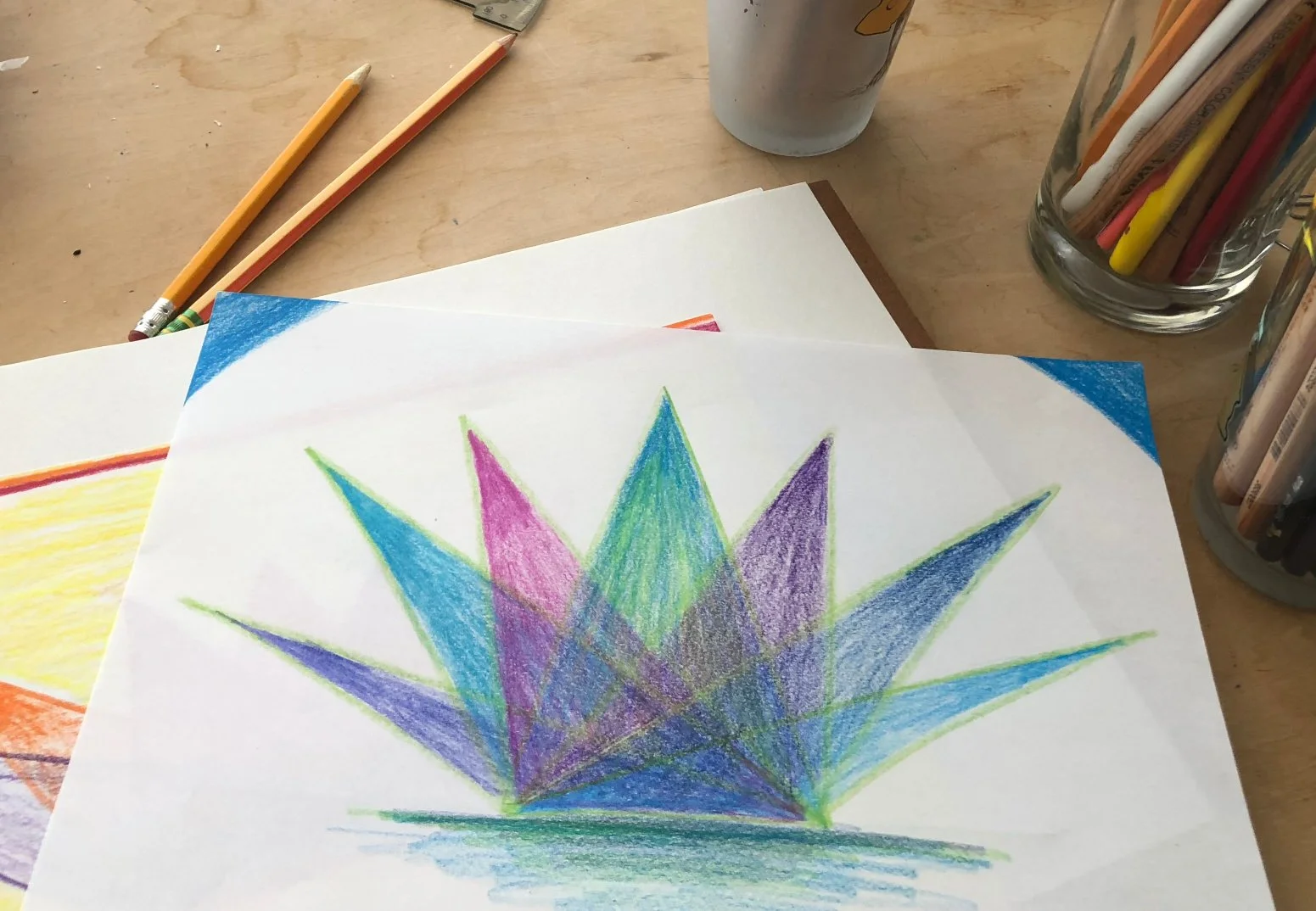
So what then is the significance of the next step, which is shading and using color to finish the final form?
This second step of using color and shading techniques, is a critical piece for the student to experience to truly get the benefits that this block provides. Now is the time to give them choice - what colors will they use? Bright, soft, bold, dark? Will the form be darker on the outer edges and get lighter as it moves in?
The choices are endless. When my students came to the point that a final form was ready to be finished with color, it never failed that the room would become quieter, students would arrange their pencils in possible color combinations, and careful, intentional work would begin. Beauty would begin to bloom around the classroom!

Student work displayed from a sixth grade classroom- every form and drawing is unique and beautiful!
Within the laws of nature, there is space for the beauty of the individual.
Isn’t that amazing, and so important for an-almost-teenager to experience?
For a sixth grader (or perhaps everyone?) it is important to hear and experience the comfort and structure that comes with knowing the laws of nature. We can count on these truths, and know that they will not waver, no matter how chaotic the world may seem. And within these laws, there is space for one to create beauty, and express their individuality in important and impactful ways.
I know these are big and lofty things to say about just one 3 or 4 week block, but I don’t say them lightly!
Geometry really is that powerful, meaningful, and just plain amazing.
Bring your homeschool curriculum to the place where art meets math! Our courses for grades 5-8 provide a full year’s worth of curriculum, instructor support, step-by-step instructions, and so much more.


About the Author
Caitlin Amajor taught in the Waldorf middle school for seven years, and was also a Waldorf student herself! She currently works as an administrative assistant for Waldorfish, and is also the instructor for the grades 5 and 6 geometry courses. Caitlin enjoys baking, gardening, and spending time with friends and family.

Celebrating Waldorf Festivals with Teens: A Time for Changing Roles
Festival life is the heartbeat of Waldorf Education.
Festivals as practiced in Steiner schools and homeschools are linked to larger rhythms in the natural world, the meanings of which have been interpreted over time and passed down along cultural and generational lines.
The youngest of Waldorf students are so earnest in their participation in these rituals. But what happens as our children reach their teens?
Do we give up on festival life and hope that they remember these early days and ways of relating to the world, researching them on their own when they are adults?

Festivals can be a family affair, for a wide range of ages!
Maybe. But perhaps there is another way.
My son’s earliest memories of Waldorf festivals are from the brick-and-mortar school he attended between the ages of 3-7. Of that period of time he shares:
“I always had a lot of fun. Advent was one of my favorites, I loved the spiral. I also liked the May Faire and the May Pole, seeing all the patterns get braided…those are the two I remember the most.
On Candlemas our teacher gave us two strings with metal nuts tied to the ends. We’d line up next to a big basin full of melted wax, and take turns dipping, walking in a circle over and over until we had full-sized candles.
In Kindergarten, on Santa Lucia Day, an 8th grade girl came through our classroom with lit candles in a wreath on her head with all the second graders following her, singing. I enjoyed that festival.”
(At this point he begins humming the song associated with Santa Lucia: “Santa Lucia, Thy Light Is Burning…”)

Simple, meaningful work makes festivals special and enriching for the whole family.
Beauty and ritual make an impression on the soul – he is now 13.
What stands out to me through the soft focus of memory is the anticipation of seasons: color, a return to the same rituals year after year, a sense of time passing and miles traveled along with the safety of a return to a spiritual home base.
Festivals have the power to connect us to one another and the natural world in ways that supersede language. We feel the magic of the Mystery to which most all spiritual disciplines point as our genesis.
The wonder inherent in these festivals is very easy to communicate to young children non-verbally, because their experience of the world does not shift to the intellectual sphere until late childhood.
“The third seven-year phase of childhood is one in which thinking prevails…[the] capacity for critical thinking shows itself in a pronounced way with the onset of adolescence and particularly at the beginning of high school. ”
I have found that if I am subtle about the approach to festival life, my son is more than happy to participate in the rituals that defined his younger years. From reading stories to activities such as baking bread, making candles, crafting floral arrangements and doing art, we always seem to find common ground related to a feast day.
This past February, to acknowledge Imbolc (the calendar day between the Winter Solstice and the Spring Equinox) we made beeswax candles, but not before an -- awkward, truthfully -- exchange about how to approach the related story from “A Festival Year”.
I began to read it aloud, and immediately felt self-conscious. I subsequently handed it to my son, who then began reading it silently to himself. Suddenly, he stopped and looked up at me. As if reading his mind, I smiled and said, “You want me to read it.”
“I do,” he replied.
So I did.
At the end of the tale, which was listened to with this whole being, he told me that he still loves hearing stories in my voice.
A final thought, about families with multiple children: festival days are a great way to give the older kids an opportunity to teach the younger ones.

How can your teenager take on more of an active role in your family’s festival life?
Menu, craft, and activity planning are all aspects of festival life in Waldorf education that need attending to. Our experience has been that they LOVE being tasked with helping to bring the festival to the younger children. This shifting of roles helps to re-awaken what’s already living inside them.
Ask them what they love most or remember the most vividly from past years, and be sure to include those elements. Remember that children in the middle grades may land somewhere between wanting to participate without doing the planning, and taking the lead on doing the planning themselves.
This is developmentally appropriate, there is no one-size-fits-all approach.
The most important aspect of festival life is to remain curious and open to the spirit of the season, trust that it will speak through your family, and above all, enjoy it.
*Cue Celebration, by Kool and the Gang*

Cristina Havel lives in Southern California where she and her husband have worked together for nearly 2 decades. They homeschool their son using the Waldorf pedagogy as a guide and believe in the transformative powers of art and nature.



Doing it Your Way: Celebrating Michaelmas!
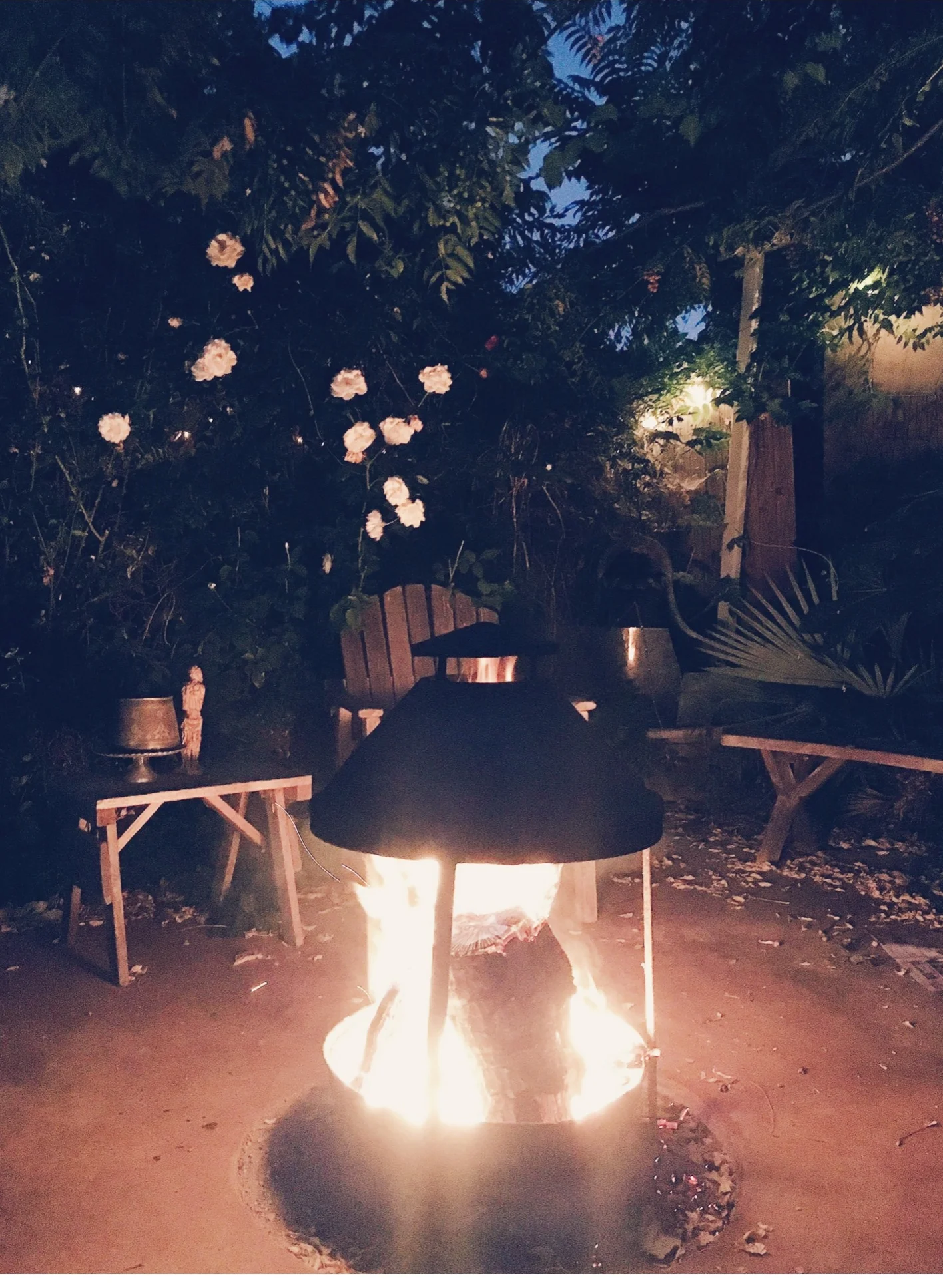
Happy fall! (Well, almost. Can you tell we’re just a little excited for the change of seasons?)

Fall is a wonderful time to enjoy the change of seasons, and celebrate Michaelmas!
In our part of the world, this season brings with it the start of a new school year, and with that, a new routine, curriculum, social group, and so many other things! It’s certainly a time of excitement.
It can also be a time where things feel challenging, and possibly, as though they haven’t quite fallen into place yet.
So, it can feel like a lot when we remember that Michaelmas, one of the major festivals for the year, is just around the corner after school begins!
But there’s no need to worry – Michaelmas (as with all festivals, in our opinion, click here for more on that!) does not need to be complicated, and should not induce more stress in your daily life.
It’s hard not to get caught up in the FOMO for this particular festival, especially when some Waldorf schools and families dedicate a large amount of time to building elaborate dragons, or baking all day, or...or...or!
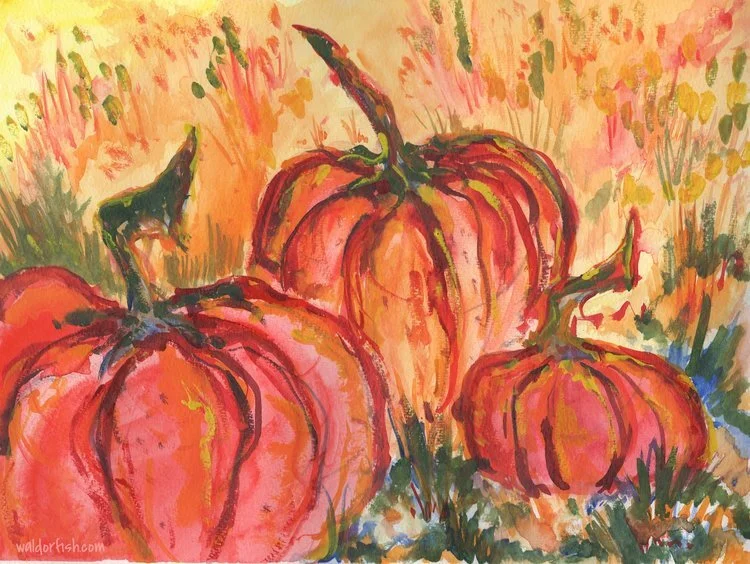
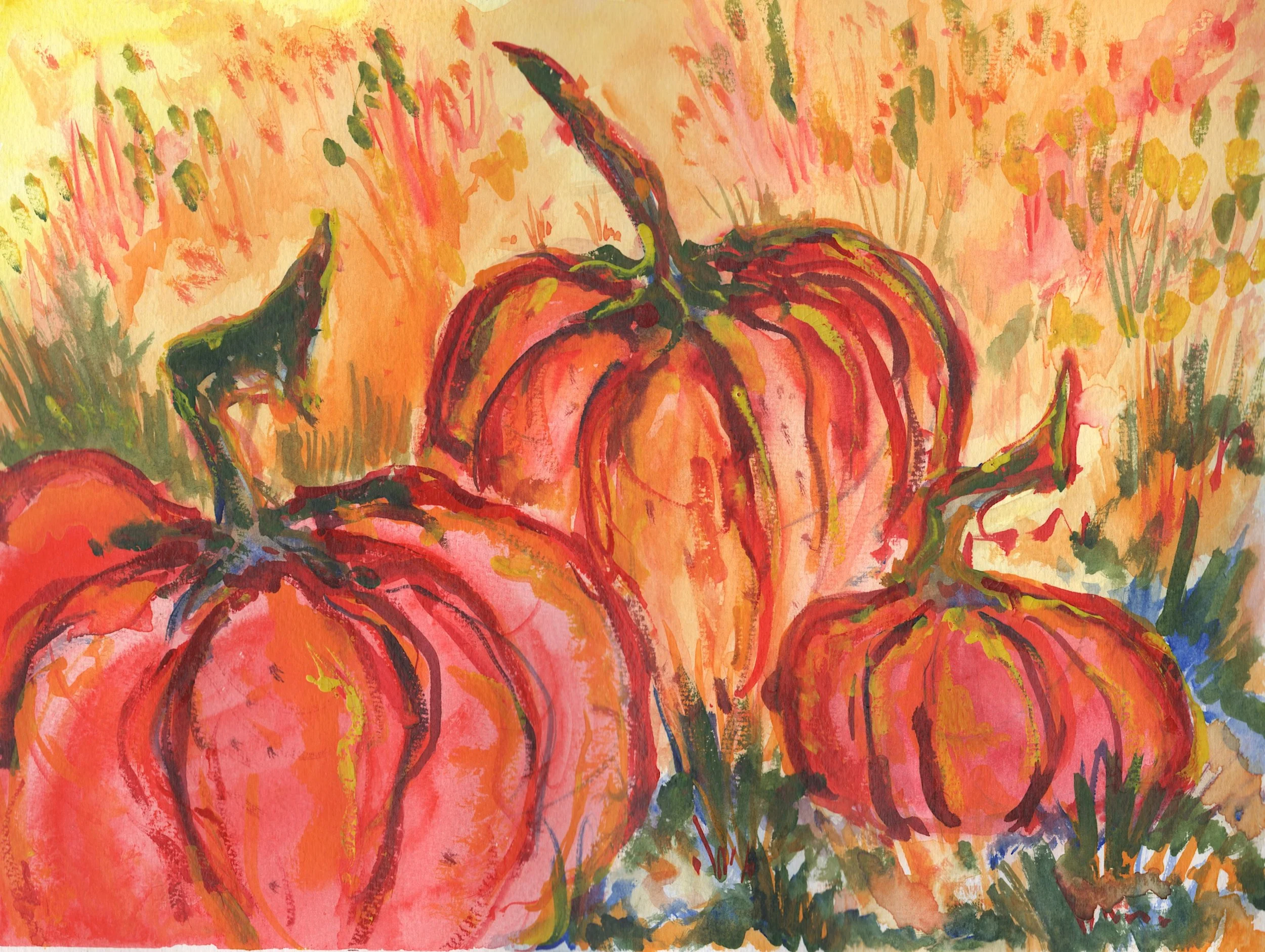
Fall pumpkins: a wonderful subject for your next watercolor painting!
But before you find yourself spiraling, take a minute to ask:
What is meaningful to MY family?
What would feel sincere to us?
And above all: how can I make this festival feel special in a simple, doable and enjoyable way?
In a nutshell, celebrating Michaelmas is about standing up for what’s right, taming the “dragon” within, and choosing to follow the path of light, joy, and goodness, even in the most difficult and challenging of circumstances.
With that in mind, we’ve got some resources for you, to help you design your Michaelmas celebration in a way that fits your family best. (Just click the links below!)

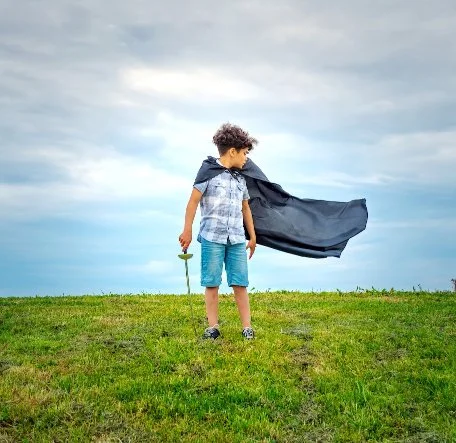
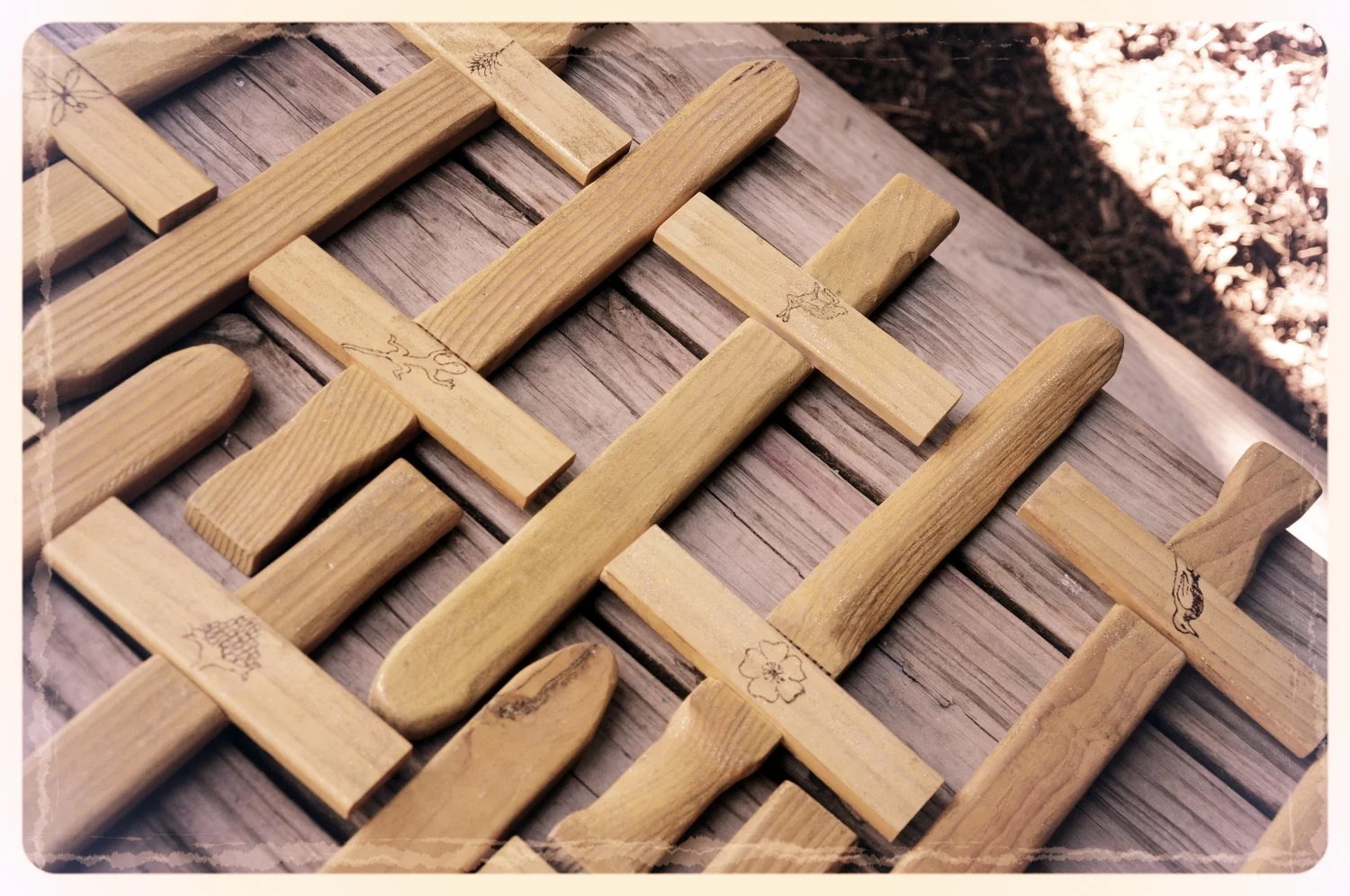
For some, making wooden swords is a Michaelmas tradition!
Dragons for Michaelmas
Building a dragon is a popular activity to celebrate Michaelmas, so we’ve put together some inspirations for you! Perfect for little and big hands alike.
On Dragons and Making Swords
What exactly is Michaelmas, and how does it apply to raising children in our modern world? Enjoy this piece written by our guest writer Christy Corp-Minamiji, and discover how Michaelmas can lead us to talking with our children about the dragons we encounter in our everyday lives.
In Praise of Balance
The title speaks for itself: we are all about building a festival life that’s in balance, and truly meaningful experiences that work for you and your family. This blog post is the perfect place to go if you need a little encouragement, inspiration, and permission to keep it simple!

Head to our Pinterest board for Michaelmas and Autumn seasonal inspiration!
Michaelmas Pinterest Board
Dragon bread, dragons, swords: our pinterest board has it all!
Festival Life in 2020
It’s safe to say that our lives aren’t quite back to the “normal” we knew before 2020, and we’re all still trying to find the best and most doable ways to make festival life work in these new times. Be sure to check out this blog post by our guest writer Cristina Havel, and find some inspiration for how to make Michaelmas and other festivals feel special, even in trying times.
Enjoy!
About the Authors
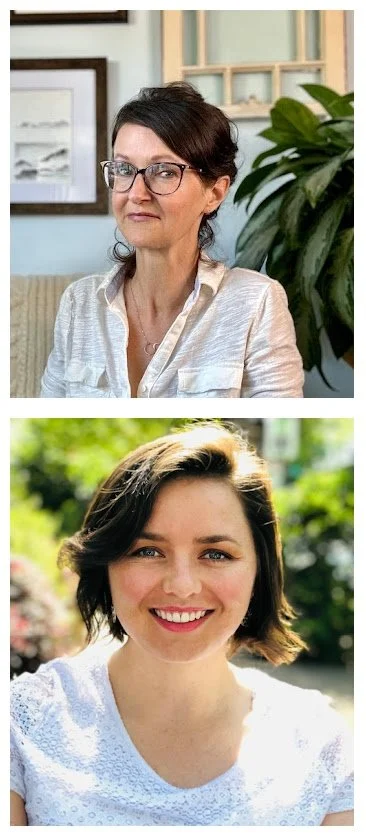
Robyn Beaufoy is Waldorfish’s CEO, and a course instructor for two of our courses - Waldorf Art for Beginners and Weekly Art Foundations. You’ll find her intuitive touches and influences throughout everything Waldorfish offers! Robyn has been in the world of education for almost 30 years, with an MA in Education and a certification in Waldorf teaching - she also homeschooled both of her children. In 2012 Robyn co-founded Waldorfish.com, creating it with the vision of making Waldorf inspired-art and pedagogy more accessible, joyful, and doable to homeschoolers all over the world.
Caitlin Amajor is Waldorfish’s course instructor for Geometry grades 5 & 6, and Botany, as well as our Administrative Assistant. From a young age, Caitlin has been immersed in Waldorf education, attending a Waldorf school from K-8. After receiving a BA in History, Caitlin gained her certification in Waldorf teaching, and spent seven years as a Waldorf class teacher in the upper grades. With a special fondness for watercolor painting and geometry, Caitlin loves bringing Waldorf education to her students all over the world, and seeing their own individuality and style bloom from the curriculum!
We Won! (Thanks to YOU!)
Happy August everyone! We’ve got some exciting news…
We won!
Our Weekly Art course series won first place in the i-Learn (art) category for the 2021 Practical Homeschool Awards!
Each year, Practical Homeschooling Magazine (an awesome resource for homeschool families!) requests reader nominations for its i-Learn and Reader Awards. Thousands of homeschool families vote for their favorite curricula in a variety of categories (such as math, language arts, vocabulary etc.) and we’re proud to say our Weekly Art courses were voted #1 for online art curriculum.

Art is for everyone to enjoy together!
We are so thankful to have won this award, and we want to share a resounding THANK YOU to our community for casting their votes!
Waldorfish has been around for eight years now (wow!) and it’s still so fun to share our love of Waldorf education with such a creative, resourceful, and down right cool community.
If you’re looking for an art curriculum for your homeschool year, our Weekly Art Foundations course is a great place to start, and enrollment is open until the end of September!

We’re so thankful to share Waldorf art curriculum with YOU!
About the Author
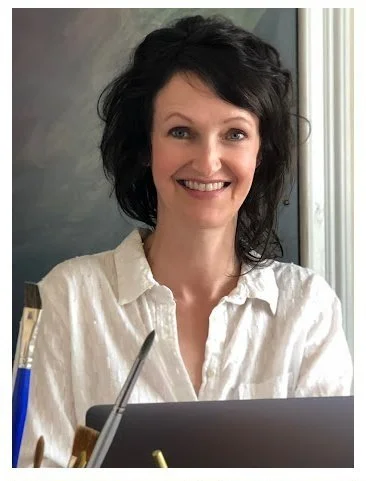
Robyn Beaufoy is Waldorfish’s CEO, and a course instructor for two of our courses - Waldorf Art for Beginners and Weekly Art Foundations. You’ll find her intuitive touches and influences throughout everything Waldorfish offers! Robyn has been in the world of education for over 25 years, with an MA in Education and a certification in Waldorf teaching - she also homeschooled both of her children. In 2012 Robyn co-founded Waldorfish.com, creating it with the vision of making Waldorf inspired-art and pedagogy more accessible, joyful, and doable to homeschoolers all over the world.
Looking for something?

Welcome to Waldorfish! We started this adventure in 2012 out of a desire to make Waldorf training more accessible to class teachers in remote locations and to homeschooling families everywhere! Read more, click here.

WE WON! Our Weekly Art courses were voted “best interactive art program.” Learn more about the award, here.

Click here for a full list of schools we work with.
A few of our most popular blog posts:
Who are our courses for?

Starting Waldorf First Grade
4 Things to Know Before Planning Your Homeschool Year

In Praise of Balance: A Healthy Festival Life
Science in Waldorf Middle School: Starting Something New!