
Waldorfish Blog
Working in the Round: Macramé, Knitting, and 3D Thinking
We’re excited to share a piece from authors, educators, and all around amazing humans, Shellie Smith and Elizabeth Seward! With decades of experience, they will be sharing insights into Waldorf handwork.
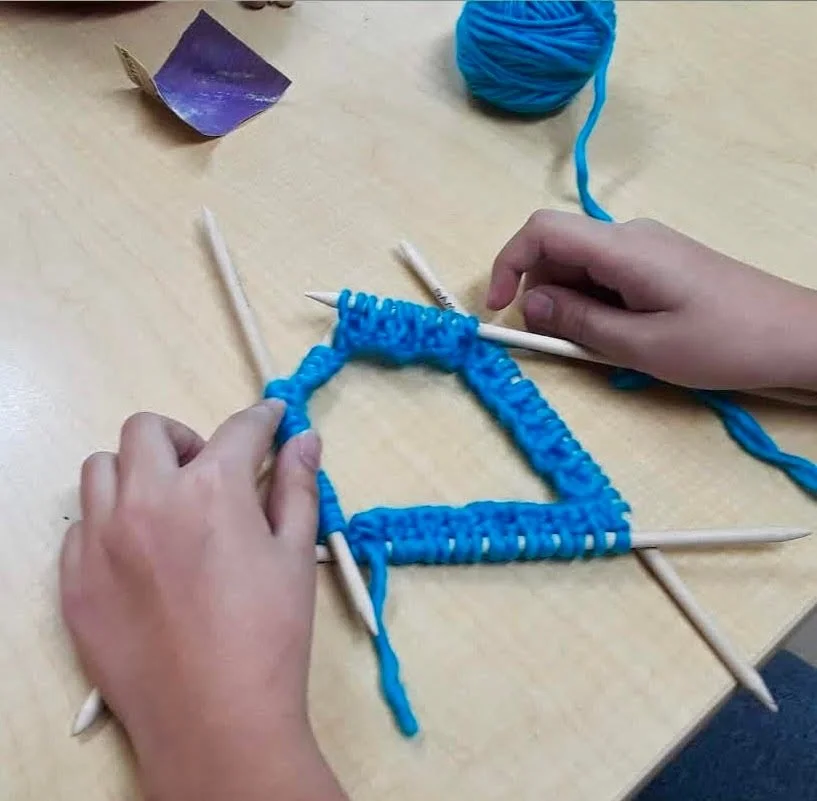
Handwork curriculum builds many skills, including spatial visualization!
Handwork, by its very nature, is three-dimensional.
From the earliest grades, children work with real, tangible materials that respond to touch and are transformed through the work of their hands. And yet, something new begins to emerge in fifth grade.
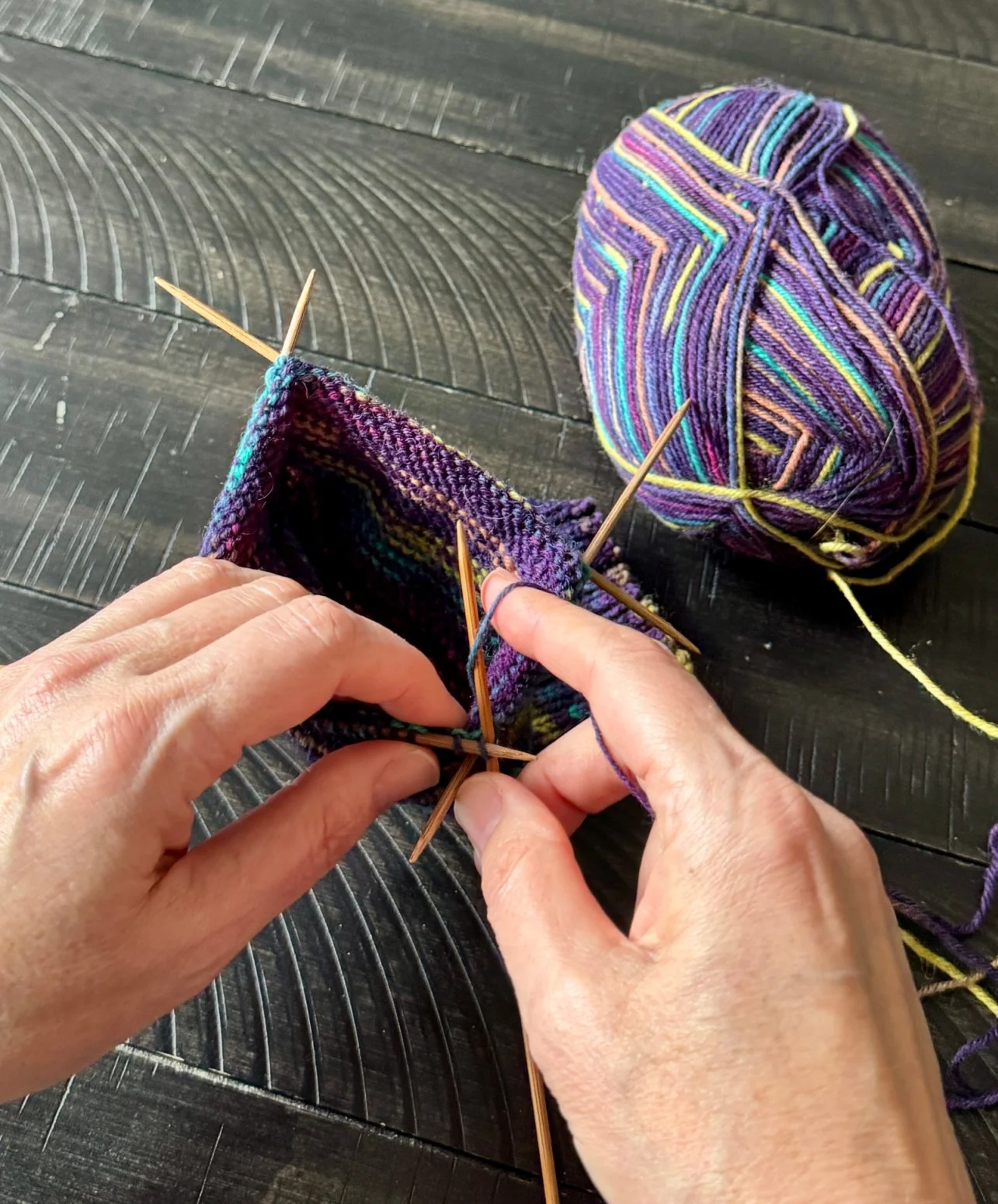
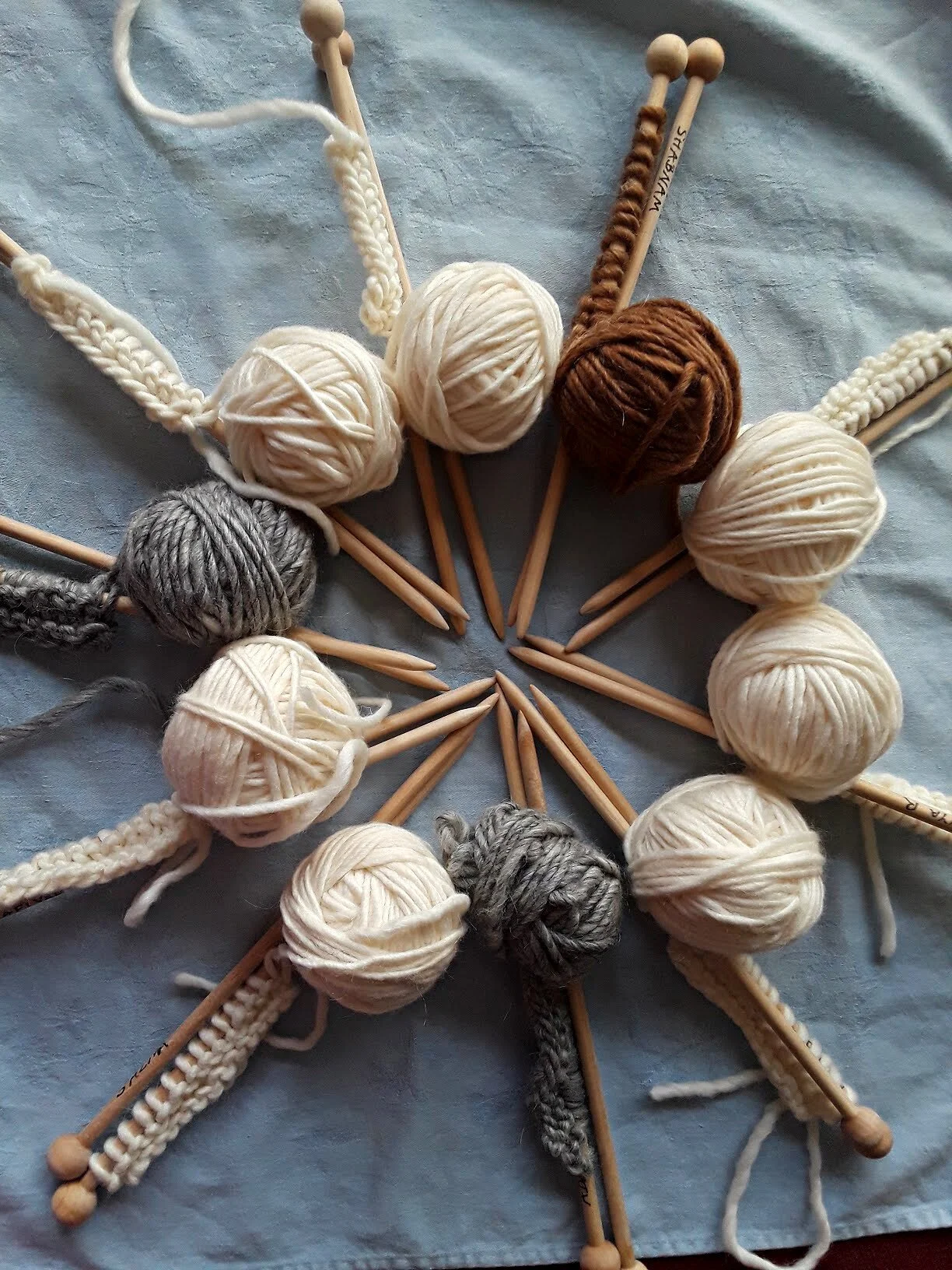
In first through third grade, children knit or crochet flat pieces that are later folded, shaped, and sewn into three-dimensional forms. In fourth grade, they embellish the surface, bringing individuality and design into what has already been made. But in fifth grade, there is a shift. Instead of transforming something flat, they begin working directly in the round—the form emerging stitch by stitch from the very beginning.
Three-dimensional thinking—sometimes called spatial visualization—is the ability to mentally hold, rotate, and understand complex forms.
It is the capacity to see beyond one perspective, to imagine how parts relate to a whole, and how that whole exists in space. This kind of thinking lives at the foundation of so many human endeavors: architecture, engineering, medical work, scientific research, and even the ability to navigate social situations with depth and understanding.
In contrast, two-dimensional thinking keeps us fixed in a single viewpoint. But in these middle years of childhood, something is awakening that calls for more.
Fifth graders stand at a threshold. They are no longer fully immersed in the world as younger children are; a quiet distance begins to emerge—a growing awareness of themselves in relation to others and the world around them.
With this comes a readiness for greater precision and complexity. They are preparing for geometry, formal scientific observation, and the study of history as something recorded and examined. Their thinking becomes more objective, their observations more careful, and soon—by sixth grade—they begin to question and debate.
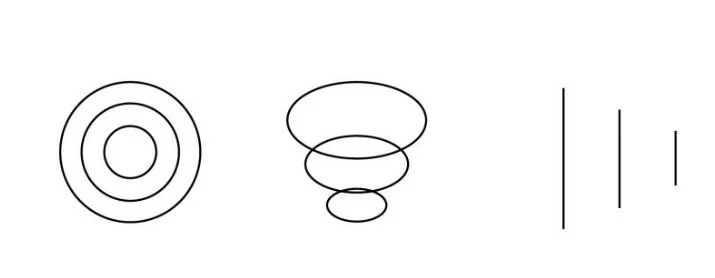
Fifth grade handwork projects challenge the student to look at an object from different points of view.
Handwork meets this moment in a profound and practical way. When children work in the round—whether through knitting, macramé, basketry, netting, or other crafts native to your geographical location—they are actively creating a three-dimensional form in their hands.
This is not abstract. It is lived, tactile, immediate. Stitch by stitch, knot by knot, they build something that exists in space, quietly developing the inner capacity to imagine and work with complexity.
At the same time, something else is being asked of them. They must learn to focus and expand their awareness simultaneously. In knitting in the round, this might mean working with two active needles while holding the others in space, keeping them from slipping or tangling. In macramé, a student might work with twelve cords—focusing on four at a time while holding the remaining eight in the periphery.
This gesture is significant. Children are learning to attend to what is immediately in front of them while maintaining awareness of the larger whole.
This is not only a technical skill—it is a lived experience of balanced attention. Over time, this physical practice lays the groundwork for something much larger: the ability to hold multiple perspectives, to think around a question, and to recognize that more than one viewpoint can exist at the same time.
We see here one of the central principles of Waldorf education: experience first, understanding later. The hands lead, and thinking follows.
Traditionally, knitting in the round has been one way we meet this developmental moment in fifth grade. It is a beautiful, time-honored practice. At the same time, macramé bears a remarkable similarity. It calls for the same kind of three-dimensional thinking—working rhythmically, round and round, to build form through repetition.
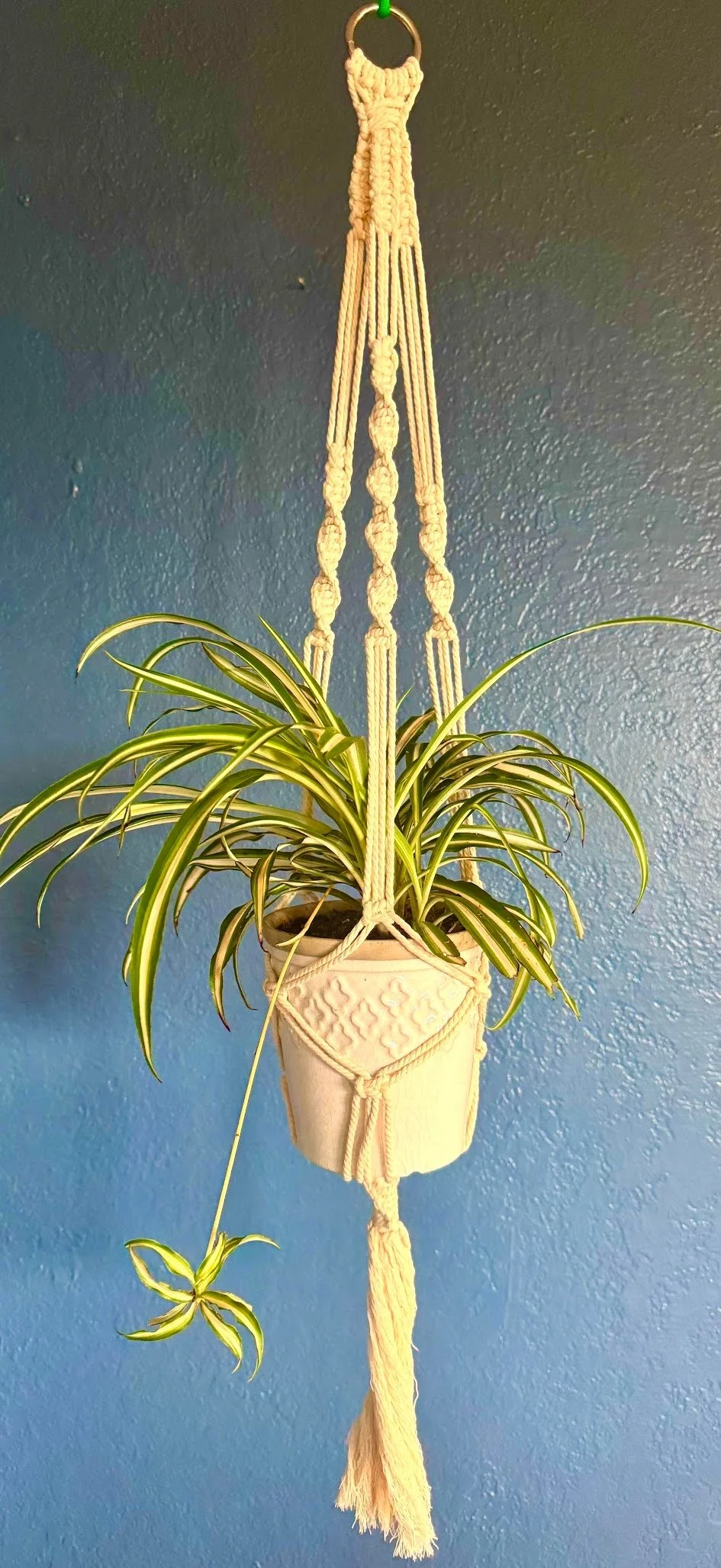
Macramé asks students to work with multiple stands at a time while learning knotting techniques.
In a macramé plant hanger, for example, students might work with twelve individual cords—focusing on four at a time while holding the other eight in awareness. Just as in knitting, where a child learns to “read” their stitches, students begin to read their knots. The work itself offers clues, guiding them forward with increasing independence.
While macramé saw a decorative revival in the 1970s, the knots themselves belong to a much older and nearly universal tradition. For centuries, knotting was used to secure, strengthen, and finish textiles so they would endure. Across cultures, these simple knots have formed everything from functional nets and bags to finely detailed lacework.
And macramé is just one example. Across cultures and environments, this same gesture appears in basketry, netting, and coiling traditions that invite children to work directly in three dimensions. If knitting wool socks does not feel suitable in your climate or context, we can look to what is local, meaningful, and practical while still meeting the same developmental need.
This brings us back to an essential question:
Does everybody have to knit socks?
If our goal is to support their development, to strengthen their capacities, to bring thinking, feeling, and willing into balance—then we can begin to widen our lens.
What matters most is not the specific technique, but the gesture:
Are the students working in three dimensions?
Are they holding multiple elements in relationship?
Are they practicing focused attention alongside peripheral awareness?
Are they creating something meaningful, purposeful, and real?
Is it challenging enough to give them something to strive for while also ensuring their success?
If the answer is yes, then we are heading in the right direction.
In fifth grade, we are doing more than teaching skills. We are laying the groundwork for a way of thinking, a way of perceiving, and ultimately, a way of being in the world. First, a secure sense of self is built in the early grades. Then, slowly, the capacity grows to recognize and genuinely respect the perspectives of others.
This is the future we are working toward.
Interested in bringing this into your classroom? Waldorf Handwork Educators offers a 5th Grade Handwork Curriculum Guide that includes both knitting in the round and alternative projects like macramé—helping you meet your students in developmentally appropriate and meaningful ways.




About the Authors
Elizabeth Seward, PhD, founder, director and co-owner of Waldorf Handwork Educators has over 40 years experience teaching Handwork and other subjects in public, private, and homeschool Waldorf settings. Elizabeth is a trained Waldorf class teacher in the grades, and she was co-director of a nationally recognized Waldorf teacher training institute from 2000 - 2003. She holds a PhD in Education, an MA in second language learning, and an MA in Education and Spirituality. Elizabeth has three children and four grandsons who enjoy the lifelong benefits of Waldorf Education. She enjoys Scottish Country Dancing, swimming, gardening, and teaching basic handwork skills to children and adults! She is author of Teaching Through Stories: Jane and Jeremy Learn to Knit
Shellie Smith is the founder, director, and co-owner of Waldorf Handwork Educators, an international initiative supporting teachers through online professional development, global conferences, and individualized mentoring. She finds profound joy in guiding and empowering handwork teachers around the world.
Shellie has taught in public, private, and homeschool settings for over 25 years. With a background in social work and elementary education, and formal training in Waldorf handwork education from the Rudolf Steiner College, She brings a rich blend of skill, heart, and experience to her work. She believes that teaching through the imagination and fostering authentic relationships are the keys to meaningful, lasting learning. Shellie is also the author and illustrator of A Twisted Tangled Tale: A Handwork Fairy Tale, a whimsical story that celebrates the magic and metaphor of the handwork journey.

Nature Journaling in Fifth Grade: More Than Just a Drawing Lesson

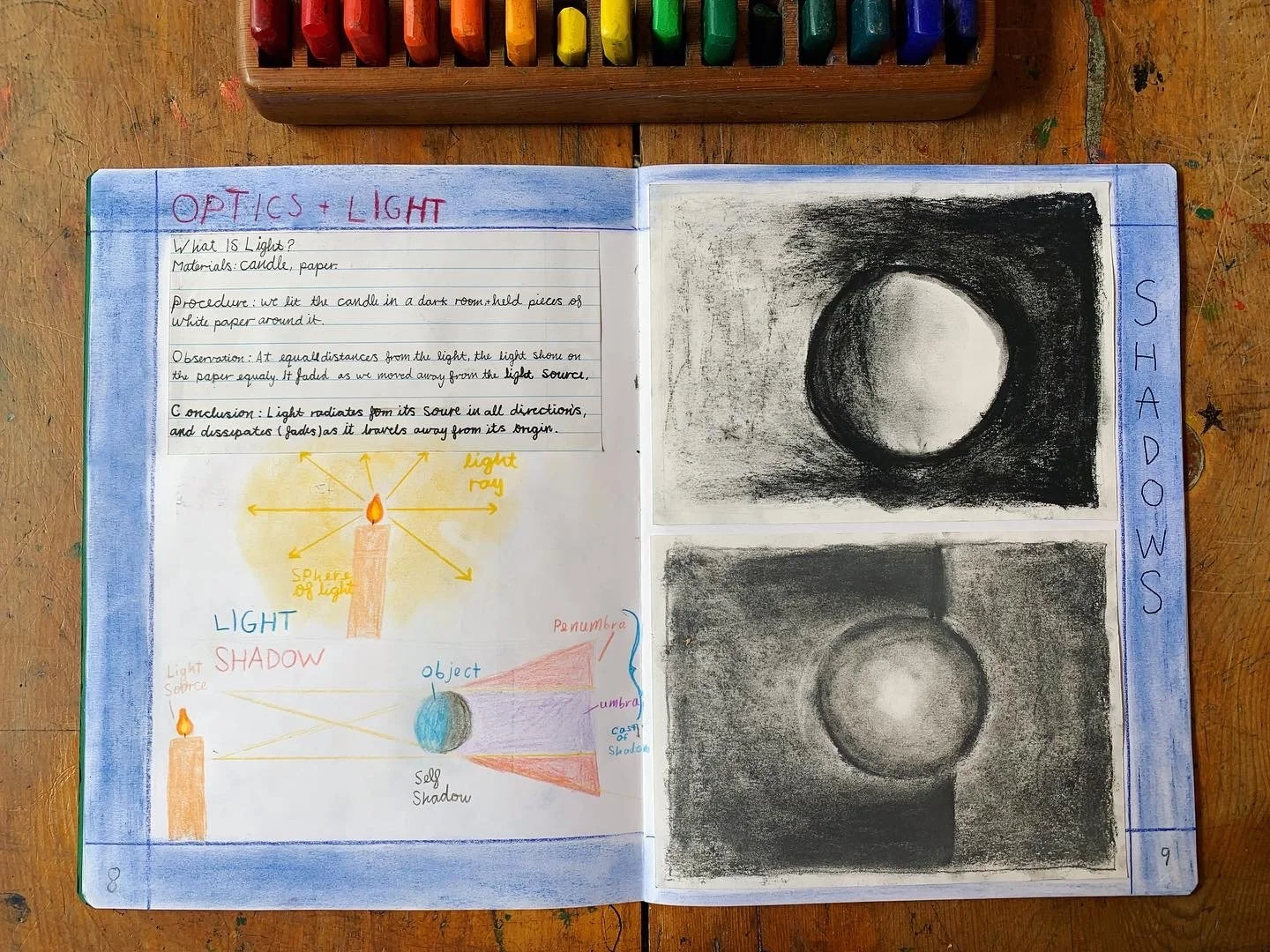
In Waldorf Education, science is taught by doing and observing!
In Waldorf education, fifth grade marks a special shift - one where science becomes more focused, more intentional.
Beginning with Botany in the fifth grade and progressing to Physics, Chemistry, Geology, Anatomy, and more in the later years, students are invited into the world of science not through textbooks or lectures, but through phenomenology—an approach that begins with observation and lived experience.
In practical terms, this means students are encouraged to experience scientific phenomena directly, often through demonstrations or hands-on activities, and then draw their own conclusions. No memorizing facts just to regurgitate them—this is science experienced through the senses.
One of the most beloved activities in the fifth-grade Botany block is something called Nature Sketching (sometimes also called Nature Journaling). It’s simple on the surface: students take their colored pencils, etc. and sketchbooks outdoors, find one subject that captures their attention - a flower, a leaf, even a curled root peeking out of the earth - and spend time carefully observing and drawing it.
But here’s the thing: it’s not about the drawing. Not really.

Nature sketching provides a moment of quiet in a busy, fast world.
Sure, students are encouraged to draw what they see with care - matching color, texture, shape, position - but the true goal is deeper. We’re helping them learn to slow down, to really look, and to begin noticing the small details that might otherwise go unseen.
What does the flower smell like? What’s its texture? How many petals? What’s the light doing at that time of day?
This moment of quiet, focused attention is a rare gift in our fast-paced world. And it turns out, it’s doing more than just building observation skills. Nature journaling also introduces two incredibly important ways of thinking that scientists and artists alike rely on: distributed cognition and metacognition.
Let’s unpack those.
Distributed cognition is a fancy way of saying: sometimes, our brains need a little help keeping track of everything. That’s why we use things like calendars, grocery lists, or calculators - they’re all tools that “share the load” of thinking. In the same way, a nature journal becomes a thinking partner. Instead of trying to remember every detail of a flower or the texture of a leaf, the student writes it down or draws it. Their journal becomes an extension of their memory and attention - just like a scientist’s field notebook.
And then there’s metacognition - thinking about our thinking. As John Muir Laws puts it, “Thinking about our thinking helps us think better.” When students go back and review their nature sketches and notes, they’re not just remembering what they saw; they’re also reflecting on how they observed, what they were curious about, and how their perspective might have changed. That’s metacognition in action - and it’s a powerful habit to develop.
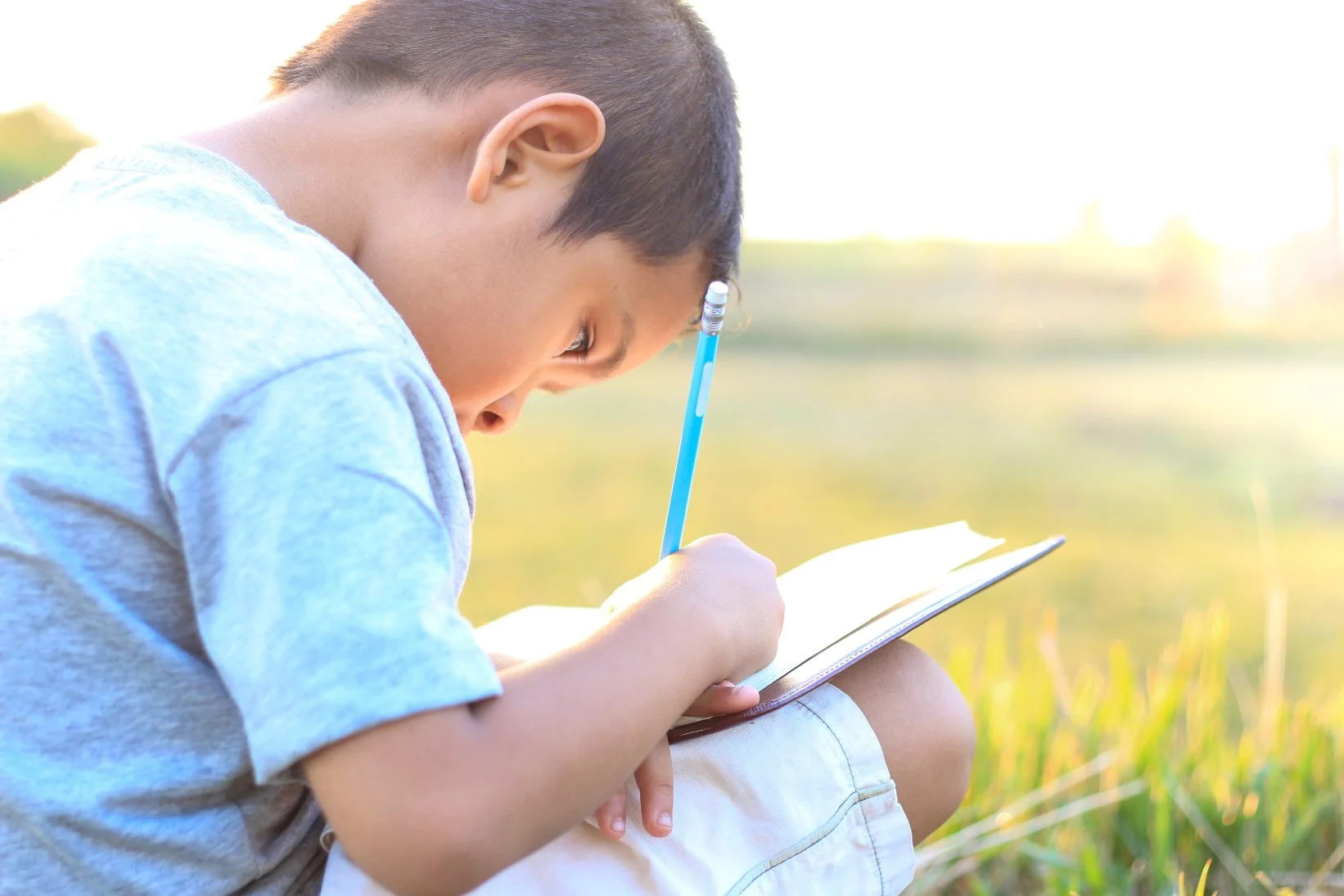
Nature sketching is a multi-faceted, powerful tool.
What’s more, the simple act of nature sketching engages a whole web of skills: fine motor skills, attention to detail, language arts (through labeling, note-taking, or journaling), even basic quantitative skills like counting, measuring, and comparing. And every time a student tries something new - maybe they’ve never blended colored pencils to show shading before, or never really paid attention to the shape of a leaf - their brain is making new connections. That’s neuroplasticity at work: the brain growing and adapting through experience.
So while it may look like just a quiet moment with paper and pencil out in the garden or forest, Nature Journaling is a deceptively powerful tool - one that builds scientific thinking, strengthens artistic observation, supports language and reflection, and even grows the brain itself!
And best of all? It invites the student into a lifelong relationship with the natural world - one quiet sketch at a time. And what our students learn to love, they will strive to protect.
More from Waldorfish:



About the Authors
Robyn Beaufoy is Waldorfish’s CEO, and also a course instructor for Simple Season, Waldorf Art for Beginners, and Weekly Art Foundations. You’ll find her intuitive touches and influences throughout everything Waldorfish offers. Robyn has been in the world of education for over 25 years, with an MA in Education and a certification in Waldorf teaching - she also homeschooled both of her children for some of that time. In 2012 Robyn co-founded Waldorfish.com, creating it with the vision of making Waldorf inspired-art and pedagogy more accessible, joyful, and doable for homeschoolers all over the world.
Caitlin Amajor is Waldorfish’s course instructor for Geometry grades 5 & 6, Botany, and Geology, as well as our Administrative Assistant. From a young age, Caitlin has been immersed in Waldorf education, attending a Waldorf school from K-8. After receiving a BA in History, Caitlin gained her certification in Waldorf teaching, and spent seven years as a Waldorf class teacher in the upper grades. With a special fondness for watercolor painting and geometry, Caitlin loves bringing Waldorf education to her students all over the world, and seeing their own individuality and style bloom from the curriculum!
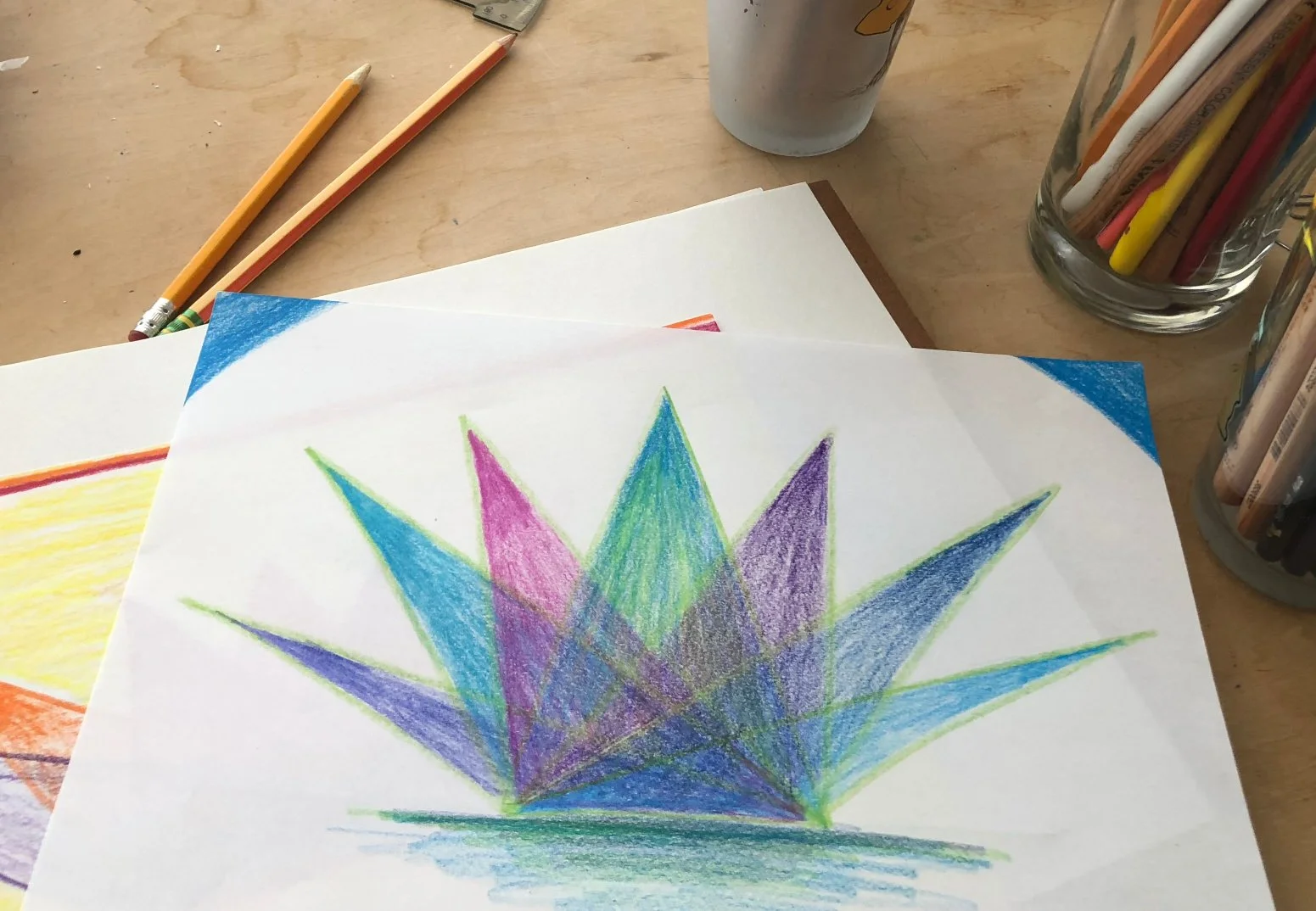
Waldorf 5th Grade: Weaving Geometry Throughout the Curriculum

“The Crown” form found in our grade five geometry course.
Waldorf fifth grade curriculum includes a variety of subjects to explore.
It is particularly exciting because it is the first year history and science are introduced as stand-alone areas of study. Ancient Civilizations, Greek Mythologies and History, Botany, Decimals, and much more are explored using a variety of approaches, including (but not limited to!) art, music, and story.
One of our favorite aspects of the fifth grade curriculum is Geometry. Through a freehand approach, the fifth grader builds a strong relationship to geometry within their own bodies, and is prepared for the more complex work with tools that they will experience in sixth grade.
Geometry can be taught in block form in fifth grade (where the lessons are taught every school day over a three or four week period) and/or can also be sprinkled in throughout the school year - it is an ideal subject to be woven into other aspects of the curriculum.
Geometry fits in just about everywhere in the fifth grade year- here are several suggestions if you’re interested in weaving it all together:
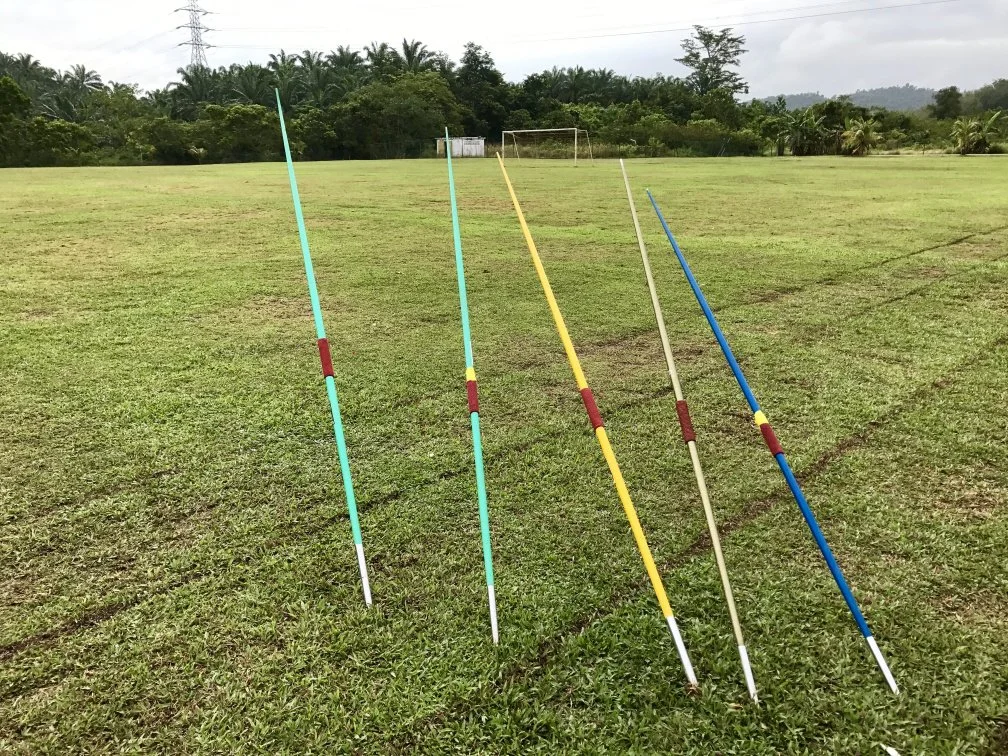
Javelin throwing is a big part of the Pentathlon and can be a full-body way of exploring parallel lines, angles, arcs, and much more from the geometry curriculum!
Greek history: Greek architecture and art is filled with familiar forms that are found all throughout geometry in fifth grade and will also bring back an opportunity to review form drawing as well.
Movement: As students prepare for the Waldorf Pentathlon (a common activity for fifth graders), students and educators can explore the geometry behind movement. Angles of the javelin throw, symmetry in running strides, and the circular motion in discus throwing all connect back to geometry in a real-world way.
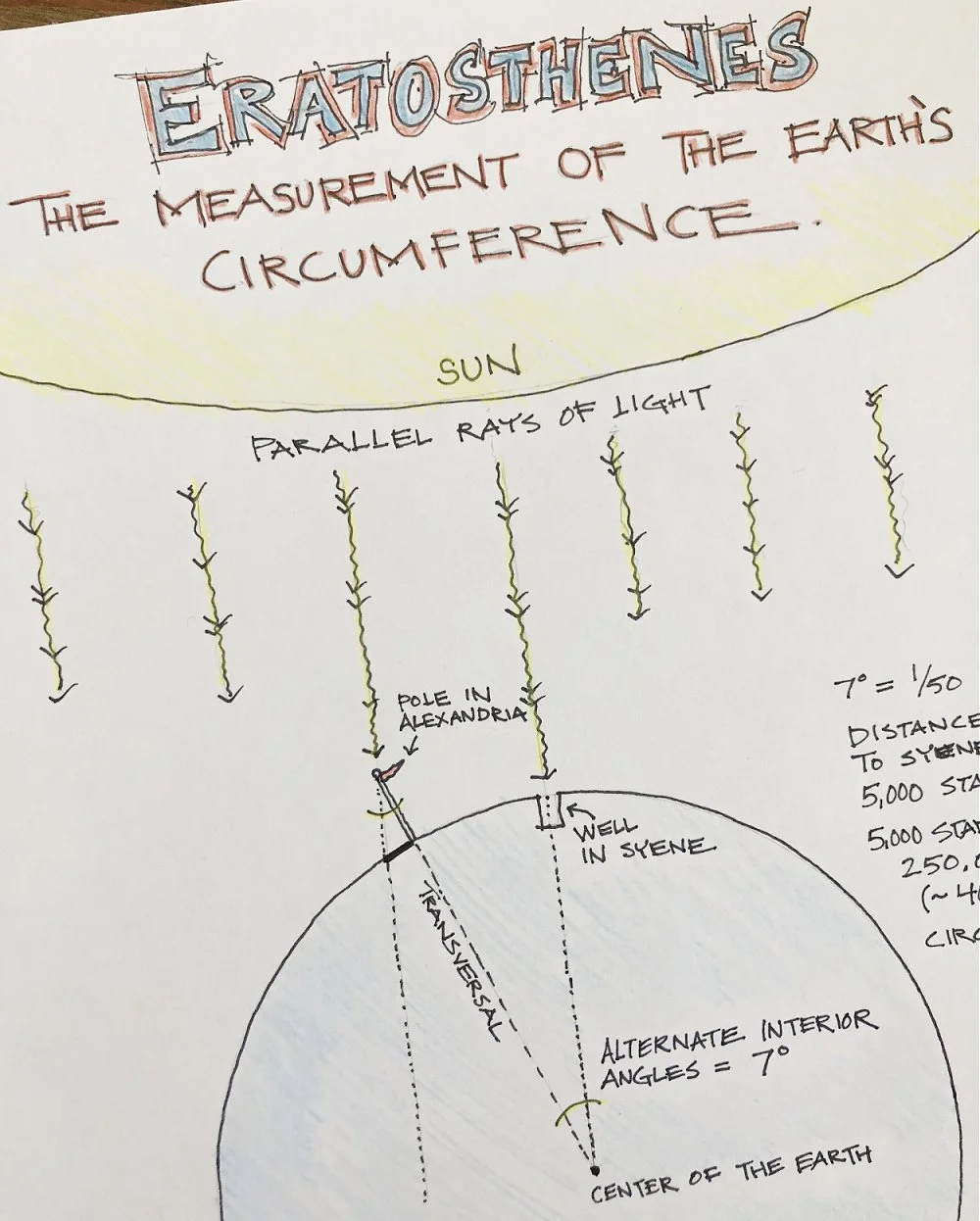
Botany: Flowers and leaves unfurl, bloom, and structure themselves in beautiful patterns naturally! Take the time to find these patterns through nature sketching, or on a hike, and discover just how orderly nature really is.
Ancient Civilizations: Mandalas evoke the beauty of Ancient India, the sculpture and carvings of Ancient Persia have repeating patterns- there is endless inspiration here for things to be created on main lesson book pages and other artwork!
Map drawing: Fifth grade is a wonderful time to bring in a more strategic and skillful approach to map drawing by using freehand grids. Maps can be drawn of students’ home towns, countries, ancient kingdoms, and much more.
One of the most beautiful aspects of Waldorf Education is how various subjects seamlessly weave into each other, and geometry is no exception!
Math into art, history into nature studies, music into movement- the possibilities are endless when it comes to creating a rich tapestry with the fifth grade curriculum.
Explore our blog!




About the Authors
Robyn Beaufoy is Waldorfish’s CEO, and also a course instructor for Simple Season,, Waldorf Art for Beginners, and Weekly Art Foundations. You’ll find her intuitive touches and influences throughout everything Waldorfish offers. Robyn has been in the world of education for over 25 years, with an MA in Education and a certification in Waldorf teaching - she also homeschooled both of her children for some of that time. In 2012 Robyn co-founded Waldorfish.com, creating it with the vision of making Waldorf inspired-art and pedagogy more accessible, joyful, and doable for homeschoolers all over the world.
Caitlin Amajor is Waldorfish’s course instructor for Geometry grades 5 & 6, and Botany, as well as our Administrative Assistant. From a young age, Caitlin has been immersed in Waldorf education, attending a Waldorf school from K-8. After receiving a BA in History, Caitlin gained her certification in Waldorf teaching, and spent seven years as a Waldorf class teacher in the upper grades. With a special fondness for watercolor painting and geometry, Caitlin loves bringing Waldorf education to her students all over the world, and seeing their own individuality and style bloom from the curriculum!
Waldorf 5th Grade Geometry Curriculum: Building a Strong Foundation

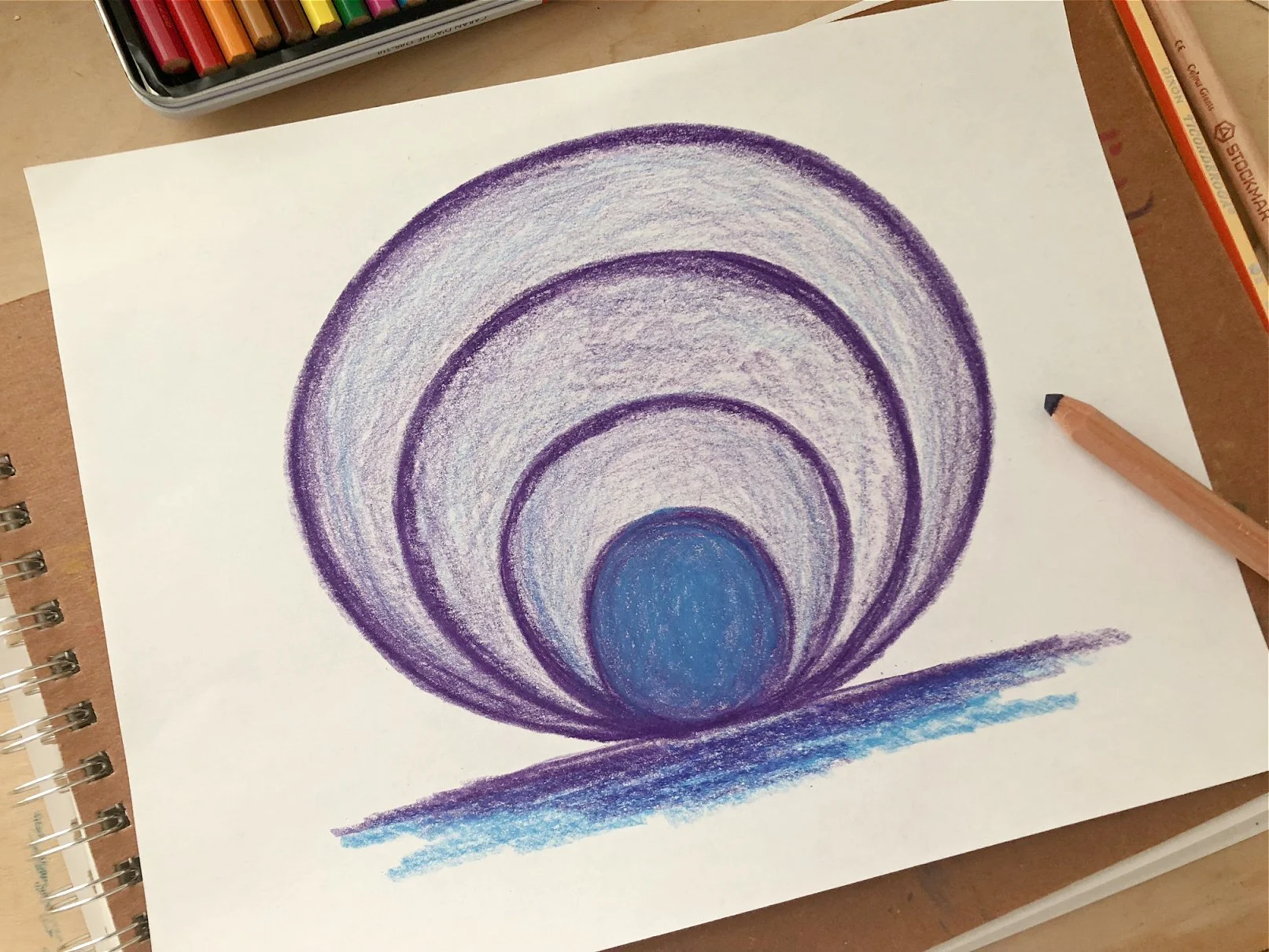
A freehand geometric form of growing circles.
In Waldorf curriculum, fifth grade marks the beginning of geometry studies.
Thus far, students have built their understanding of forms through Form Drawing lessons and their abilities in spatial awareness, pencil grip, balance and symmetry have grown through those experiences.
In fifth grade, it's time to jump into Geometry, and begin exploring its foundations!
The fifth grade child is in a particularly special time in childhood, often referred to as the “golden age.” Physically, they are balanced and graceful; stronger and more sure in their movements than that of a young child, and without the awkwardness that often marks the physicality of a teenager.
Inwardly, they are uniquely in-between the magic of early childhood and the realism of middle school. They are discovering a newfound curiosity and desire to understand how the world works in the present and what has happened in the past – all while finding beauty and magic in every aspect.
Finding beauty in truth- the fifth grader is ready to explore geometry!
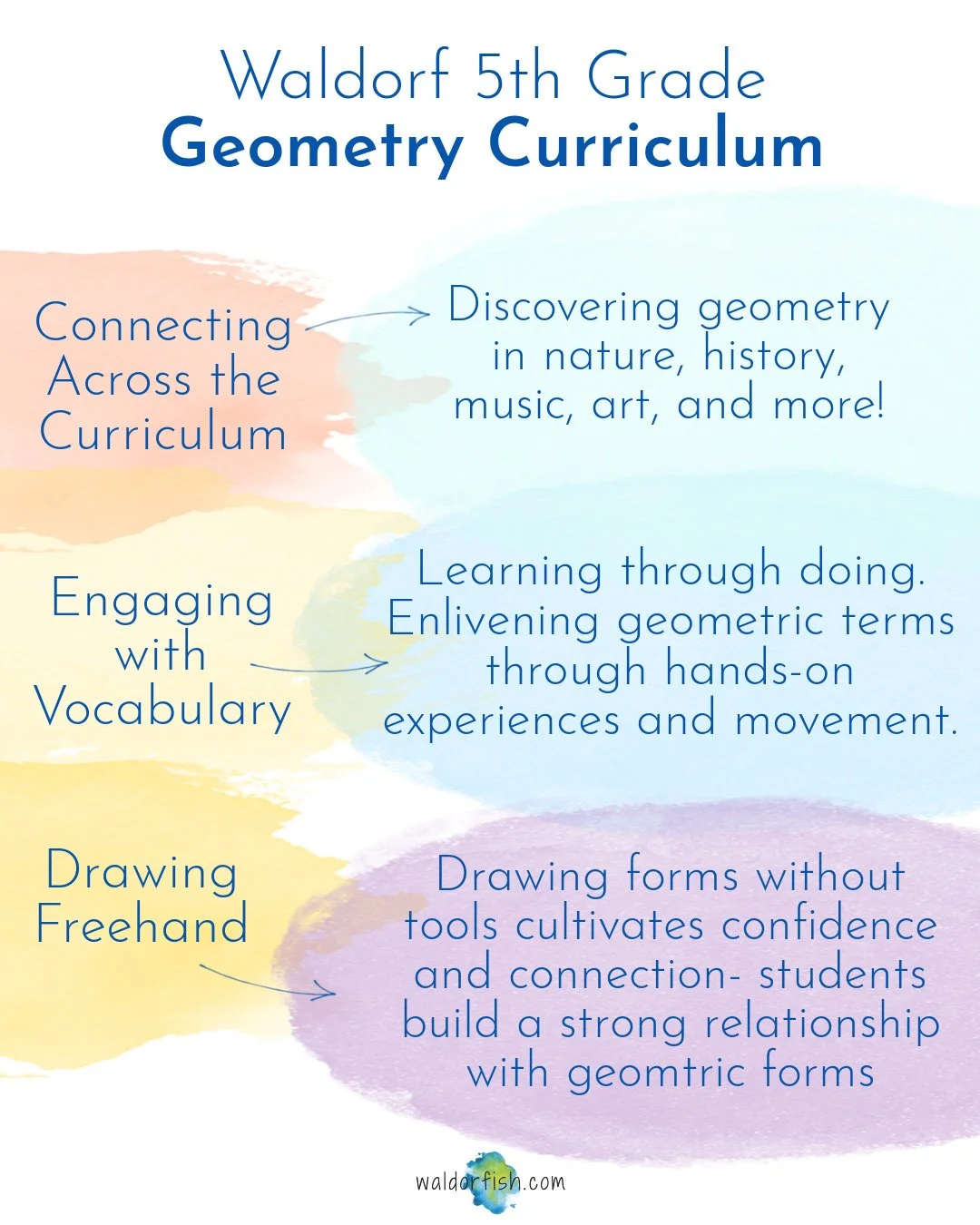
Fifth grade geometry curriculum is rich, challenging, and fun!
Geometry is everywhere, and one aspect of the fifth grade curriculum is finding geometry in nature, history, and all around us! The pyramids of ancient Egypt, the columns of ancient Greece, petals on blooming plants in Botany, exploring the patterns of music: geometry fits into all these subjects in various ways. Fifth graders have a fascination for the world around them, and finding geometry in different and unexpected places cultivates an appreciation and sense of wonder for the subject.
With geometry comes a whole new set of vocabulary and meanings, and it is important that the fifth grader explores these in a way that feels alive and engaging.
Instead of simply memorizing terms and definitions, vocabulary can be explored through movement and hands-on experiences to forge connections. For example, instead of discussing what “circumference” means, a fifth grader may walk the circumference of a large circle drawn with chalk. A “diameter” and “radius” can be created with popsicle sticks; quadrilaterals can be compared through a dramatic skit about the evolution of angles and sides. The fifth grader gains true understanding of vocabulary through doing, exploring, and connecting.
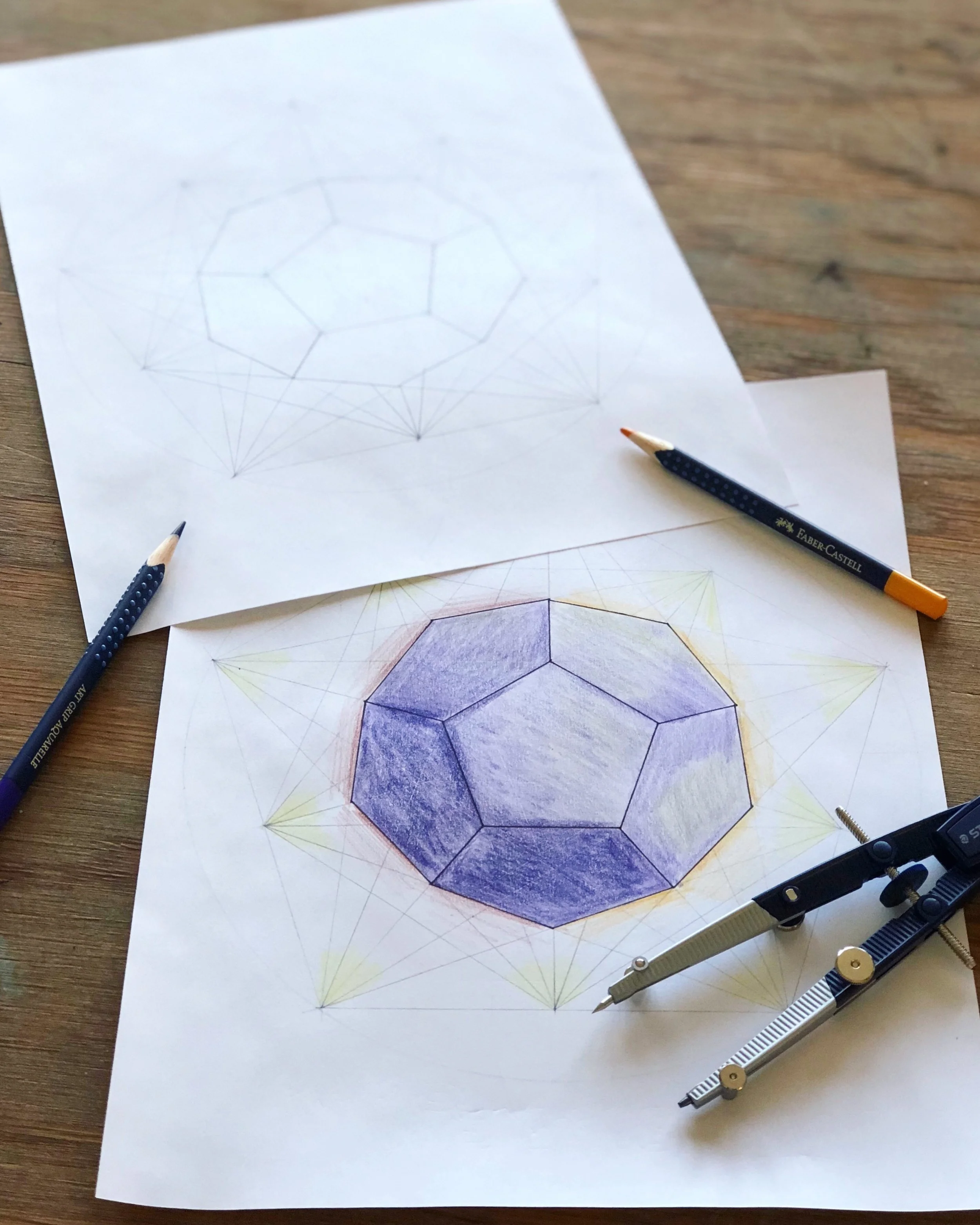
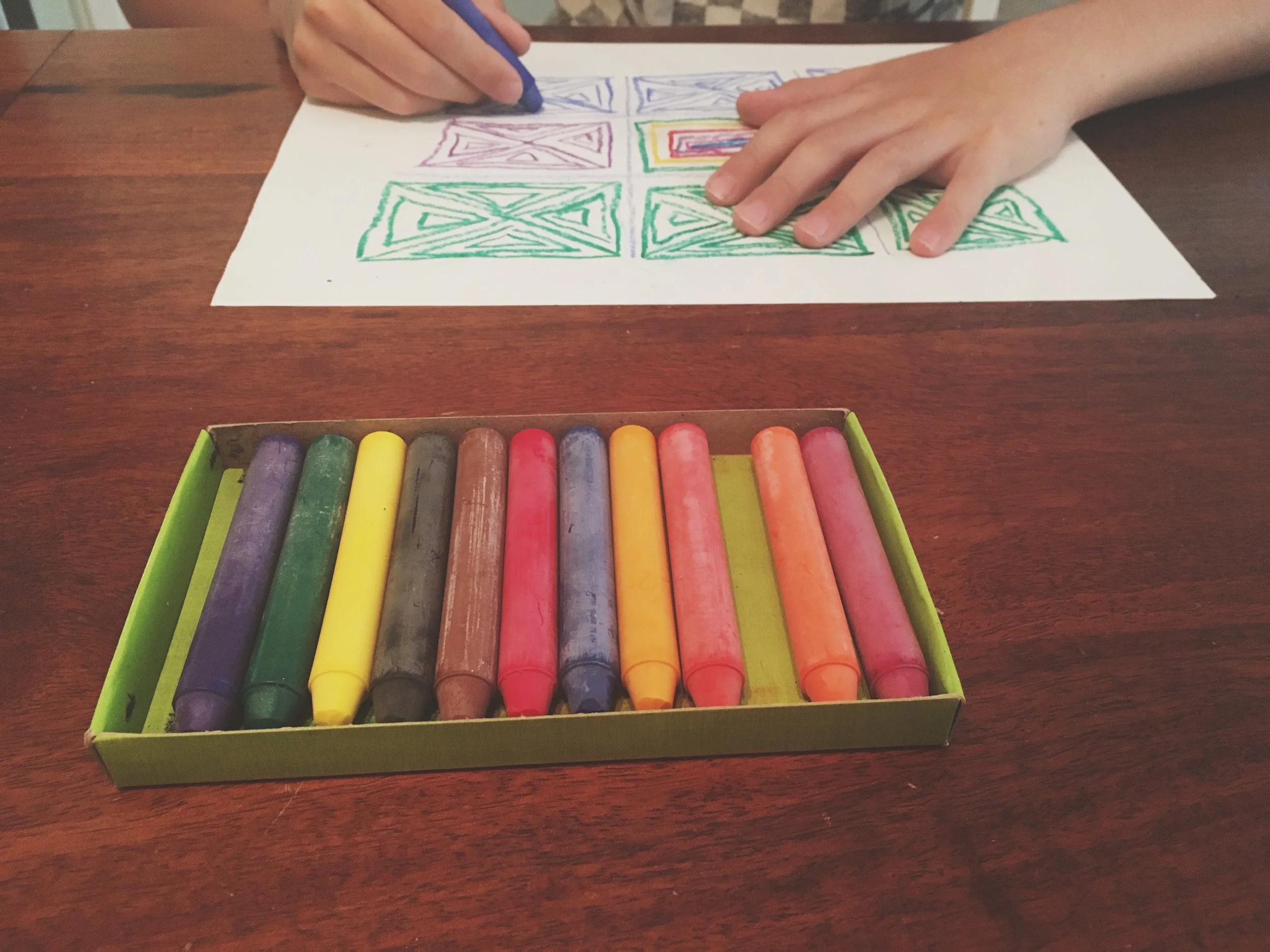
Drawing freehand is a key aspect of the fifth grade curriculum- no tools just yet, as those will be introduced in sixth grade. The fifth grader is experiencing a balance and symmetry in their own physical bodies and inner life that will soon change through puberty, so it is a truly perfect time to cultivate their relationship with geometry without leaning on anything other than their own skills and abilities.

Drawing freehand is all about practice and improvement- not perfection!
With finding geometry in nature and experiencing its language through doing, the fifth grader dives into drawing forms. Variations of triangles, circles, and quadrilaterals are drawn throughout many practice sessions, all culminating in a “final form” which is beautifully shaded and created with care and effort.
In a practical sense, the practice of drawing builds their capacities in creating geometric forms that are accurate and balanced. As well, drawing freehand connects the child with geometry on a deep soul level, because they have experienced it in a direct and organic way.
Geometry curriculum evolves with the growing child as they progress through middle school and beyond. The sixth grader will learn to use tools, the seventh grader finds patterns and sequences, and the eighth grader shifts their thinking into the abstract and 3D world.
But to move forward into the upper grades and the ever more complex world of geometry, the student needs a strong and true foundation that is cultivated through the fifth grade curriculum.
Are you looking to bring freehand geometry into your homeschool classroom? We can help!
Click here to learn more about our course that provides a full year’s worth of geometry curriculum for the growing fifth grader.



About the Authors
Robyn Beaufoy is Waldorfish’s CEO, and also a course instructor for Simple Season (coming soon!), Waldorf Art for Beginners, and Weekly Art Foundations. You’ll find her intuitive touches and influences throughout everything Waldorfish offers. Robyn has been in the world of education for over 25 years, with an MA in Education and a certification in Waldorf teaching - she also homeschooled both of her children for some of that time. In 2012 Robyn co-founded Waldorfish.com, creating it with the vision of making Waldorf inspired-art and pedagogy more accessible, joyful, and doable for homeschoolers all over the world.
Caitlin Amajor is Waldorfish’s course instructor for Geometry grades 5 & 6, and Botany, as well as our Administrative Assistant. From a young age, Caitlin has been immersed in Waldorf education, attending a Waldorf school from K-8. After receiving a BA in History, Caitlin gained her certification in Waldorf teaching, and spent seven years as a Waldorf class teacher in the upper grades. With a special fondness for watercolor painting and geometry, Caitlin loves bringing Waldorf education to her students all over the world, and seeing their own individuality and style bloom from the curriculum!
Looking for something?
Welcome to Waldorfish! We started this adventure in 2012 out of a desire to make Waldorf training more accessible to class teachers in remote locations and to homeschooling families everywhere! Read more, click here.


WE WON! Our Weekly Art courses were voted “best interactive art program.” Learn more about the award, here.


Click here for a full list of schools we work with.
A few of our most popular blog posts:
Who are our courses for?

Starting Waldorf First Grade
4 Things to Know Before Planning Your Homeschool Year

In Praise of Balance: A Healthy Festival Life
Science in Waldorf Middle School: Starting Something New!