
Waldorfish Blog

Waldorf Science Curriculum: What is the role of formal lab write-ups in middle school?
A: When a student enters sixth grade, the curriculum shifts to meet them just where they are in their development in many ways…
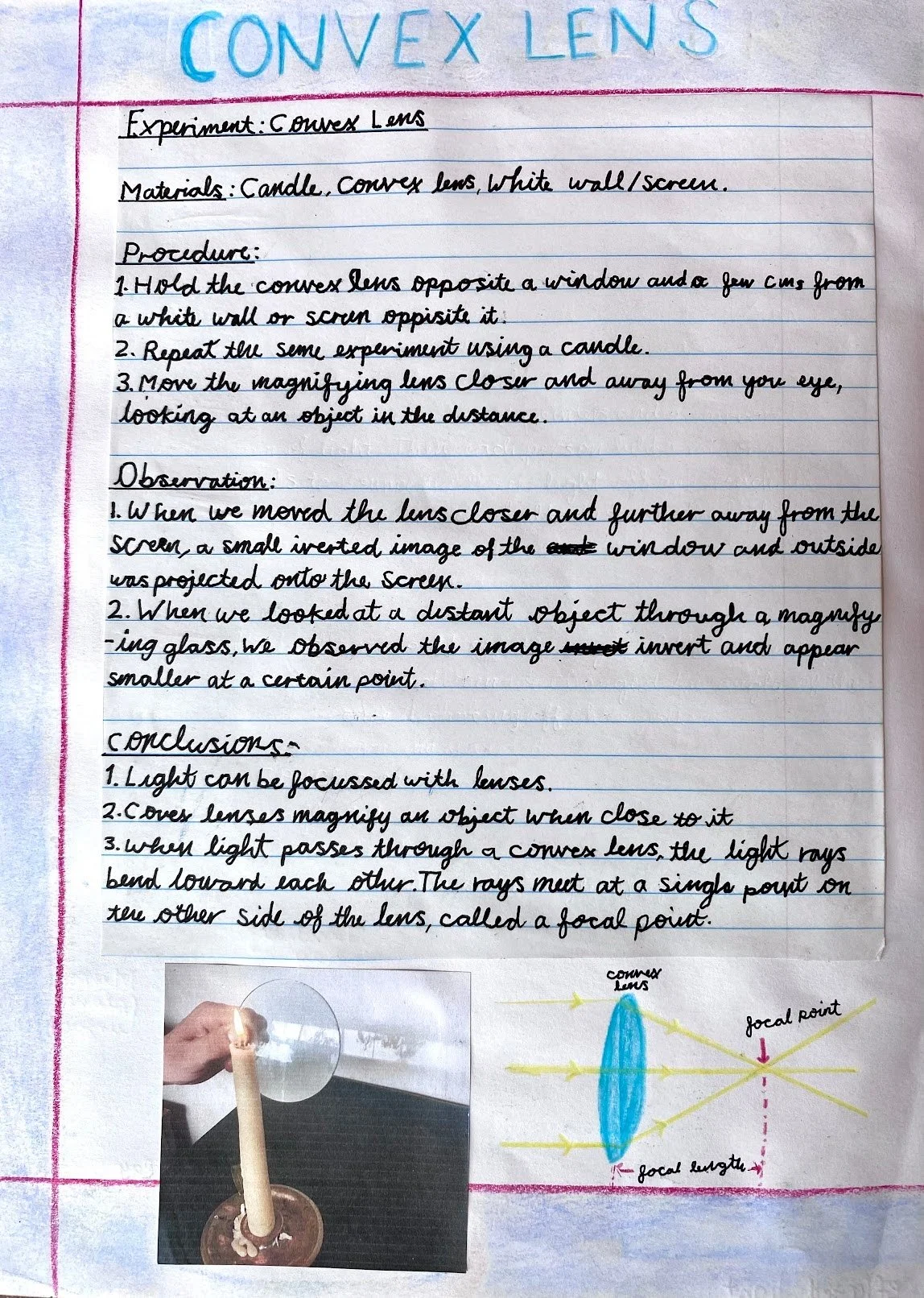
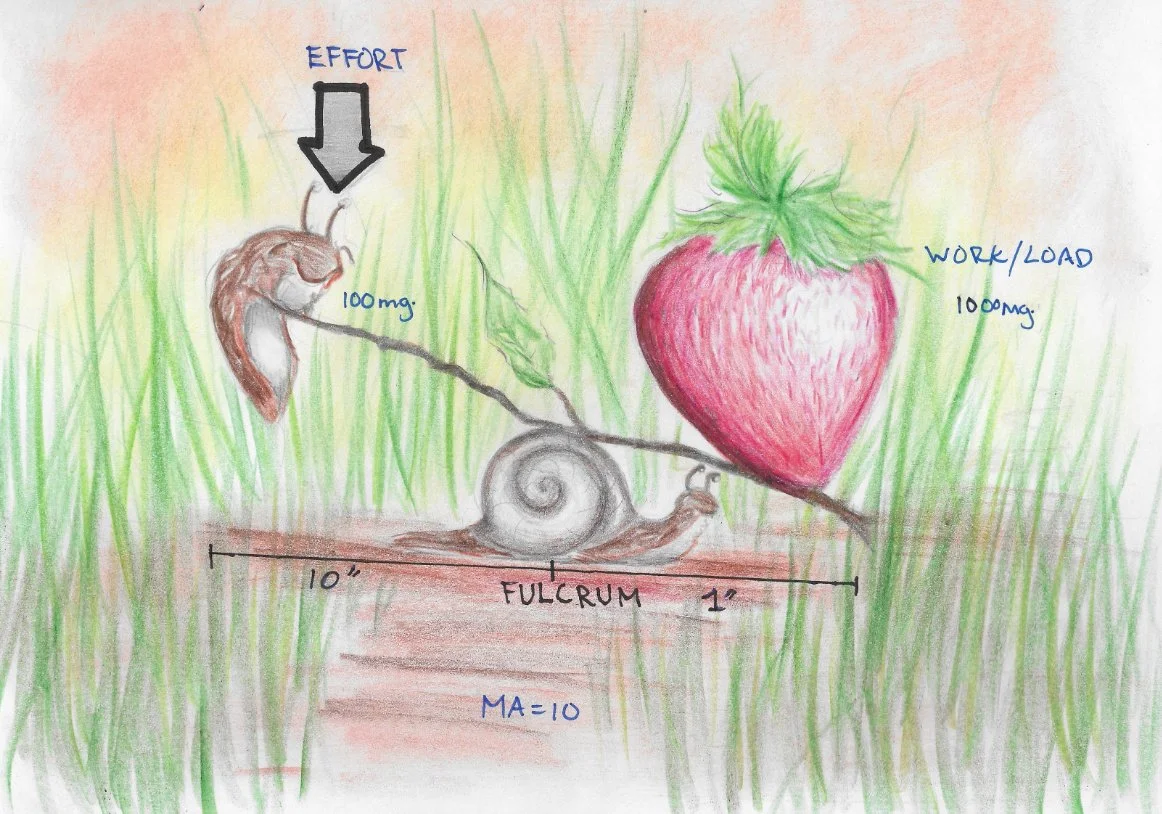
An example of a student lab write-up from our seventh grade Chemistry class.
…one of them being the study of science- physics, geology, astronomy, and more as the grades progress!
In 6th grade Physics specifically (and in Chemistry blocks later in 7th and 8th grade), the educator will introduce the practice of creating formal lab write-ups, which illustrate the materials, methods, observations, and conclusions of a single science experiment. After an experiment has been fully demonstrated and discussed, the lab write-up is the final step in reviewing what has been learned and discovered.
(Our science courses for Physics (grades 6-8) and Chemistry (grades 7-8) include templates and helpful guides to get started with science write-ups in your homeschooling curriculum!)
These formal lab write-ups are where science and language arts work closely together!
Though on its surface this sounds simple and straightforward, science lab write-ups pose a whole new challenge for the budding scientist, and are a tool used by the educator to build observational and objective communication skills. These science write-ups provide an opportunity to practice writing what we see, hear, smell, feel and taste, all through using clear, accurate and objectively written descriptions.
Removing opinions, and describing the facts!
With this practice, the educator poses such questions as:
“What do we need to complete this experiment?”
“What is the method used, or, how does one actually do this experiment from start to finish?”
“What happens during this experiment? What did you see throughout the experiment?”
“What conclusions can be reached from your observations?”
Writing all of this objectively is actually much harder than it seems!
When I first introduced science write ups to my 6th grade class, I challenged my class to write a simple guide for me: “How to Make a Peanut Butter and Jelly Sandwich”- from start to finish.

Students learn the principles of thermodynamics through our 6th grade physics curriculum- learning by doing! Find the science write-up for this experiment in the next image.
What would I need to make a PB & J? How should I do it? What challenges should I be aware of, or what techniques worked best? What should I expect to end up with after applying the method?
Then, after writing their PB & J write-ups, it was my job to make these sandwiches in front of the class, but I could only do what the science write-up said- literally! No guesses, inferences, or assumptions on my part- I had to follow the instructions exactly as written.
As you can imagine, this was a very entertaining lesson- and an effective one! Students unknowingly left out all kinds of ingredients, tools, and steps (resulting in very silly sandwiches!)
All demonstrating that when we write a lab write-up, we have to be specific, methodical, and objective.
Writing our observations proved to be a challenge as well, which we discussed with the PB & J demonstration. To practice communicating observations, I asked the students to describe a PB & J sandwich. What does it look, smell, taste, or feel like?
Many students wrote that a sandwich tastes “Good!” or “The bread was especially tasty.” Almost all wrote their opinions about the sandwich. If we imagine the reader had never seen a PB & J sandwich, words like “good” or “tasty” actually do not describe anything other than one’s preferences and opinions; they don’t provide a detailed depiction of the sandwich itself!
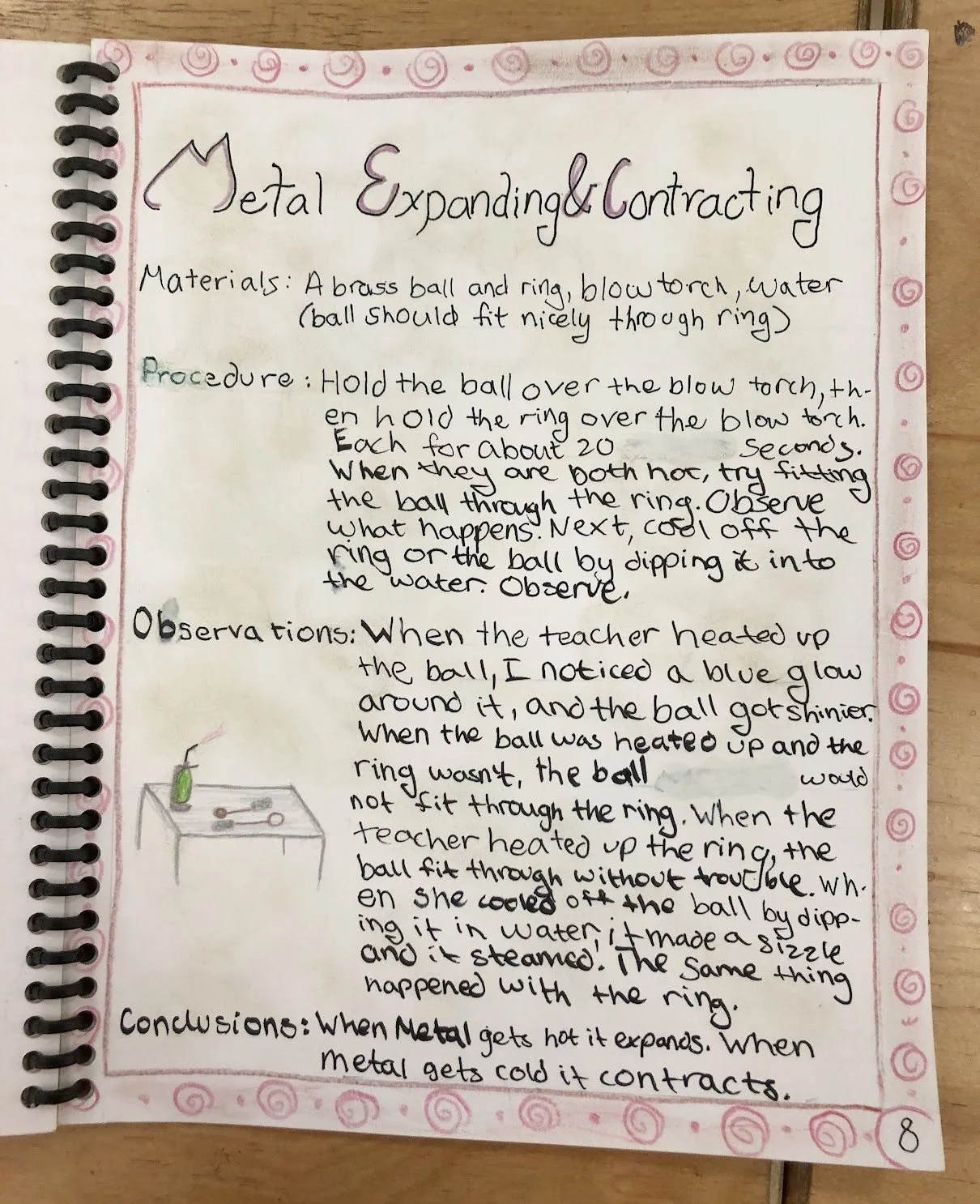
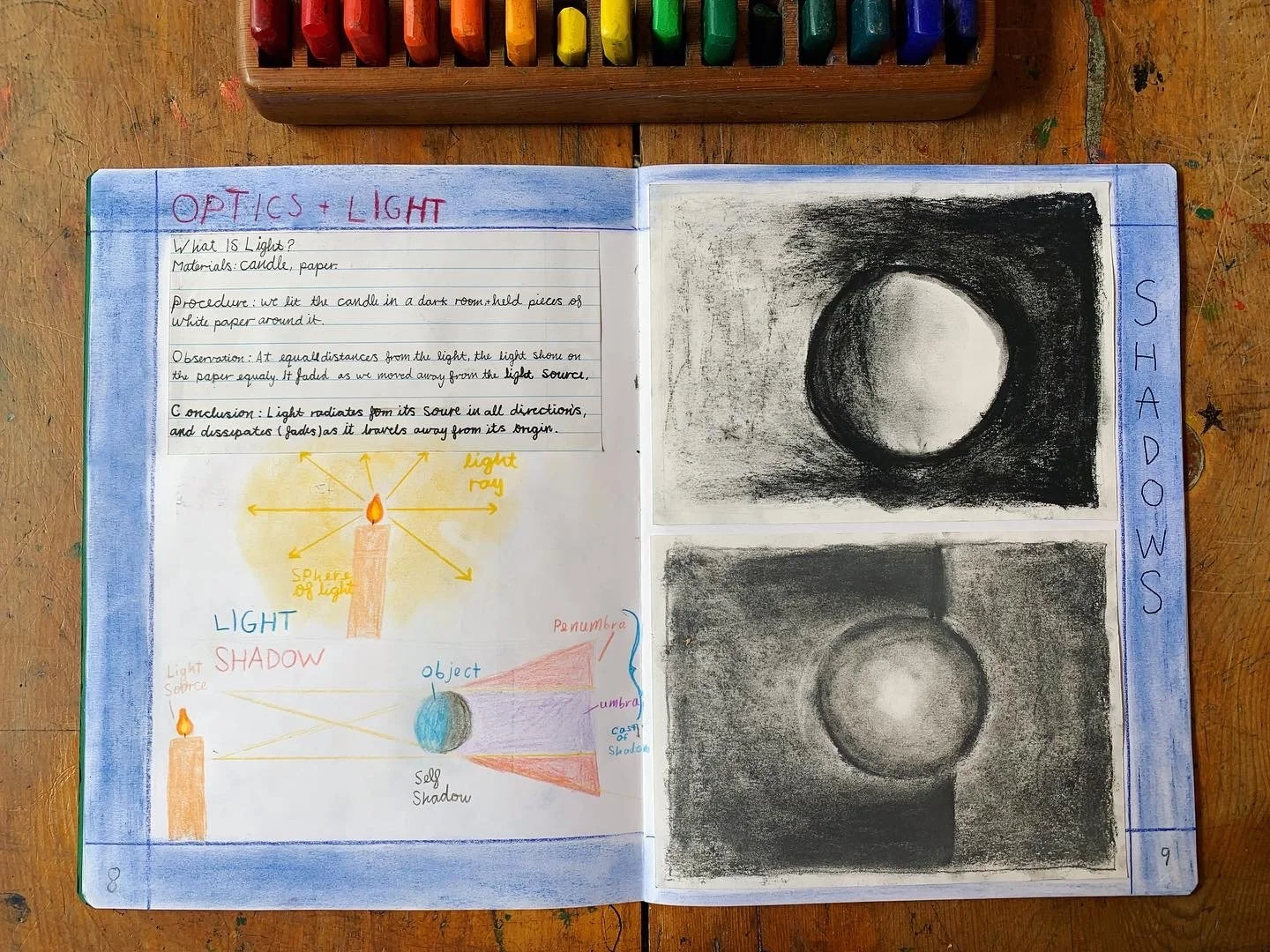
After working through an experiment and discussing the results, it’s time to bring it all together in a science write-up. This is an example of student work after observing how metal expands and contracts; the laws of thermodynamics in action!
Instead, we discussed using objective and clear descriptive word choices and sentences.
“The bread is soft and white, while the jelly is somewhat sticky and tastes sweet.”
“The peanut butter is smooth to spread and has a very nutty taste.”
Already, with these simple adjustments in our language, a reader will be able to get a much better idea of what the student actually observed with their senses.
This exercise translated well over to our science experiments and subsequent formal lab write-ups. For example, when the students studied acoustics, we found all kinds of descriptive words to use for observations: “hollow,” “tinny,” “ringing,” “grating,” “soft,” “muffled,”- the list goes on.
Here is where science and language arts become one!
Formal lab write-ups provide a way to meld together science and language. The process pushes students to remove their opinions, and focus on what their senses experience in an objective way- perfect for the sixth grader who is beginning their journey into the often unsettled and murky experience of puberty! While the experiments in a science block are of course important, the formal lab write-up provides a structure for the student to process their observations, grow in their writing skills, and find the truth outside opinion.
Looking to add Waldorf-inspired science to your homeschool classroom?

About the Authors
Robyn Beaufoy is Waldorfish’s CEO, and also a course instructor for Simple Season (coming soon!), Waldorf Art for Beginners, and Weekly Art Foundations. You’ll find her intuitive touches and influences throughout everything Waldorfish offers. Robyn has been in the world of education for over 25 years, with an MA in Education and a certification in Waldorf teaching - she also homeschooled both of her children for some of that time. In 2012 Robyn co-founded Waldorfish.com, creating it with the vision of making Waldorf inspired-art and pedagogy more accessible, joyful, and doable for homeschoolers all over the world.
Caitlin Amajor is Waldorfish’s course instructor for Geometry grades 5 & 6, and Botany, as well as our Administrative Assistant. From a young age, Caitlin has been immersed in Waldorf education, attending a Waldorf school from K-8. After receiving a BA in History, Caitlin gained her certification in Waldorf teaching, and spent seven years as a Waldorf class teacher in the upper grades. With a special fondness for watercolor painting and geometry, Caitlin loves bringing Waldorf education to her students all over the world, and seeing their own individuality and style bloom from the curriculum!

Upper Grades Curriculum Resources from Waldorfish
Let’s dive into the Waldorf upper grades curriculum resources available here at Waldorfish.com!
Through art, science, and geometry, Waldorf upper grades curriculum (for grades 5-8) meets the growing student right where they are in their transformation from child to teen.
From online homeschooling courses to pedagogical resources, Waldorfish can help you gain confidence in teaching your middle school student, and enjoying the process along the way!
Art Resources
Art is an integral part of Waldorf upper grades curriculum, and is woven into nearly every subject of study. New techniques and mediums are introduced throughout grades 5-8, all designed to enrich the student’s connection to artistic skills, build their understanding of the natural world, and find their own style and method of expression. Check out all of our art resources, and explore the courses we offer that will support you through your upper grades art journey!
On the blog…

An example of beautiful chalk art.
Explore why Waldorf education utilizes chalk drawings as a way to enliven the classroom and the curriculum.

A perspective drawing showing depth and distance.
Perspective Drawing- Art in the Middle Grades
Why are perspective drawing techniques introduced in seventh grade? It’s all about point of view!

Gray scale, lights and darks- it all comes to life through charcoal drawing!
Black and White Drawing- Art in the Middle Grades
Discover why drawing with charcoal perfectly meets the developmental experience of the growing middle school student.

Chalk art weaving together geometry and perspective drawing.
Waldorf Art: How is Art Incorporated into the Waldorf Middle Grades 5-8?
From pencil drawing, to clay work, to watercolor painting, we’ve got your guide to all things Waldorf upper grades art.
Full support from our courses…

Colorful chalk art brings a landscape to life!
Make Waldorf art lessons a part of your weekly rhythm! With 33+ lessons, including watercolor painting, crayon drawing, chalk, and more- we’ve got everything ready to get you started!
*Enrollment opens August ‘24.

Watercolor painting enlivens the study of ancient civilizations.
Join us in the next step of your artistic journey, with new skills including clay work, perspective drawing, and grade-specific art lessons for grades 4-8!
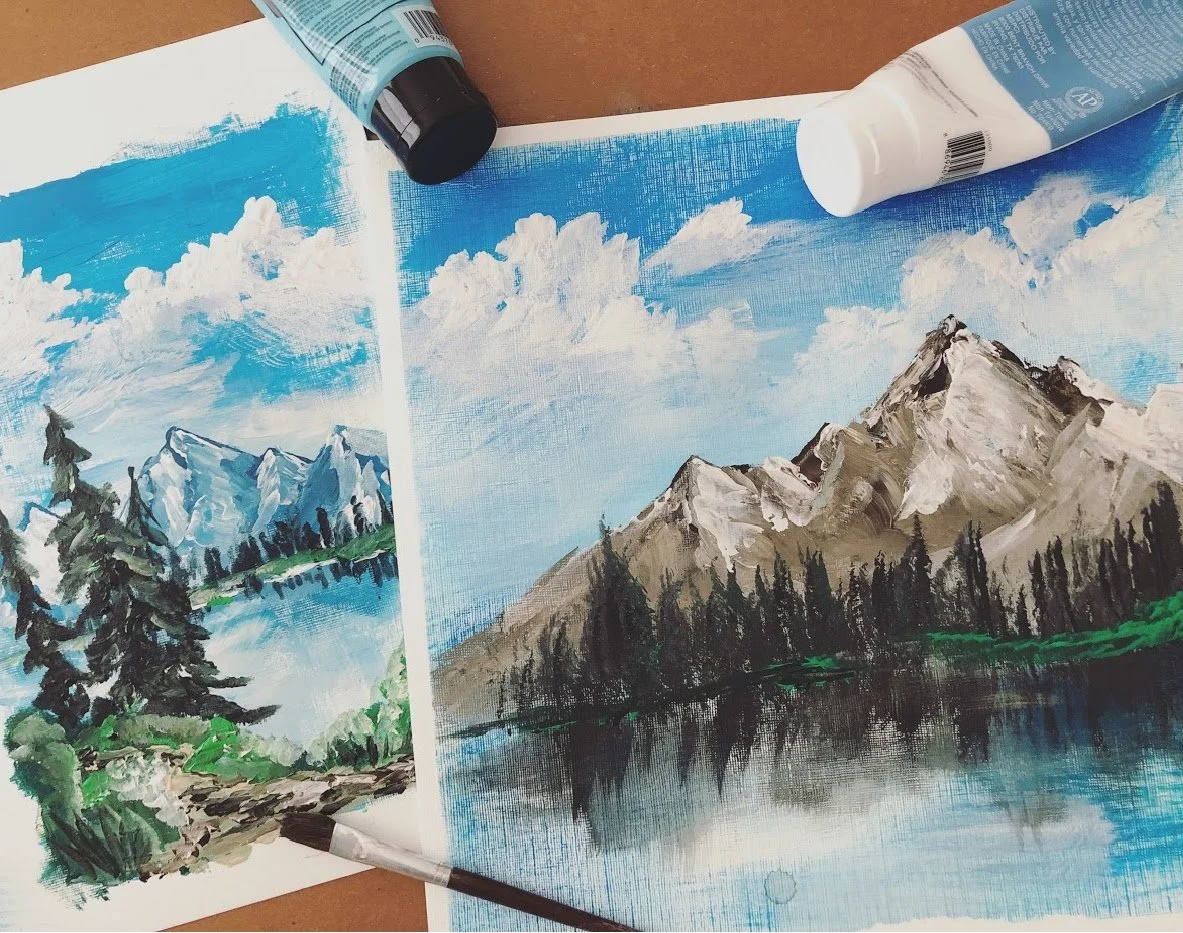
Beautiful landscapes in acrylic paint.
For the high school student or experience artist, this course includes a deeper dive into techniques, and new experience with acrylic painting, ink work, and more!
Science Resources
In Waldorf education, science becomes a focused area of study in the middle grades. The students are ready to explore the world in a whole new way, and begin to dive into the subjects of Botany, Physics and Chemistry, Geology (and more!). With all this new and exciting curriculum, the educator also needs to make a shift in their teaching approach to foster the growth and thinking skills of their students. We’ve got everything you need to get started in your journey through upper grades science curriculum: from free resources, to paid courses, we’ve got you!
On the blog…
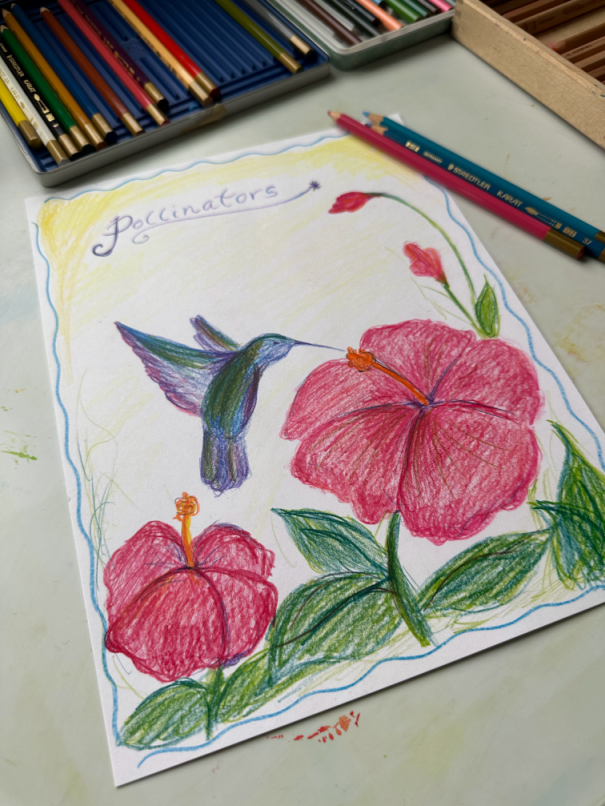
A Botany main lesson book page.
Is Waldorf Botany Academic as Well as Artistic?
Can science and art work hand in hand? In Waldorf Botany curriculum, the two meld together to create a enriching curriculum for the growing child.

Chalk art from a Waldorf Botany block.
Waldorf Fifth Grade Botany: Growing with the Child
Enjoy an in-depth look at how Waldorf Botany curriculum meets the growing child through storytelling, art, hands-on demonstrations, and more!

There are many ways to make Waldorf Botany curriculum your own!
Waldorf Botany: Adapting the Curriculum to Your Region
Explore nine doable and meaningful ways to adapt the Botany curriculum to your region.
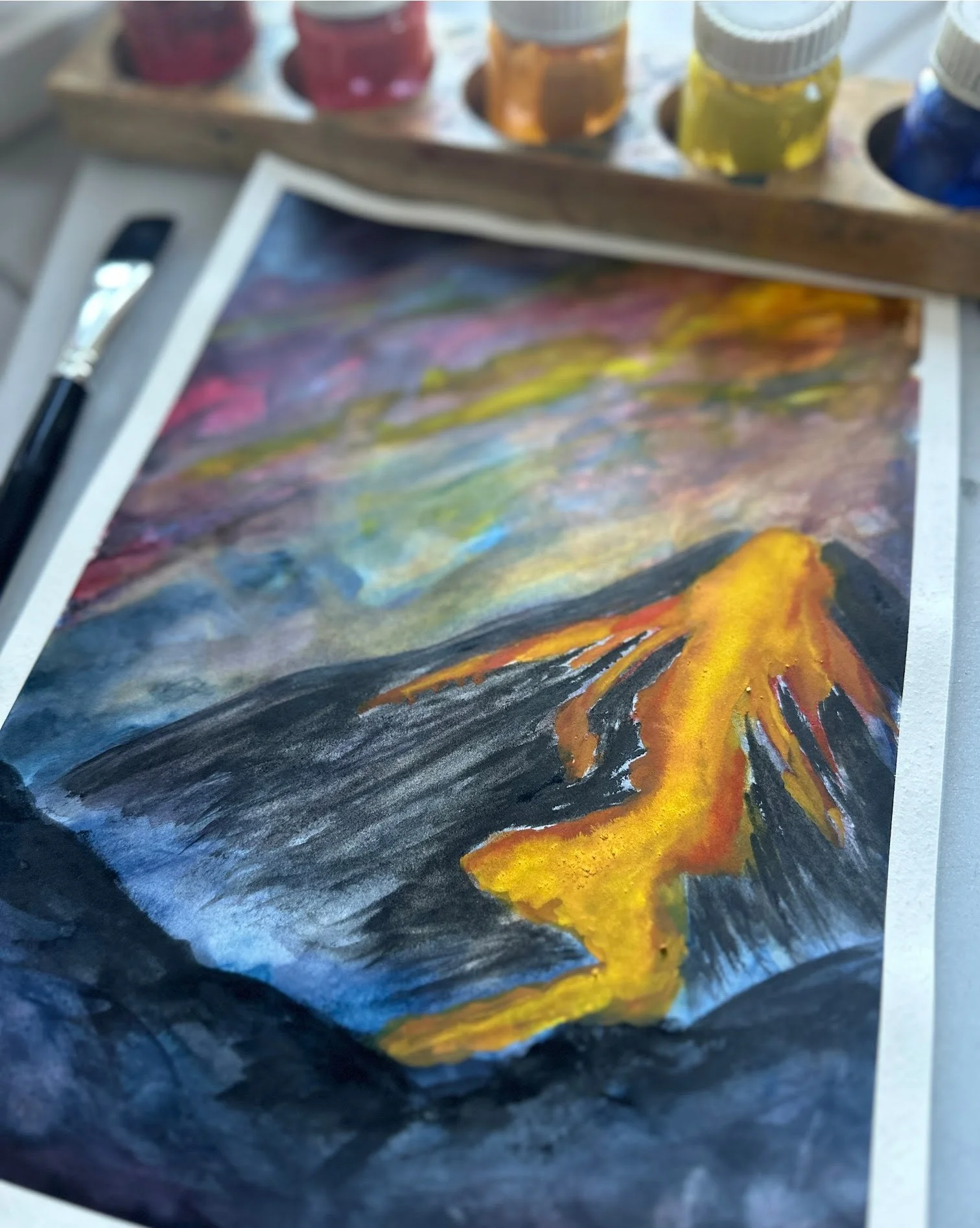
Watercolor painting is a wonderful medium to weave into Geology curriculum.
The Waldorf Geology Block: Curriculum for the Transforming Child
How does geology curriculum meet the changing sixth grader? From a deep exploration of the earth’s structure, to enriching artistic and hands-on experiences, the study of the earth perfectly meets the transforming child!

An example main lesson book page from a seventh grade science block.
Science in the Waldorf Middle School: Starting Something New
With the introduction of formal science curriculum in the Waldorf middle grades, the methods of learning and teaching change for the students and educators alike!

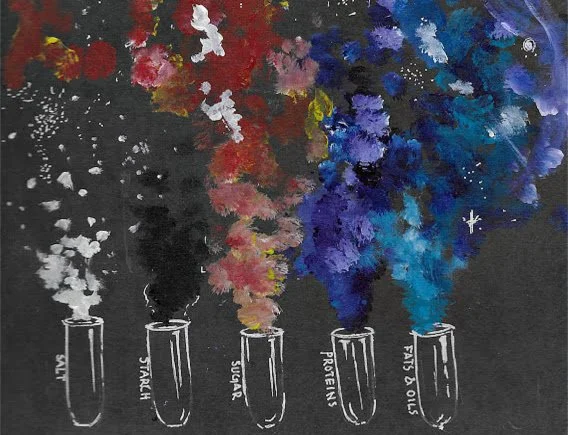
Learning by doing (and tasting!) is a fun and effective way to explore organic chemistry.
Waldorf 8th Grade Organic Chemistry: In the Kitchen!
In Waldorf education, the study of organic chemistry begins in the kitchen! Discover how cooking bridges the gap between abstract learning to concrete examples, and how doing inspires the growing eighth grader.
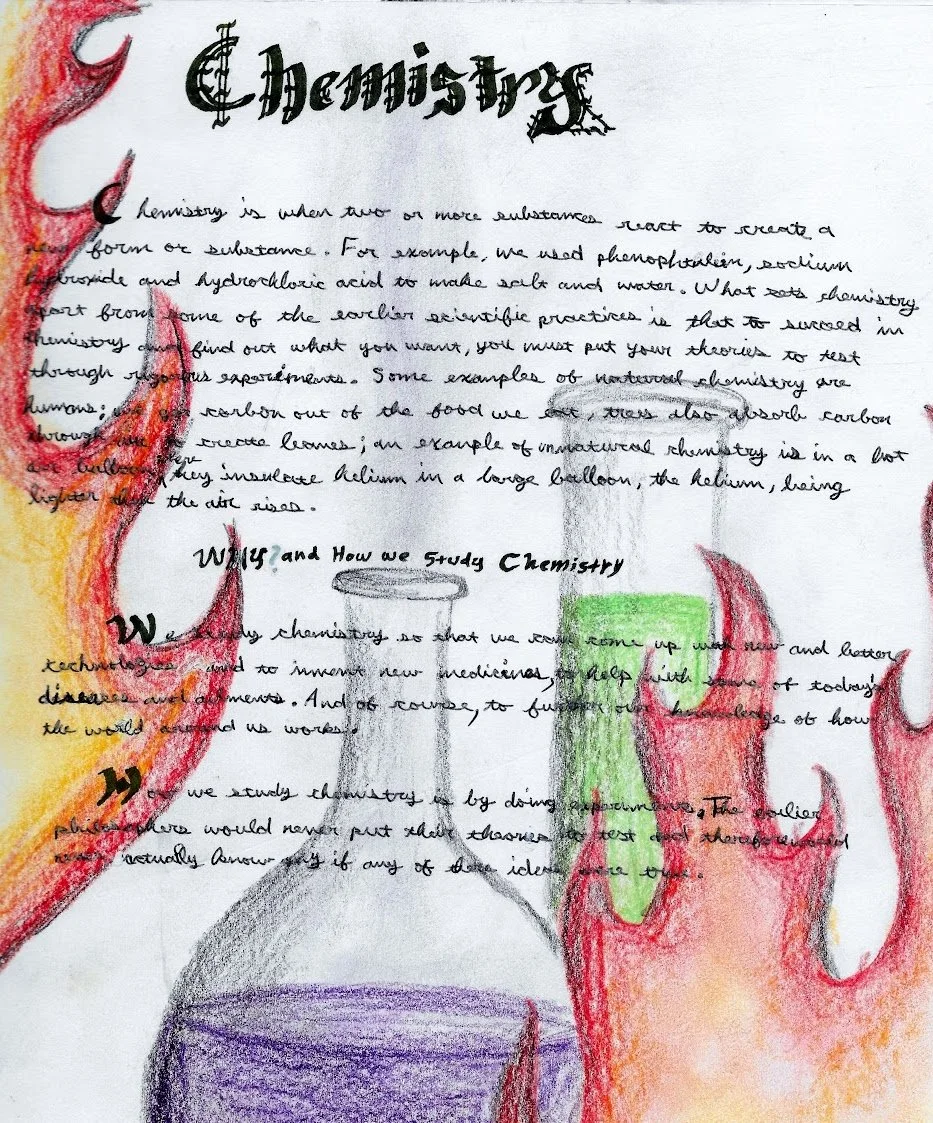
Art and science weave together throughout Waldorf middle school curriculum. .
Waldorf Science: What is a Phenomenological Approach to Teaching?
Enjoy our in-depth guide to a phenomenological approach to teaching science, which fosters a sense wonder, observation, and critical thinking in the growing child.
Waldorf science curriculum provides a special experience for the educator as well as the student.
3 Tips: Teaching Waldorf Science Curriculum
How can an educator enliven their approach to teaching Waldorf science curriculum, while working through a phenomenological lens? We’ve got three tips for you.
Full support from our courses…

Chalk art from our Botany course.
Our Botany course provides over 75 videos of instruction, main lesson book page tutorials, hands-on demonstrations, original stories, art lessons, and so much more!

Our science courses cover the why’s and how’s of teaching from start to finish.
Our Physics courses (grades 6-8) and Chemistry courses (grades 7 and 8) provide enough material for your entire school year, as well as detailed supply lists, step-by-step demonstrations, and much more.

Explore the earth through art and science!
Designed for the sixth grader, our Geology course provides everything you need for a deep-dive into the study of the Earth including over 75 lesson videos, main lesson book page tutorials, a fully-designed research project, and so much more!
Geometry Resources
An exciting aspect of the curriculum begins in the Waldorf middle grades: Geometry! Weaving together math and art, geometry begins as a freehand experience in fifth grade, and evolves in its complexity all the way through eighth grade and beyond. Explore our resources and courses that provide everything you need to bring artistic geometry into your student’s middle school experience- enjoy!
On the blog…
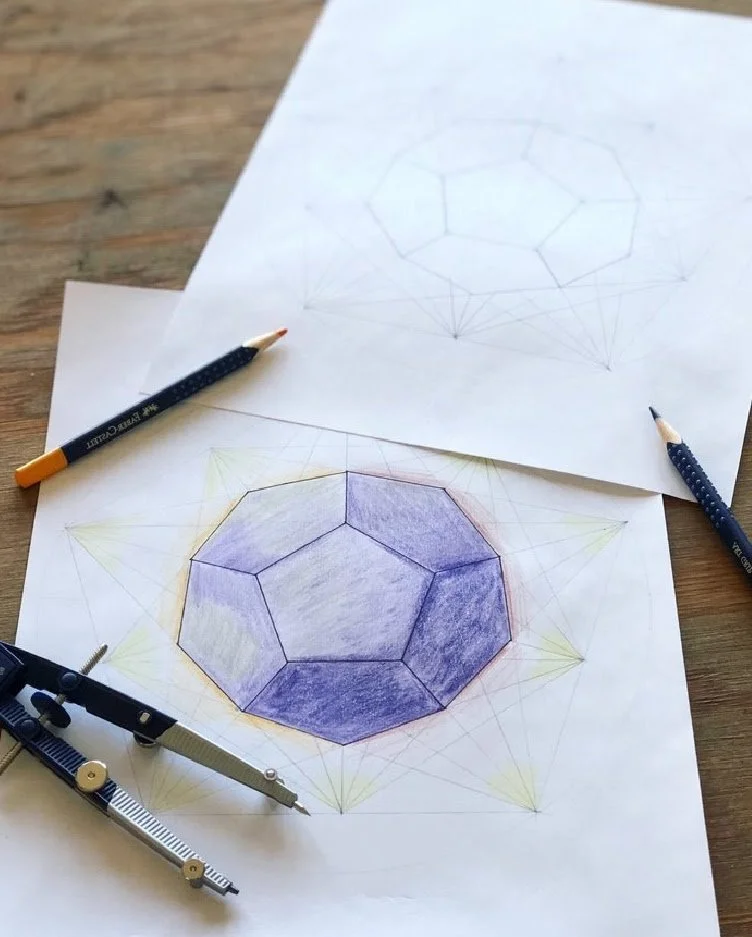
A form from eighth grade geometry curriculum.
Waldorf Geometry: Math in the Middle Grades
Explore how Waldorf geometry curriculum evolves with the growing child from fifth through eighth grade. Starting from freehand experiences and ending with complex, abstract study, geometry deeply enlivens the middle schooler’s experience.
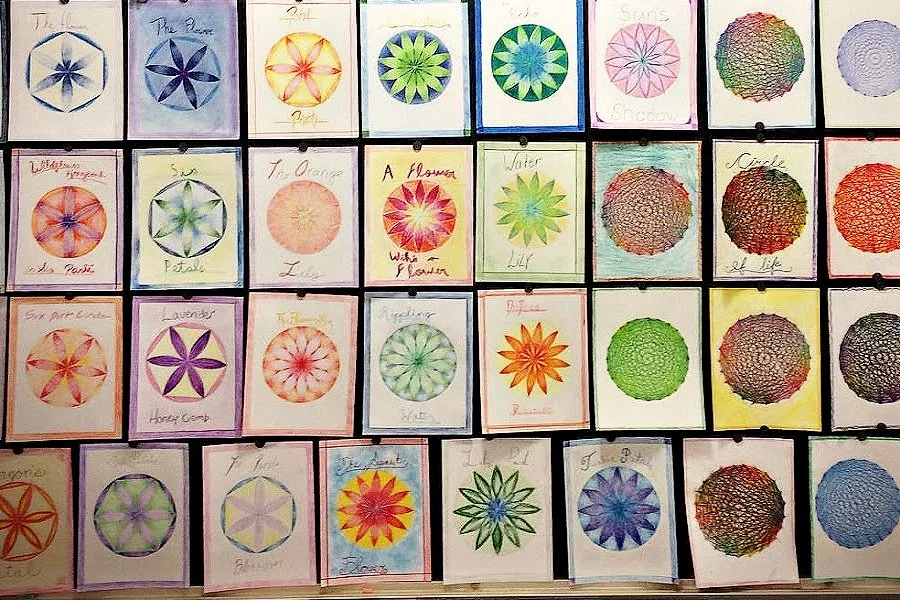
Self-expression, color, and beauty is found all through sixth grade geometry curriculum.
Waldorf Geometry: How it Meets the Sixth Grader
In sixth grade, Waldorf geometry curriculum meets the growing child in their quest to understand cause and effect, discover their unique artistic style, and find order in the natural world.

A freehand geometry form from fifth grade geometry.
Waldorf Geometry: How Can I Incorporate Art into a Traditional Geometry Curriculum?
In Waldorf geometry curriculum, mathematics and art weave together to create a rich academic and artistic experience for the middle school student.
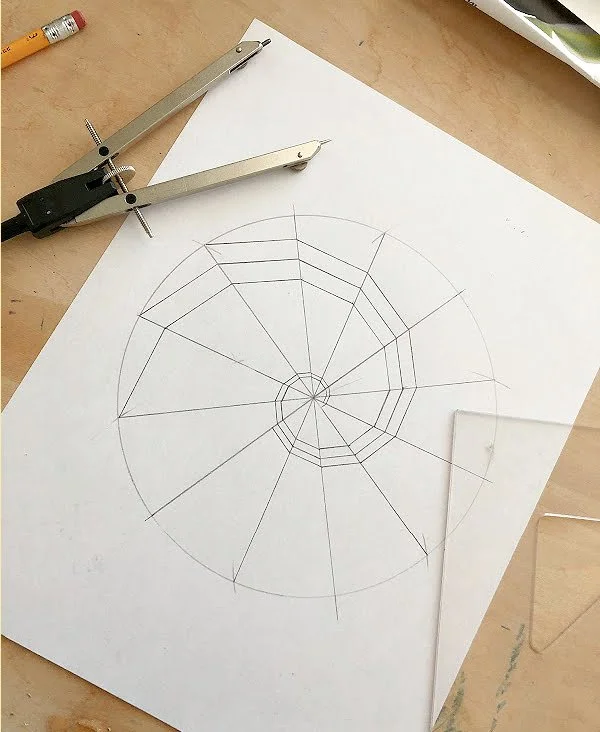
Simple geometric tools creating something beautiful!
Waldorf Geometry: Why Do We Wait Until Sixth Grade to Introduce Tools?
A compass and straightedge are introduced to Waldorf geometry class in sixth grade. Why? The student is now ready to deepen their understanding of the subject through the use of these simple and ancient tools!
Full support from our courses…

A form from our sixth grade geometry course.
Where art meets math! Our geometry courses for grades 5-8 provide everything you need for a full year’s curriculum! Each grade’s course provides step-by-step demonstrations, instructor support, lifetime access, and much more.
We’ve shared a lot, so feel free to send us a message here- we’re happy to answer any questions and help find the best course for your family!

About the Authors
Robyn Beaufoy is Waldorfish’s CEO, and a course instructor for two of our courses - Waldorf Art for Beginners and Weekly Art Foundations. You’ll find her intuitive touches and influences throughout everything Waldorfish offers! Robyn has been in the world of education for almost 30 years, with an MA in Education and a certification in Waldorf teaching - she also homeschooled both of her children. In 2012 Robyn co-founded Waldorfish.com, creating it with the vision of making Waldorf inspired-art and pedagogy more accessible, joyful, and doable to homeschoolers all over the world.
Caitlin Amajor is Waldorfish’s course instructor for Geometry grades 5 & 6, and Botany, as well as our Administrative Assistant. From a young age, Caitlin has been immersed in Waldorf education, attending a Waldorf school from K-8. After receiving a BA in History, Caitlin gained her certification in Waldorf teaching, and spent seven years as a Waldorf class teacher in the upper grades. With a special fondness for watercolor painting and geometry, Caitlin loves bringing Waldorf education to her students all over the world, and seeing their own individuality and style bloom from the curriculum!

The Waldorf Geology Block: Curriculum for the Transforming Child
An exciting aspect of the sixth grade Waldorf curriculum is a new area of study: Geology!
Of course, students have been studying the earth since the beginning of their academic journeys: agriculture in third grade, gardening class, and more!
This block is sometimes given the title “Mineralogy,” which we are intentionally choosing not to use here. Mineralogy is it’s own vast subject under the umbrella of Geology - one that requires an understanding of general geologic concepts. In sixth grade, the curriculum touches upon the formation of different minerals, but the goal is to really live into Geology and all the basic concepts that lead into more complex studies in the future.

Chalk is a wonderful medium to use in a geology block- it provides color, texture, and dimension!
The curriculum of the whole sixth grade year marks an important shift in the approach to learning, and it’s the perfect time to dive into geology, which means “the study of the earth.”
The sixth grader is beginning the very powerful journey of puberty; a deeply inward experience where their emotions, physical body, relationships, and worldview, all undergo a transformation. Some of these changes are quick and visible, others can be slow burning and invisible to those around them. Emotions can be hot and fiery one day - cold and aloof the next! While some days a sixth grade child may feel like the world is vast, open, and full of potential, just as quickly, it can feel small, closed, and pressure-filled. Physically, the student might feel light, airy, and free… and in the next moment they can just as easily feel heavy, awkward, and slow moving.

Charcoal is a new art medium to the sixth grade curriculum, and can be used throughout the school year- even in geology!
The growing student is experiencing polarities in a very real way- enter in the study of Geology as the perfect mirror!The geology curriculum is designed to meet students just where they are on their journey of conflicting feelings, emotions, and experiences.
Geology is full of great clashes and yet also contains seemingly insignificant subtleties. A volcano can erupt in a dramatic blast of lava and smoke, while sedimentary rock forms slowly under consistent, unseen pressure over millions of years. A mountain slowly grows taller through the process of uplift, or a new underwater trench may suddenly open from a powerful earthquake. Geology is ever moving, ever changing, and through processes that slowly unfold over time, or suddenly flare up without warning. On a deeply personal, soul level, the student connects with the earth and finds a sense of place and comfort- while they undergo great transformation, so too has the earth on which they stand!
Geology challenges the student to think big and small at the same time. They are looking at the earth in a new, far more abstract way than ever before.
Now the educator asks the student to use different thinking skills. What is the earth really made of, down to its core? What does the presence of exposed granite tell us about what may have existed here millions of years ago? What could an earthquake in the present do to the landscape of the future? Let’s think beyond just what we can see and what surrounds us- it’s time to explore the past, the present, and the future!

This is an example of a wet-on-dry painting: watercolor paints used on dry paper.
As well, the study of geology provides a deeply meaningful way to build one’s connection with the four elements and with nature. The experience of being a teenager and puberty can be one that brings forth real loneliness and feelings of separateness. A growing child may be unsure of where they belong, who they are connected to, and where they fit in socially and emotionally. In geology, the educator can foster a sense of belonging. The four elements, earth, water, air and fire, are found within every human being just as they are in geology.
The sixth grader is in a very important and often poignant point in their development, where so much is happening for them on and beneath the surface. The geology curriculum is designed to meet them right where they are. Just like the earth, the student is in a continuous and often intense point of transformation – and whether these changes are dramatic or subtle, they matter!
As with all things in Waldorf education, diving into a curriculum that truly meets the child is a deeply meaningful way to build the students’ knowledge, connection to nature, and relationships with themselves and others.






About the Authors
Robyn Beaufoy is Waldorfish’s CEO, and also a course instructor for Simple Season (coming soon!), Waldorf Art for Beginners, and Weekly Art Foundations. You’ll find her intuitive touches and influences throughout everything Waldorfish offers. Robyn has been in the world of education for over 25 years, with an MA in Education and a certification in Waldorf teaching - she also homeschooled both of her children for some of that time. In 2012 Robyn co-founded Waldorfish.com, creating it with the vision of making Waldorf inspired-art and pedagogy more accessible, joyful, and doable for homeschoolers all over the world.
Caitlin Amajor is Waldorfish’s course instructor for Geometry grades 5 & 6, and Botany, as well as our Administrative Assistant. From a young age, Caitlin has been immersed in Waldorf education, attending a Waldorf school from K-8. After receiving a BA in History, Caitlin gained her certification in Waldorf teaching, and spent seven years as a Waldorf class teacher in the upper grades. With a special fondness for watercolor painting and geometry, Caitlin loves bringing Waldorf education to her students all over the world, and seeing their own individuality and style bloom from the curriculum!

Waldorf Form Drawing: How the Forms Progress Through Grades 1-4
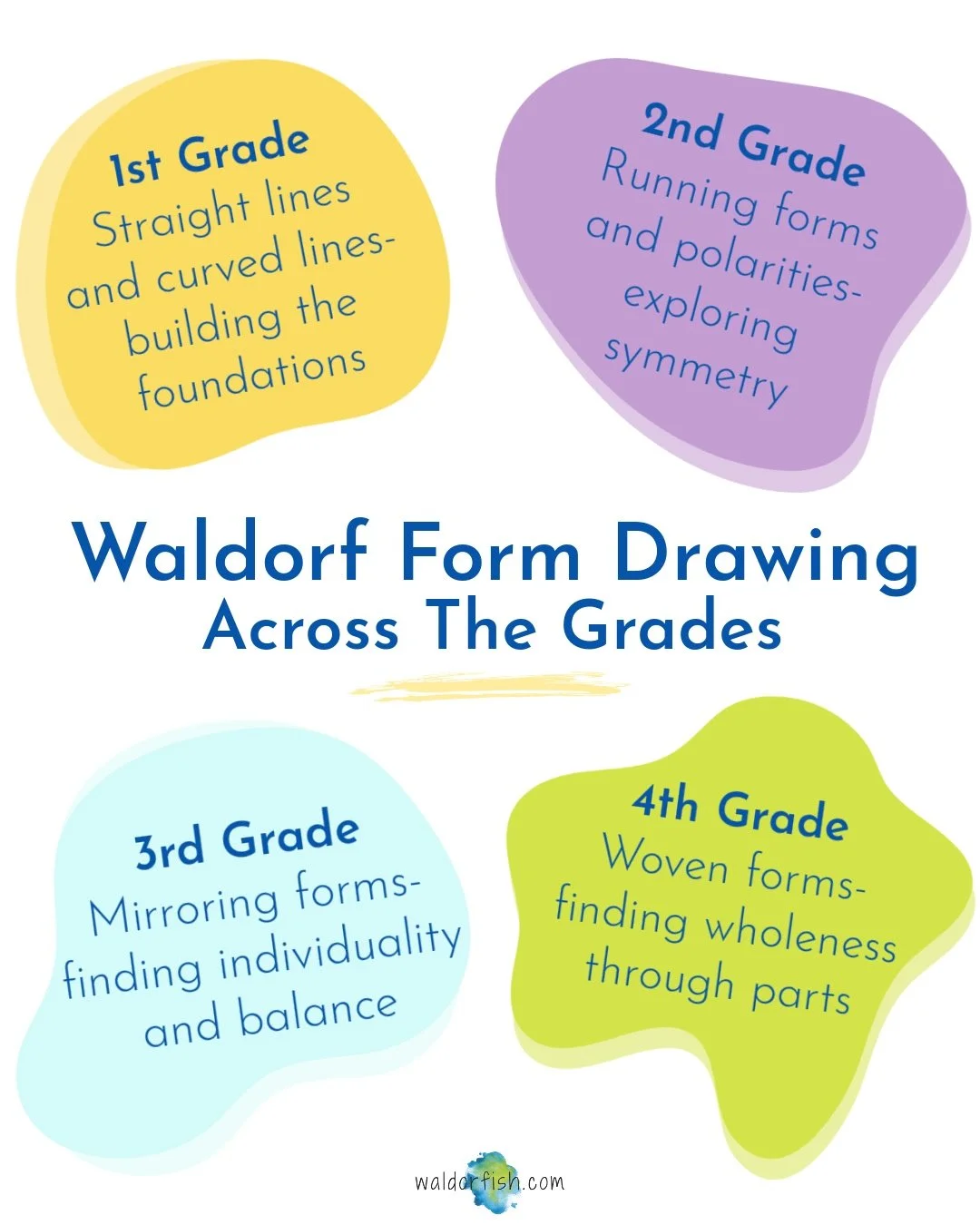
Waldorf form drawing curriculum progresses across the grades, and evolves to meet the growing child in their development.
So, how do the forms change from first through fourth grade?
In first grade, the curriculum starts at the beginning! First graders begin their journey by exploring the most basic, yet universal forms in our world: straight lines and curved lines. From drawing curves in the playground sandbox with their feet, to drawing straight lines on the chalkboard with colorful chalk, the first grader begins to explore the foundations of their surroundings through form drawing.

With form drawing, practice is far more important than the result!
The second grader is entering a new realm of development, and is ready to explore polarities: darkness and light, the heavens and earth, good and evil. They are beginning to notice balance, or lack thereof, and are growing in their ability to draw and create. The form drawing curriculum includes the practice of drawing running forms, such as a wave drawn over and over again, as the child strives to keep the shape symmetrical, the same size, and balanced. These forms themselves reflect the polarities of shapes as well; strong, straight lines, or curved, circular forms, the second grader’s form drawing curriculum emphasizes finding balance and symmetry.
In Waldorf form drawing, the forms are designed to meet the inner needs and experiences of the growing child!
Third grade marks a great change in the child, as they are beginning to see themselves as separate from the group; they are finding their individuality, which can be an exciting and isolating experience all at once! Hence, the third grade form drawing curriculum works with mirror forms. These are more complex, and require more abstract thought than ever before. At this stage, it isn’t about copying the form, but instead, transforming it to a whole different point of view. Through this process, the third grader is encouraged to appreciate the form in its original state, and then make it their own through the process of form drawing.
Fourth grade is the final year of form drawing curriculum before students formally enter the world of geometry. A fourth grader is ready to conquer more complicated and abstract subjects; they are ready to see things not just as a “whole” but also for their individual “parts.” This year marks the culmination of all the skills they have cultivated thus far in form drawing- symmetry, mirroring, running forms, the use of straight and curved lines to create a whole form.
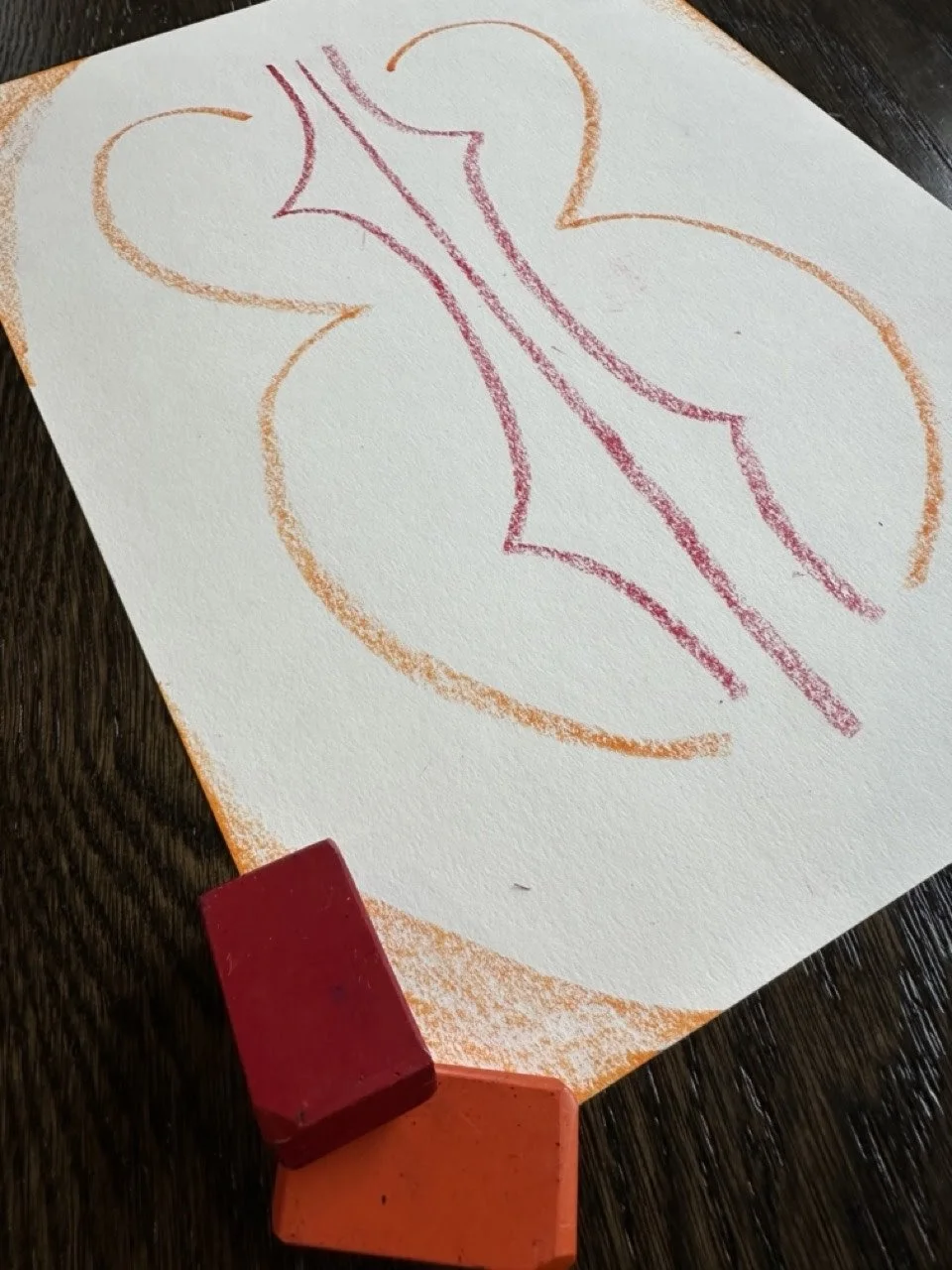
An example of a mirror form- the center line serves as the “mirror”!
As well, exploring fractions is a focus of the fourth grade math curriculum and Norse myths are told throughout much of the school year. With that, the form drawing curriculum becomes more intricate and challenging. Fourth graders are asked to apply all their skills through drawing elaborate forms such as knots and woven forms, where the lines criss-cross, go under and over each other, all while keeping the balance and symmetry intact. Through this process, the form is a whole with its own parts; the fourth grader is able to see and appreciate the form in all its beauty, simplicity, and complexity.
Waldorf form drawing curriculum evolves with a child's growth from first to fourth grade. Starting with basic lines, students progress through exploring polarities, mirror forms, and finally, complex woven forms in fourth grade.
This journey not only hones artistic skills but fosters a deep appreciation for balance, symmetry, and individual creativity.

About the Authors
Robyn Beaufoy is Waldorfish’s CEO, and also a course instructor for Simple Season, Waldorf Art for Beginners, and Weekly Art Foundations. You’ll find her intuitive touches and influences throughout everything Waldorfish offers. Robyn has been in the world of education for over 25 years, with an MA in Education and a certification in Waldorf teaching - she also homeschooled both of her children for some of that time. In 2012 Robyn co-founded Waldorfish.com, creating it with the vision of making Waldorf inspired-art and pedagogy more accessible, joyful, and doable for homeschoolers all over the world.
Caitlin Amajor is Waldorfish’s course instructor for Geometry grades 5 & 6, and Botany, as well as our Administrative Assistant. From a young age, Caitlin has been immersed in Waldorf education, attending a Waldorf school from K-8. After receiving a BA in History, Caitlin gained her certification in Waldorf teaching, and spent seven years as a Waldorf class teacher in the upper grades. With a special fondness for watercolor painting and geometry, Caitlin loves bringing Waldorf education to her students all over the world, and seeing their own individuality and style bloom from the curriculum!
Looking for something?
Welcome to Waldorfish! We started this adventure in 2012 out of a desire to make Waldorf training more accessible to class teachers in remote locations and to homeschooling families everywhere! Read more, click here.

WE WON! Our Weekly Art courses were voted “best interactive art program.” Learn more about the award, here.

Click here for a full list of schools we work with.
A few of our most popular blog posts:

Who are our courses for?

Starting Waldorf First Grade
4 Things to Know Before Planning Your Homeschool Year

In Praise of Balance: A Healthy Festival Life
Science in Waldorf Middle School: Starting Something New!