
Waldorfish Blog

5 Tips for Studying the Lower Plants in Waldorf Fifth Grade Botany
Why begin with the “lower plants” in Waldorf Botany curriculum? In fifth grade Botany, we often begin with a full block that explores the “lower plants” or “simple plants”- algae, fungi, lichen, moss, and ferns.
Curious to learn more about why botany is usually split into two blocks? Click here!

Hands-on experience is the best way to connect with the lower plant world!
While we know that some of these lower plants are not all truly plants, each of these organisms have a magical, mystical sense to them in their structures, purpose, and appearance. Exploring them opens up the world of botany for the student in a gentle way; perfect for the young fifth grader who is just beginning their developmental journey towards puberty and middle school.
How can you bring hands-on experiences of the lower plants into your botany curriculum?
We’ve got five ideas to get you started!
Algae
Plan a time to be out in nature, and see if you kind find algae in a nearby river, lake, or beach. Note its color, movement, texture, and location. Not near a body of water? Head to your local library and ask for books and resources on algae, preferably one with all kinds of images!
Lichen
Head outside and try to find lichen. Look around on surfaces: fence posts, rocks, concrete, stepping stones, etc. This is a great activity even for those who live in urban areas- you’ll be surprised where lichen grows!
Fungi
Create your own sourdough starter (a yeast fungi!) and learn how to tend to it to make it active for baking. Make bread, pancakes, bagels- the sourdough possibilities are endless!
Moss
Build a terrarium using moss, plants, and other elements. This can be used as an ongoing project throughout your study of Botany, as you can continuously add to your terrarium, and watch it thrive!
Ferns
Bring ferns into the kitchen! Head to your local market and purchase some fiddleheads for a taste test. After observing them closely, find a yummy recipe and cook them up together.
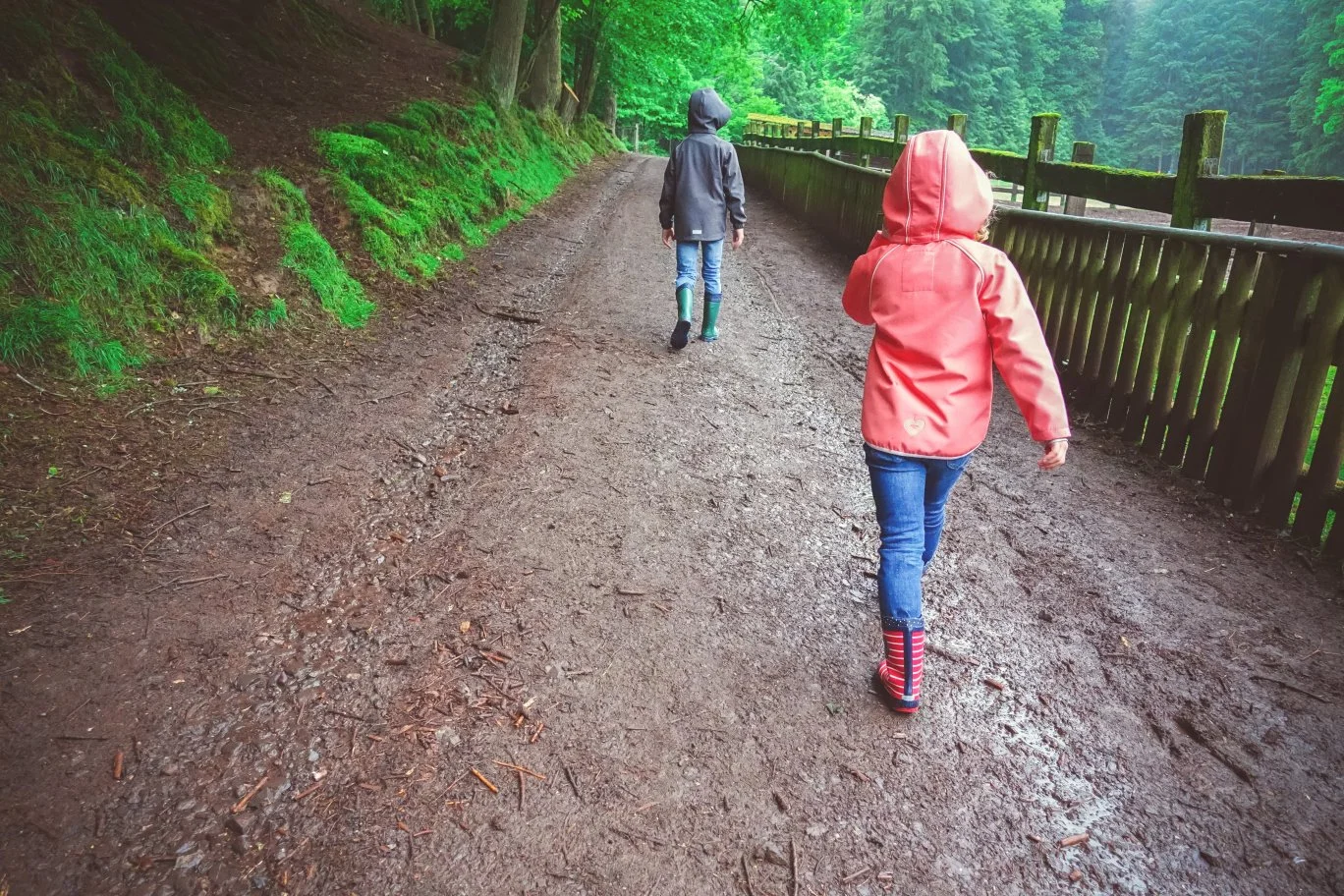
Enjoy the outdoors, and see what you discover!
When it doubt- Go outside! You’ll be amazed at how the lower plants thrive in even the most unexpected places. Explore and connect with nature- it’s always worth it!
Looking for more support for the fifth grade Botany curriculum? Our course offers a full year’s worth of material, main lesson book page tutorials, art lessons, instructor support, and so much more!

About the Authors
Robyn Beaufoy is Waldorfish’s CEO, and also a course instructor for Simple Season (coming soon!), Waldorf Art for Beginners, and Weekly Art Foundations. You’ll find her intuitive touches and influences throughout everything Waldorfish offers. Robyn has been in the world of education for over 25 years, with an MA in Education and a certification in Waldorf teaching - she also homeschooled both of her children for some of that time. In 2012 Robyn co-founded Waldorfish.com, creating it with the vision of making Waldorf inspired-art and pedagogy more accessible, joyful, and doable for homeschoolers all over the world.
Caitlin Amajor is Waldorfish’s course instructor for Geometry grades 5 & 6, and Botany, as well as our Administrative Assistant. From a young age, Caitlin has been immersed in Waldorf education, attending a Waldorf school from K-8. After receiving a BA in History, Caitlin gained her certification in Waldorf teaching, and spent seven years as a Waldorf class teacher in the upper grades. With a special fondness for watercolor painting and geometry, Caitlin loves bringing Waldorf education to her students all over the world, and seeing their own individuality and style bloom from the curriculum!

Award-winning, art-infused, secular homeschool curriculum.

Why worry, when you can ask?
A brand new school year is around the corner; we can’t wait to support you!
Very likely, you are dreaming up your plans for the upcoming school year. Good news: we can help! We have a range of courses that are open for enrollment. All our lessons are pre-recorded, which allows you to fit them into your ideal family rhythm.
Additionally, when you buy one of our courses, you have access to all of the lessons for the lifetime of the course - no hurry to finish them in a set period of time!
Our curriculum includes instruction and support from our trained Waldorf teachers, lessons planned out for you for the entire block, supplemental activity suggestions, and detailed supply lists w/ helpful links.
One of our primary goals is to make things simpler for you, so you can focus on all the other moving pieces that this school year is sure to bring.
*Click on the links and images below to learn more about specific courses and what they each offer.
Appropriate for Ages 7 and Up:
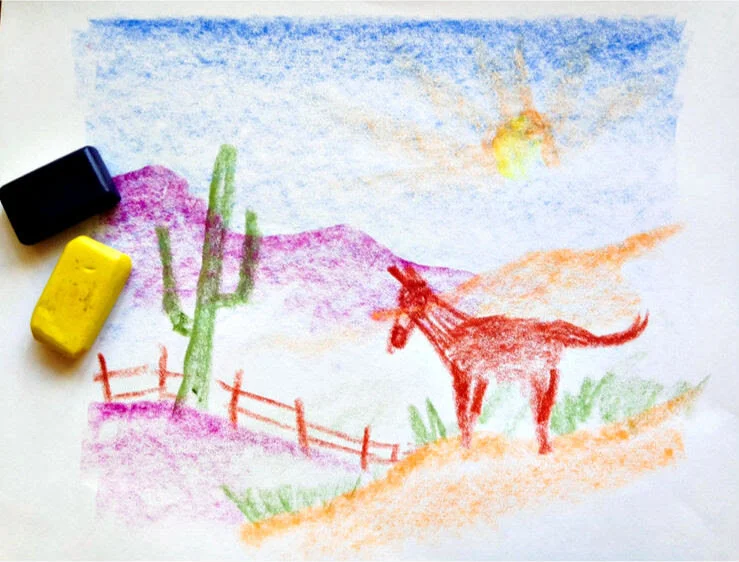
An affordable introduction to Waldorf Art.
Waldorf Art for Beginners
A great place for those who are just getting started! This eight lesson course gives the rundown on watercolor painting, beeswax crayon drawing, and chalk drawing. Everything you need in one tidy spot! Perfect for those who are brand new to Waldorf-inspired art and don’t want to spend hours on the internet finding allll the information.
Open for enrollment year-round.

A beautiful pastel drawing from our Weekly Art Foundations course!
Weekly Art Foundations
One of our most popular courses! You’ll get over 33 lessons; one delivered each week- enough for an entire school year! Access them whenever it works for your schedule. You’ll learn how to work with crayon, charcoal, wet-on-wet painting, and other common Waldorf art mediums and techniques. Plus, enjoy instructor support, guidance on working through ‘comparison syndrome,’ and so much more!
Open for enrollment twice a year. Enrollment opens July/early August '26.
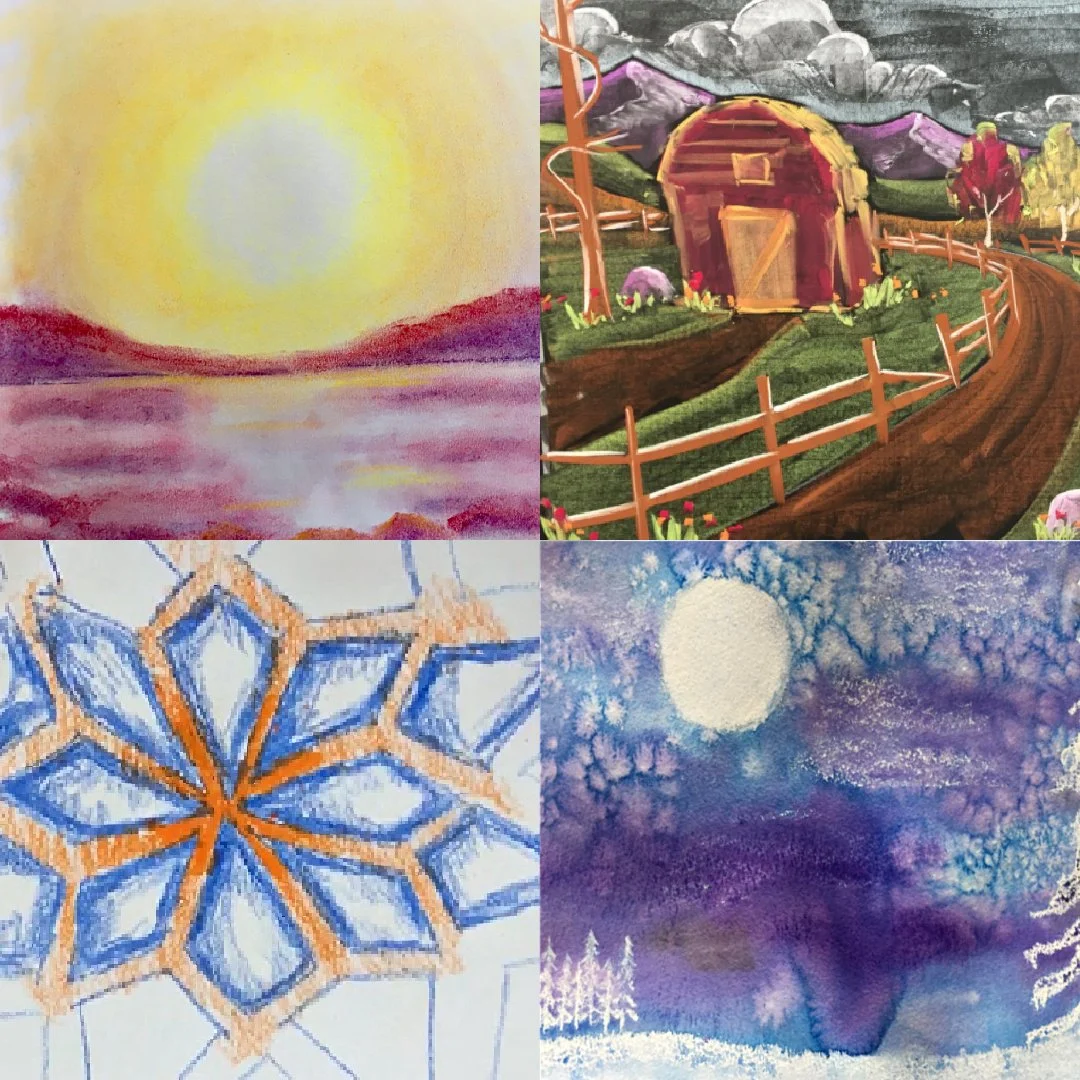
Artistic works you can find in our Art Bundle #1!
Art Lesson Bundles
Looking for art lessons, but not quite ready for a full course? Start here! Our Art Bundles include four lessons each, and provide a chance to gain experience in various Waldorf art mediums, such as chalk drawing, watercolor painting, and crayon work!
Open for enrollment year-round.
For the Lower Grades Child (Grades 1-4)

A beautiful wet-on-wet painting from our first grade course.
Watercolor Painting for Grades 1, 2 and 3
Created to meet the developing young child’s growth through experience in color, form, and story! Each course provides a full year’s worth of lessons, and include original verses, instructor support and insight, curriculum connections, and more!
Open for enrollment year-round.
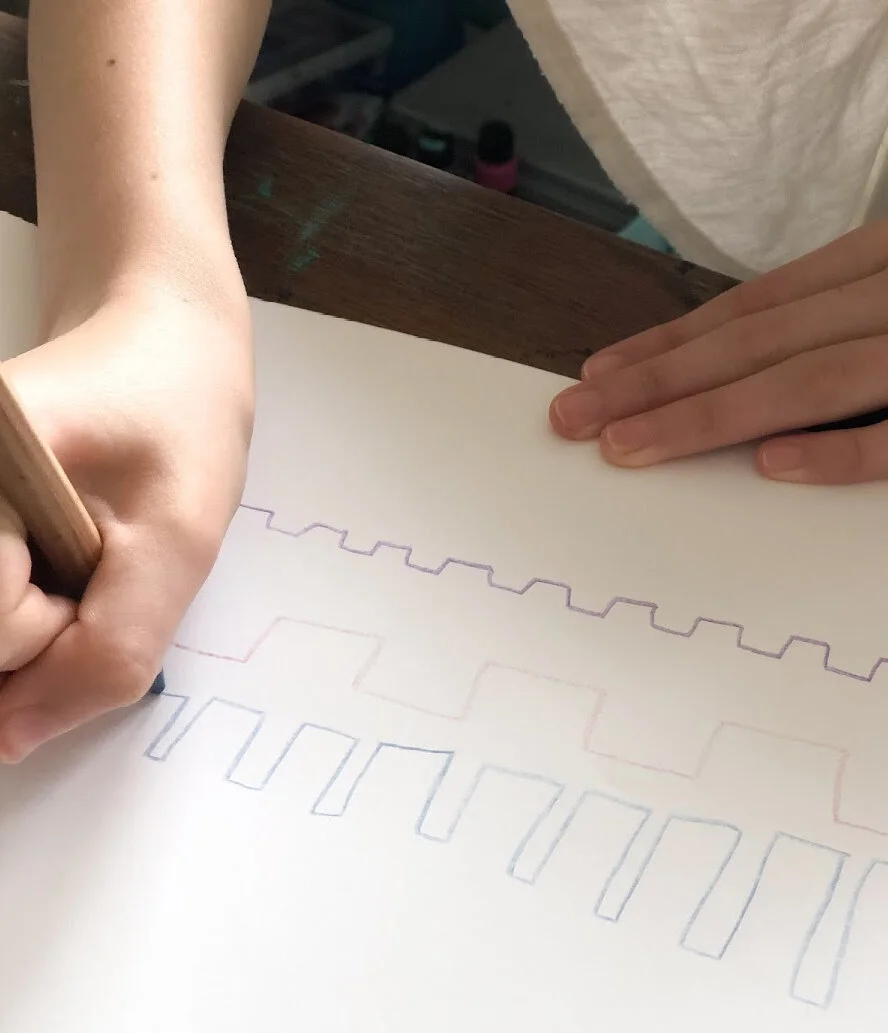
Finally get started with form drawing- we’ve got you covered for the school year.
Form Drawing for Grades 1 - 4
We offer four courses that encompass a year’s worth of form drawing curriculum for grades 1-4! With over 30 videos per course, step-by-step tutorials, and instructor support, you’ll have everything you need to bring form drawing to your child’s educational rhythm.
Open for enrollment year-round.
For the Upper Grades (Grades 5-8)
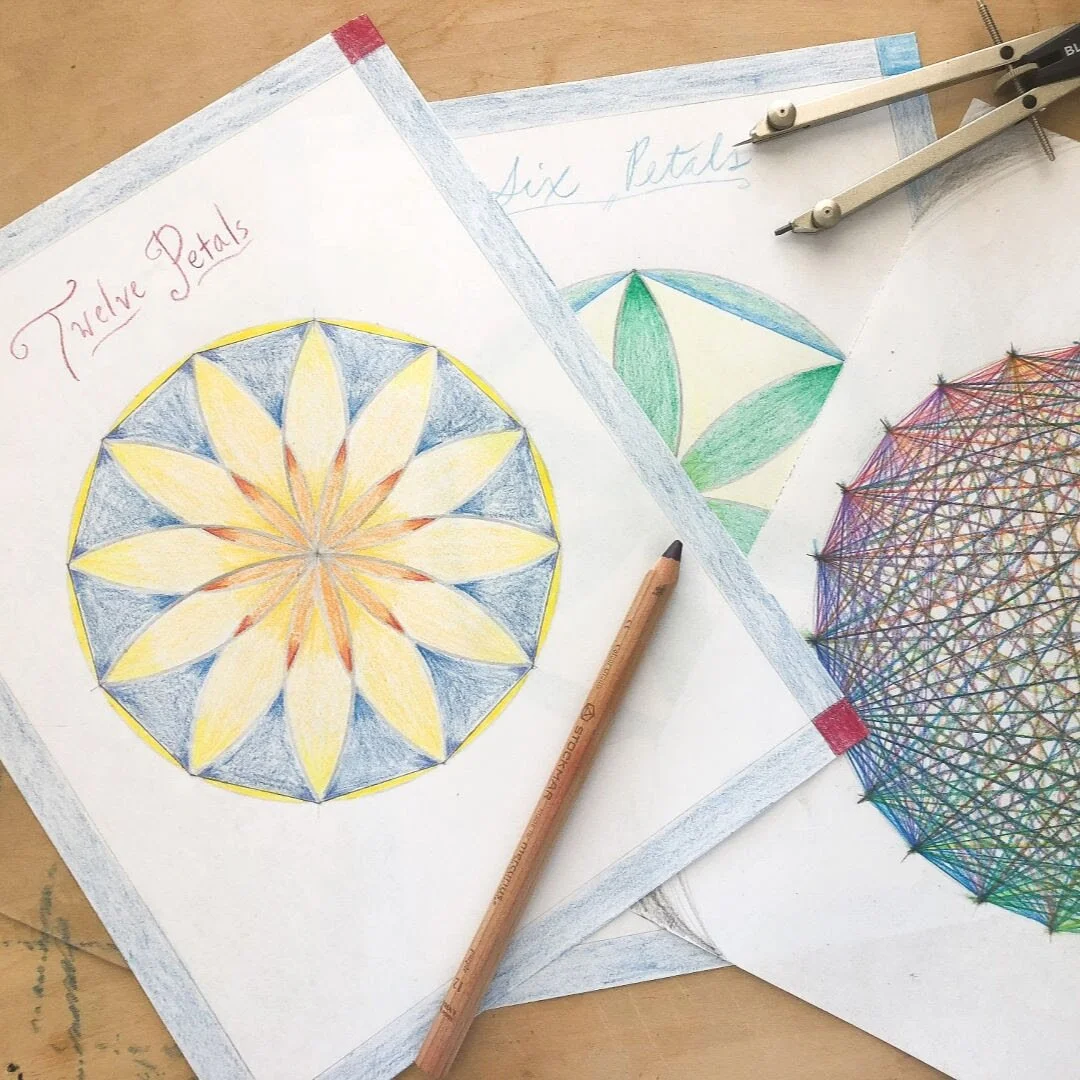
Beautiful forms from our sixth grade geometry course.
Geometry for Grades 5-8
Our four courses for grades 5-8 provide a full year’s worth of geometry curriculum instantly! With each course providing 15 lessons, each is perfect for the Waldorf homeschooling classroom, or for those using other educational methods, is also a perfect artistic supplement!
Open for enrollment year-round.
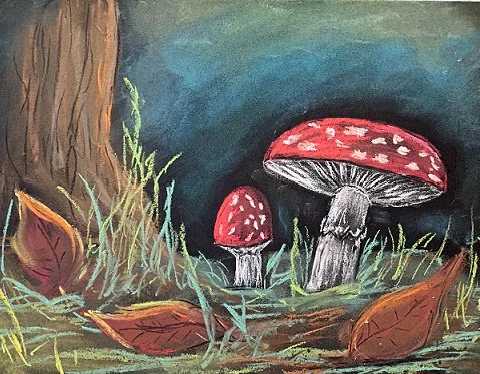
Exploring the world of fungi through chalk drawing!
Botany
Designed for the growing fifth grader, this course provides over videos that cover a full year’s worth of curriculum. With art lessons, step-by-step guides for main lesson book pages, hands-on demonstrations, and so much more, this course provides everything your student needs to explore the vast world of plants.
Open for enrollment year-round.

Our science courses show you HOW to set-up and bring these topics to your child.
Waldorf Science: Physics (Grades 6-8) and Chemistry (Grades 7 & 8)
Waldorf science curriculum for homeschool & classroom educators! Built for the educator, each course provides step-by-step demonstrations, how and why to create rhythm in the lessons, and an in-depth exploration into Waldorf teaching methods. Each course provides a full year’s worth of curriculum, detailed supply lists, instructor support, and so much more!
Open for enrollment year-round.
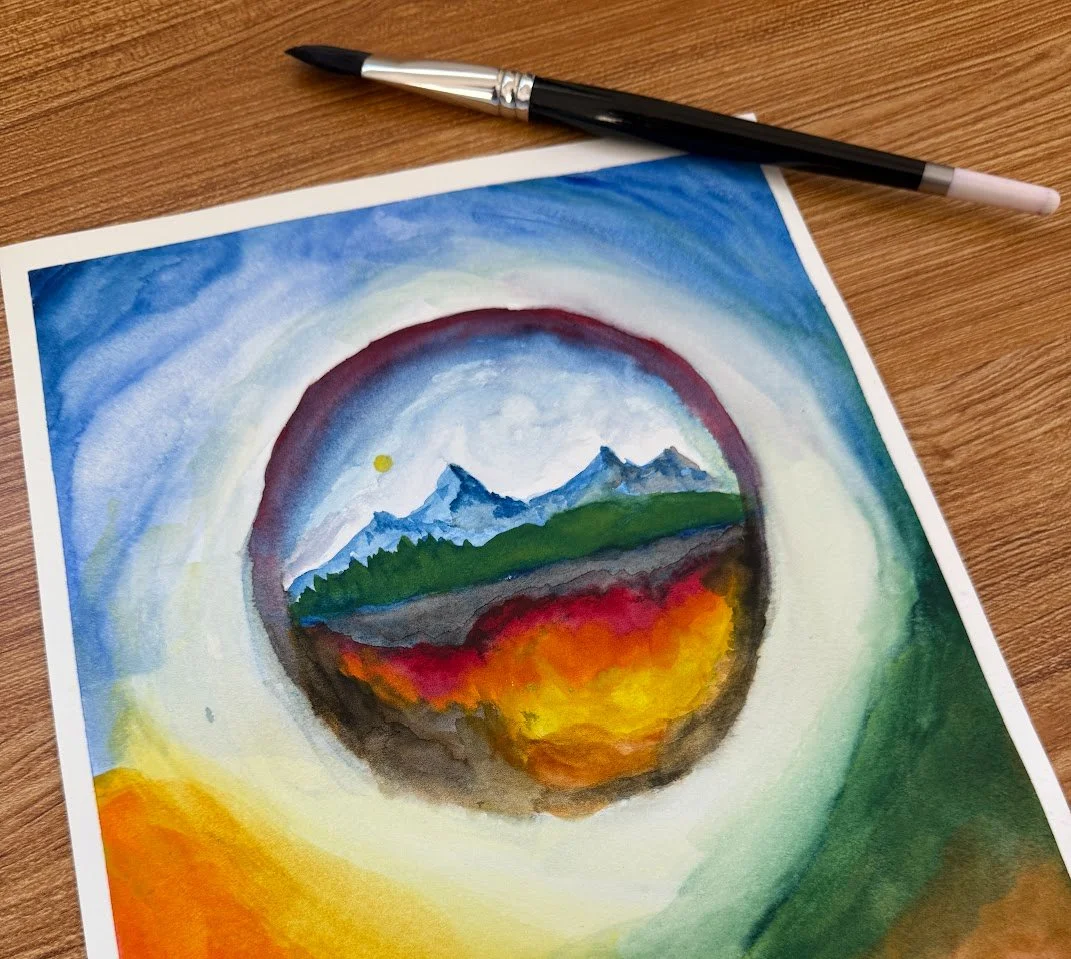
Study the Earth through art!
Geology
Designed for the sixth grader, our Geology course provides everything you need for a deep-dive into the study of the Earth. You will be provided with over 75 pre-recorded videos that cover a year’s worth of geologic exploration & lessons for your child, main lesson book page tutorials, art lessons, and so much more! Plus, the course includes a fully mapped-out research project; an opportunity to apply what they’ve learned in a hands-on way through writing, interviewing, illustrating, and presenting.
Open for enrollment year-round.

A watercolor painting connects to the Waldorf fifth grade curriculum of exploring Ancient Egypt.
Weekly Art Diving Deeper
For students who have completed our Weekly Art Foundations course (see above), this course is built for those who are ready to enhance their artistic skills. This course includes in-depth instruction in Perspective Drawing, Figure & Portrait Drawing, charcoal, chalk drawing, watercolor and so much more!
Open for enrollment year-round.
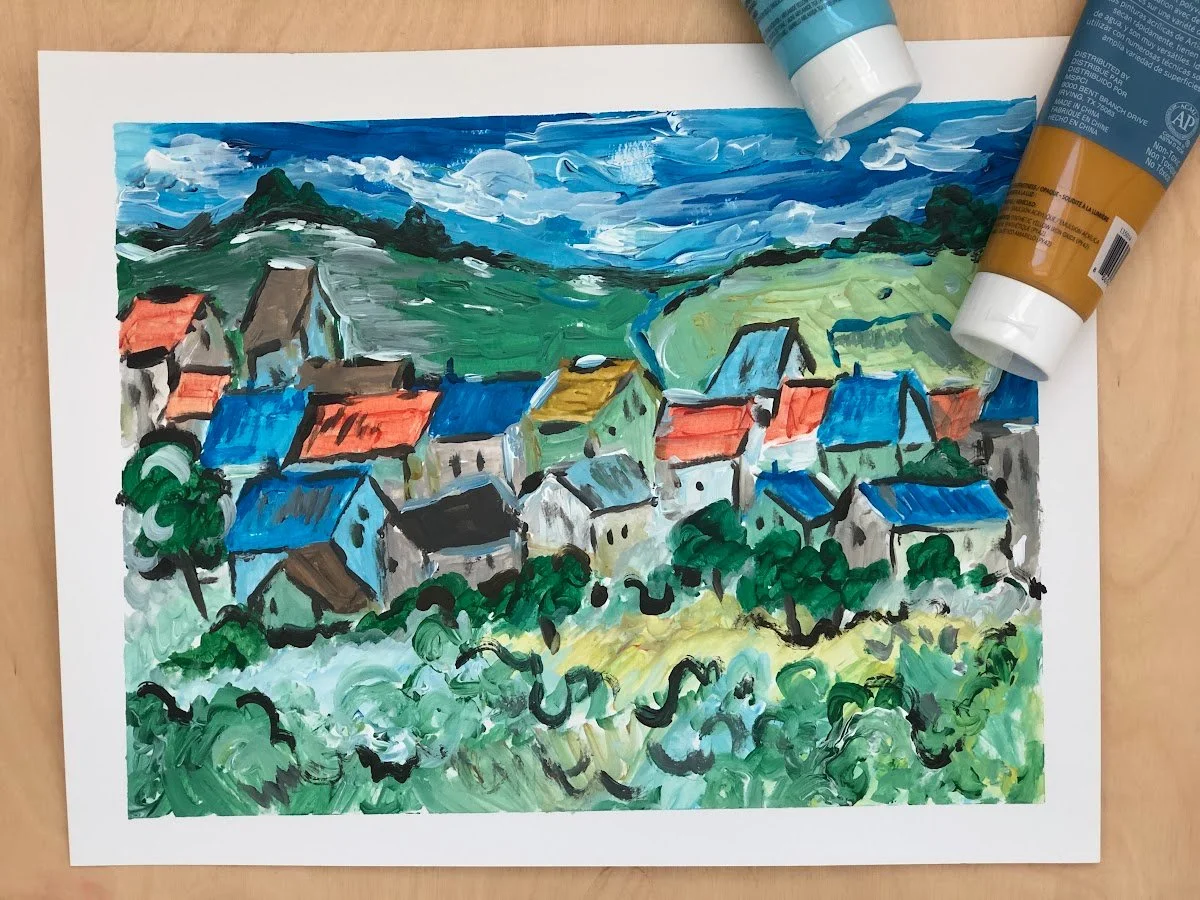
Ready to learn how to paint with acrylics? Start here!
Weekly Art…and Beyond!
Weekly Art…and Beyond is the next step in our Weekly Art series - for those who have completed our Weekly Art Diving Deeper course, and/or for high schoolers ready to stretch their artistic skills! With over 30 lessons, this course explores familiar skills such as chalk and charcoal drawing, and introduces brand new mediums such as ink work, acrylic painting, and so much more!
Open for enrollment year-round.
For Adults
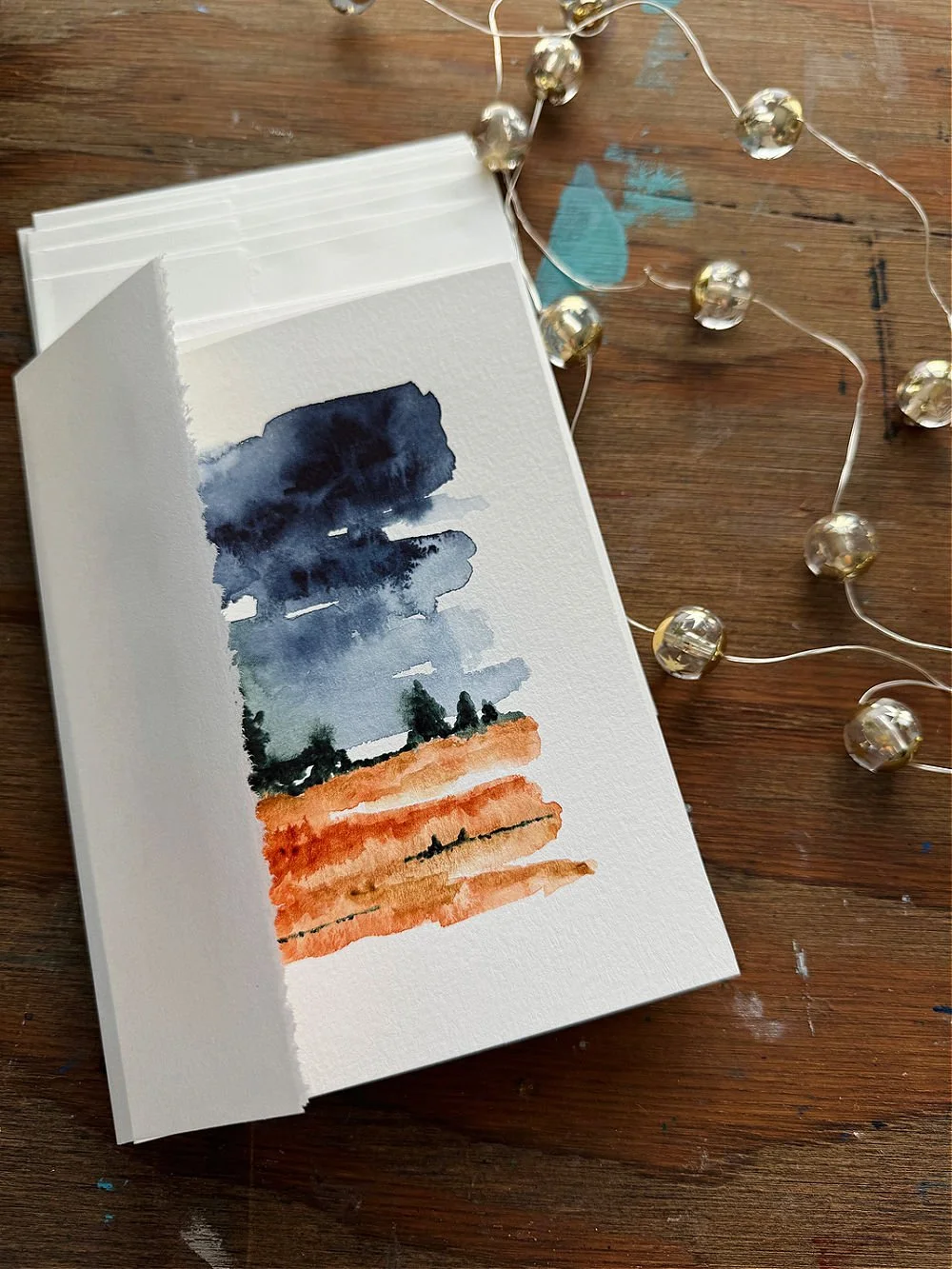
Simple Season
Designed for caretakers, this course provides an opportunity to create, plan, and reflect! With three watercolor painting lessons, a simple (yet impactful!) guiding PDF, and thought-provoking discussion prompts, this mini-course will help you find what’s really meaningful to you around celebrations and holidays.
Open for enrollment through December 2024.
We’d love to teach for you this year!
Questions? Let us know how we can help —> Click here!








The Importance of Rhythm in Early Childhood.
Enjoy this piece from guest writer and Storytime in the Schoolhouse founder, Becca Lane! For over thirteen years, she has been creating magical moments for families with young children in the classroom and online.
What is rhythm?
Rhythm is the flow of our day and week; what happens in what order.
When we hear “rhythm,” we often think of music. A song has rhythm when it has a steady and predictable beat. The beat holds the song together.
When we talk about the rhythm of our lives, we mean how our day flows. Our day has a rhythm when the parts unfold in a predictable order. For example, your child knows what to expect when they wake up, or bedtime has a similar flow every night, or what you do after school each day is always the same.
The more predictable and consistent the flow of your day is, the more rhythm you have.

Clean-up time can be a rhythmic aspect of the day for the whole family!
A rhythm is different from a schedule.
Rhythm and schedule are often confused, so let’s take a moment to clear up the difference.
A schedule is based on clock time. We write “scheduled” events on our calendar—at a specific day and time.
A schedule is often externally imposed. Your job or school has a schedule. You schedule appointments. These happen at a particular time on a specific day.
On the other hand, rhythm is based on flow and order. It is loosely based on clock time but not dependent on it.
Rhythm has layers.
Our day has a flow or rhythm, as do our week, month, and year. Even the smaller parts of our day have a rhythm. We can add rhythm to any of these layers.
Even the busiest/most chaotic lives can create rhythm.
As little as one new “beat” of rhythm creates consistency and predictability.
Rhythm benefits adults as much as children.
We often focus on our children and the benefits for them but a rhythm benefits adults just as much. I am amazed each time I make the effort to create a new rhythm in our day or week--I see how much it benefits me and eases some of my own overwhelm.

Rest and reset: an essential aspect of daily rhythm!
What are the benefits of rhythm?
Rhythm is one thing we can add to our life that actually simplifies it.
Children can feel anxious, overwhelmed, and out of control when their days unfold randomly without any underlying consistency or predictability. They don’t know what will happen, when, or what is expected of them if/when it does.
Rhythm creates predictability and consistency.
Research shows children experience less anxiety and overwhelm and more connection and ease when their days are predictable and consistent; when they generally know what to expect during the day.
Rhythm reduces anxiety.
We live in an increasingly unpredictable world that makes many (most?!) adults and children anxious. One way to protect our children from the anxiety this creates is to add predictability to our family life.
Creates time for what matters.
Life can become busy, full, and chaotic once you become a parent! Creating a rhythm allows you to carve out time for what matters for your family, whether it be regular family dinners, weekly hikes, or slow Sundays at home.
(The Waldorfish community saves $10! Use code RHYTHM4WALDORFISH .)
How do I get started?
Pre-made rhythms rarely work.
You’ll likely find lovely rhythms posted on social media or included in purchased curriculum. However, taking a pre-created rhythm and making it work in your life is hard. Our individual lives and all the moving pieces are just too different.
One small, doable change.
Most of us assume we are supposed to create a new rhythm from morning until night, Monday through Sunday, and wake up one Monday morning and implement the whole thing. Well, I hate to tell you, but this usually doesn’t work! This level of change takes a tremendous effort to pull off and is unsustainable in the long run. Humans can’t create this many changes at once!
Instead, adopt the principle of “one small, doable change.” Create one new rhythm, implement it, and wait until it becomes a habit. Then, add another. Repeat until you reach a rhythm that works for your family.
First, focus on connection.
When we add our first “beats” of rhythm to our day, adding a tidy-up time or cleaning rhythm can be tempting. Instead, start with a consistent and predictable moment of connection with your child. Let the foundation of your rhythm be built on connection. Once the foundation has been laid, you can add on from there, including more practical elements like tidy-up time or dinner prep.
Start with sleep times and mealtimes.

Keep it simple: share a meal together!
When you are beginning to build your rhythm, start with a sleep time or mealtimes. Add one new “beat” of rhythm to that time of the day.
Add something you can easily do the same way every day. (Hint: it shouldn’t have lots of steps or involve a lot of materials.)
Keep doing this until it is a habit. Just one steady “beat” will create rhythm!
Then, add another “beat” to another time of day.
Repeat until you have a unique rhythm that works for your family.
Examples of “beats” of rhythm that add connection:
Go on a walk after breakfast each day.
Have warm tea and muffins after school every day.
Light a candle at dinner each evening and share a family blessing. (“Blessings on our meal, and everyone near and dear.”)
Read books together on the couch for 30 minutes each night before bed.
About the Author
Becca Lane creates magical moments of connection between children, families, and the natural world.
For over thirteen years, Becca ran Little Round Schoolhouse, a mixed-age children’s garden for 3-7-year-olds. In 2020, her work shifted online with the creation of Storytime in the Schoolhouse, an online program that helps parents provide their young children with a rhythm of songs, stories, and creative projects.
*This post contains affiliate links. Waldorfish is a big fan of Storytime in the Schoolhouse, and believe it will help support you and your family! 
Waldorf Science Curriculum: What is the role of formal lab write-ups in middle school?
A: When a student enters sixth grade, the curriculum shifts to meet them just where they are in their development in many ways…
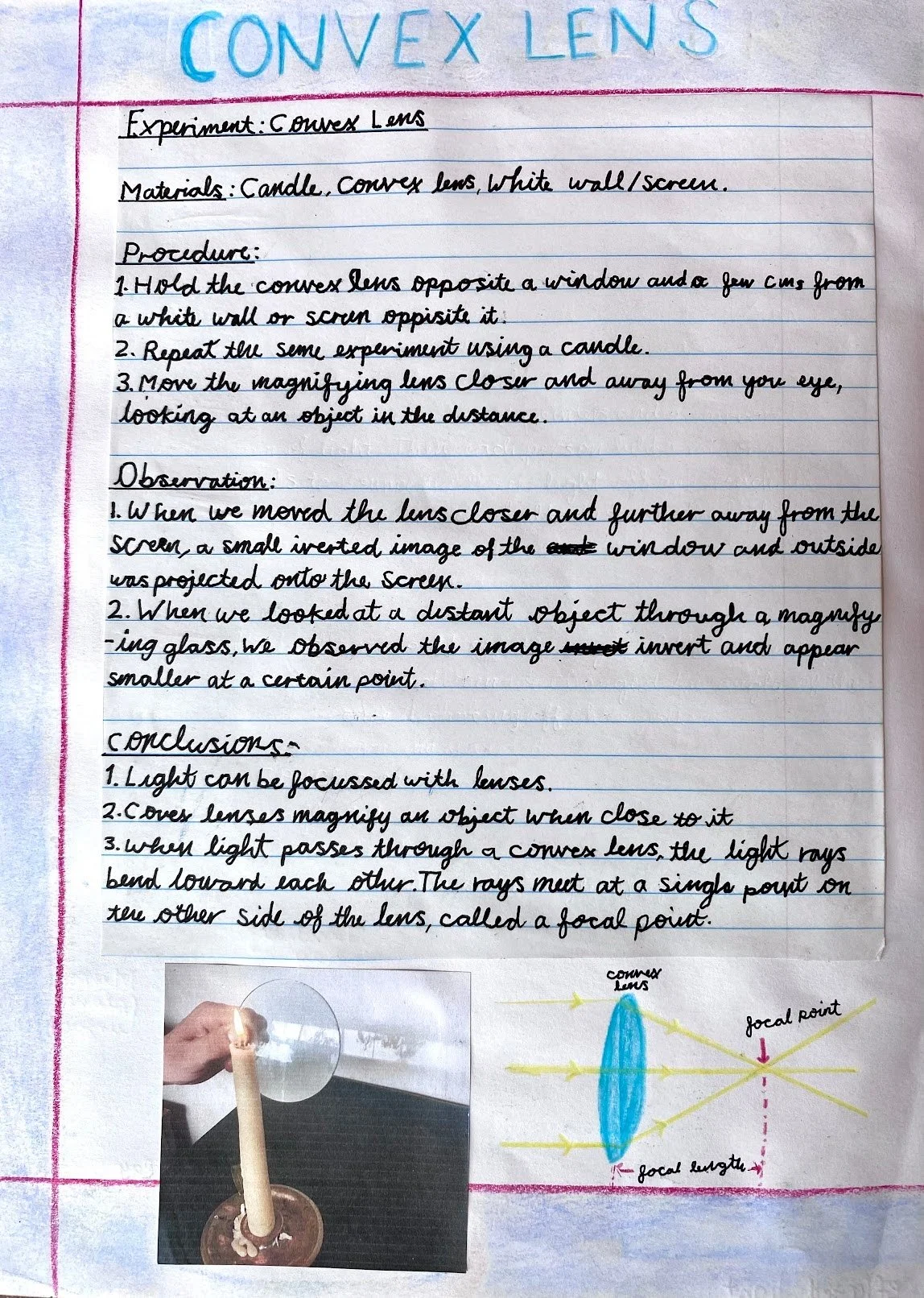
An example of a student lab write-up from our seventh grade Chemistry class.
…one of them being the study of science- physics, geology, astronomy, and more as the grades progress!
In 6th grade Physics specifically (and in Chemistry blocks later in 7th and 8th grade), the educator will introduce the practice of creating formal lab write-ups, which illustrate the materials, methods, observations, and conclusions of a single science experiment. After an experiment has been fully demonstrated and discussed, the lab write-up is the final step in reviewing what has been learned and discovered.
(Our science courses for Physics (grades 6-8) and Chemistry (grades 7-8) include templates and helpful guides to get started with science write-ups in your homeschooling curriculum!)
These formal lab write-ups are where science and language arts work closely together!
Though on its surface this sounds simple and straightforward, science lab write-ups pose a whole new challenge for the budding scientist, and are a tool used by the educator to build observational and objective communication skills. These science write-ups provide an opportunity to practice writing what we see, hear, smell, feel and taste, all through using clear, accurate and objectively written descriptions.
Removing opinions, and describing the facts!
With this practice, the educator poses such questions as:
“What do we need to complete this experiment?”
“What is the method used, or, how does one actually do this experiment from start to finish?”
“What happens during this experiment? What did you see throughout the experiment?”
“What conclusions can be reached from your observations?”
Writing all of this objectively is actually much harder than it seems!
When I first introduced science write ups to my 6th grade class, I challenged my class to write a simple guide for me: “How to Make a Peanut Butter and Jelly Sandwich”- from start to finish.

Students learn the principles of thermodynamics through our 6th grade physics curriculum- learning by doing! Find the science write-up for this experiment in the next image.
What would I need to make a PB & J? How should I do it? What challenges should I be aware of, or what techniques worked best? What should I expect to end up with after applying the method?
Then, after writing their PB & J write-ups, it was my job to make these sandwiches in front of the class, but I could only do what the science write-up said- literally! No guesses, inferences, or assumptions on my part- I had to follow the instructions exactly as written.
As you can imagine, this was a very entertaining lesson- and an effective one! Students unknowingly left out all kinds of ingredients, tools, and steps (resulting in very silly sandwiches!)
All demonstrating that when we write a lab write-up, we have to be specific, methodical, and objective.
Writing our observations proved to be a challenge as well, which we discussed with the PB & J demonstration. To practice communicating observations, I asked the students to describe a PB & J sandwich. What does it look, smell, taste, or feel like?
Many students wrote that a sandwich tastes “Good!” or “The bread was especially tasty.” Almost all wrote their opinions about the sandwich. If we imagine the reader had never seen a PB & J sandwich, words like “good” or “tasty” actually do not describe anything other than one’s preferences and opinions; they don’t provide a detailed depiction of the sandwich itself!
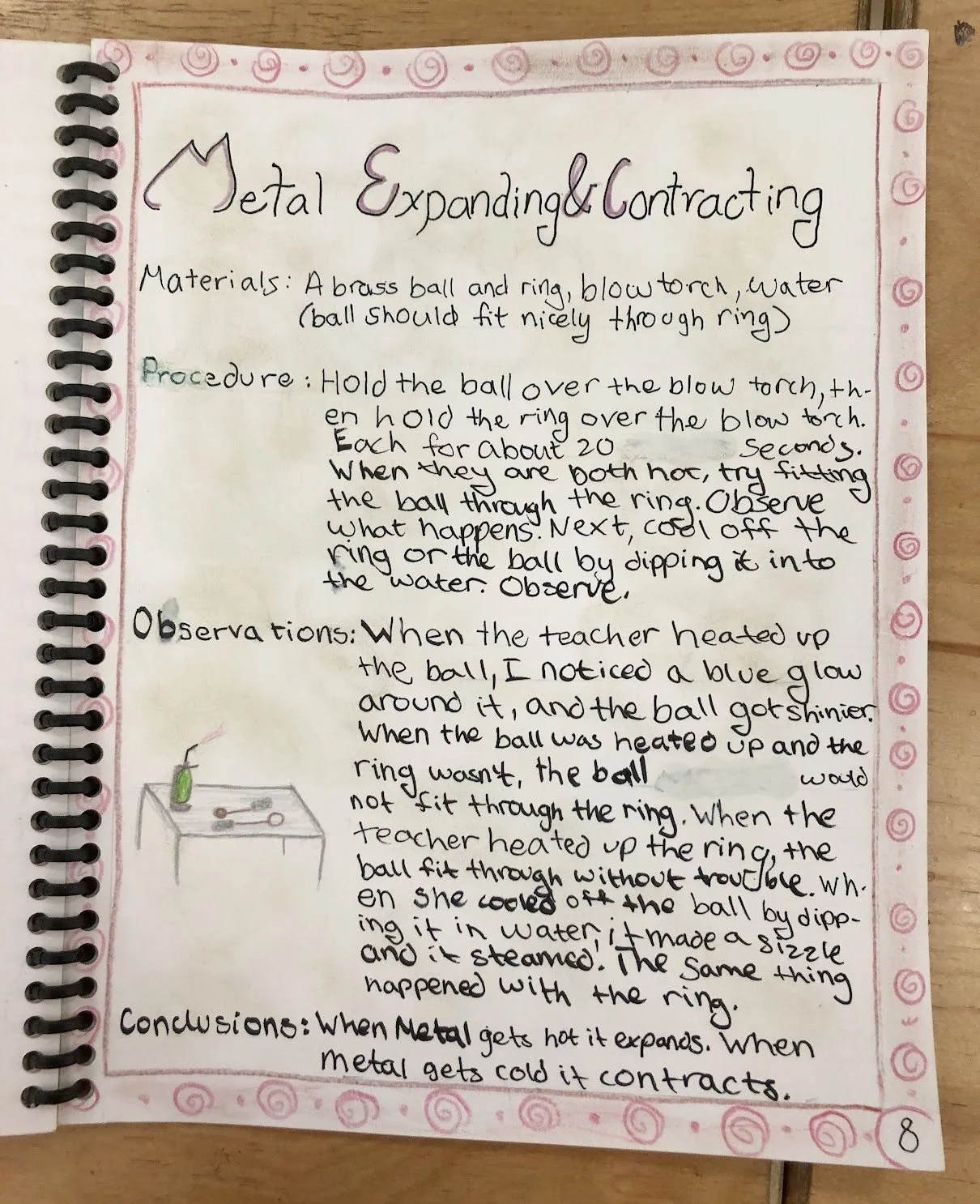
After working through an experiment and discussing the results, it’s time to bring it all together in a science write-up. This is an example of student work after observing how metal expands and contracts; the laws of thermodynamics in action!
Instead, we discussed using objective and clear descriptive word choices and sentences.
“The bread is soft and white, while the jelly is somewhat sticky and tastes sweet.”
“The peanut butter is smooth to spread and has a very nutty taste.”
Already, with these simple adjustments in our language, a reader will be able to get a much better idea of what the student actually observed with their senses.
This exercise translated well over to our science experiments and subsequent formal lab write-ups. For example, when the students studied acoustics, we found all kinds of descriptive words to use for observations: “hollow,” “tinny,” “ringing,” “grating,” “soft,” “muffled,”- the list goes on.
Here is where science and language arts become one!
Formal lab write-ups provide a way to meld together science and language. The process pushes students to remove their opinions, and focus on what their senses experience in an objective way- perfect for the sixth grader who is beginning their journey into the often unsettled and murky experience of puberty! While the experiments in a science block are of course important, the formal lab write-up provides a structure for the student to process their observations, grow in their writing skills, and find the truth outside opinion.
Looking to add Waldorf-inspired science to your homeschool classroom?

About the Authors
Robyn Beaufoy is Waldorfish’s CEO, and also a course instructor for Simple Season (coming soon!), Waldorf Art for Beginners, and Weekly Art Foundations. You’ll find her intuitive touches and influences throughout everything Waldorfish offers. Robyn has been in the world of education for over 25 years, with an MA in Education and a certification in Waldorf teaching - she also homeschooled both of her children for some of that time. In 2012 Robyn co-founded Waldorfish.com, creating it with the vision of making Waldorf inspired-art and pedagogy more accessible, joyful, and doable for homeschoolers all over the world.
Caitlin Amajor is Waldorfish’s course instructor for Geometry grades 5 & 6, and Botany, as well as our Administrative Assistant. From a young age, Caitlin has been immersed in Waldorf education, attending a Waldorf school from K-8. After receiving a BA in History, Caitlin gained her certification in Waldorf teaching, and spent seven years as a Waldorf class teacher in the upper grades. With a special fondness for watercolor painting and geometry, Caitlin loves bringing Waldorf education to her students all over the world, and seeing their own individuality and style bloom from the curriculum!
Looking for something?

Welcome to Waldorfish! We started this adventure in 2012 out of a desire to make Waldorf training more accessible to class teachers in remote locations and to homeschooling families everywhere! Read more, click here.

WE WON! Our Weekly Art courses were voted “best interactive art program.” Learn more about the award, here.


Click here for a full list of schools we work with.
A few of our most popular blog posts:

Who are our courses for?

Starting Waldorf First Grade

4 Things to Know Before Planning Your Homeschool Year

In Praise of Balance: A Healthy Festival Life

Science in Waldorf Middle School: Starting Something New!